Key points:
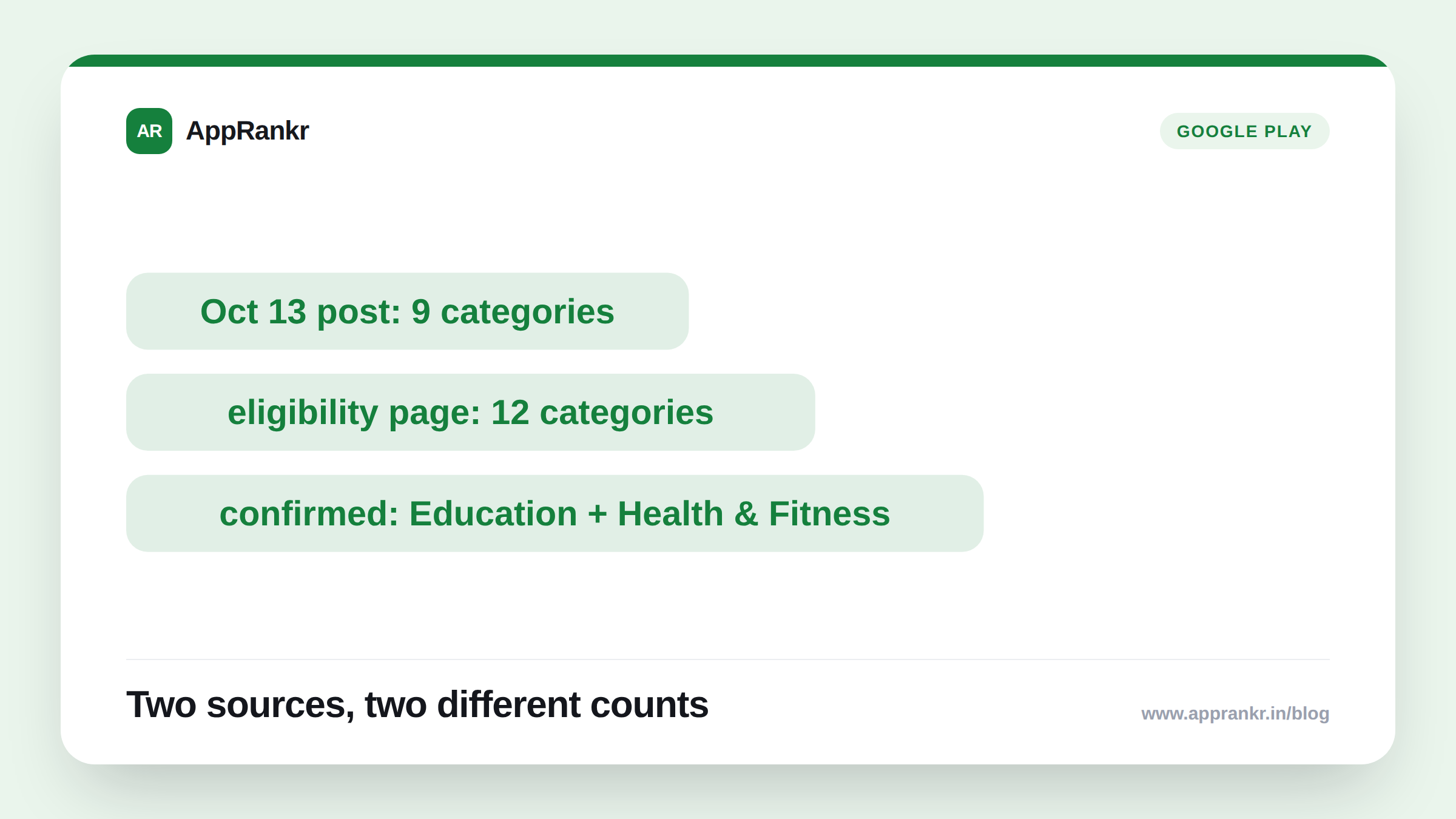
- Google’s own October 13, 2026 blog post confirms the Engage SDK now covers 9 categories. It names Education and Health & Fitness as new additions.
- Per Google’s own words, the SDK works by showing personal content on Apps Home, the You tab, and Android tablets.
- A separate eligibility page lists 12 category names, not 9. The two pages don’t agree, and neither says which is newer.
- This is a re-engagement tool. Not a way to find new users. It shows content only to people who already have your app.
A discovery surface most teams have never touched just opened up to more app categories. Whether yours qualifies depends on which Google page you check.
What Google’s own post actually confirms
Per Google’s own words, from its October 13 checklist: “Integrate Engage SDK… now supporting 9 categories, including Education and Health & Fitness.” It pairs that with one more line. The SDK works “by delivering personalized content across surfaces.” Those surfaces: Apps Home. The You tab. Android tablets.
| Detail | What Google’s own sources say |
|---|---|
| Category count, per the Oct 13 post | 9, naming Education and Health & Fitness |
| Category count, per the eligibility page | 12 named categories |
| Surfaces it populates | Apps Home, You tab, Android tablets |
| What it’s for | Re-engagement, not new-user acquisition |
Where the two sources actually disagree
Google’s own eligibility page names 12 categories. Media & Entertainment. Books & Reference. Comics & Manga. News & Magazines. Music & Audio. Shopping. Food & Drink. Social. Travel & Local. Events. Health & Fitness. Education. That’s 12, not 9. Neither page says which one is newer. Maybe the blog post undercounted. Maybe the eligibility page already reflects a later expansion. Neither source says.
One thing holds across both. Education and Health & Fitness are both confirmed, in either source. If your app sits in one of the other listed categories, check the Engage SDK program page directly. Don’t trust either count alone.
Real-world scenario: A meditation app’s team saw the October 13 post. They assumed Health & Fitness being named meant they could integrate right away. They checked the Engage SDK program page first, before building anything. They found a real sign-up flow still gating access. Not an instant switch-on. They applied through that page, then scoped the real work only once their own eligibility was confirmed in writing. Not from a blog post’s wording alone.
Why this is a re-engagement tool, not a growth hack
Google’s own words tie this to bringing users “back to your app.” Not acquiring new ones. It populates surfaces a user already sees, because they already have your app installed. Apps Home. The You tab. Tablets. That’s a different lever from anything touching search ranking or new-user discovery. Treat it as a retention tool worth having. Not a shortcut around ASO fundamentals.
What to actually do about it
- Check your real status on Google’s own program page. A name match alone isn’t proof, since the two sources don’t agree.
- Treat this as retention, not growth. It shows content to people who already have your app. Not new searchers.
- Keep your store listing fresh anyway. Google’s own post lists that as a separate, standing habit.
- Check back if you miss out today. Google’s own page has talked about more categories arriving “in the coming year.” A miss now may not last.
AppRankr’s Rank Tracker tracks your real search visibility, a useful baseline to compare against once a re-engagement tool like this is live for your app.