Reviews & Ratings
13 guides on reviews & ratings for app store optimization, from the team behind AppRankr.
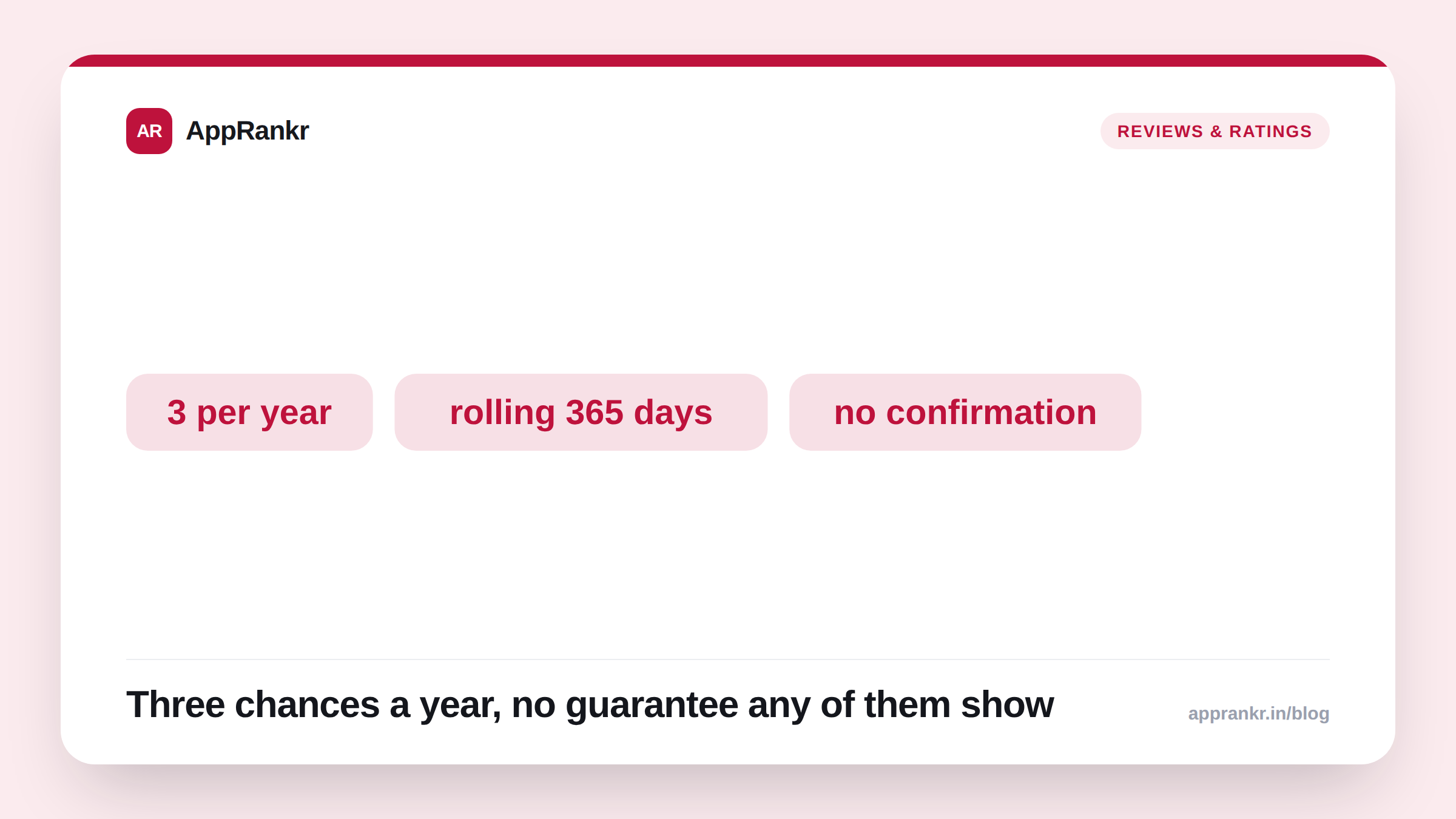
Apple's Review Prompt Has a Hard Limit: 3 Times Per Year, Per App
SKStoreReviewController isn't a suggestion box you can call whenever you want. Apple's own documentation caps it at three prompts per 365 days, no exceptions.
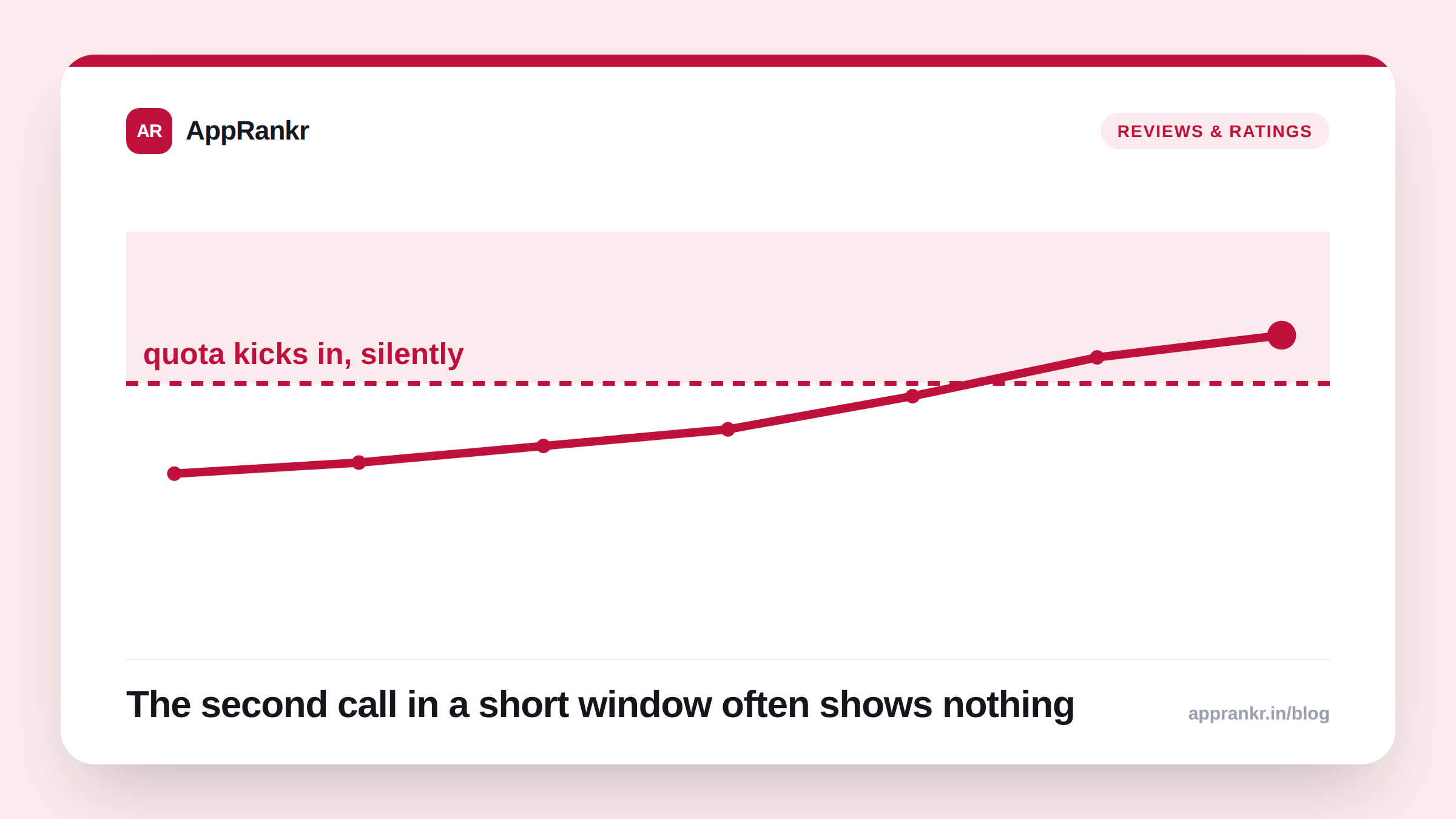
Google's In-App Review Prompt Has a Hidden Quota, and It's Intentional
Call the API twice in a short window and the second request often shows nothing. Google's own docs confirm a quota exists. They just won't say the exact number.
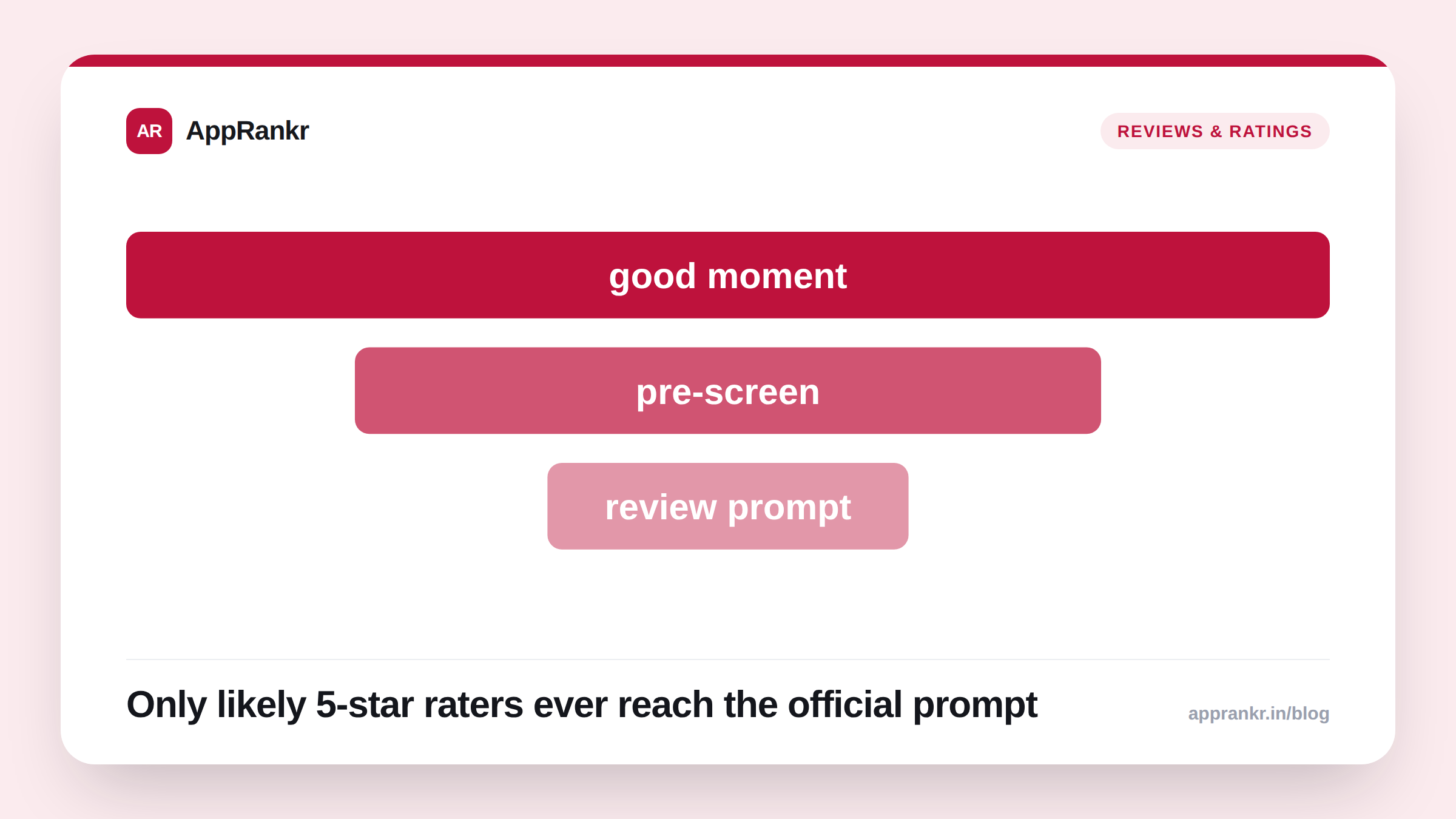
The NPS Pre-Screen: A Smarter Way to Time Your In-App Review Prompt
Reporting describes a pattern where a one-question survey runs before the official review prompt, sending only likely 5-star raters to it. Here's what's reported, and where Google's own rules still apply.
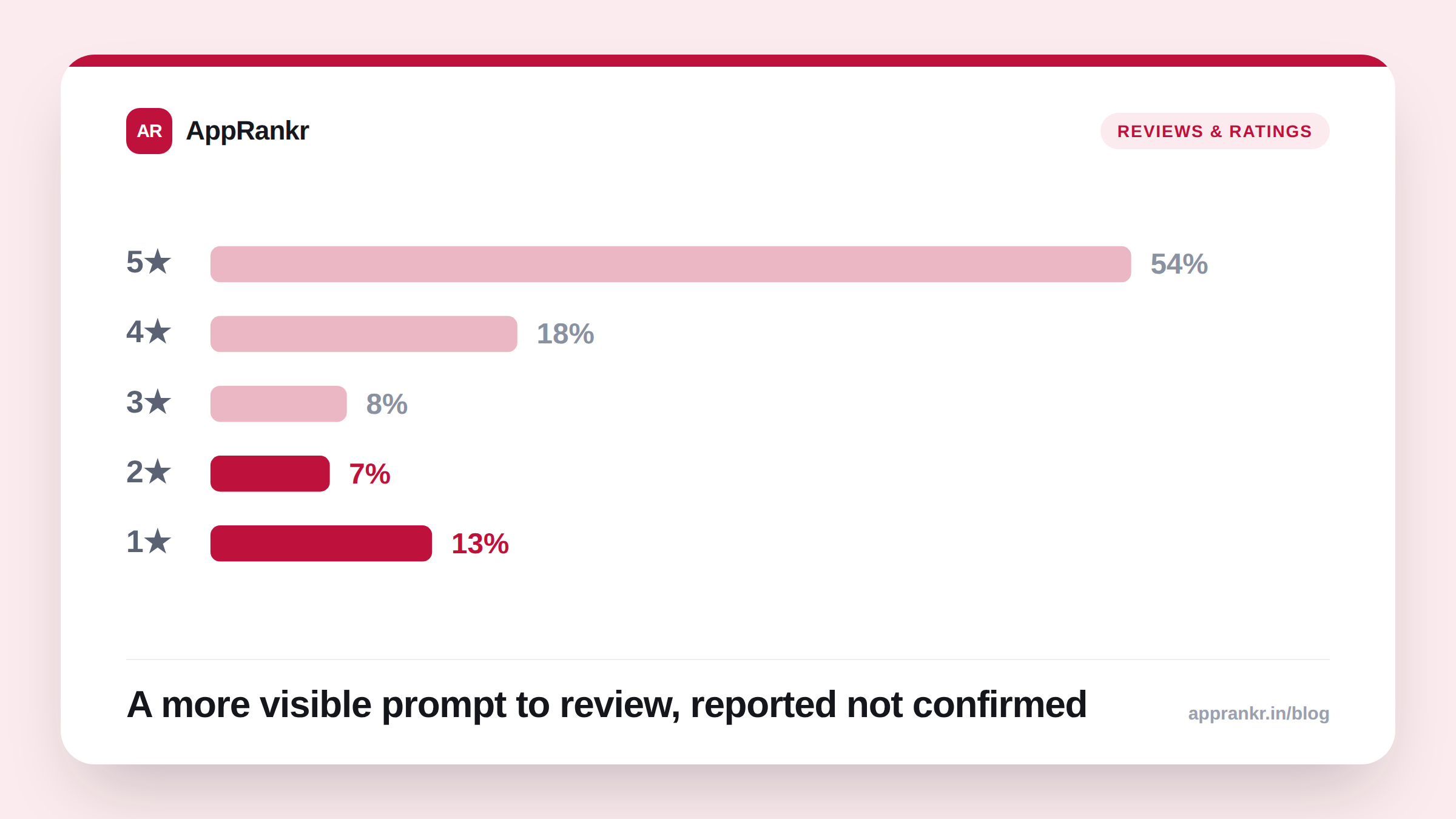
Google Play's New Contribution Hub Wants Users to Leave More Reviews
Reporting on Google Play Store v53.2 describes a new Contribution Hub on the 'You' tab, built to prompt more ratings and reviews. Here's what's reported, and why review volume is worth watching.
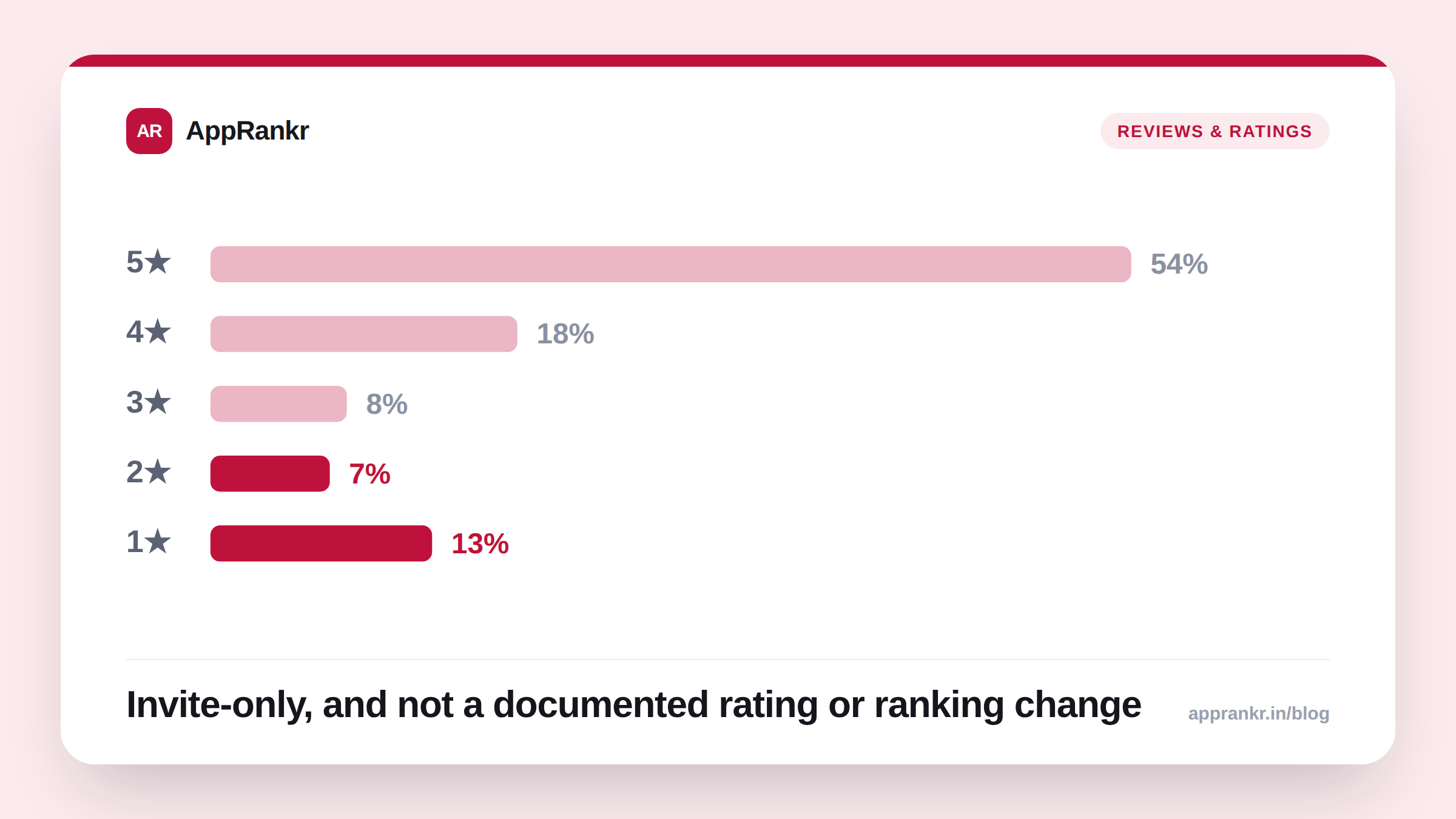
Google Play's Trusted Contributor Badge: What It Means for the Reviews on Your App
Google now marks some Play Store reviewers with a Trusted Contributor badge. Here's what Google's own help page says about how it works and what it means for the reviews you see.
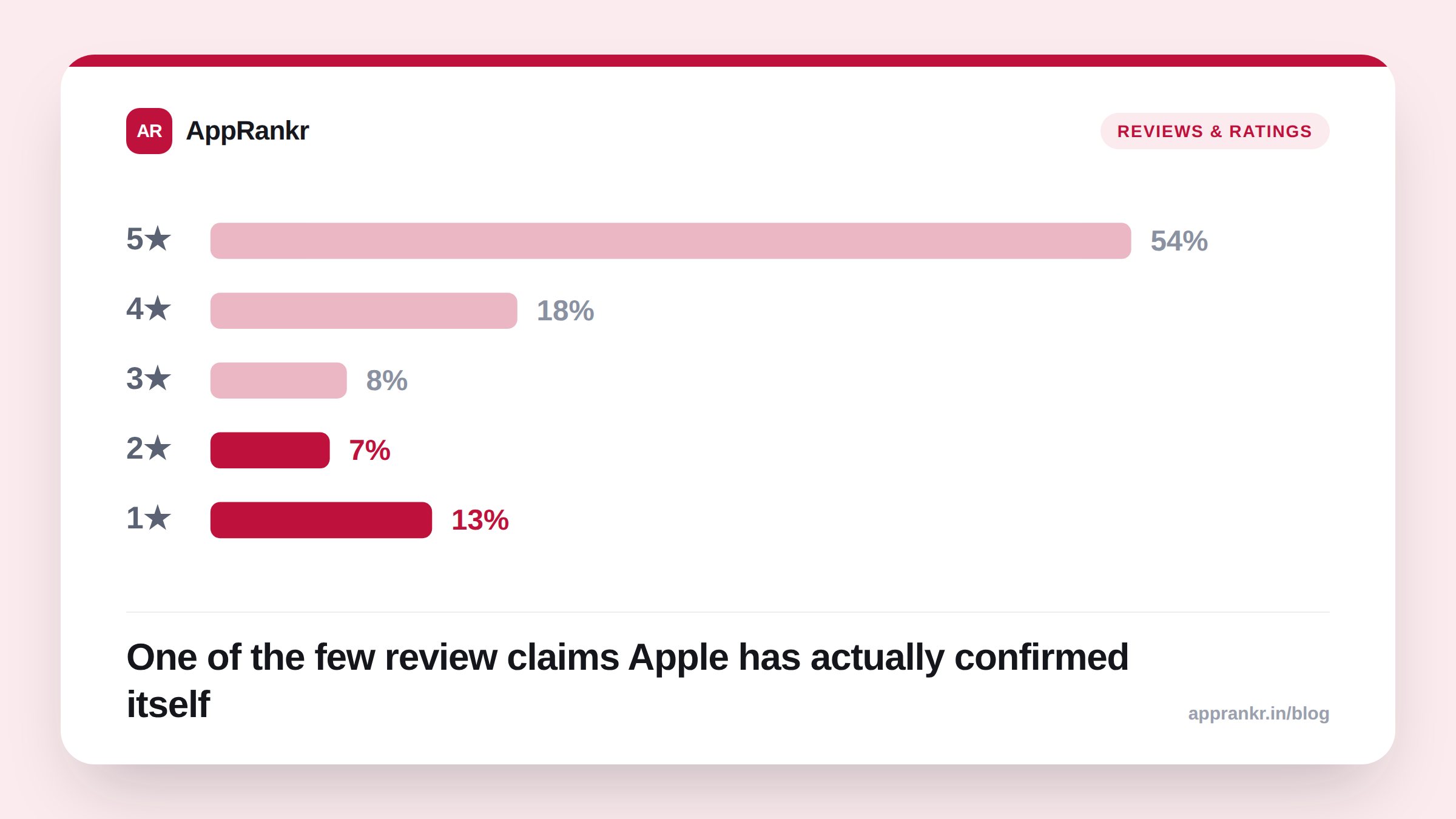
Does Responding to App Store Reviews Actually Improve Your Rating or Ranking?
Apple's own guidance links review responses to a better rating and better discoverability. Here's exactly what Apple says, and how to actually respond through App Store Connect.
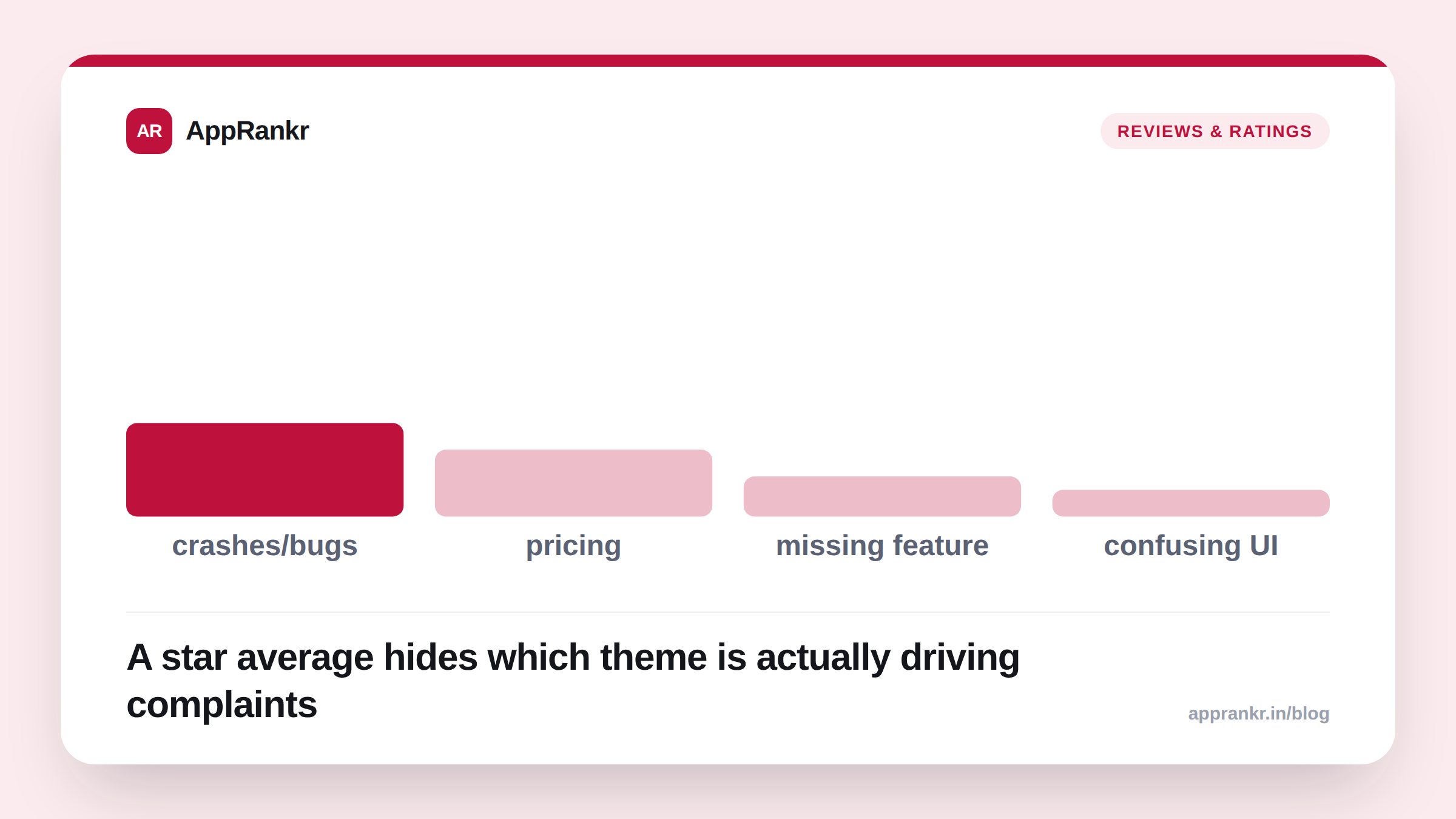
What Thousands of App Reviews Can Tell You That Star Ratings Can't
A star average tells you how people feel. It doesn't tell you why. Here's how real teams mine review text for product, pricing, and roadmap signal, and what the academic research behind it actually found.
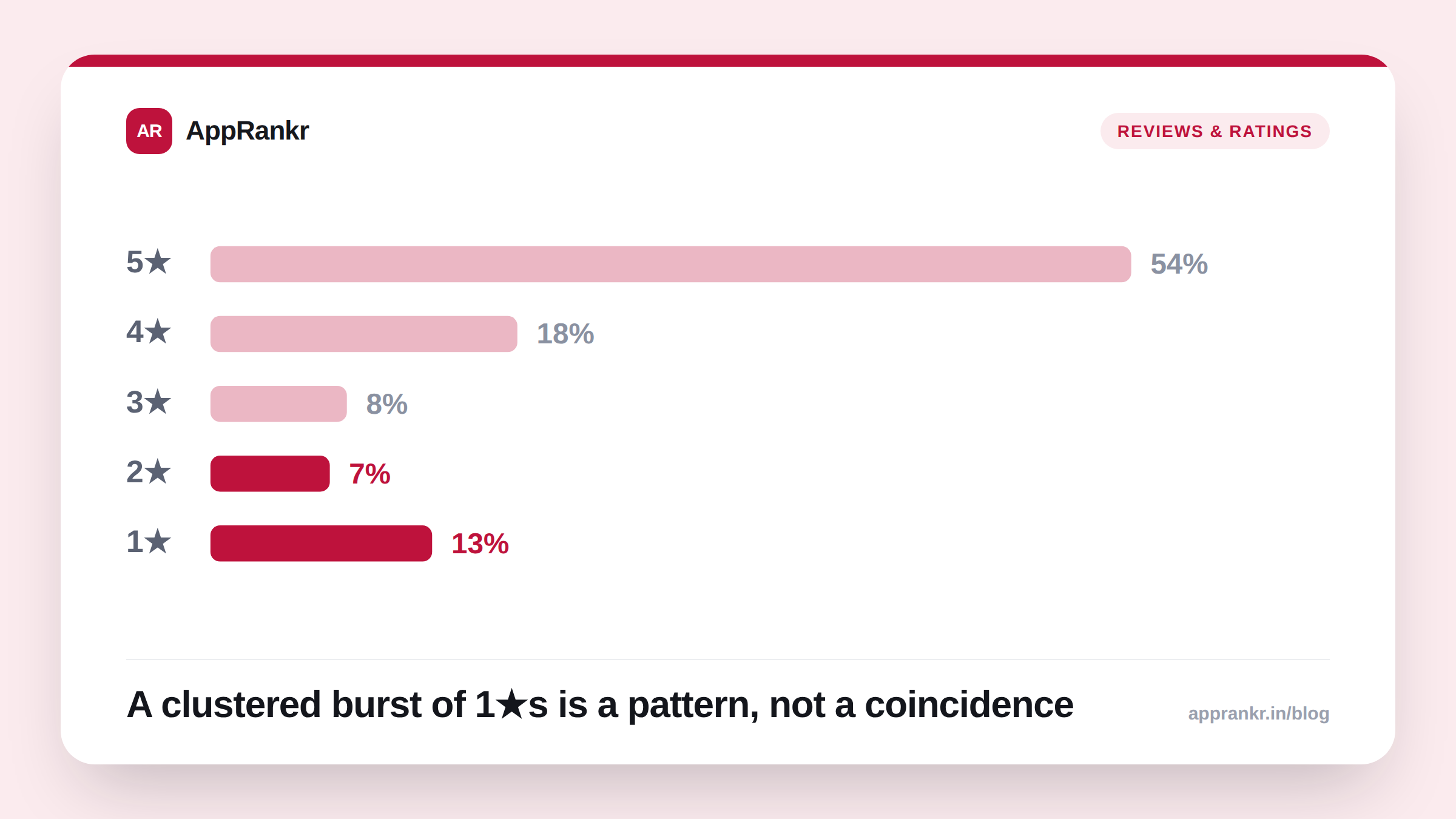
Competitor Review Bombing: How to Spot It and What You Can Actually Do
A sudden burst of fake 1-star reviews, all around the same time, often traces to a rival — not a real product problem. Here's how to tell the difference and what to do about it on Google Play and the App Store.
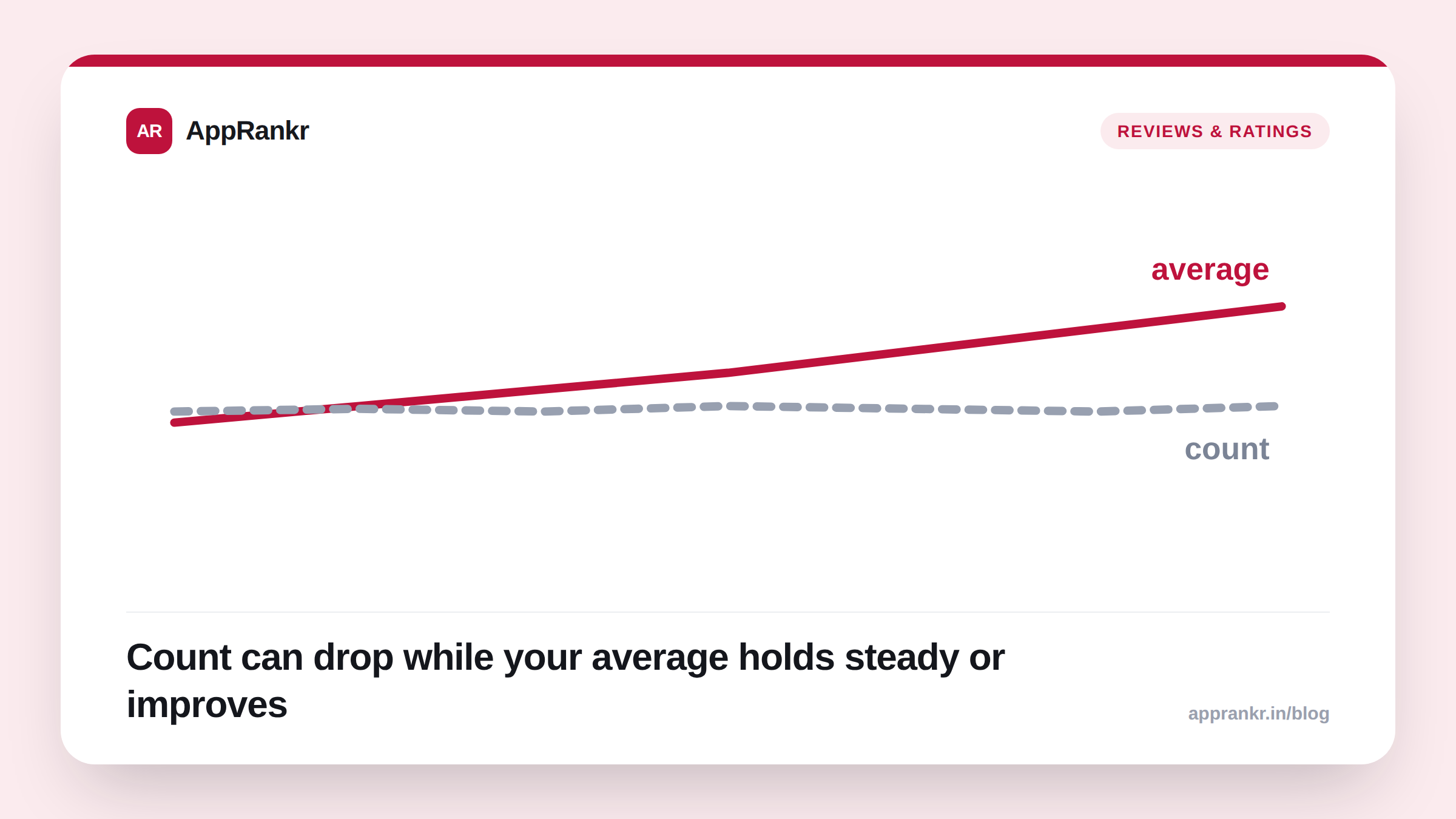
Why Does Google Play Remove Some of My App's Ratings?
A drop in your rating count that you didn't cause usually traces to one of a few documented causes: policy enforcement, a platform migration, or a ratings recalculation. Here's how to tell which.
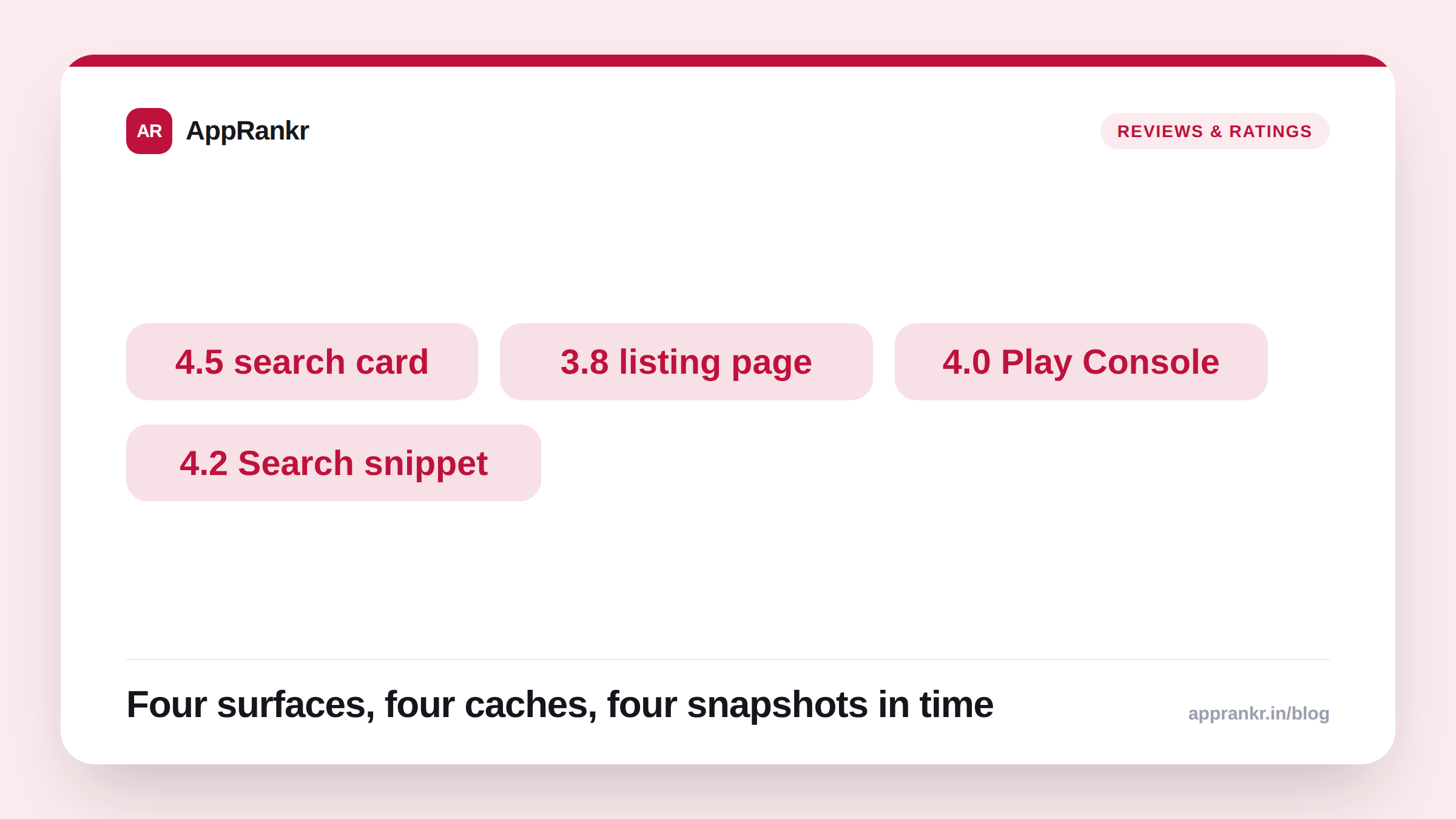
3.8, 4.0, 4.5: Why Your App's Rating Looks Different Every Time You Check It
Same app, same region, same afternoon — and the star rating shown seems to change depending on where you're looking. Here's what's actually different about each place you're checking it.
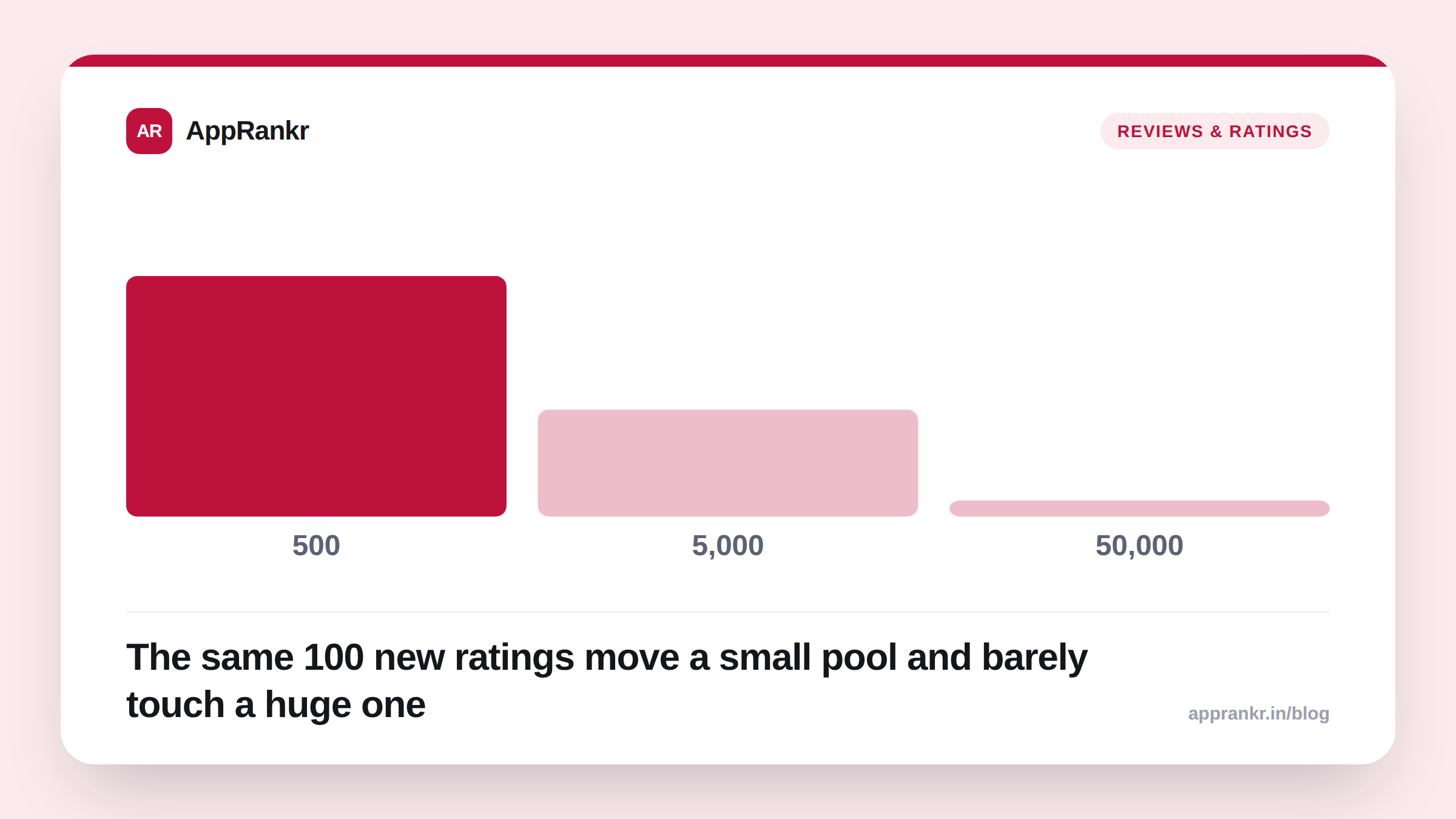
The Arithmetic Behind Why 100 New 5-Star Ratings Barely Move Your Average
You're getting more reviews and ratings than ever, but the number on your listing hasn't moved. It's not a delay or a bug — it's what averaging a batch of new ratings into a huge existing pool actually does.
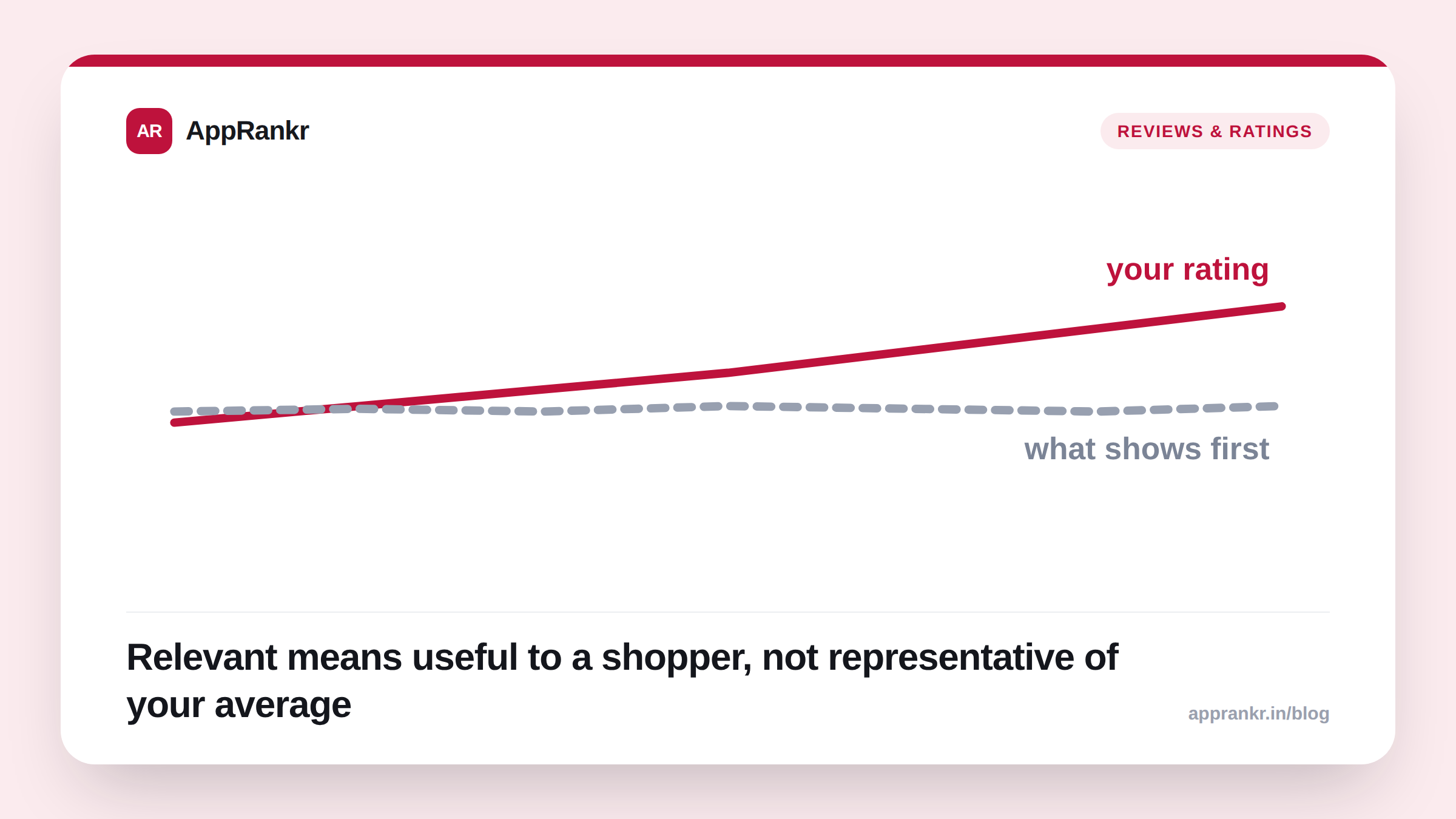
Why Google Play's 'Most Relevant' Review Is Often Your Worst One
Your average rating is healthy, but the first review a visitor sees on Google Play is a detailed 1-star complaint. Here's why 'Most relevant' optimizes for something other than your average.
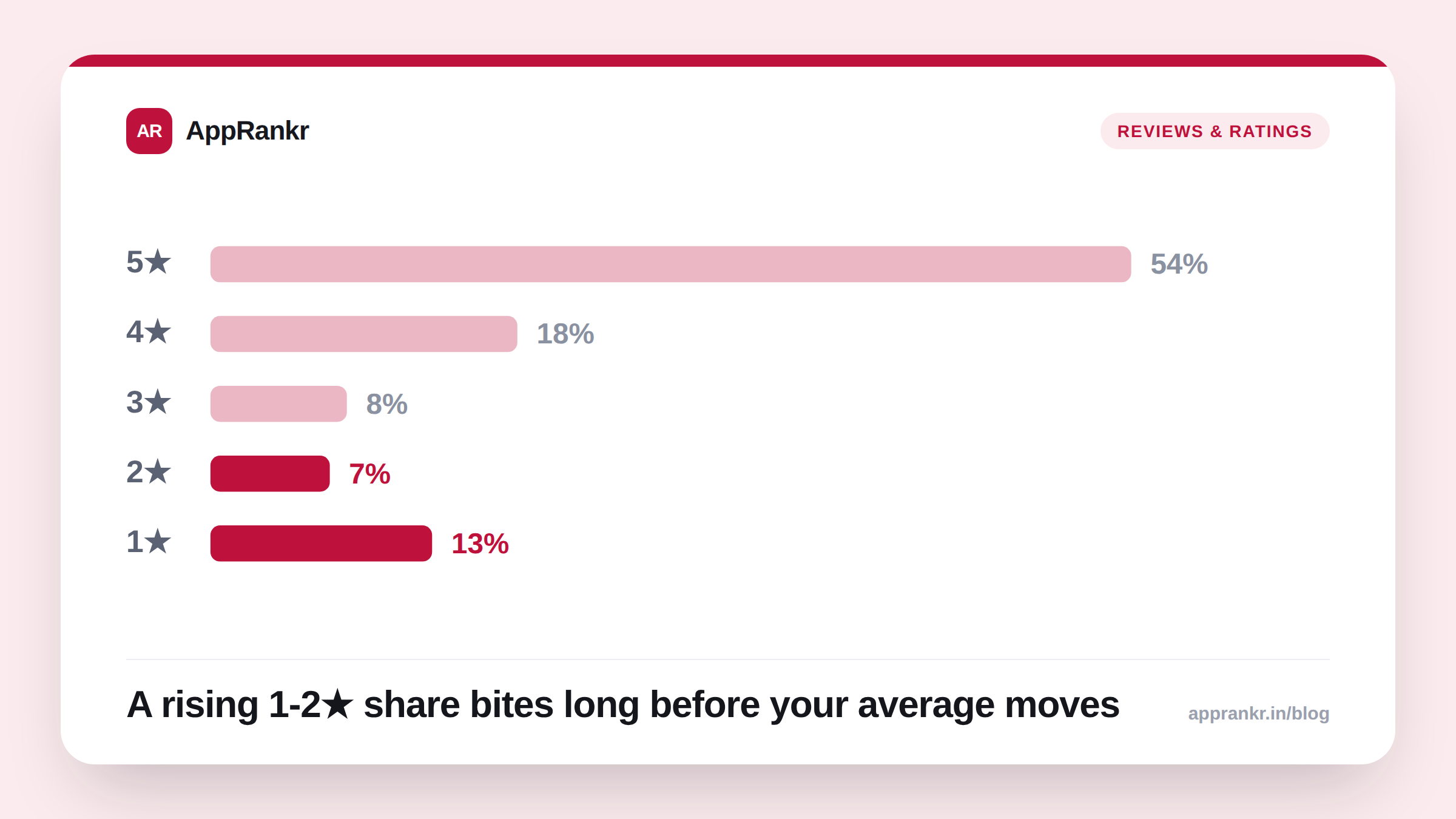
Do 1-2 Star Reviews Hurt Your App Store Ranking?
Low ratings cost you more than install conversion. There's real, documented reason to believe they suppress search visibility too. Here's the mechanism and what to actually do about it.