ASO & App Ranking Guides
Practical, no-fluff writing on App Store Optimization, keyword research, and what actually moves your app's rank on Google Play and the App Store.
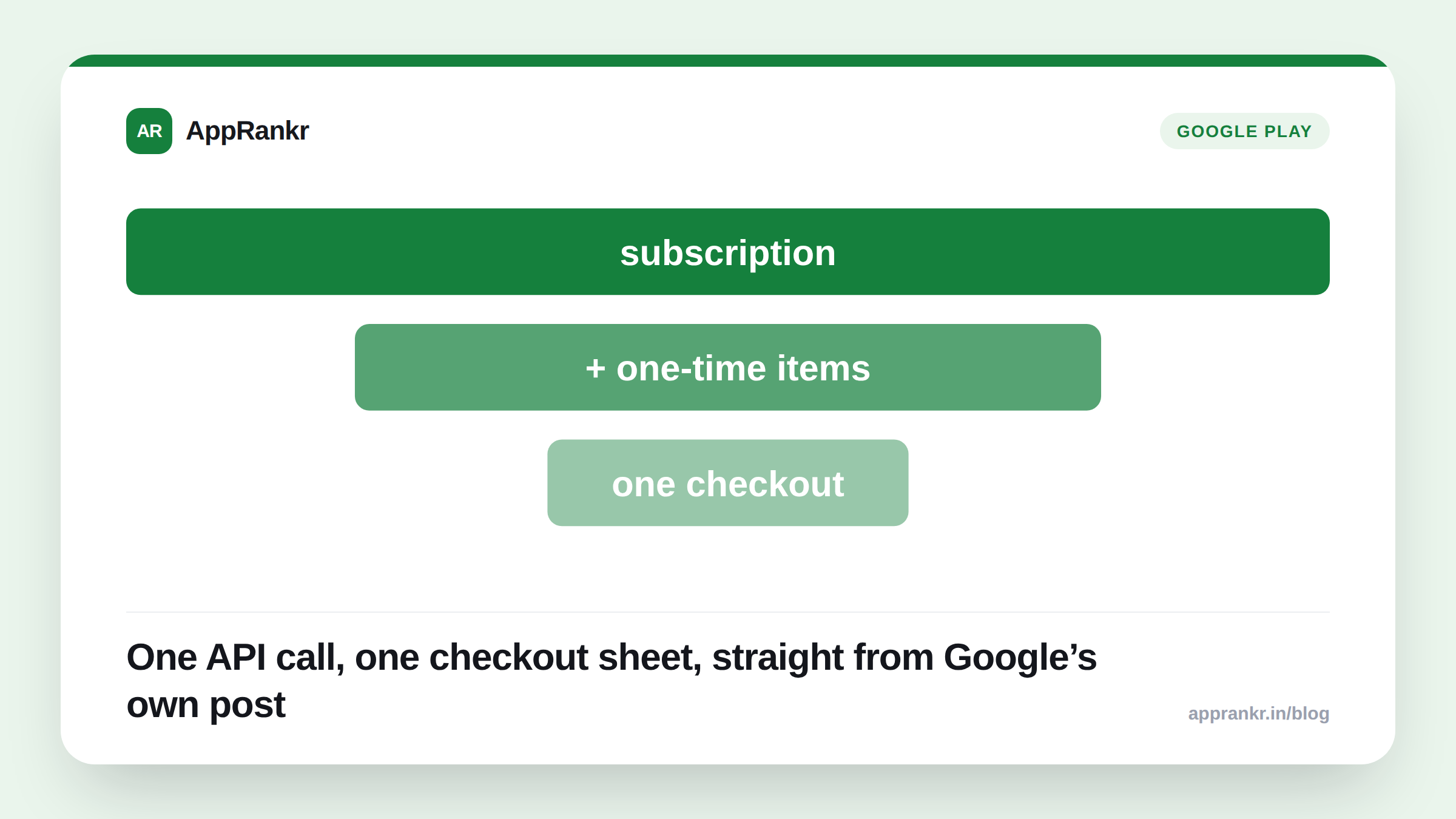
Google Play's Mixed Carts: One Checkout for Subscriptions and One-Time Items
Google's own Play subscriptions post describes Mixed Carts, a way to sell an auto-renewing subscription alongside one-time products in a single checkout. Here's the exact wording and what's still unconfirmed.
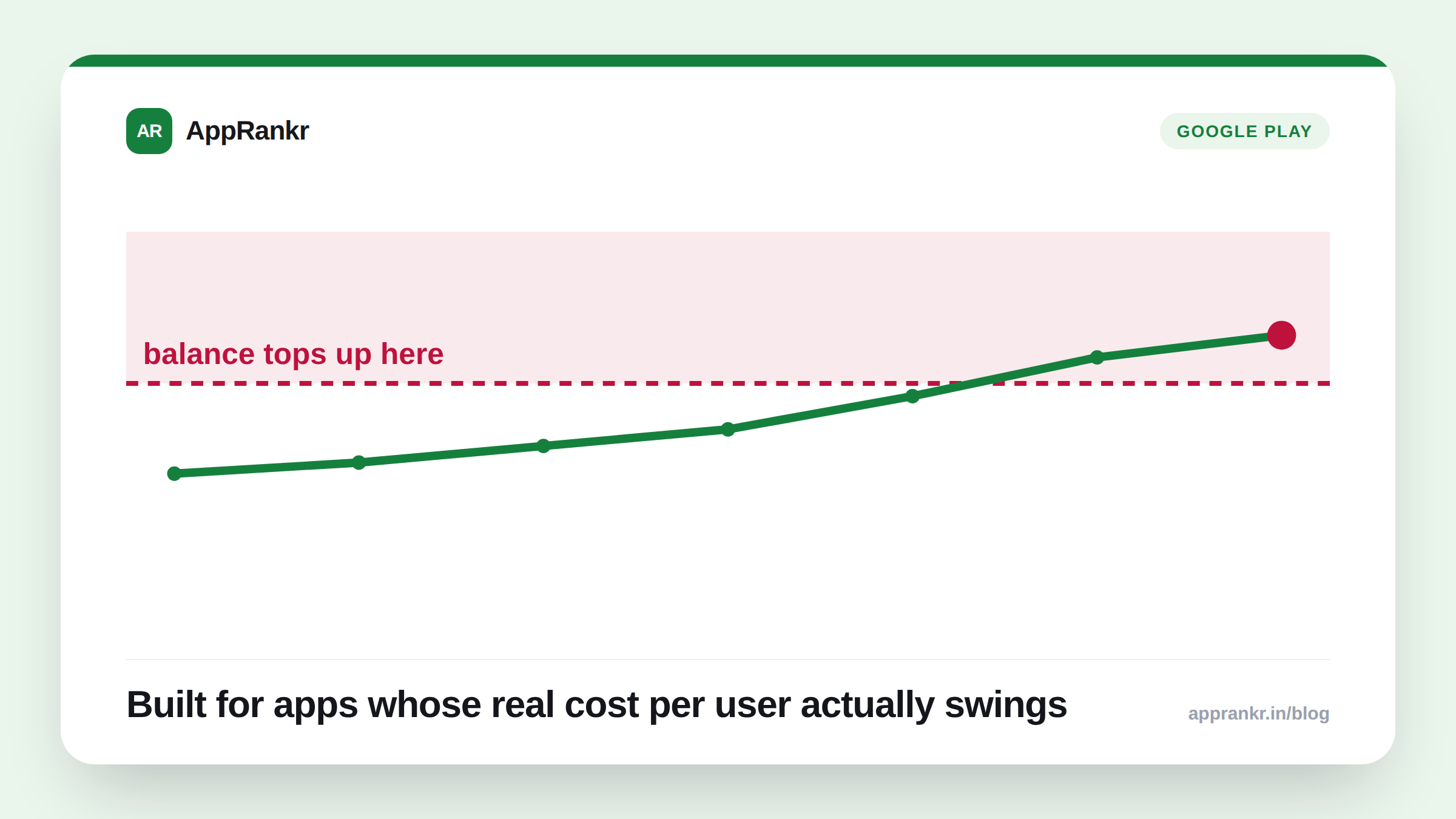
Google Play's Usage-Based Billing: Built for Apps With Real Compute Costs
Google's own Play subscriptions post describes prepaid metered billing with automatic top-ups, aimed at AI apps with variable costs. Here's exactly what it does, and what's still unconfirmed.
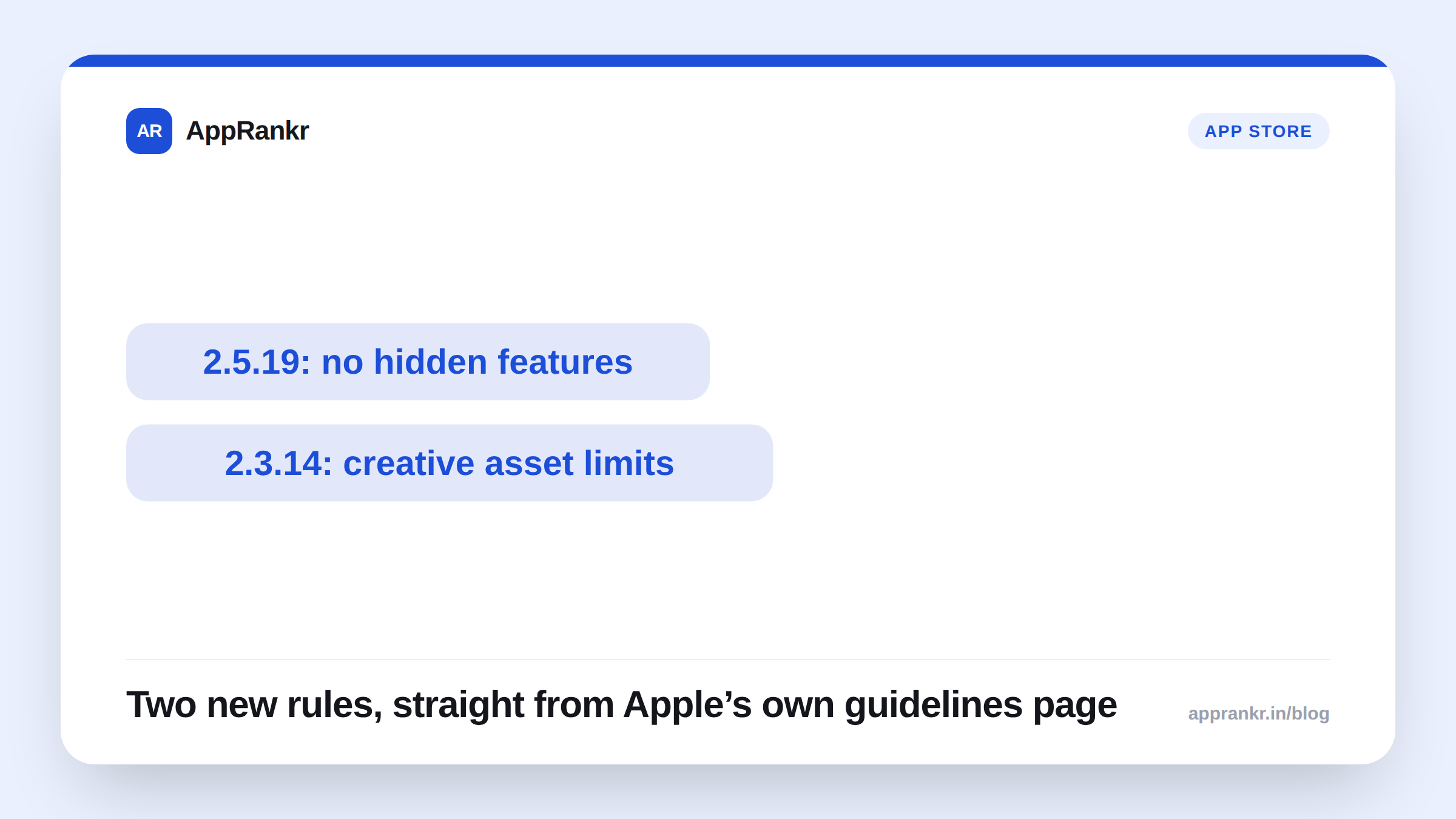
Apple's New Guidelines: No Hidden Features, and Real Rules for Creative Assets
Apple's October 16, 2026 guideline update adds two new rules worth knowing: 2.5.19 bans hidden or undocumented features, and 2.3.14 sets real content rules for creative assets. Here's the exact wording.
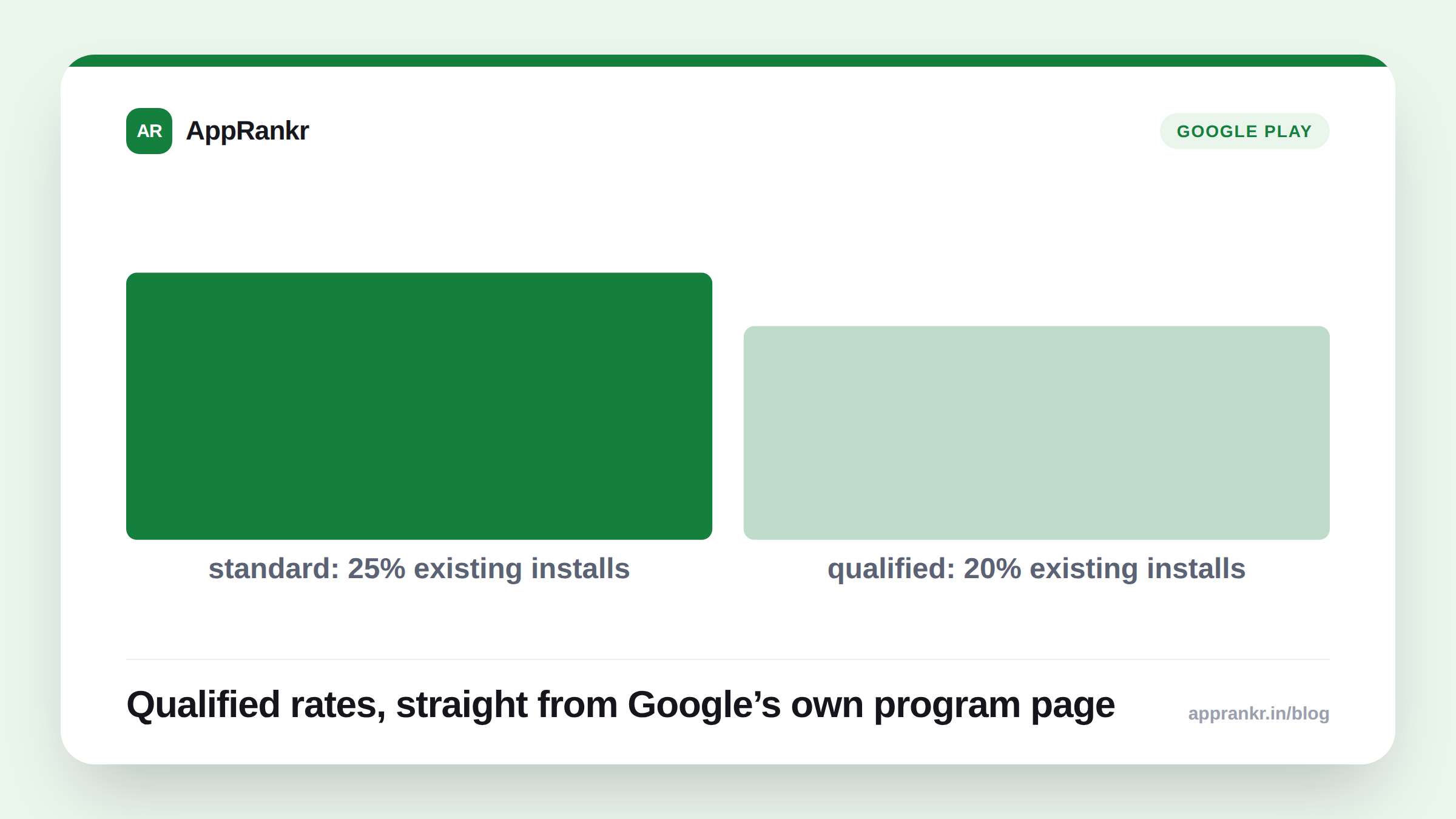
Google Play's Lower Service Fees: What 'Qualifying' Actually Means
Apps Experience and Level Up cut Google Play's service fee to 10%, 15%, or 20% depending on the transaction. Here's the real rate card, the standard rate it replaces, and how enrollment works.
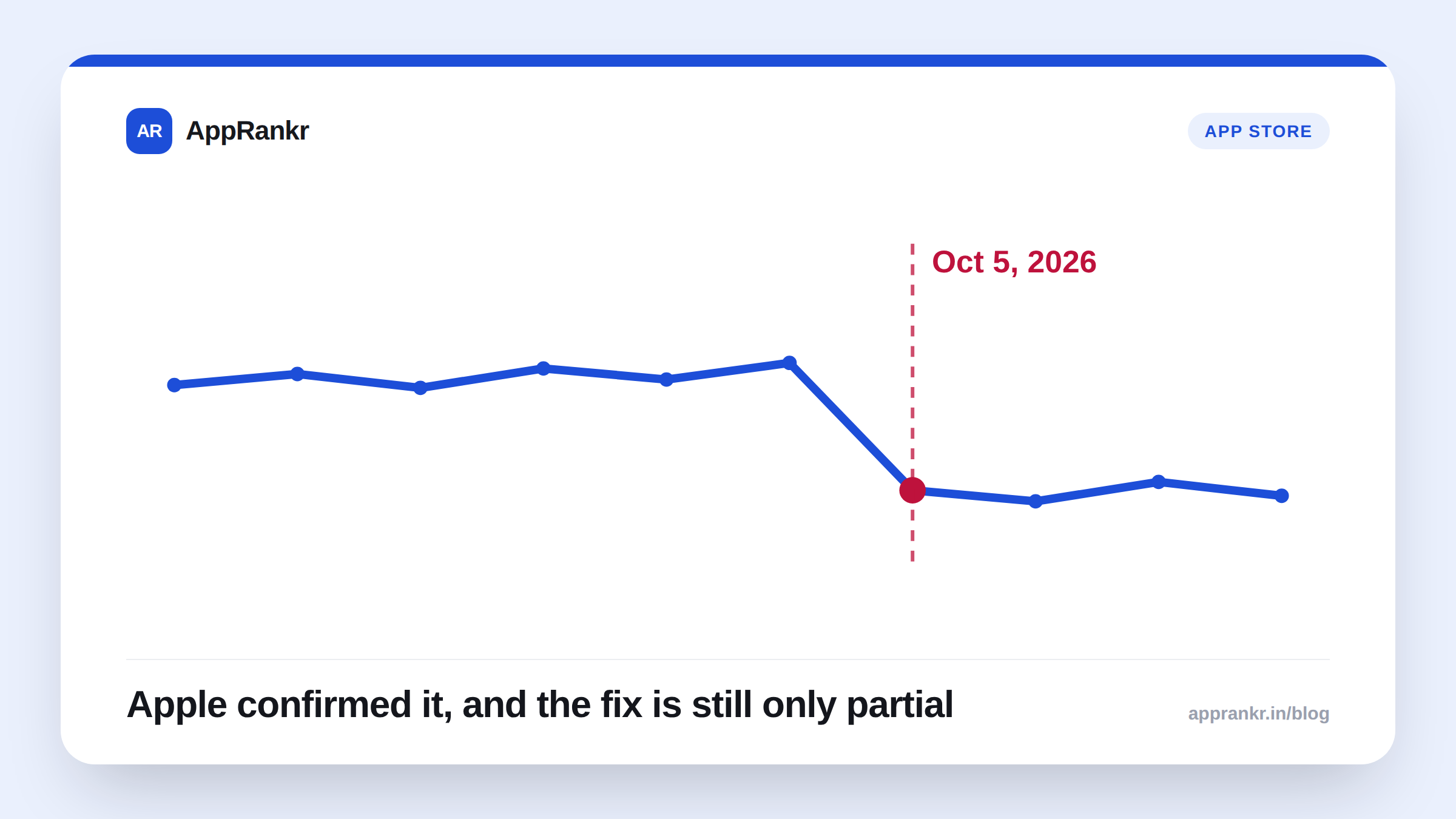
App Preview Videos Went Missing on iPhone. Here's What Developers Found
Starting around October 5, 2026, App Preview videos stopped showing on iPhone for some apps, and Apple confirmed it's investigating. Here's what developers documented, and how to check your own listing.
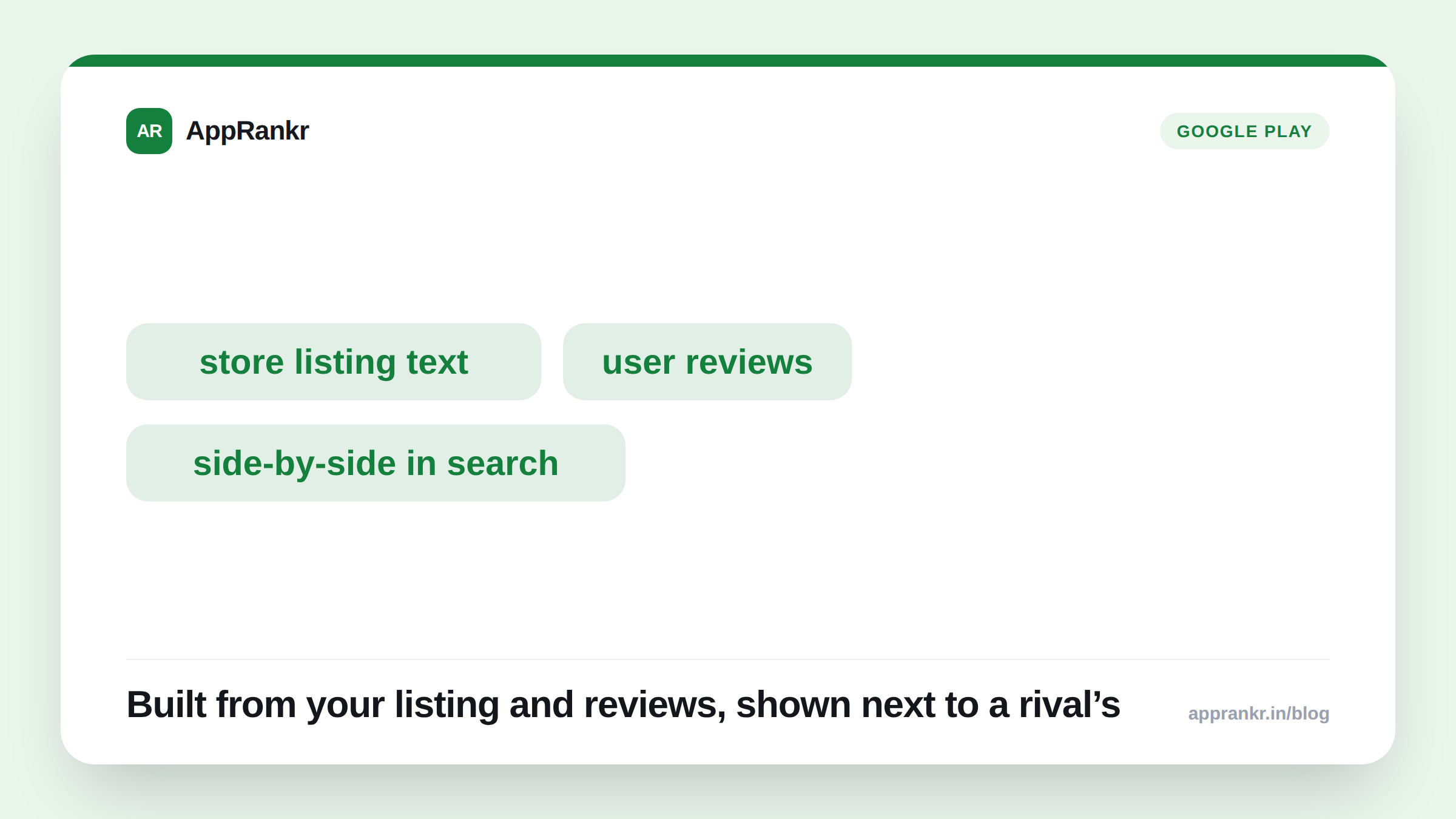
Ask Play Now Compares Apps Side by Side, Straight From Your Listing
Google's own October 2026 developer post confirms Ask Play generates dynamic app comparisons in search results, built from your store listing and user reviews. Here's what that means for what you write.
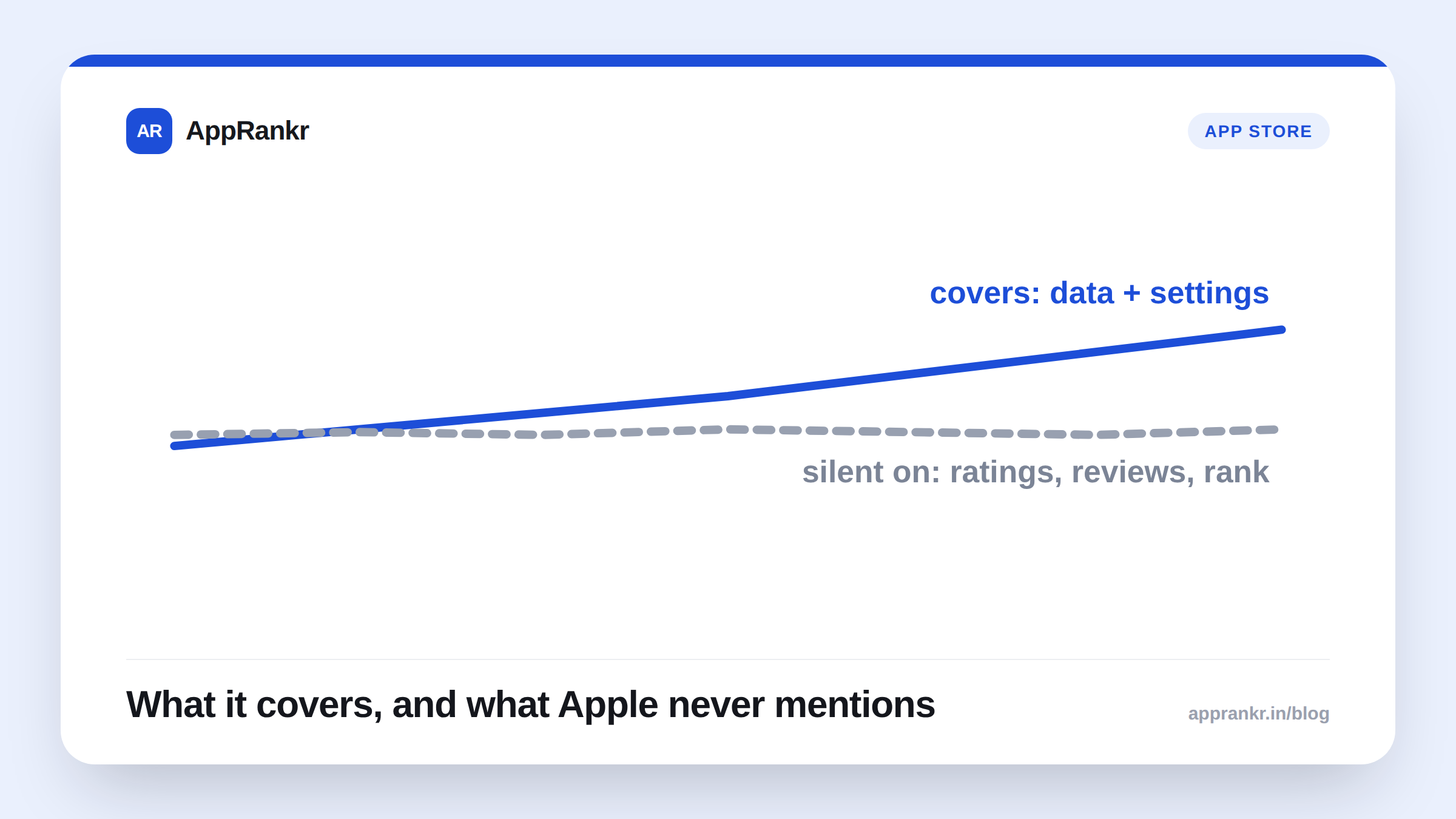
Apple's New App Replacement Entitlement: What It Actually Does
Apple's October 13, 2026 Developer Program License Agreement update adds a new App Replacement Entitlement. Here's the exact legal text, what it covers, and what it doesn't say about ratings or rank.
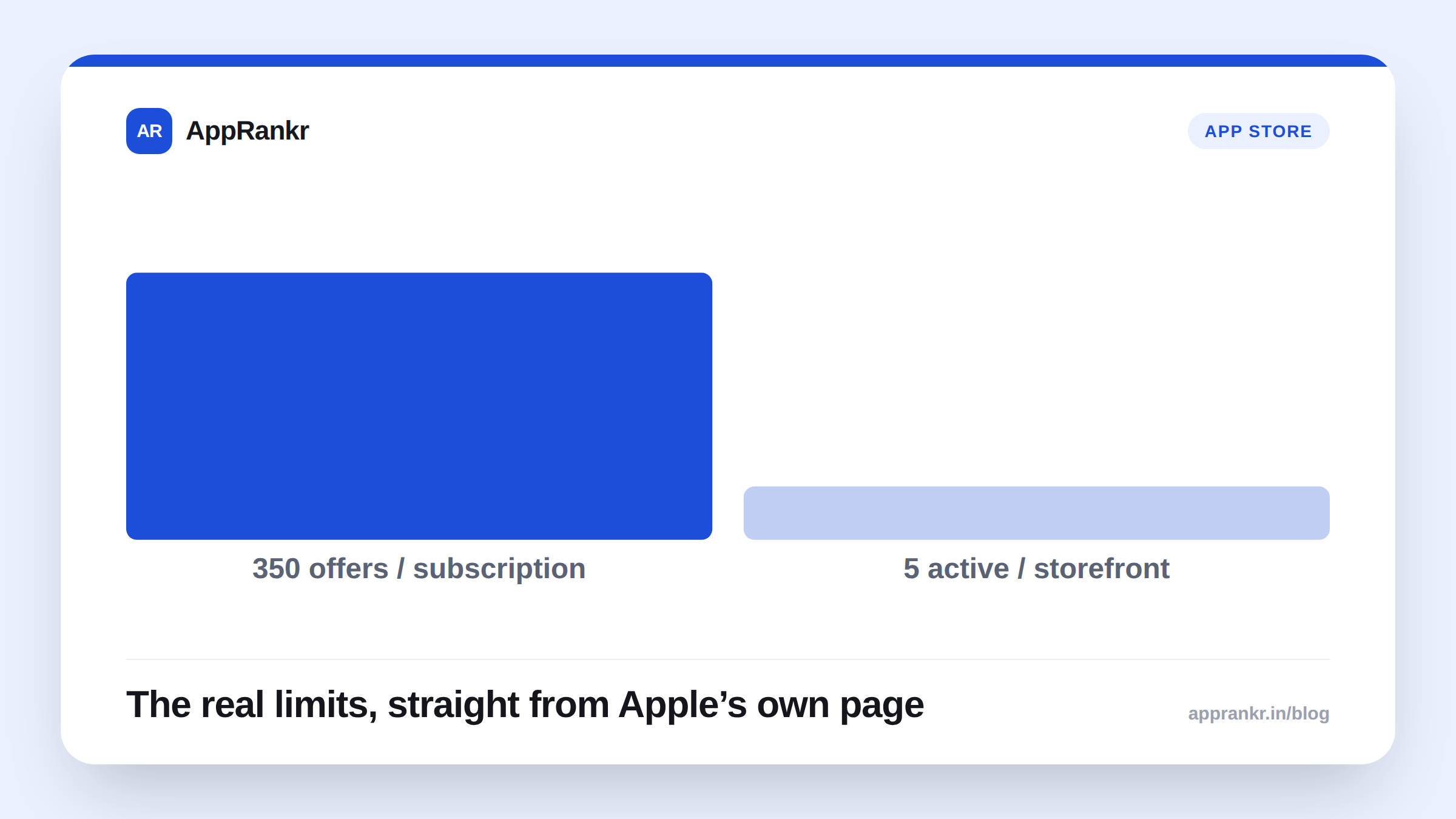
Apple's Win-Back Offers: The Real Limits and Setup Steps
Apple's own App Store Connect help page gives exact numbers for win-back offers: 350 per subscription, 5 active per storefront, a 3-day minimum run. Here's what the setup actually requires.
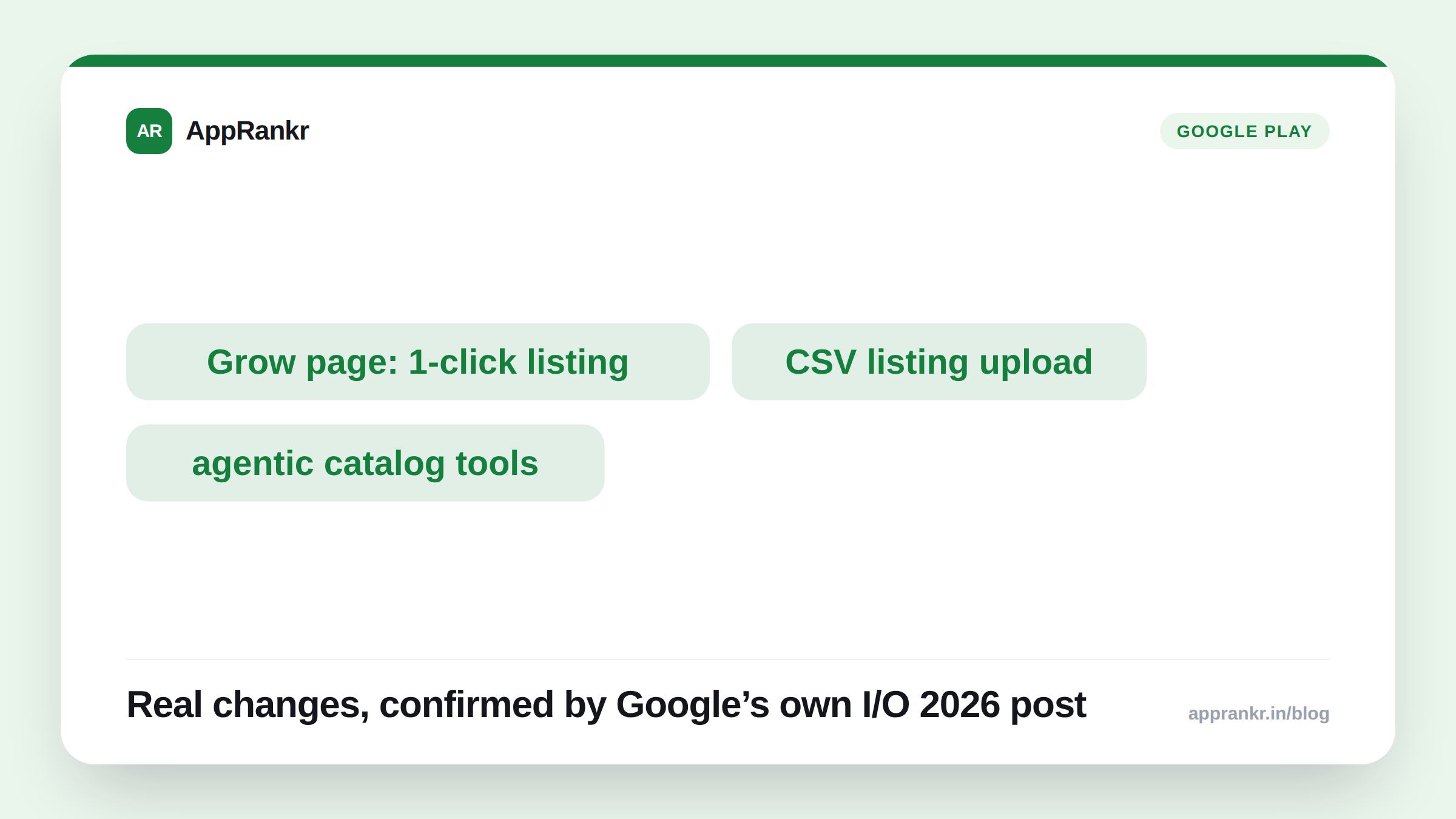
Play Console's New AI Tools: Where Things Actually Moved
Google's own I/O 2026 developer post confirms real changes inside Play Console. A one-click listing from the Grow page, bulk catalog tools, and new metrics. Here's what's genuinely new, and where to find it.
Play Console Renamed App Integrity to Protected with Play. Here's Where Things Moved
If you're hunting for the old App integrity page in Play Console and can't find it, Google replaced it. Here's exactly where App signing and your other protection settings moved to, per Google's own help page.
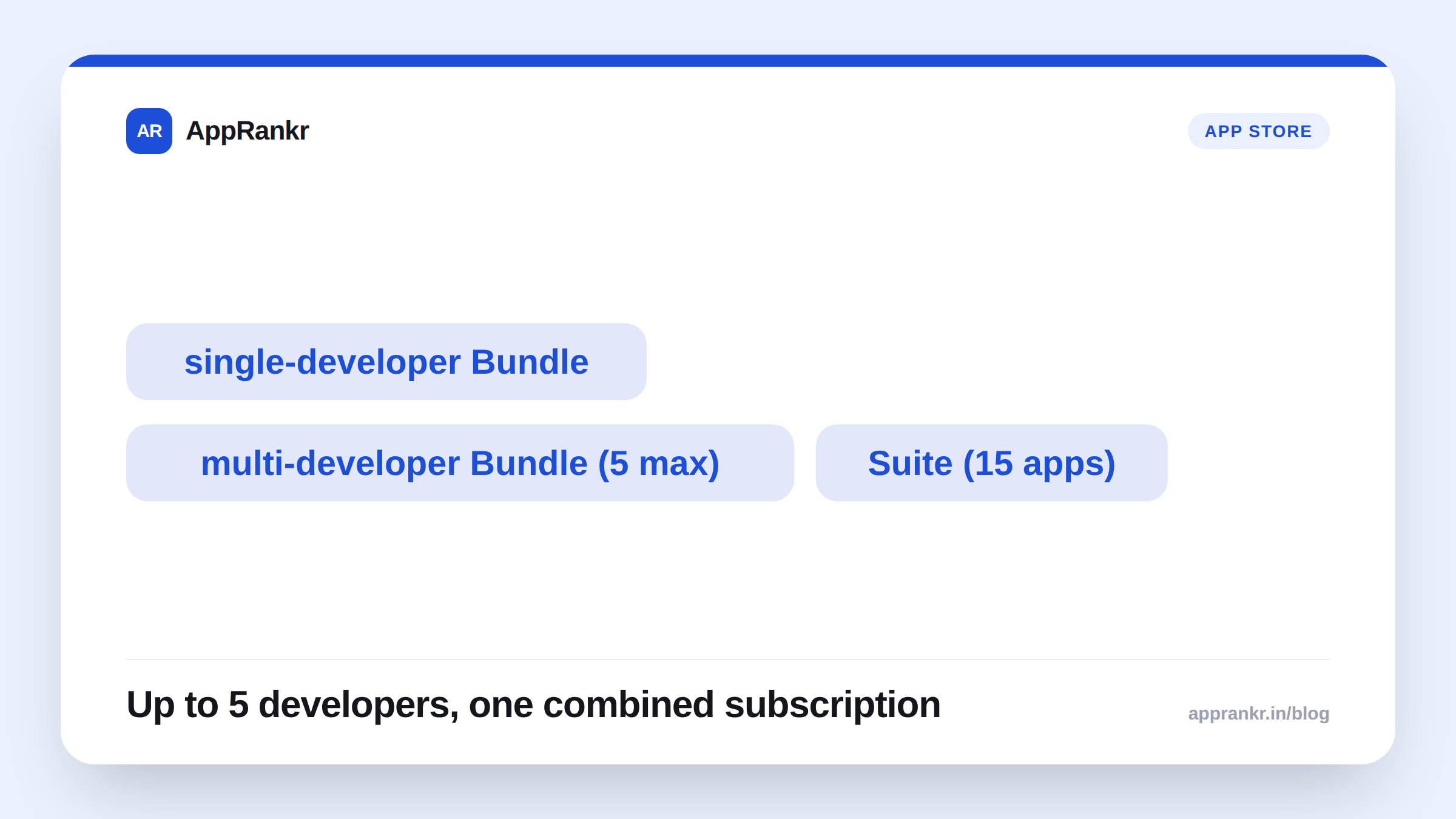
Apple's Bundles and Suites: Sell Five Developers' Subscriptions as One
Apple's own page confirms Bundles and Suites let you combine auto-renewable subscriptions, even across up to five different developers, into a single In-App Purchase. Here's exactly how it works and what it requires.
Google Play Billing Library Deadline: Even Google's Own Page Disagrees
A real deadline is landing around August 31, 2026 for your Play Billing Library version, but Google's own deprecation page gives two different answers for which version you actually need. Here's exactly what to check.
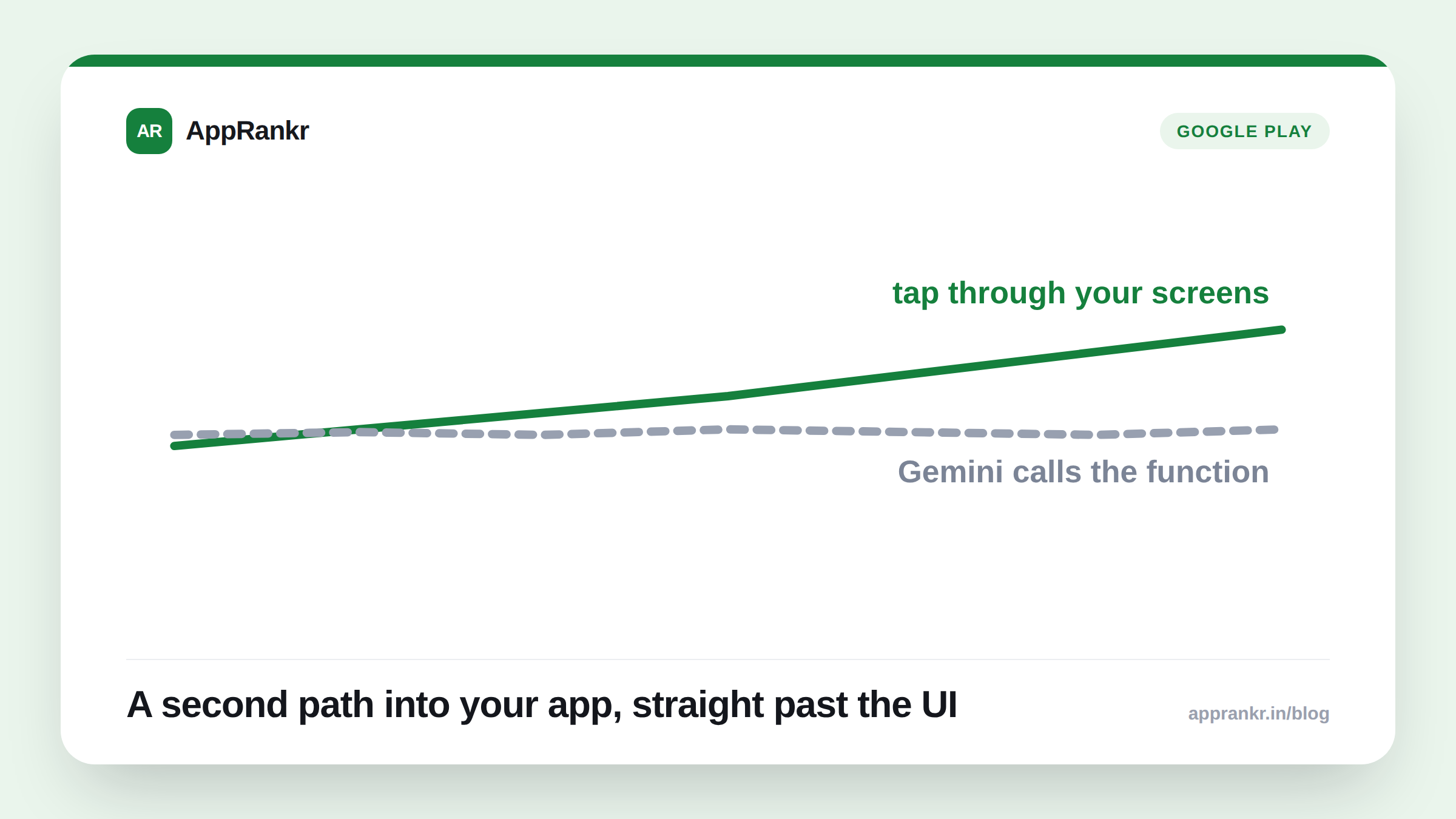
Android's AppFunctions Let Gemini Call Code Inside Your App Directly
Google's own AppFunctions platform lets an Android app expose real functions that Gemini can discover and run, skipping screen-by-screen navigation entirely. Here's what it actually requires, and how far the rollout has reached.
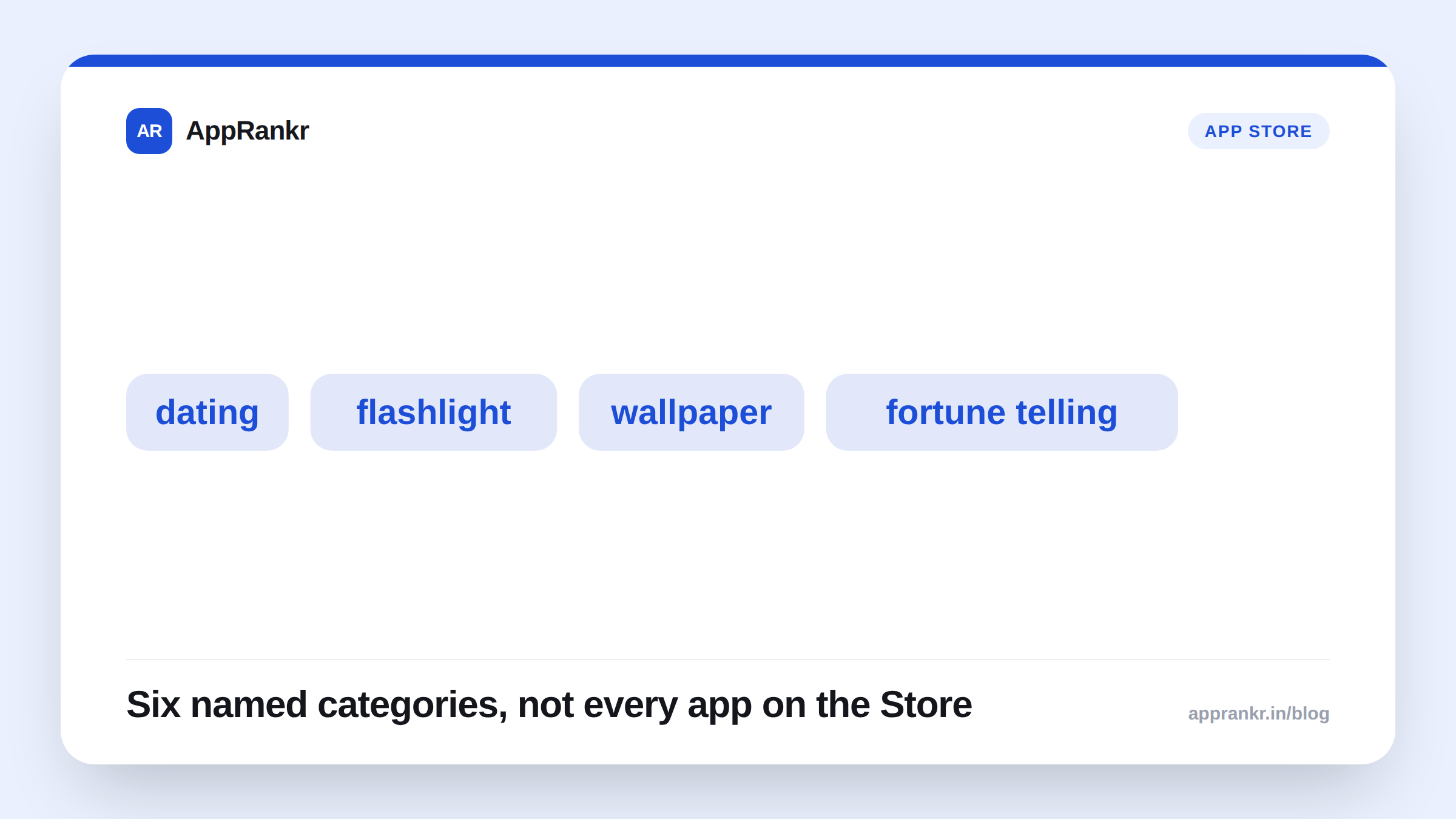
Apple's Guideline 4.3(b): Live Apps Can Now Be Removed for Not Attracting Customers
Apple's own App Store Review Guidelines confirm a real removal clause for specific saturated categories, dating, flashlight, wallpaper, and more. Here's the exact wording and who it actually applies to.
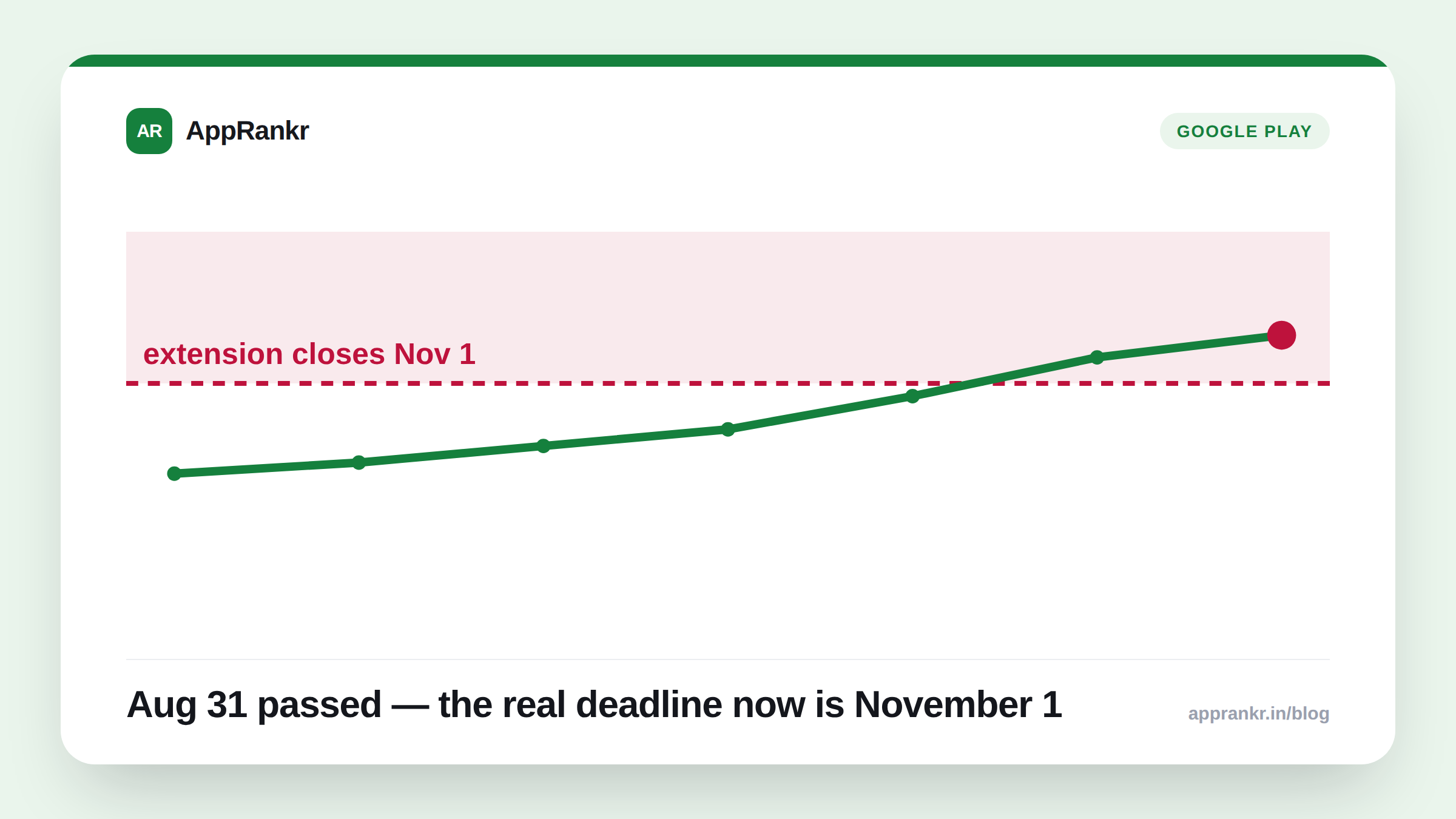
Missed Google Play's Target API Level Deadline? The Extension Window Closes Nov 1
Google's target API level requirement took effect August 31, 2026. If you haven't updated yet, there's a real extension window, but it closes November 1. Here's exactly what's required and who's exempt.
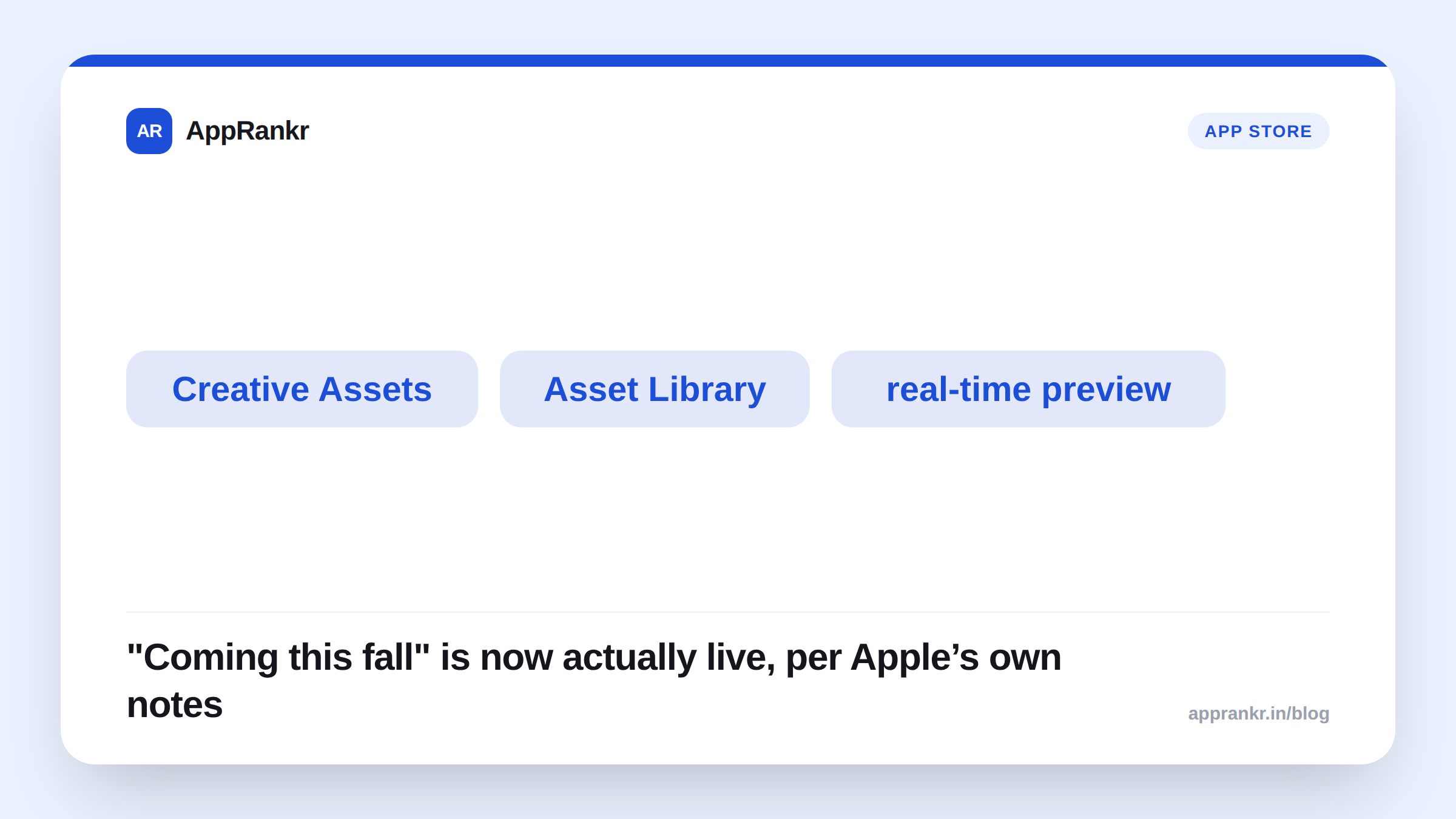
Apple's Creative Assets and Asset Library Are Now Live in App Store Connect
What Apple previewed as 'coming this fall' is now actually live. Apple's own October 5, 2026 release notes confirm the Creative Assets feature and Asset Library, with real detail on what each piece does.
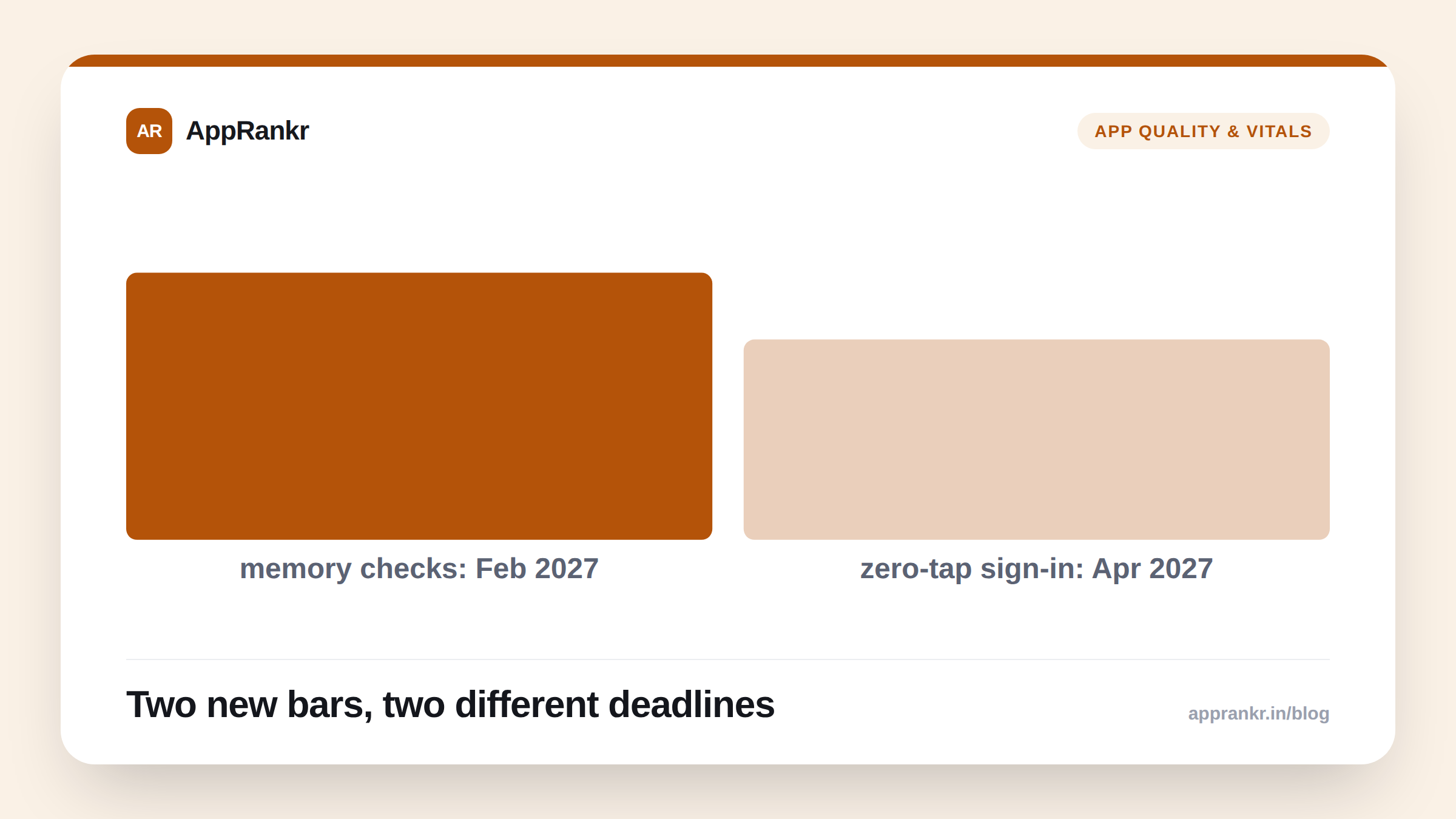
Google Play's New Memory and Zero-Tap Sign-In Requirements, With the Exact Numbers
Google's own August 2026 announcement adds two new quality bars beyond crash and ANR rate: memory usage thresholds in February 2027, and a Zero-Tap Sign-In standard for device migration in April 2027.
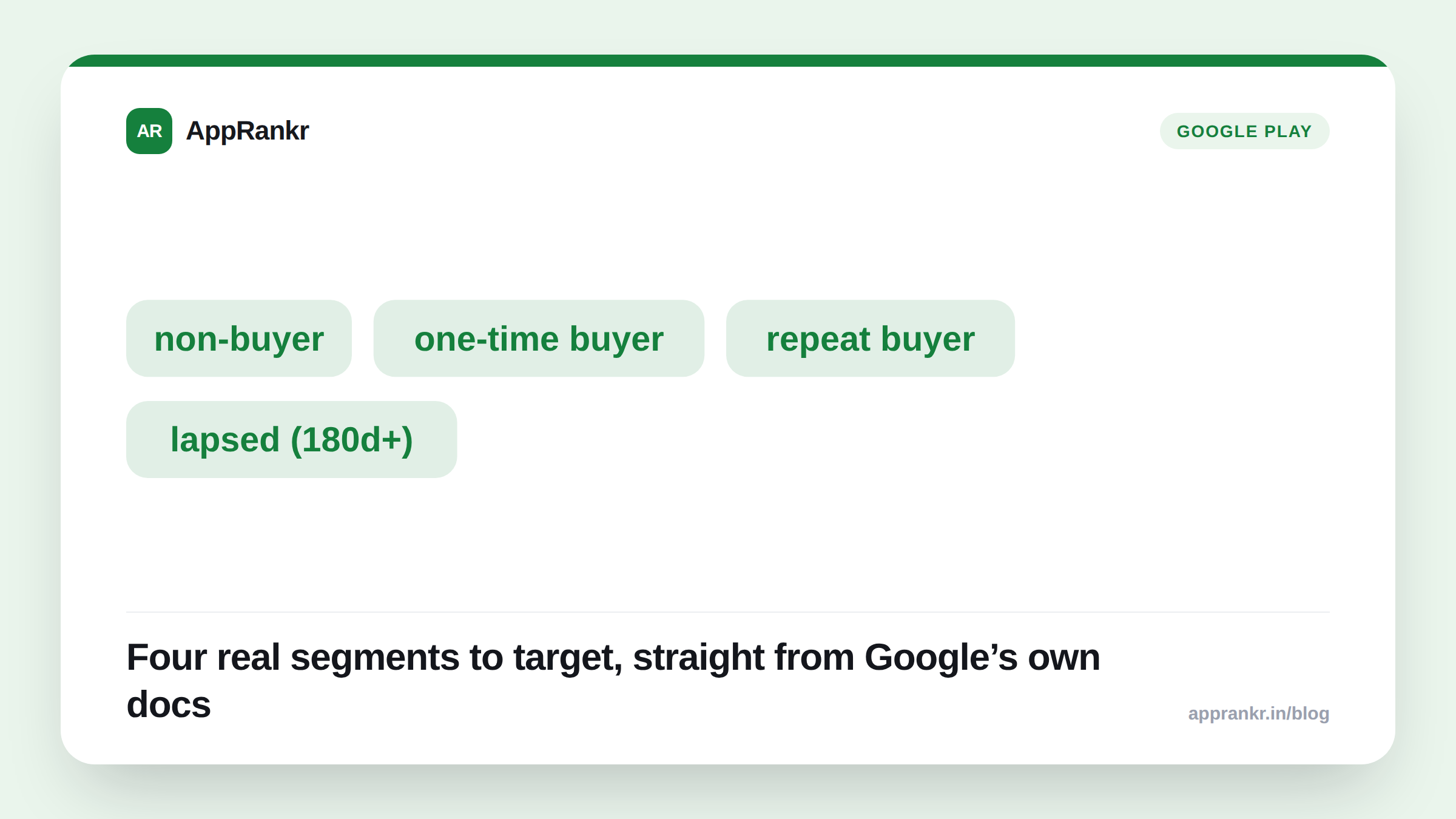
Google Play Can Now Target Custom Store Listings by Buyer Behavior
Non-buyers, one-time buyers, repeat buyers, and lapsed buyers are now real custom store listing segments. Here's what each one actually means, straight from Google's own documentation.
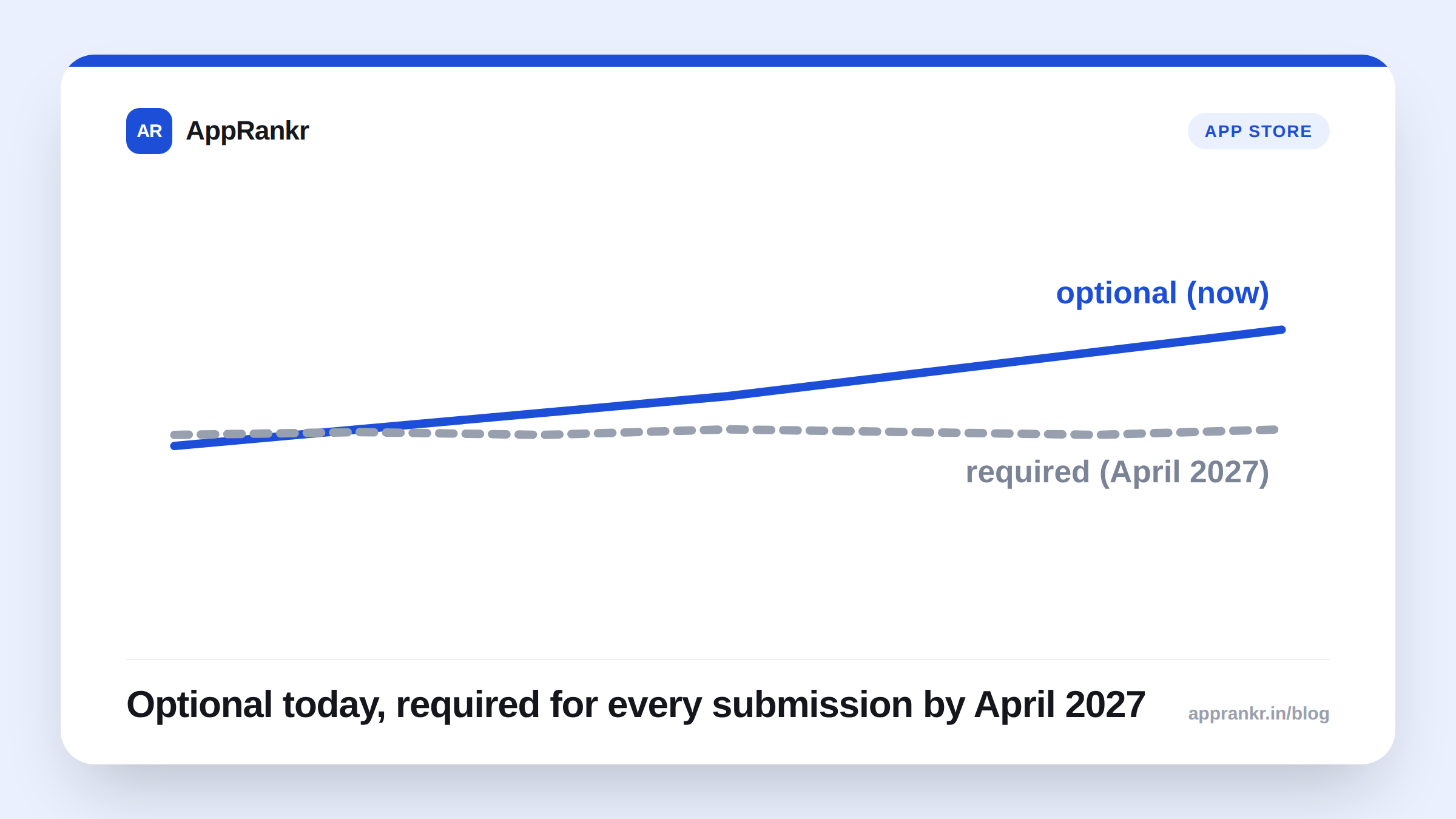
iPhone Duo Screenshots Go From Optional to Required in April 2027
Apple's own timeline confirms a real deadline. Starting April 2027, every submission needs iPhone Duo screenshots, and needs to be built with the iOS 27 SDK or later. Here's what that actually means for your next release.
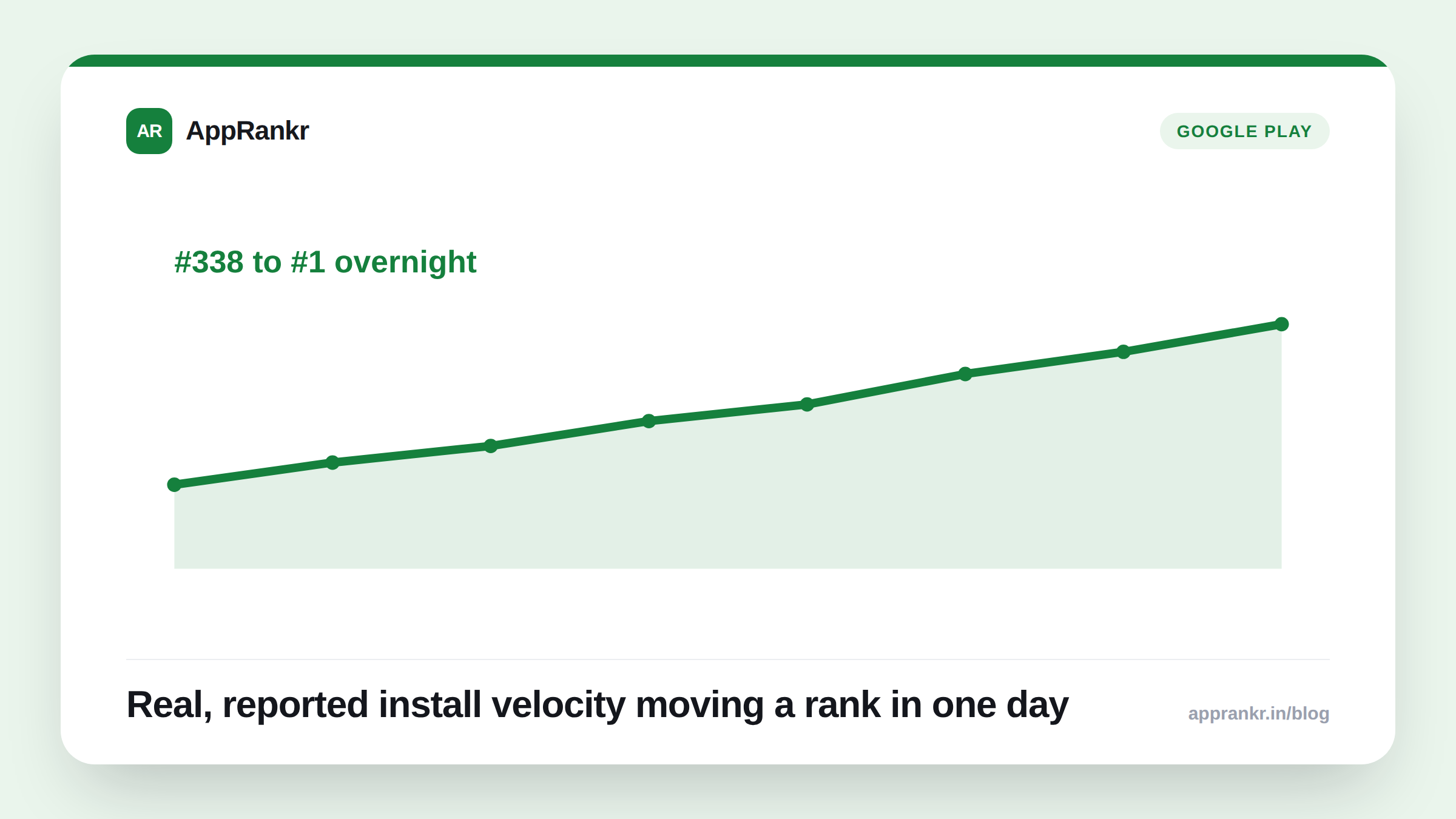
Meta's Muse Went From #338 to #1 on Google Play in a Single Day. Here's Why.
A real, heavily reported case study in install velocity: an app ranked 338th in its category jumped to #1 on Google Play overnight, right after hitting #1 on the App Store. The mechanics behind it are worth understanding.
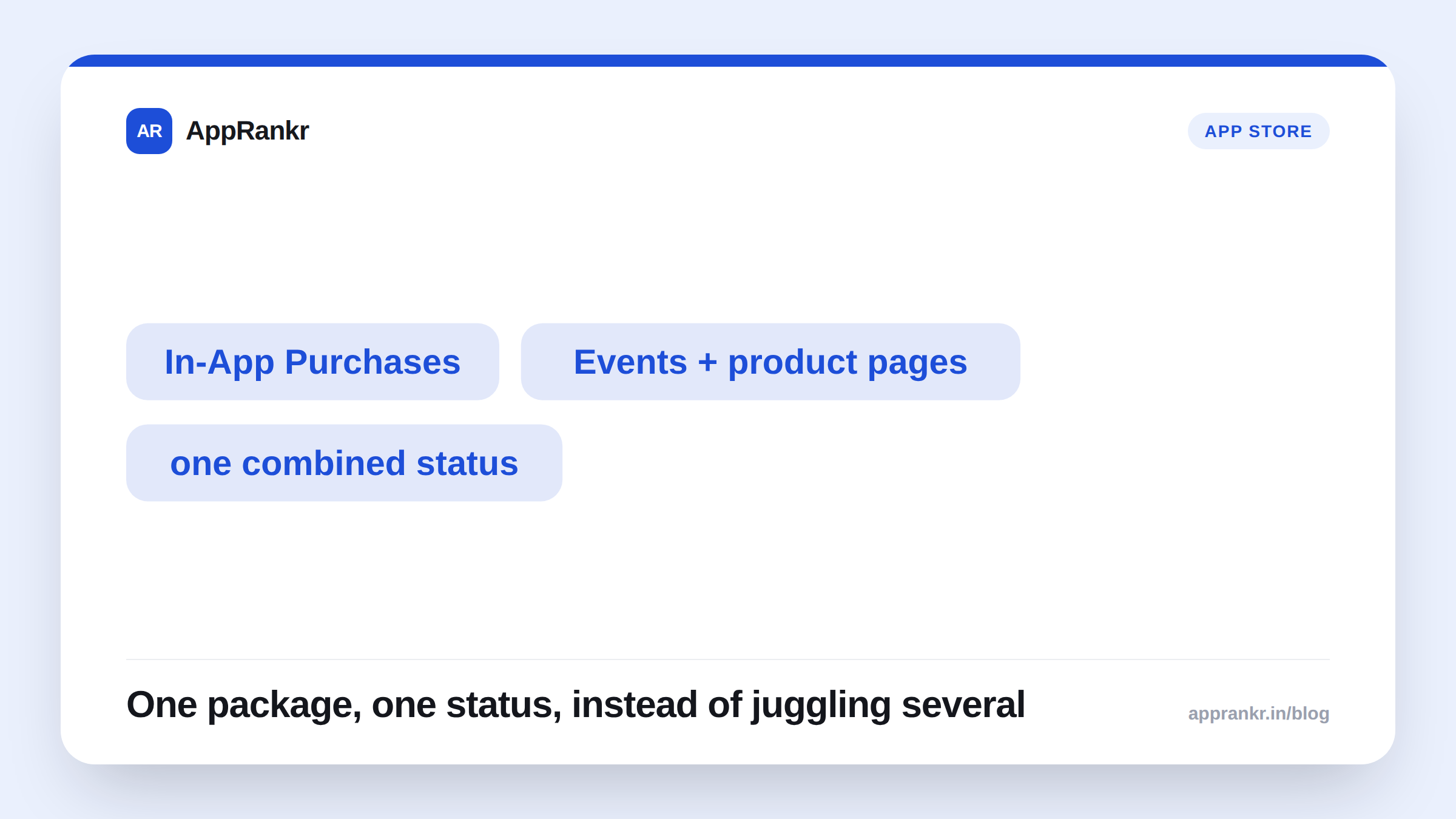
App Store Connect Now Lets You Submit Multiple Review Items as One Package
In-App Purchases, In-App Events, custom product pages, and product page tests used to mean separate submissions with separate statuses. Apple's own update lets you group them into one, with one status view.
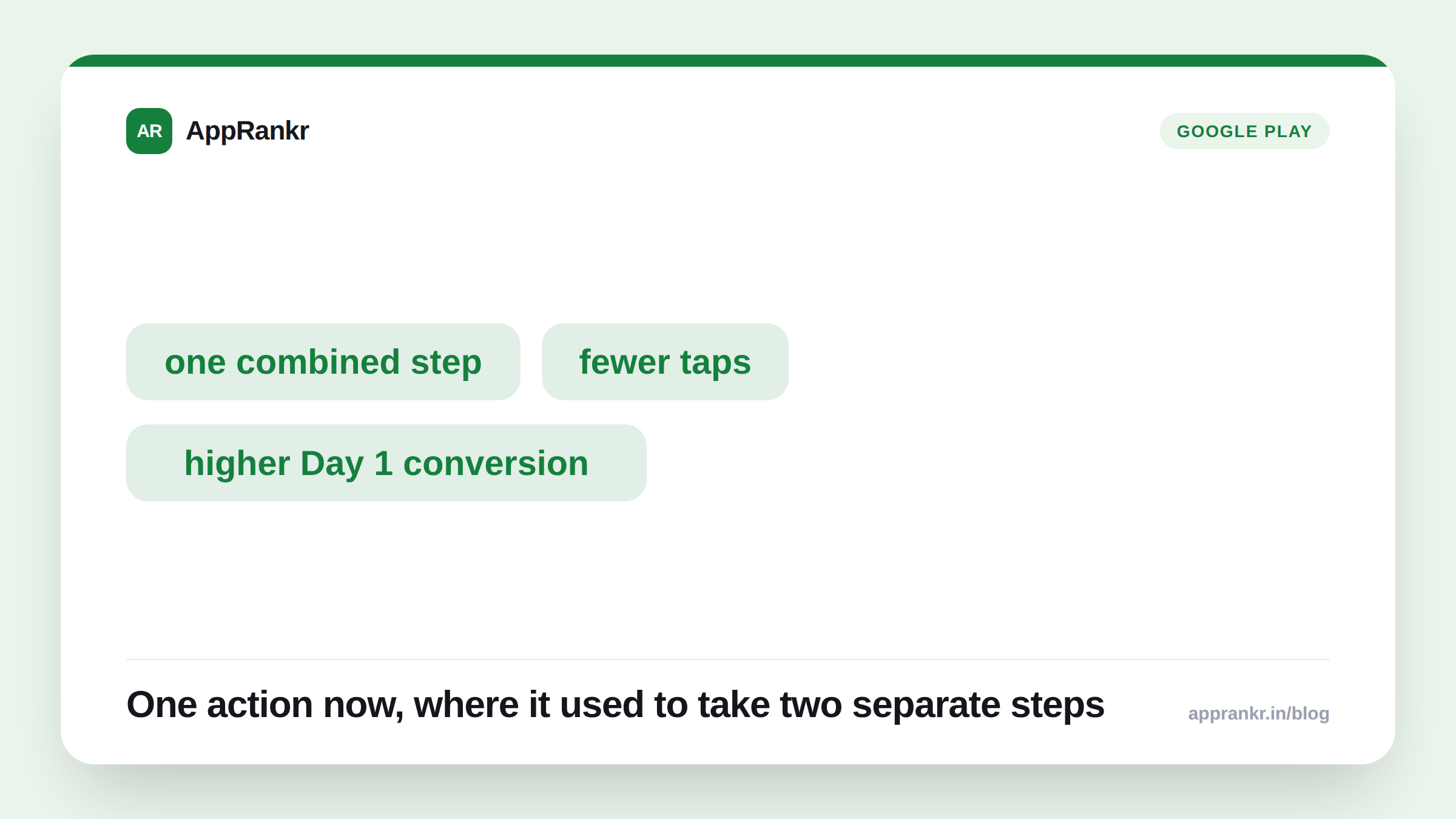
Google Play Merged Pre-Registration and Auto-Install Into One Step
Users used to register interest, then separately opt into auto-install at launch. Google's own update merges both into a single action, closing a real drop-off point before launch day.
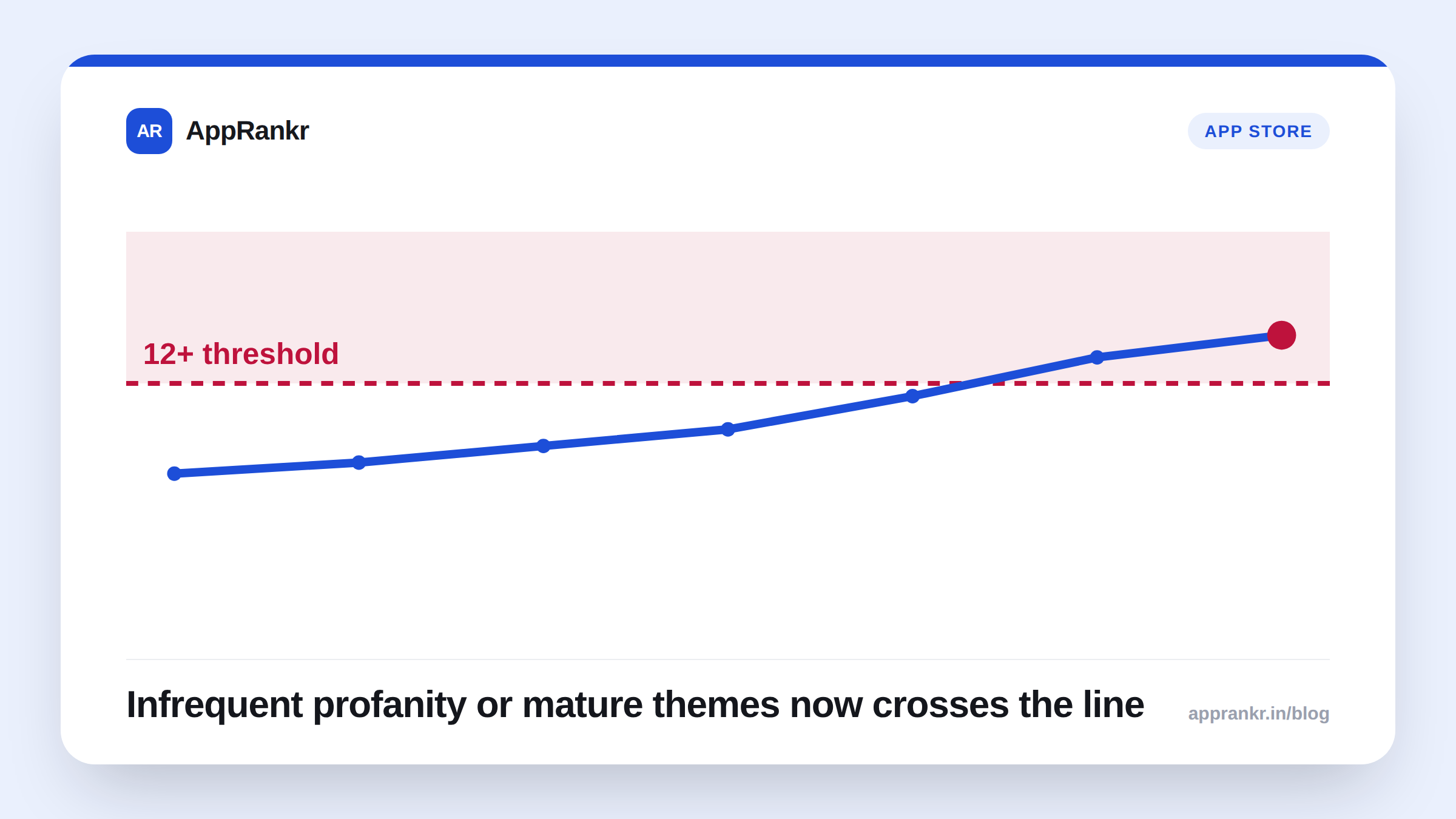
Apple's Korea Age Ratings Just Got Stricter for Mild Content
Starting October 2026, infrequent profanity and mild mature themes push a Korea App Store listing from All to 12+. Here's what Apple's own update confirms, and the override option most developers miss.
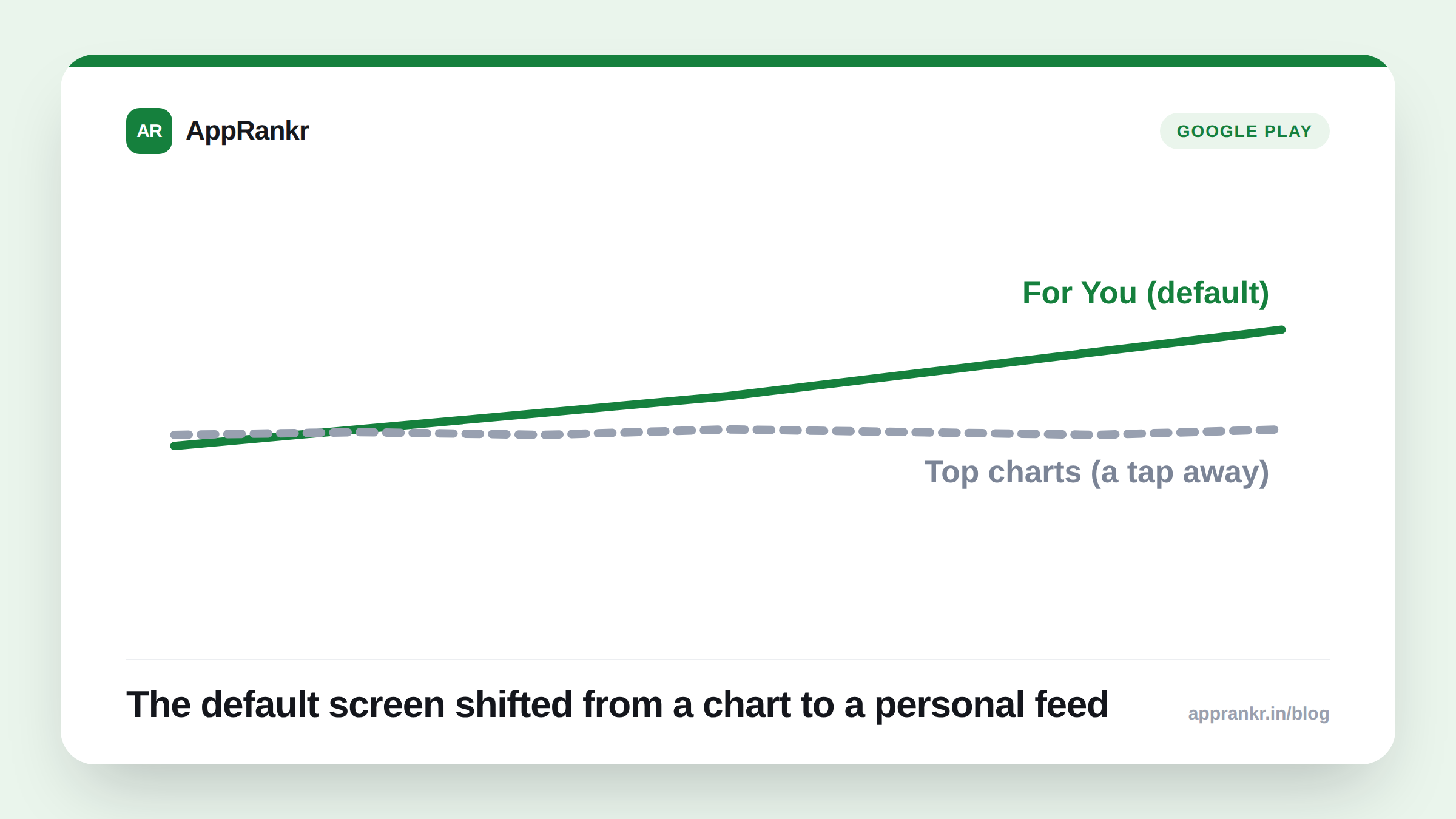
Google Play's Redesign Made Personalized Recommendations the Default View
Top charts and Categories now sit behind a tap. The For You feed opens by default on both the Apps and Games tabs. Here's what independently confirmed reporting says changed, and why it matters for browse-driven discovery.
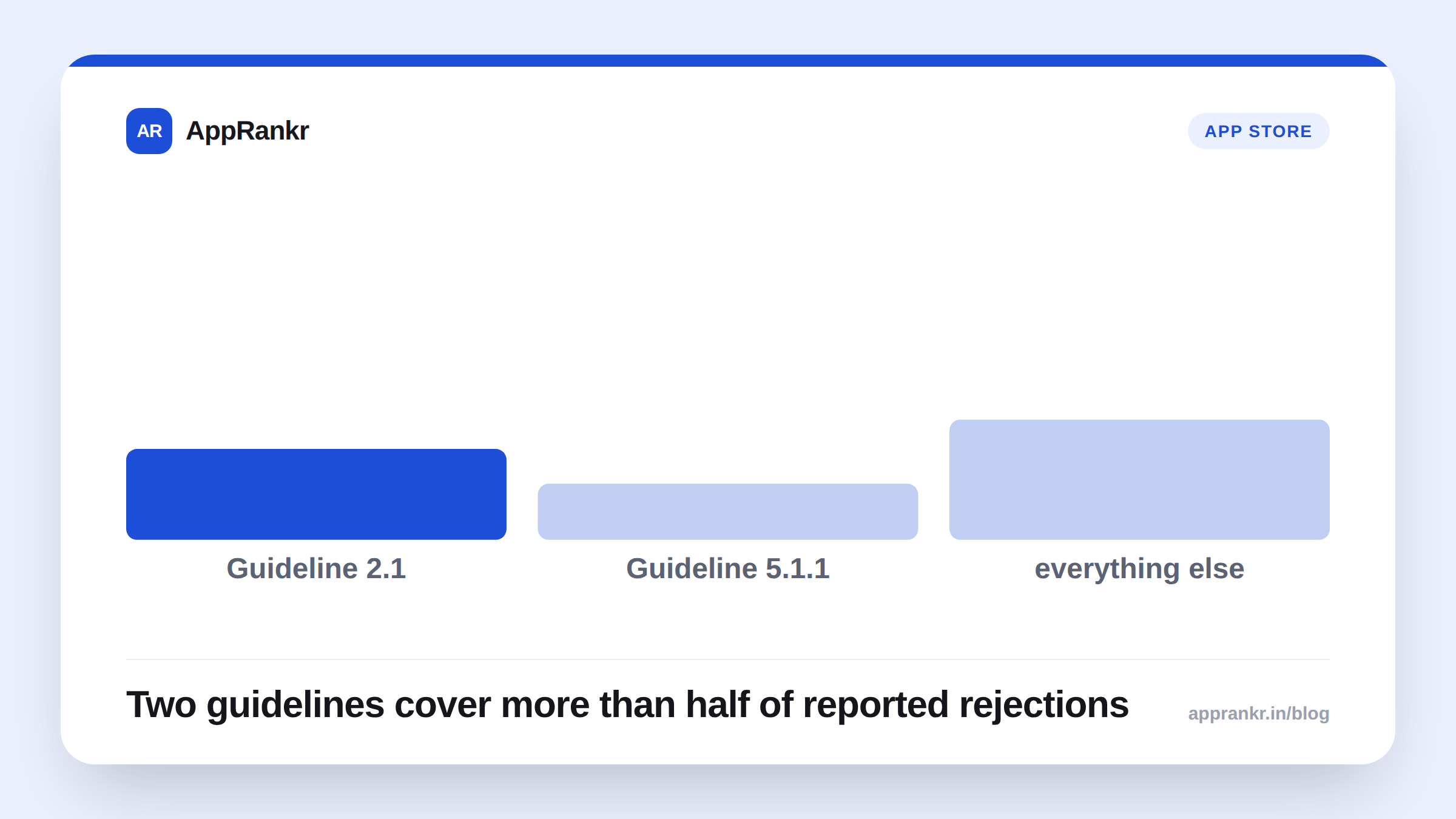
What's Actually Getting Apps Rejected on the App Store, by the Numbers
A 2026 survey of 404 iOS developers found most rejections trace back to just two guidelines. Here's the actual breakdown, clearly labeled as survey data, not an Apple-confirmed stat.
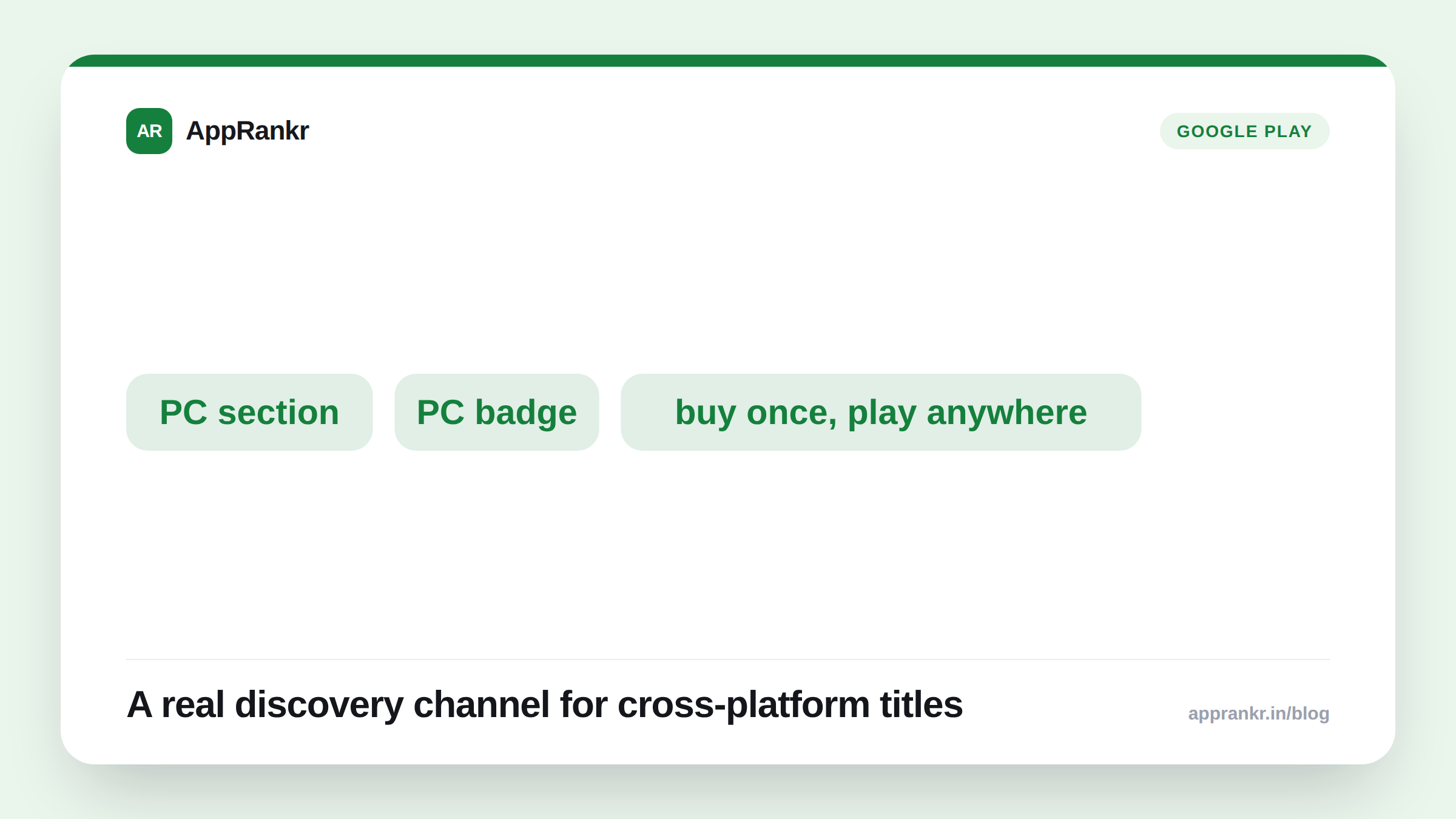
Google Play Games' New PC Section: A Real Visibility Boost for Cross-Platform Titles
A dedicated PC section in the Games tab now gives cross-platform titles high-visibility placement among active mobile players. Here's what Google's own announcement confirms, and who actually qualifies.
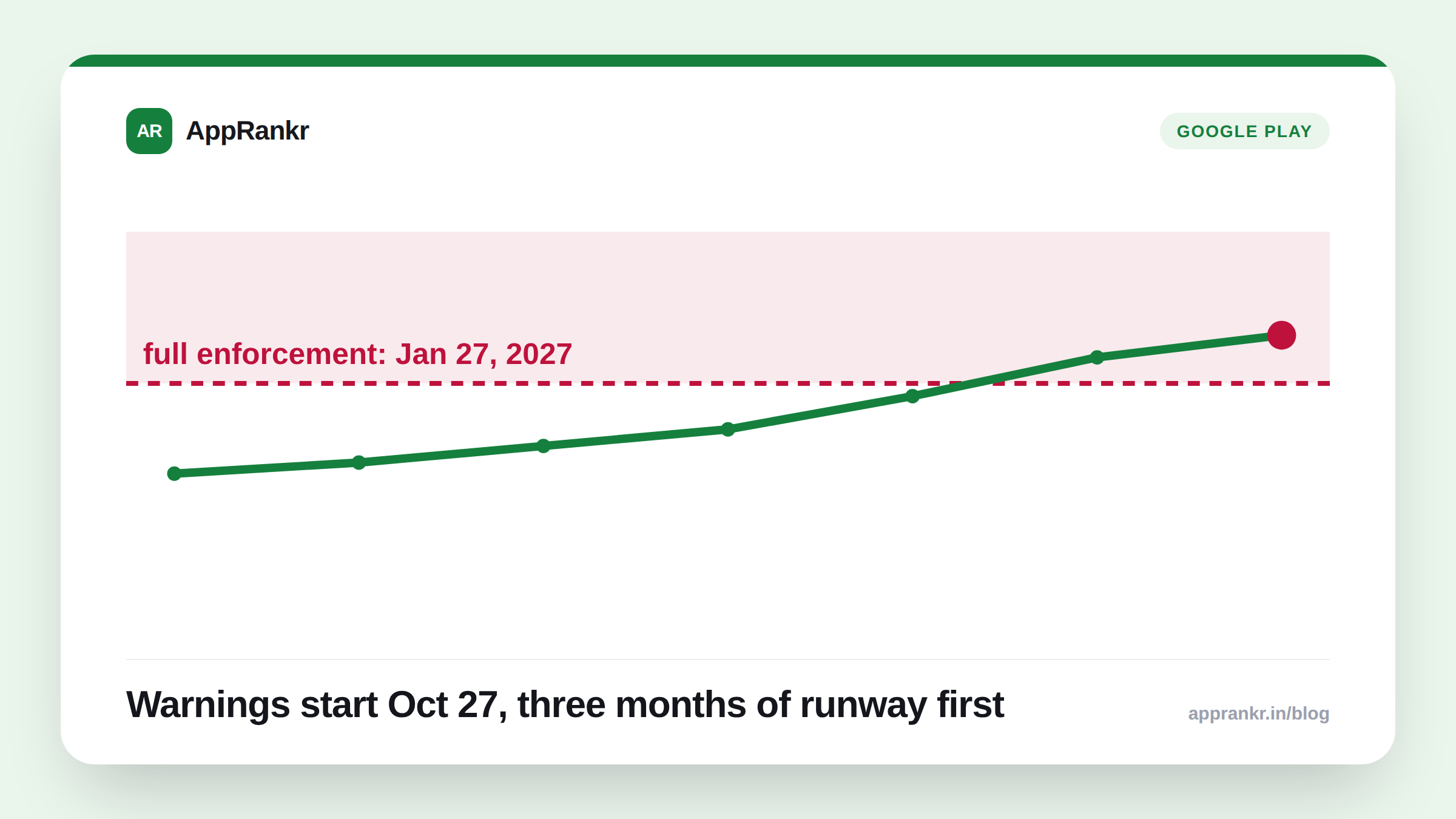
Google Play's Contacts and Location Permission Checks Start October 27
Play Console starts warning developers about contacts and location permission issues on October 27, 2026, well before the January 27, 2027 enforcement date. Here's exactly what triggers a flag.
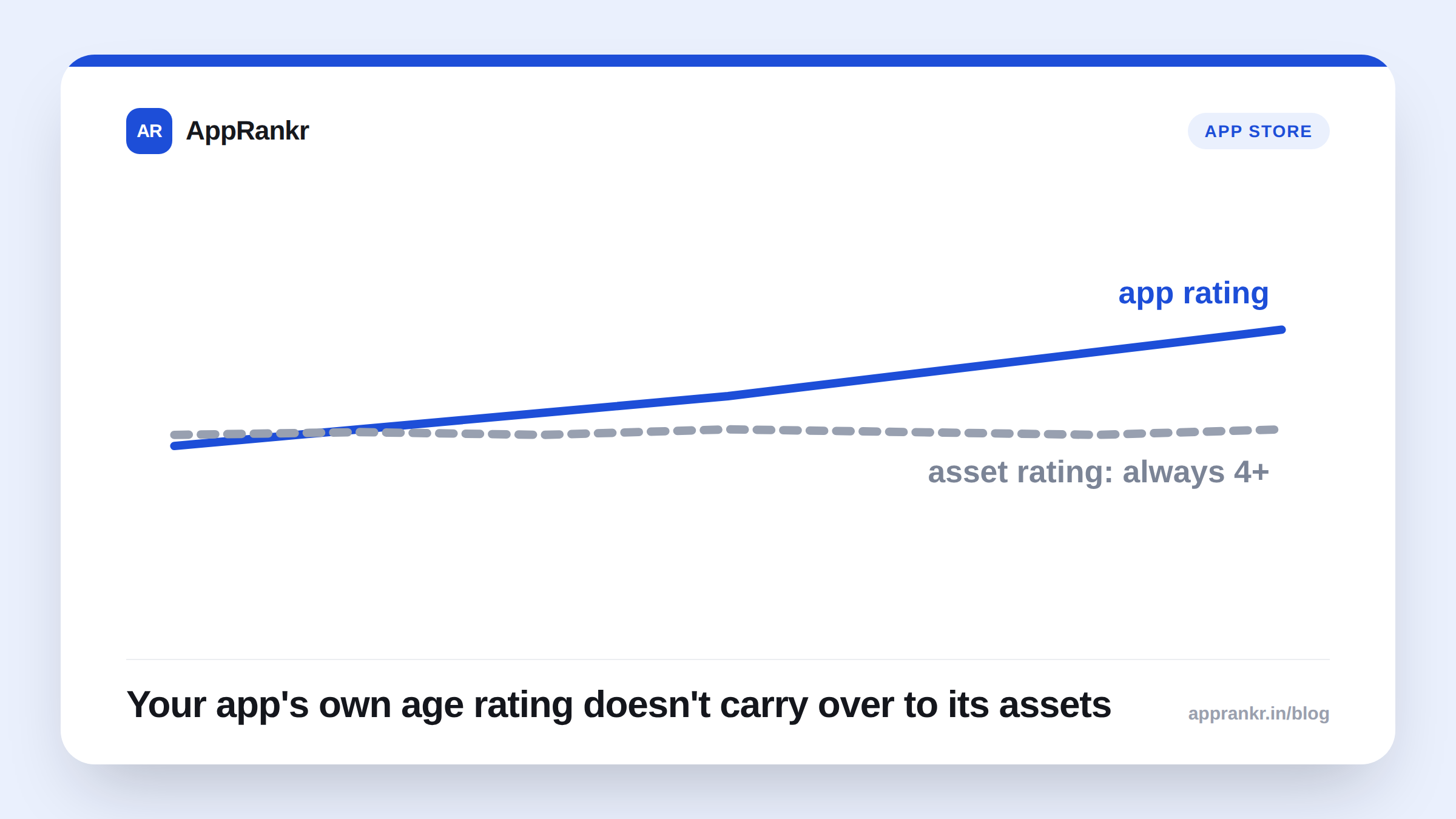
Apple's Creative Assets Must Be Rated 4+, Even for a 17+ App
Your app's own age rating doesn't carry over to its Creative Assets. Apple's own guidance holds every asset to a 4+ standard, no matter who your app is actually rated for.
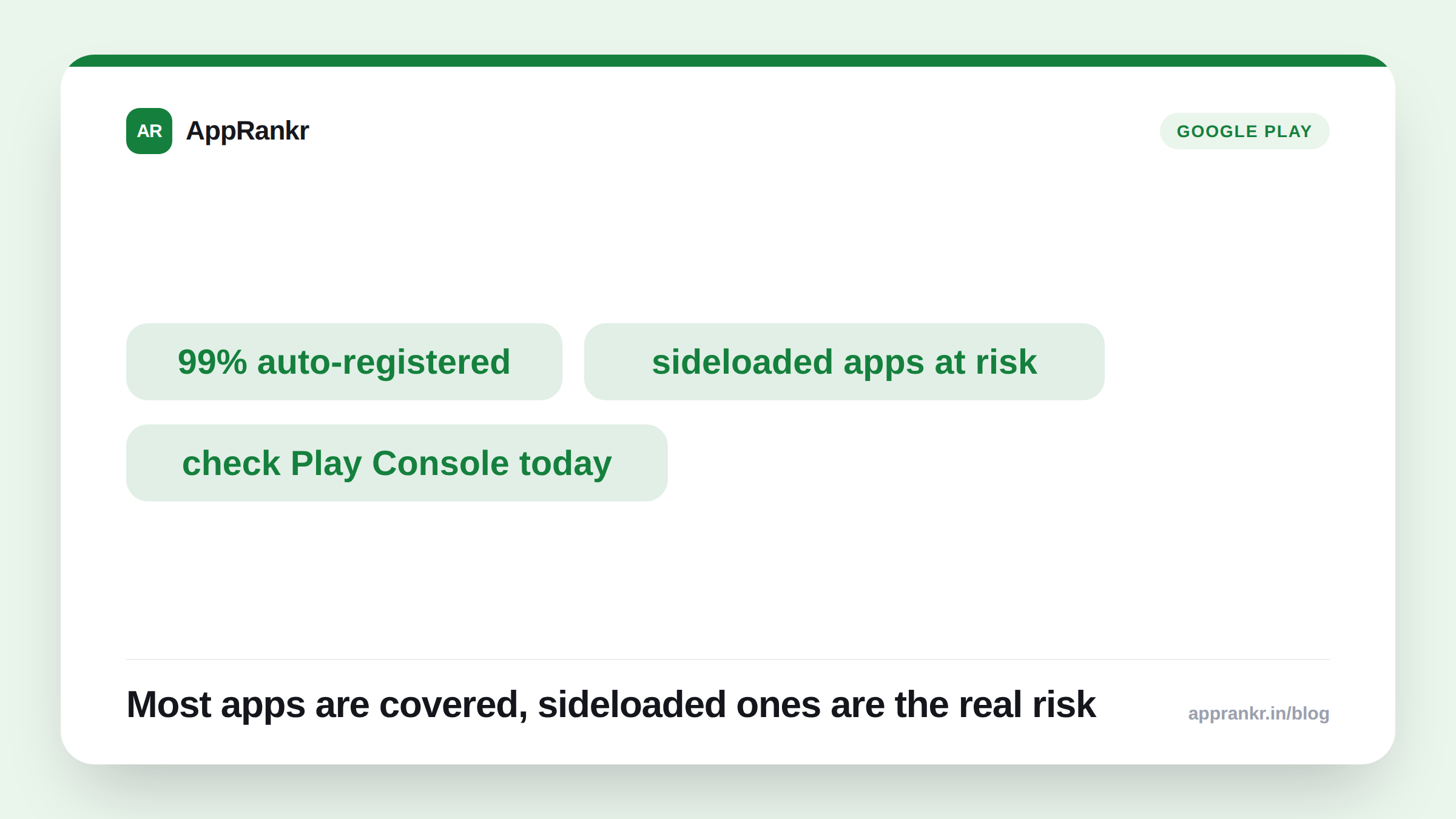
Today's the Deadline: What 'Global Removal' Actually Means for Android Developer Verification
September 30, 2026 isn't just about four countries blocking installs anymore. Google's own wording now ties unregistered package names to removal from Google Play worldwide. Here's who's actually at risk.
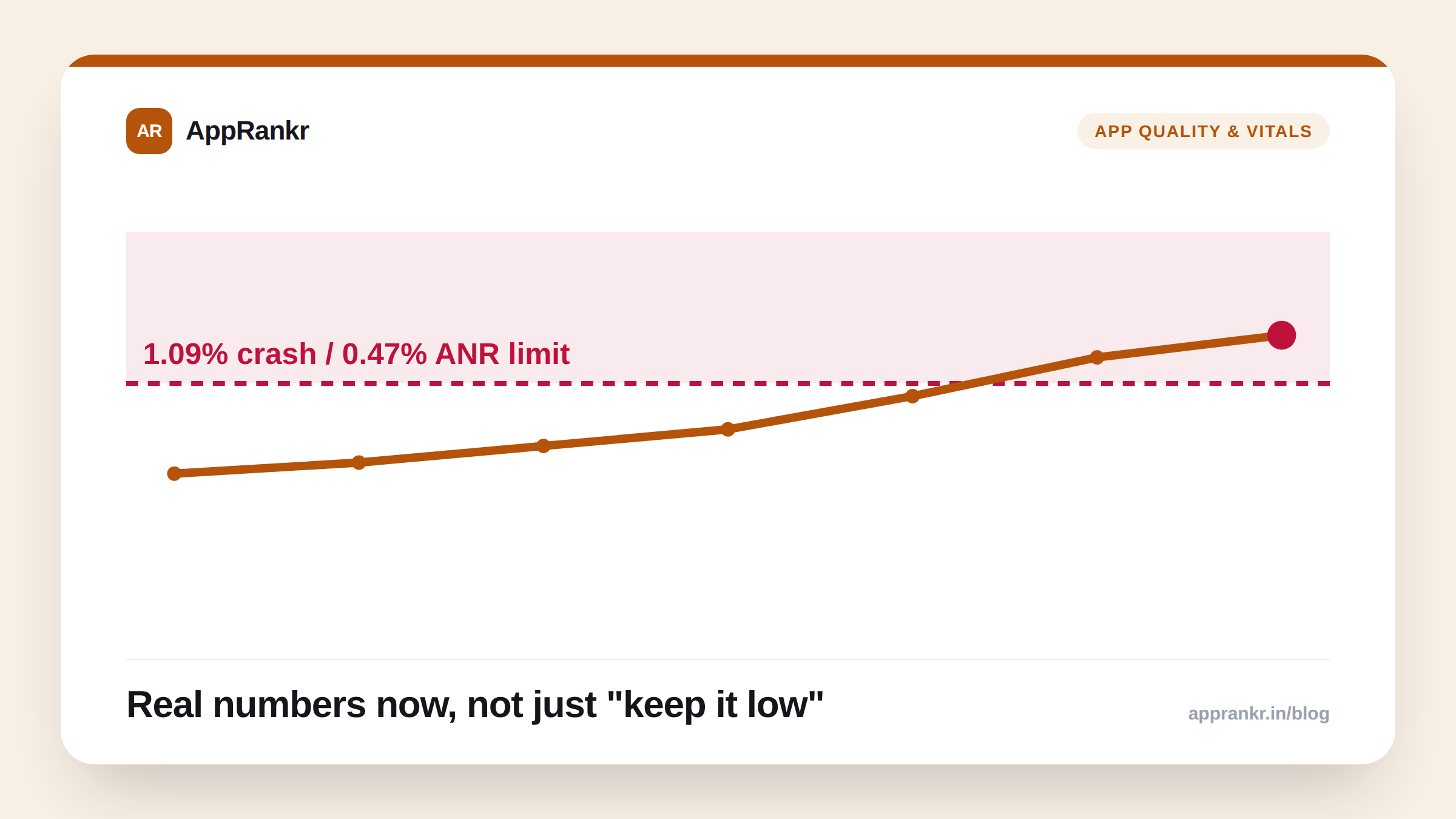
Google Play's New Crash and ANR Thresholds, With the Exact Numbers
Google announced real, numeric technical quality thresholds in August 2026, taking effect February 2027. Here's exactly where the lines sit, for crash rate and ANR rate alike.
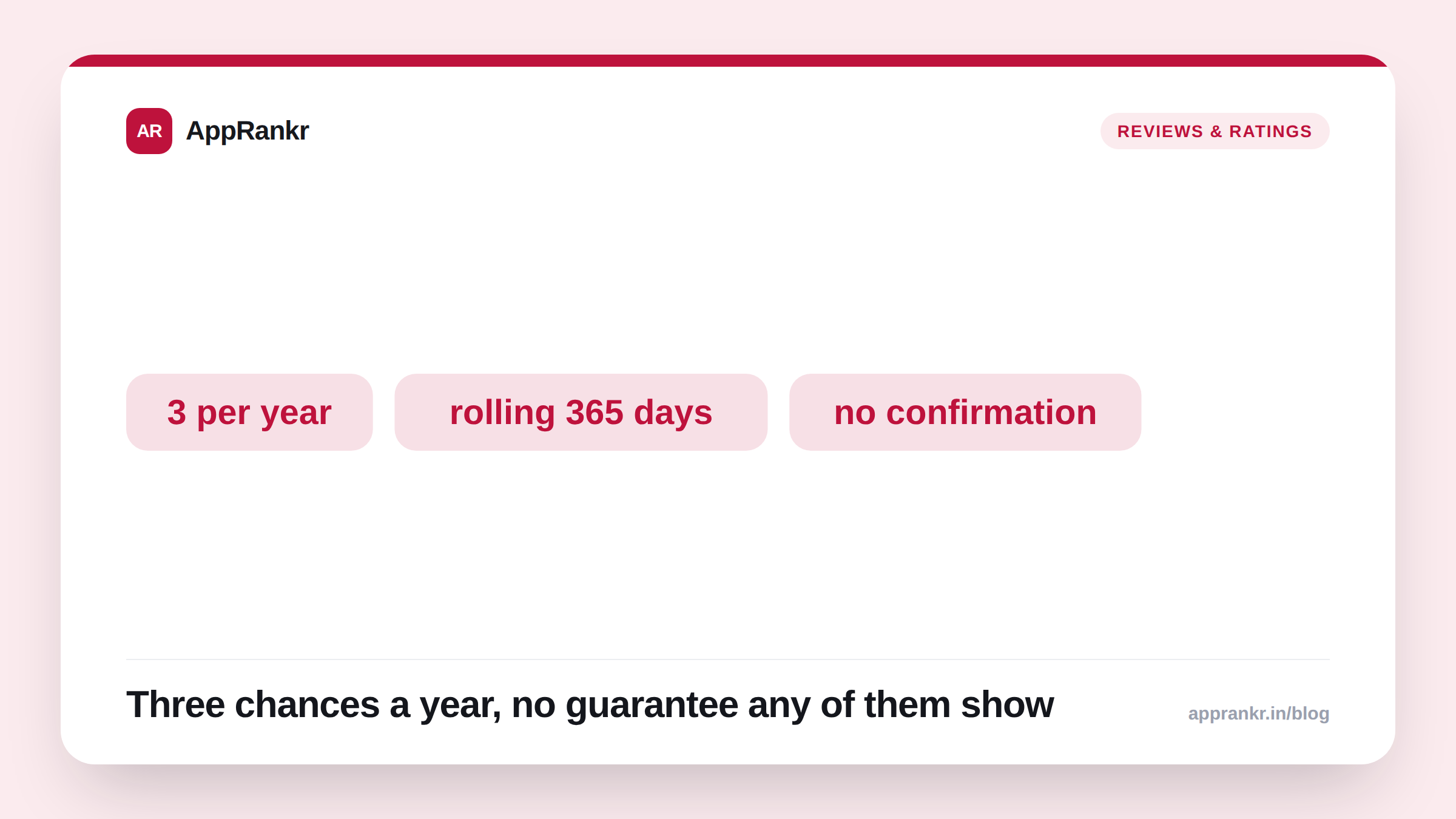
Apple's Review Prompt Has a Hard Limit: 3 Times Per Year, Per App
SKStoreReviewController isn't a suggestion box you can call whenever you want. Apple's own documentation caps it at three prompts per 365 days, no exceptions.
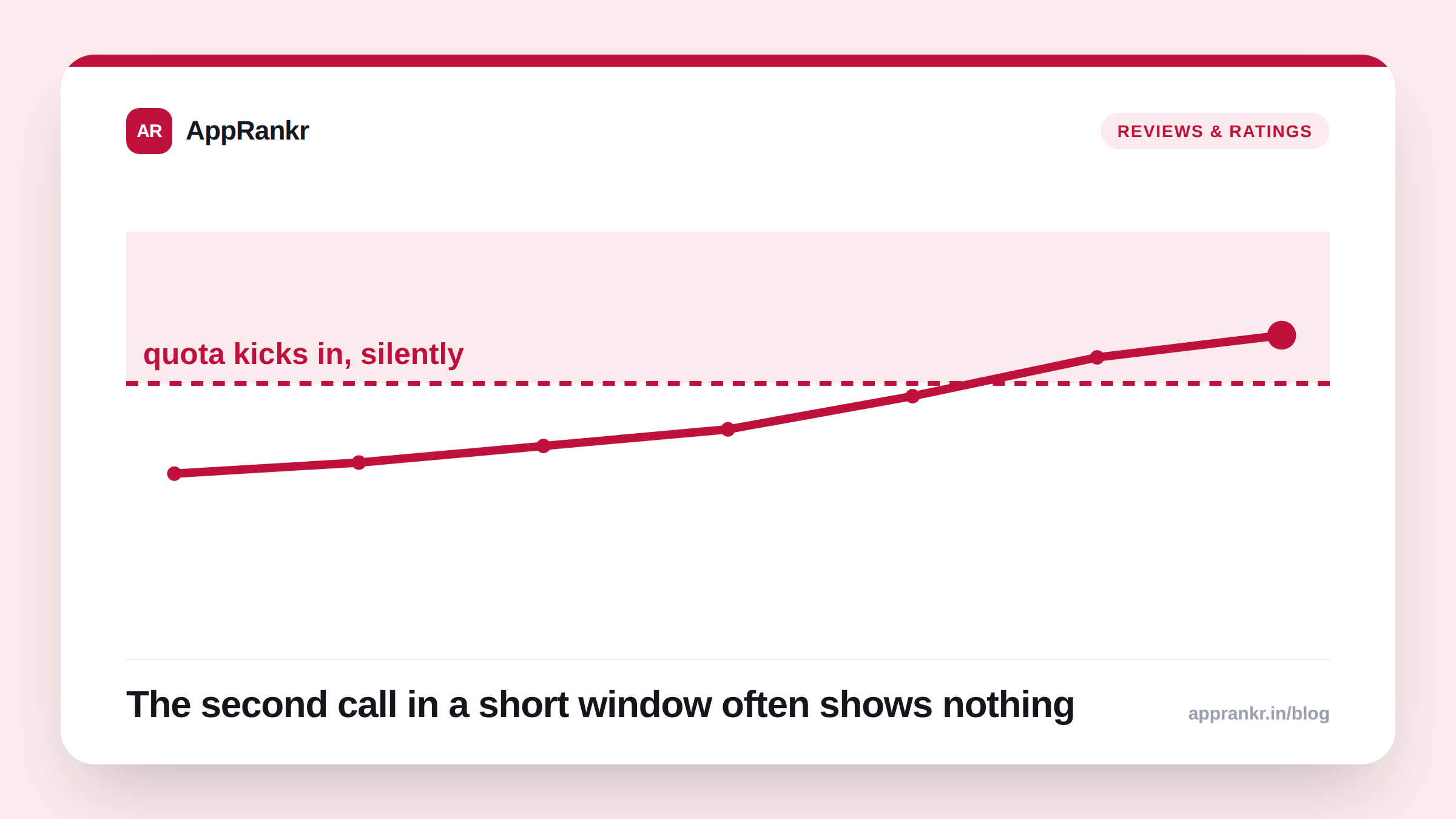
Google's In-App Review Prompt Has a Hidden Quota, and It's Intentional
Call the API twice in a short window and the second request often shows nothing. Google's own docs confirm a quota exists. They just won't say the exact number.
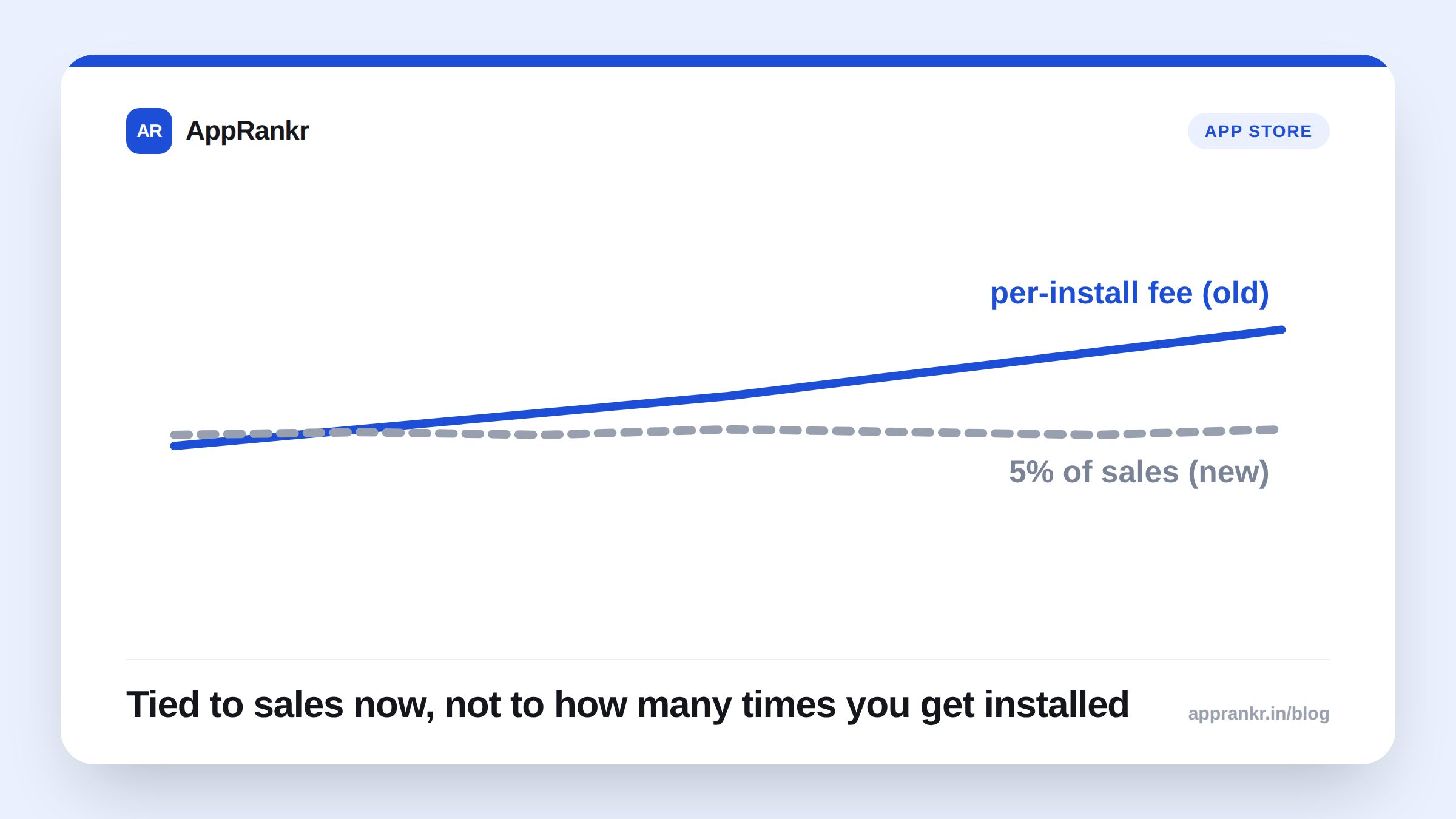
Apple Is Ending Its Per-Install EU Fee for a Flat 5% Commission Instead
The euro-per-install Core Technology Fee that only applied in the EU is going away October 1, 2026. Here's what replaces it, and why the fee model itself is changing, not just the number.
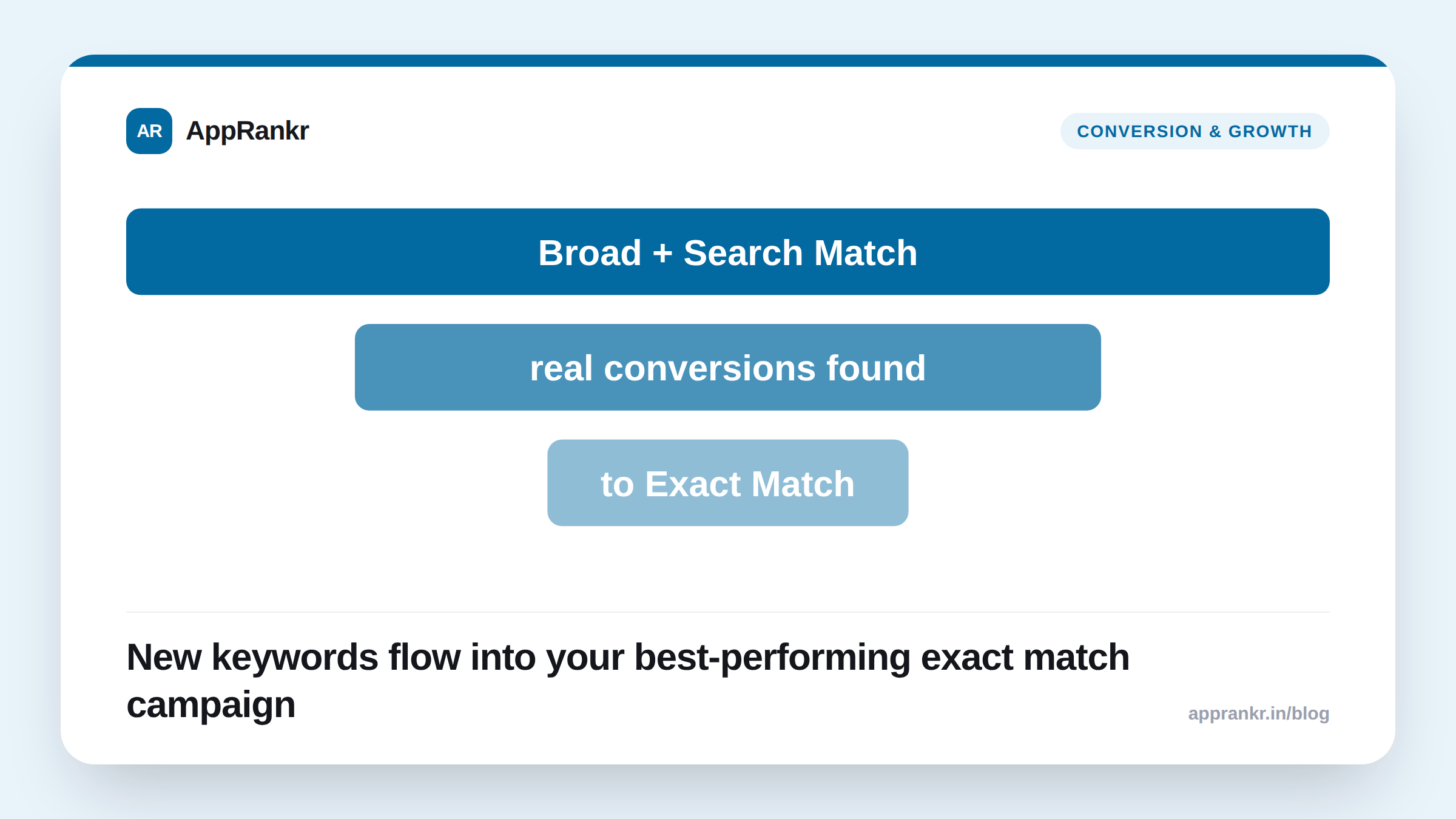
Discovery Campaigns: Apple Search Ads' Built-In Keyword-Finding Tool
Most Apple Search Ads accounts run exact-match campaigns and stop there. Discovery campaigns exist to find the keywords you don't know to bid on yet.
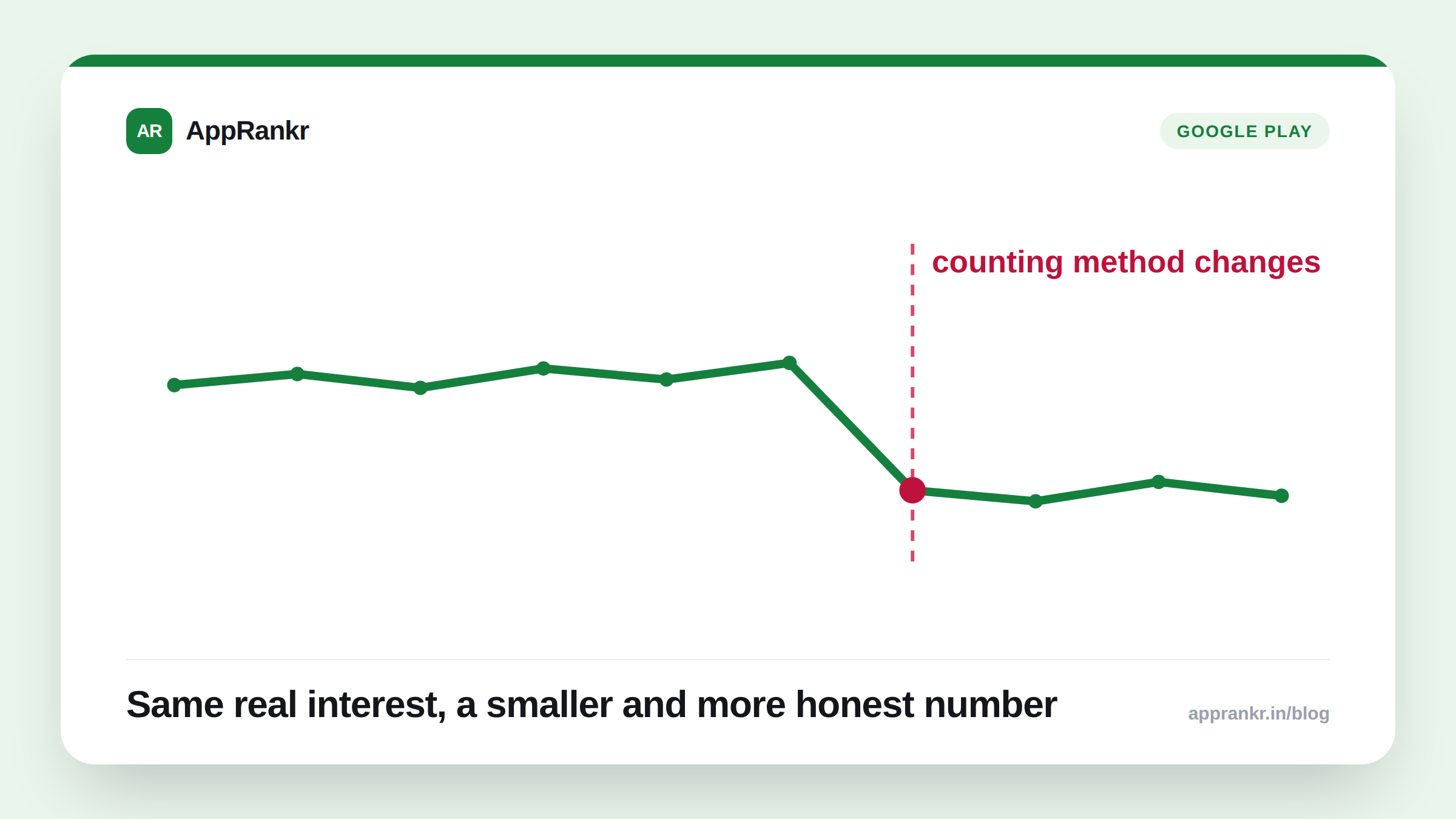
Why Your Google Play Pre-Registration Number Just Dropped
Play Console changed how it counts pre-registrations. It now only counts active, deduplicated devices. Here's why your number looks smaller, and why that's actually more accurate.
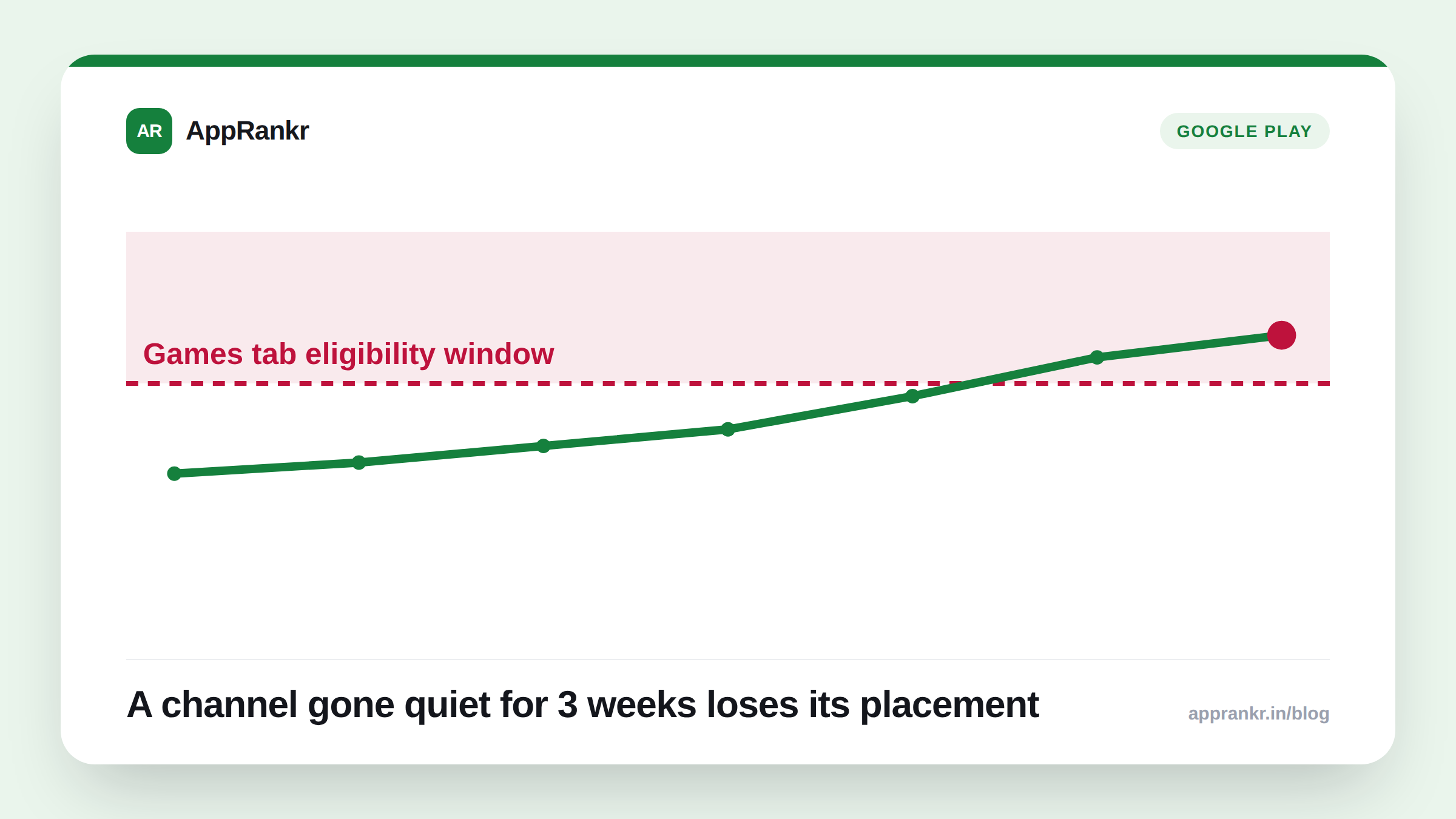
You Can Now Link a Full YouTube Channel to Your Google Play Listing
Play Console lets you showcase a whole YouTube channel or playlist, not just one preview video. Here's how the recency rules work, and why most teams miss the Games tab window.
Negative Keywords in Apple Search Ads: The Setting Most Campaigns Skip
A Search Match campaign can spend real budget on searches that will never convert. Negative keywords are the one setting built to stop it, and most accounts barely touch it.
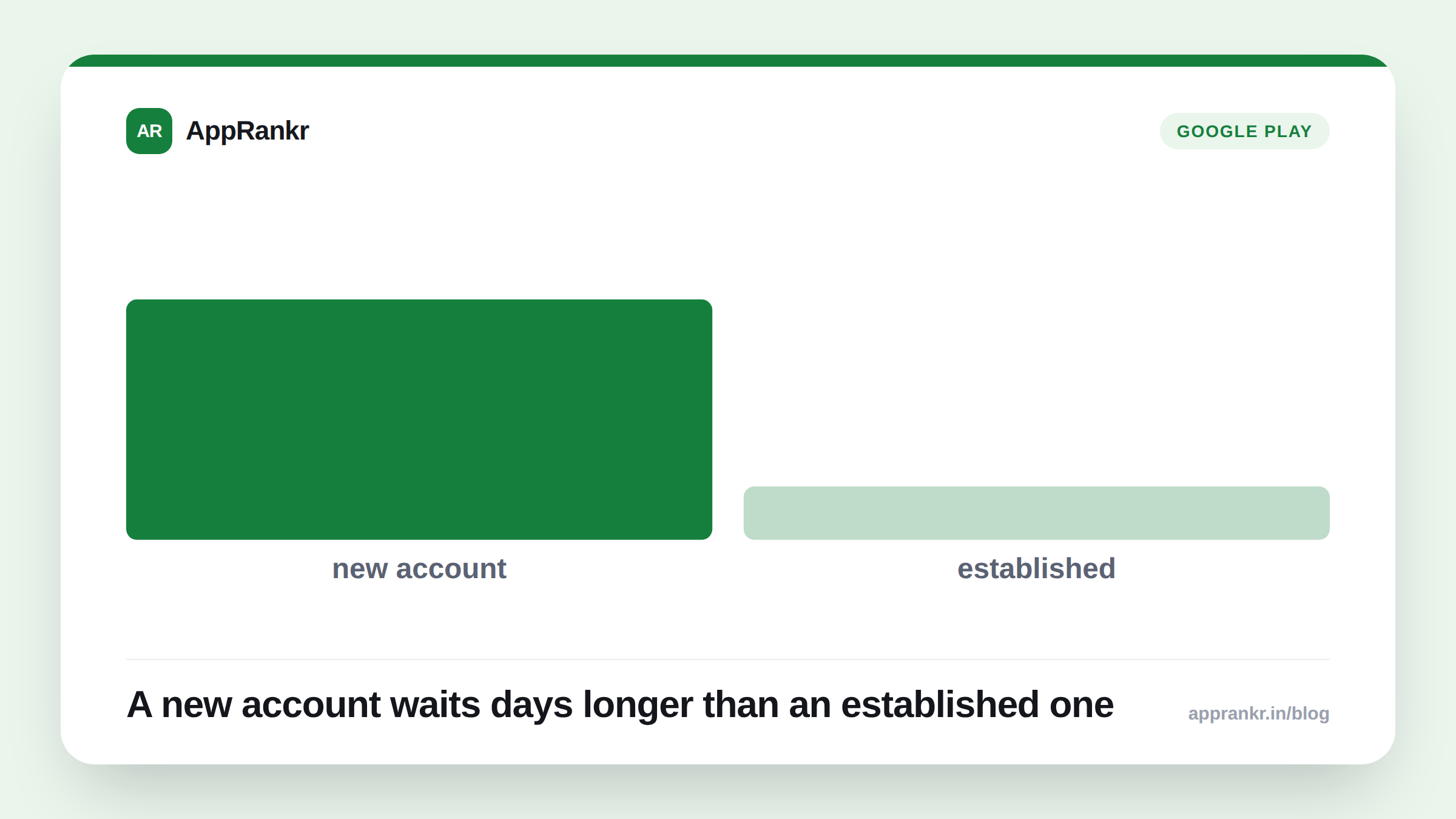
Why Your First Google Play App Takes So Much Longer to Review
A new developer account often waits 7 to 14 days for a first app review, while an established account clears in 1 to 3 days. Here's what actually causes the gap, and the closed-test requirement most new accounts miss.
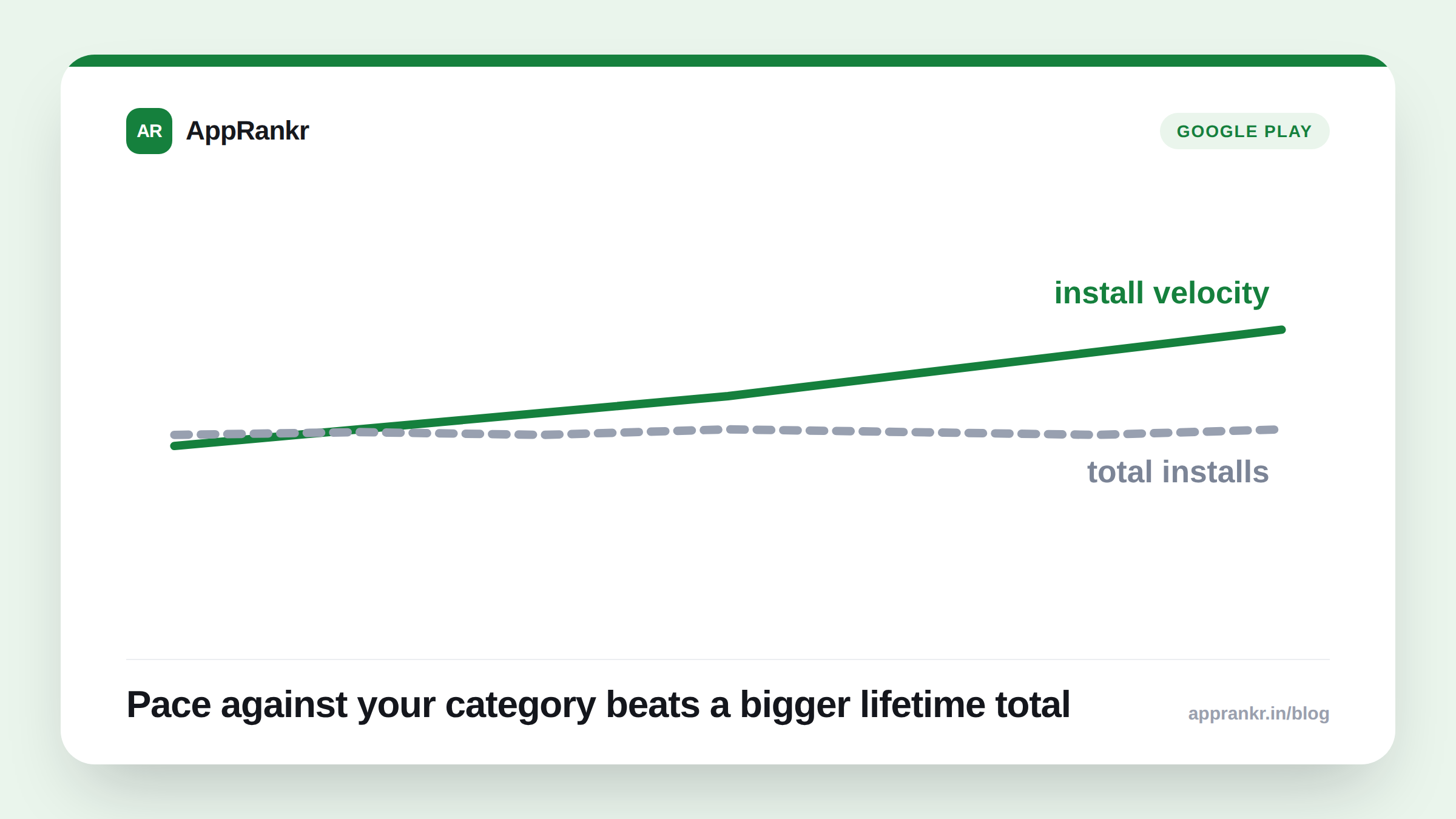
Do You Need as Many Installs as Your Competitors to Rank in Category?
Category top charts compare your app against the biggest names in your space. Here's how much your install count relative to competitors actually matters, and what else carries real weight.
Why Your Google Ads App Campaign Isn't Showing in Play Store Search
Your app is active in Google Ads, but the ad never shows up when you search for it in the Play Store. Here's what actually causes that, checked in the right order.
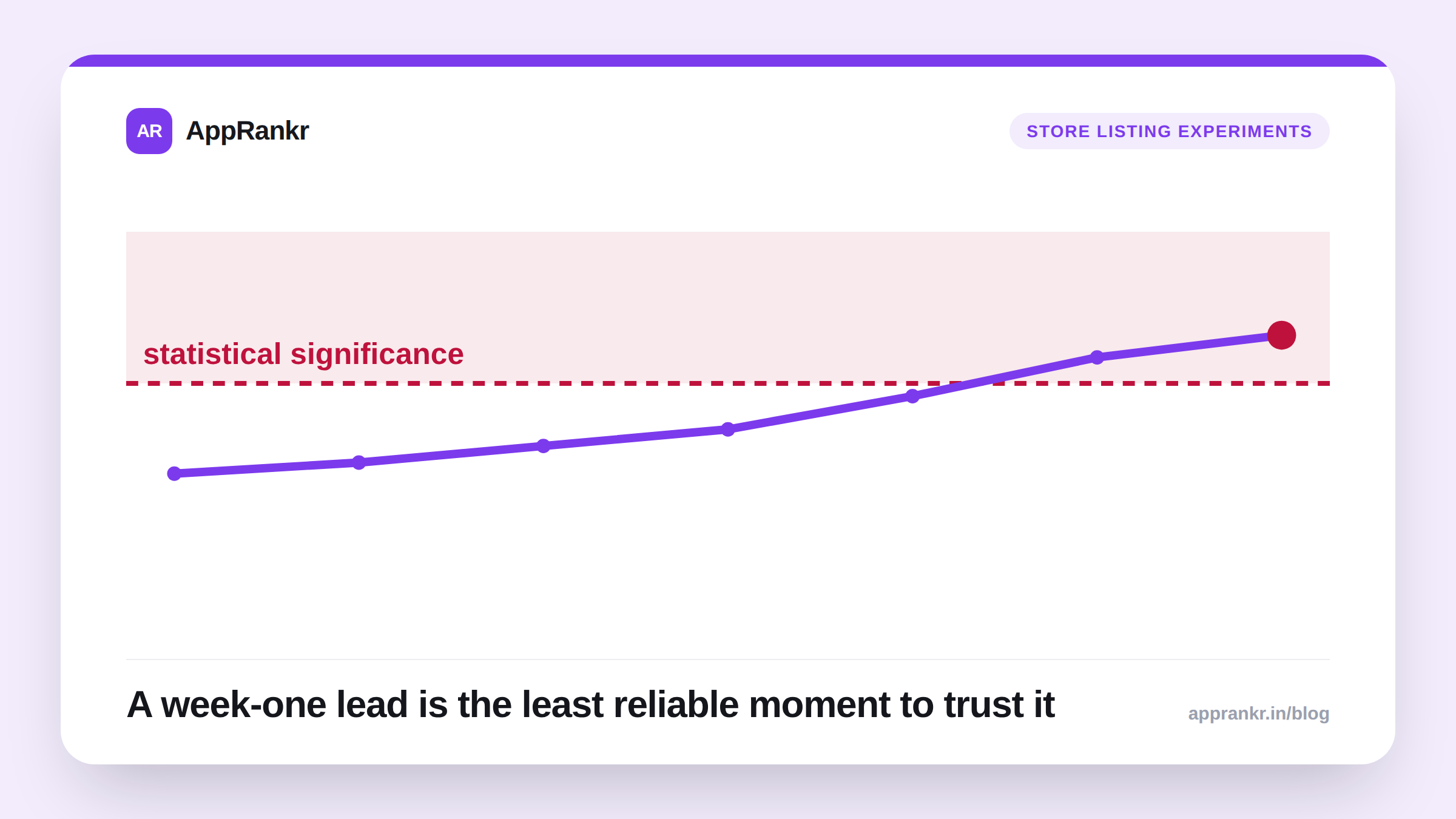
How Long Should a Google Play Store Listing Experiment Run?
A positive result in week one feels like a reason to apply it right away. Here's why that's the exact moment most experiments get read wrong, and what to wait for instead.
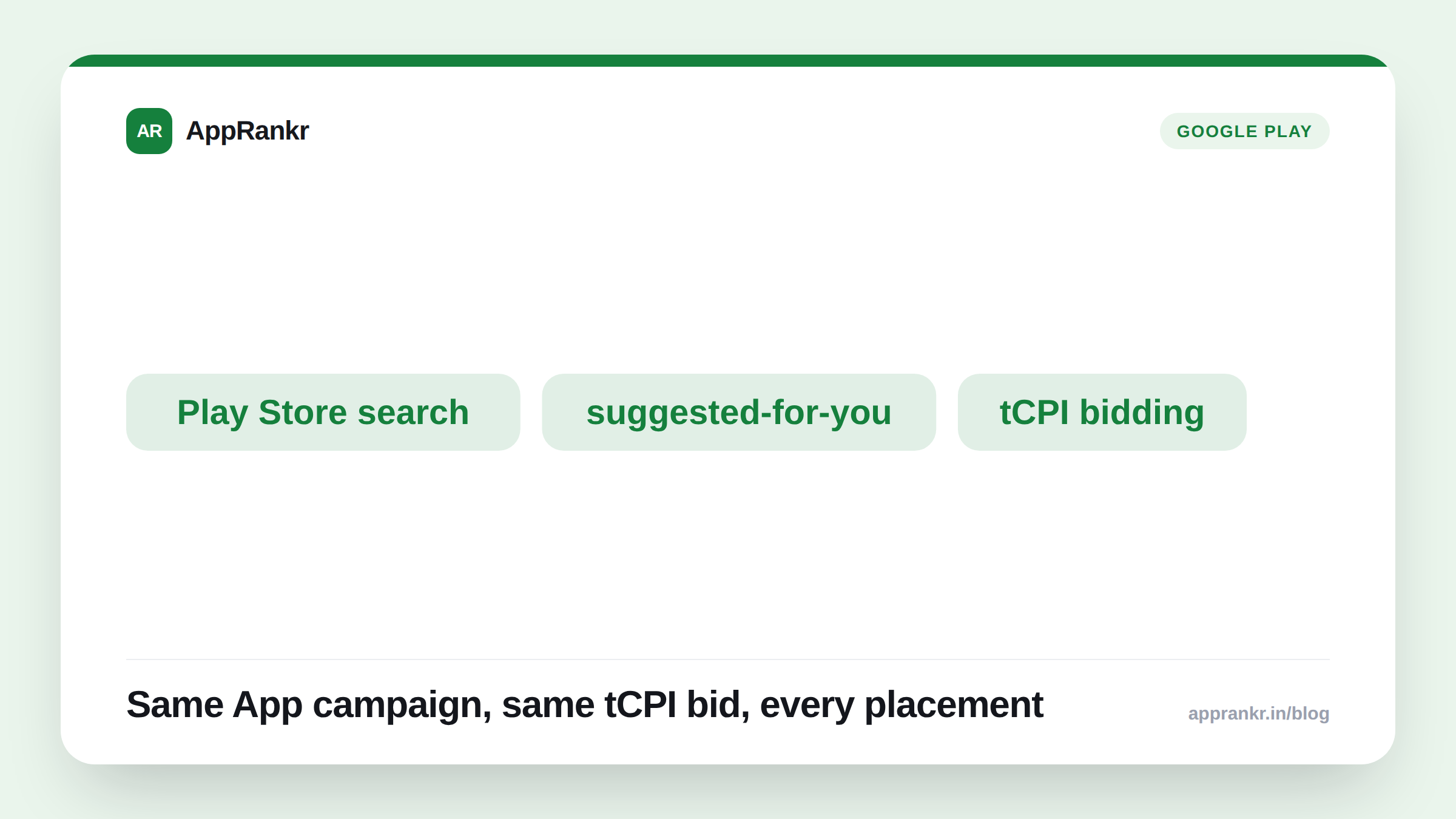
How to Get Your App Into Play Store's Sponsored and Suggested Ad Slots
The Sponsored tag in Play Store search, and the ads mixed into Similar Apps and suggested-for-you rows, both come from the same Google Ads app campaigns. Here's how the bidding actually works.
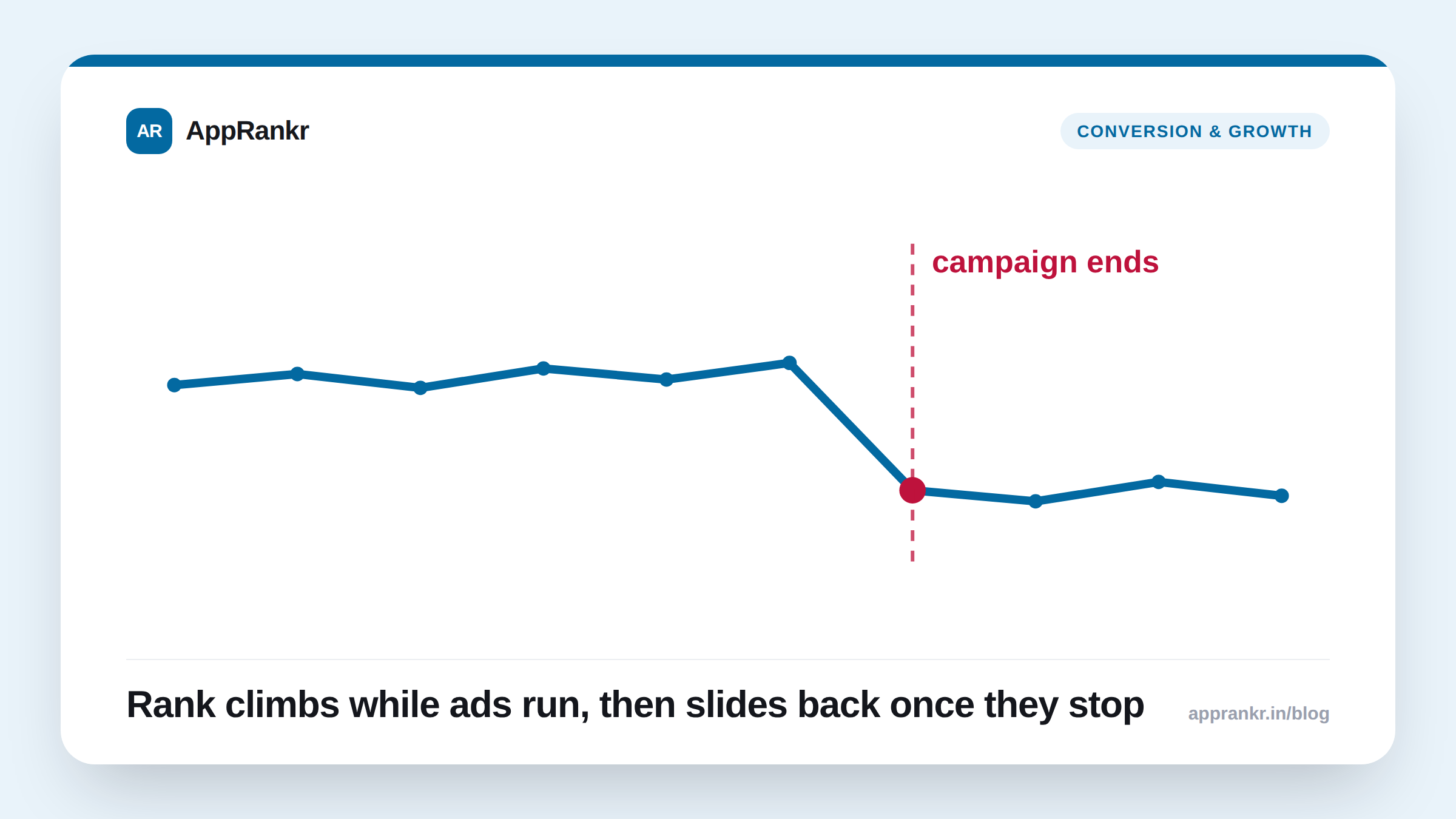
Why Your Search Ranking Drops After You Stop Paid App Ads
Paid ads push your search rank up while they run, then it slides back down once you stop. Here's why that happens, and what actually keeps some of the gain.
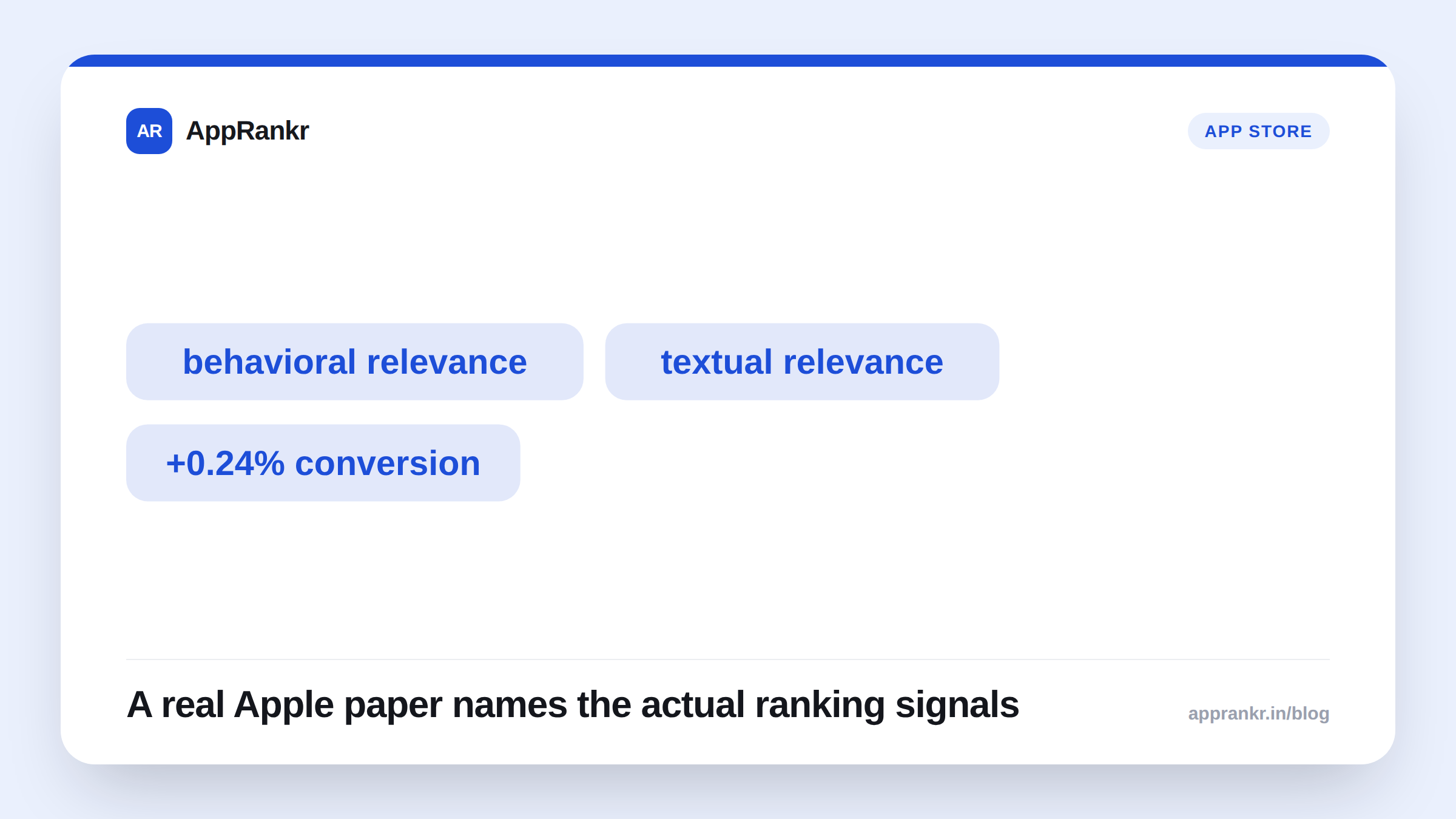
Apple Published Real Research on How It Ranks App Store Search Results
A peer-reviewed Apple paper names two actual relevance signals behind App Store search, and shows the biggest gains landed on long-tail, less common queries. Here's what it actually says.
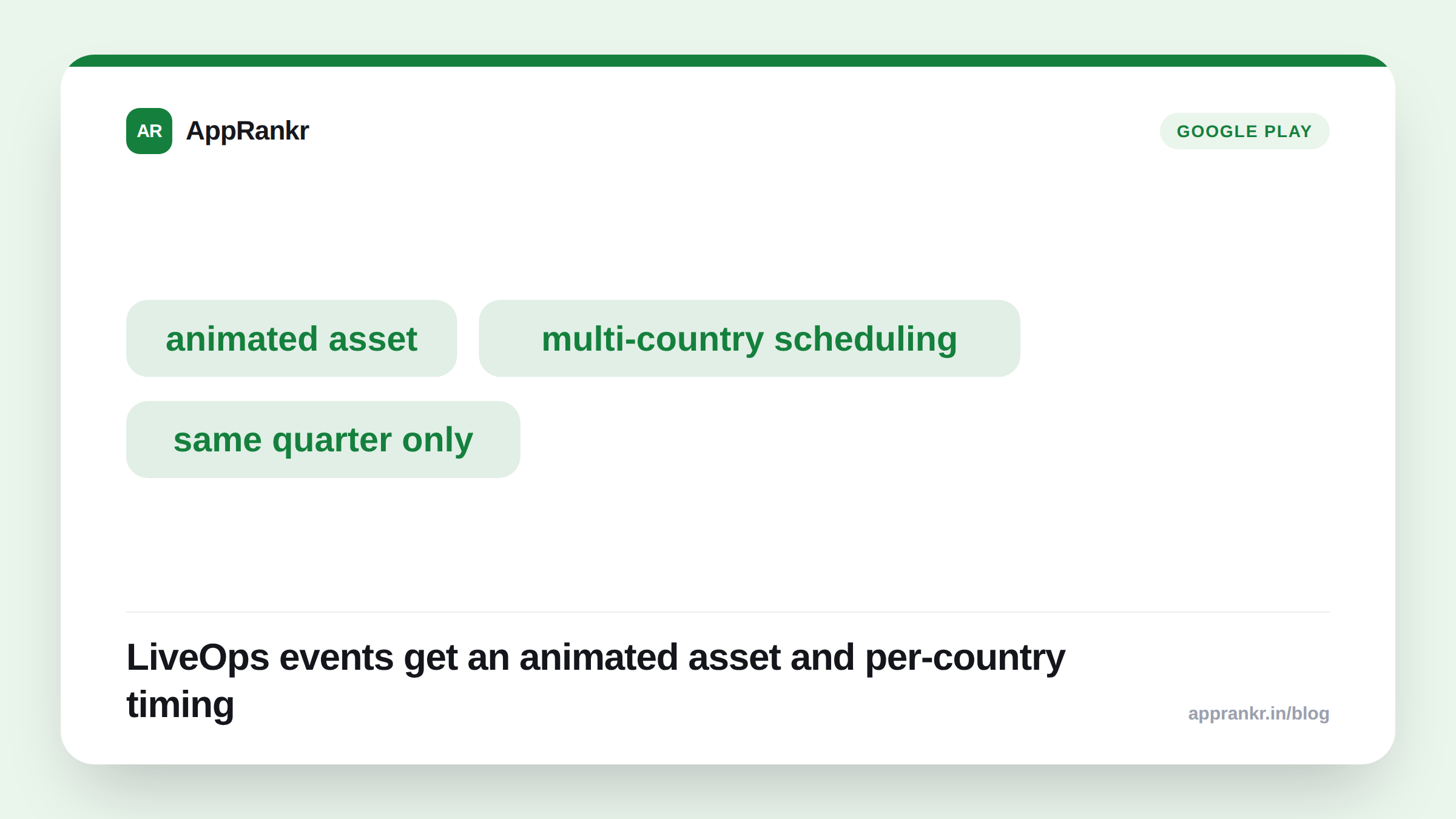
Google Play's Promotional Content Now Supports Animated Assets and Multi-Country Scheduling
Play Console's LiveOps events can now carry an animated asset, and one event can run on different schedules across country groups. Here's how both actually work, and the catch on quarters.
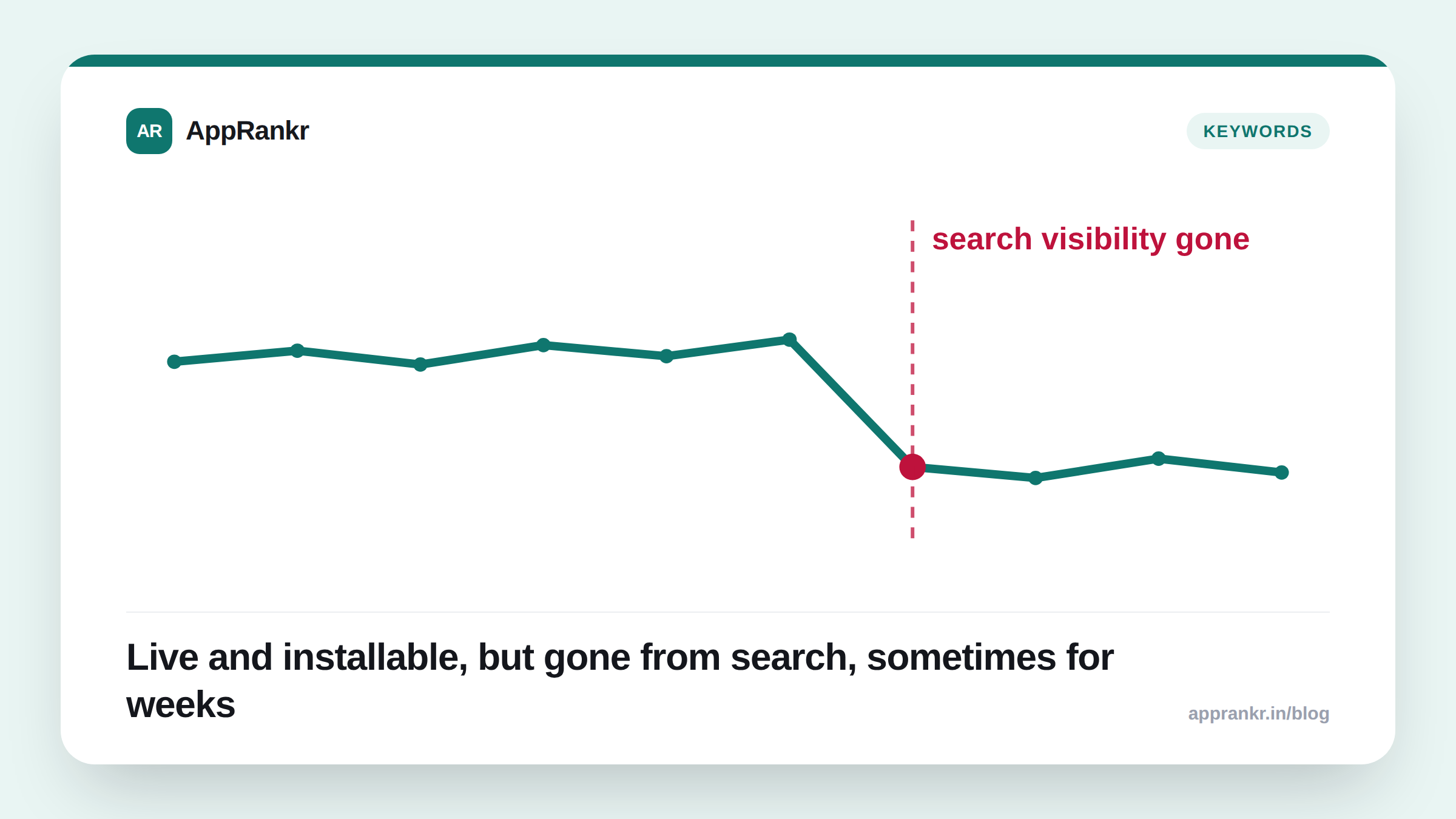
Real Developers Report Apps Vanishing From App Store Search for Weeks
Multiple threads on Apple's own Developer Forums describe live, installable apps missing from search, even for their own exact name. Here's what's reported, and what Apple's own response says.
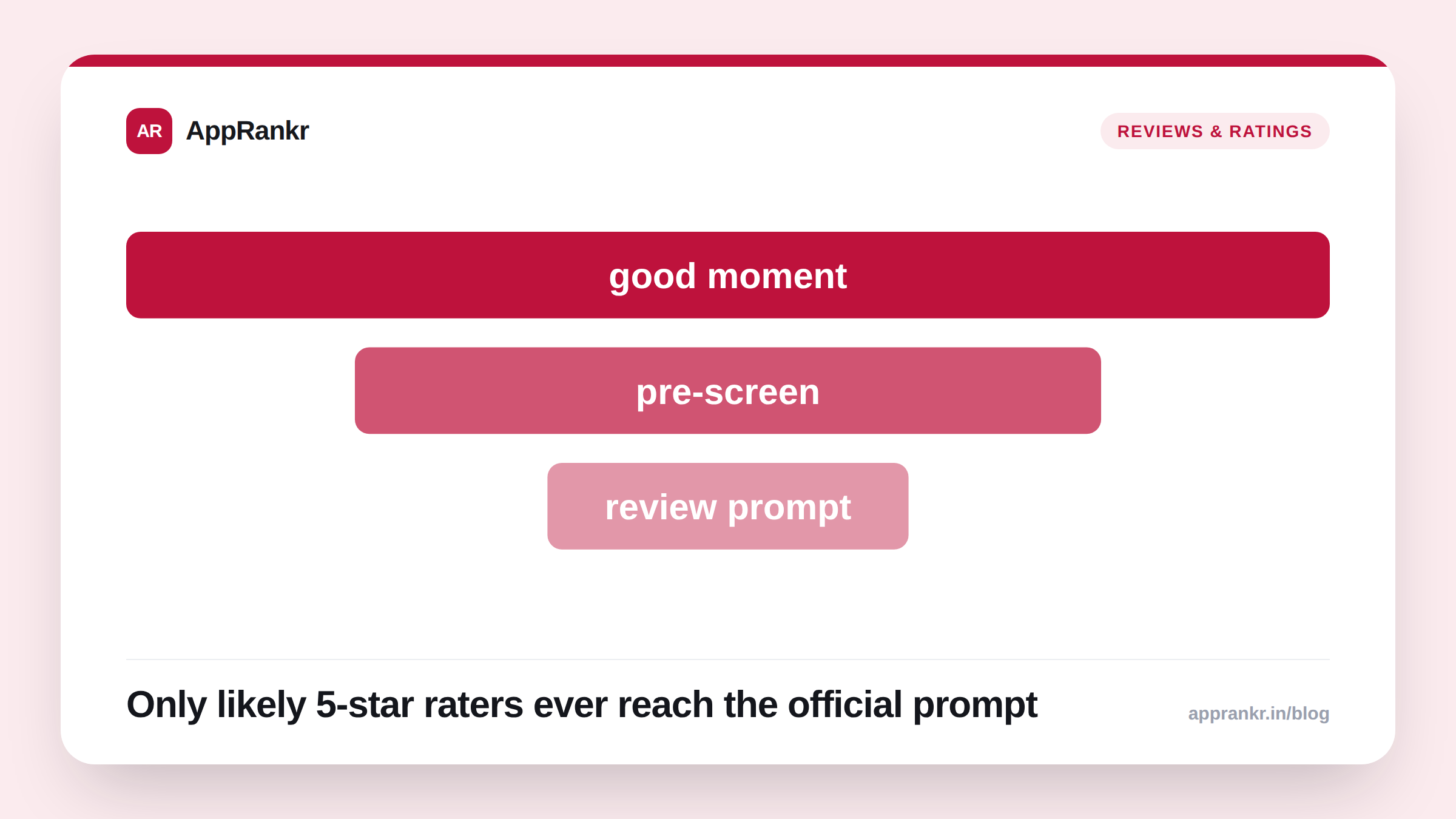
The NPS Pre-Screen: A Smarter Way to Time Your In-App Review Prompt
Reporting describes a pattern where a one-question survey runs before the official review prompt, sending only likely 5-star raters to it. Here's what's reported, and where Google's own rules still apply.
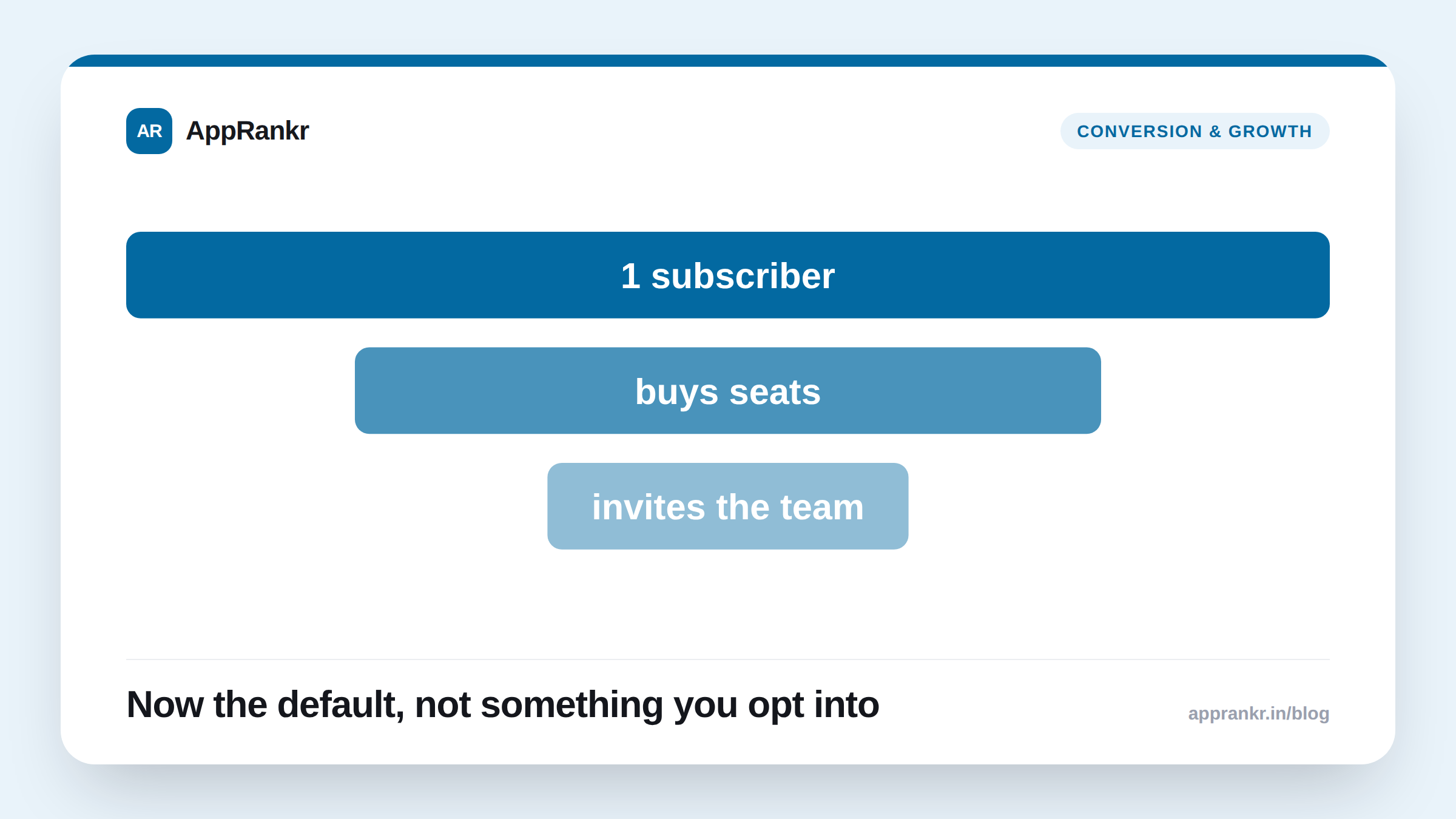
Apple Turned On Multiseat Subscriptions by Default. Here's What That Changes
Apple's own developer news confirms multiseat purchases are now on by default for App Store Connect subscriptions. Here's what shipped, and how to check your own setting.
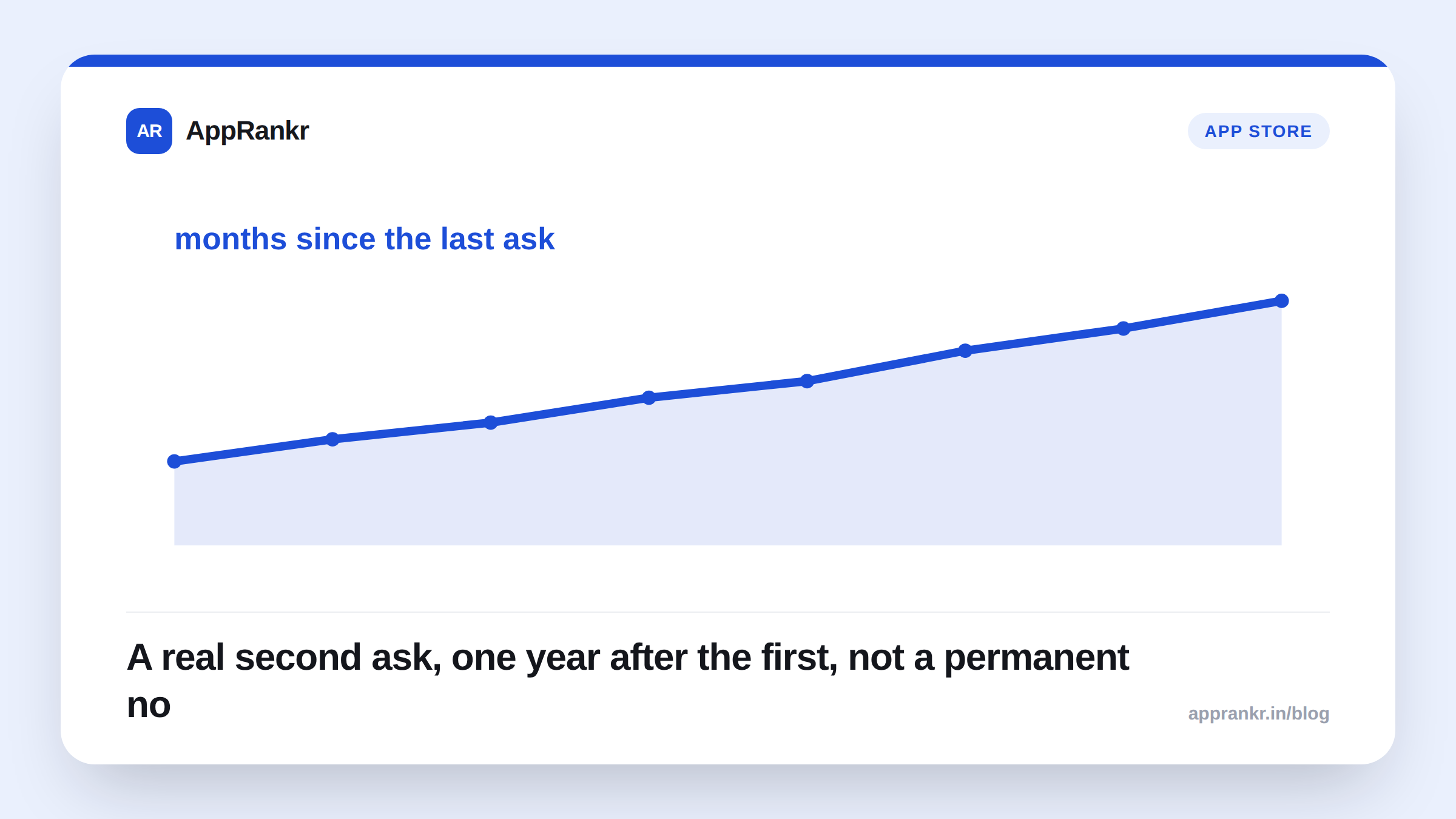
Apple's New EU Tracking Prompt Comes With a Real Second Chance
Apple's own page confirms an alternative App Tracking Transparency prompt in the EU, mandatory in five countries, plus a real annual re-prompt. Here's what actually changed for attribution.
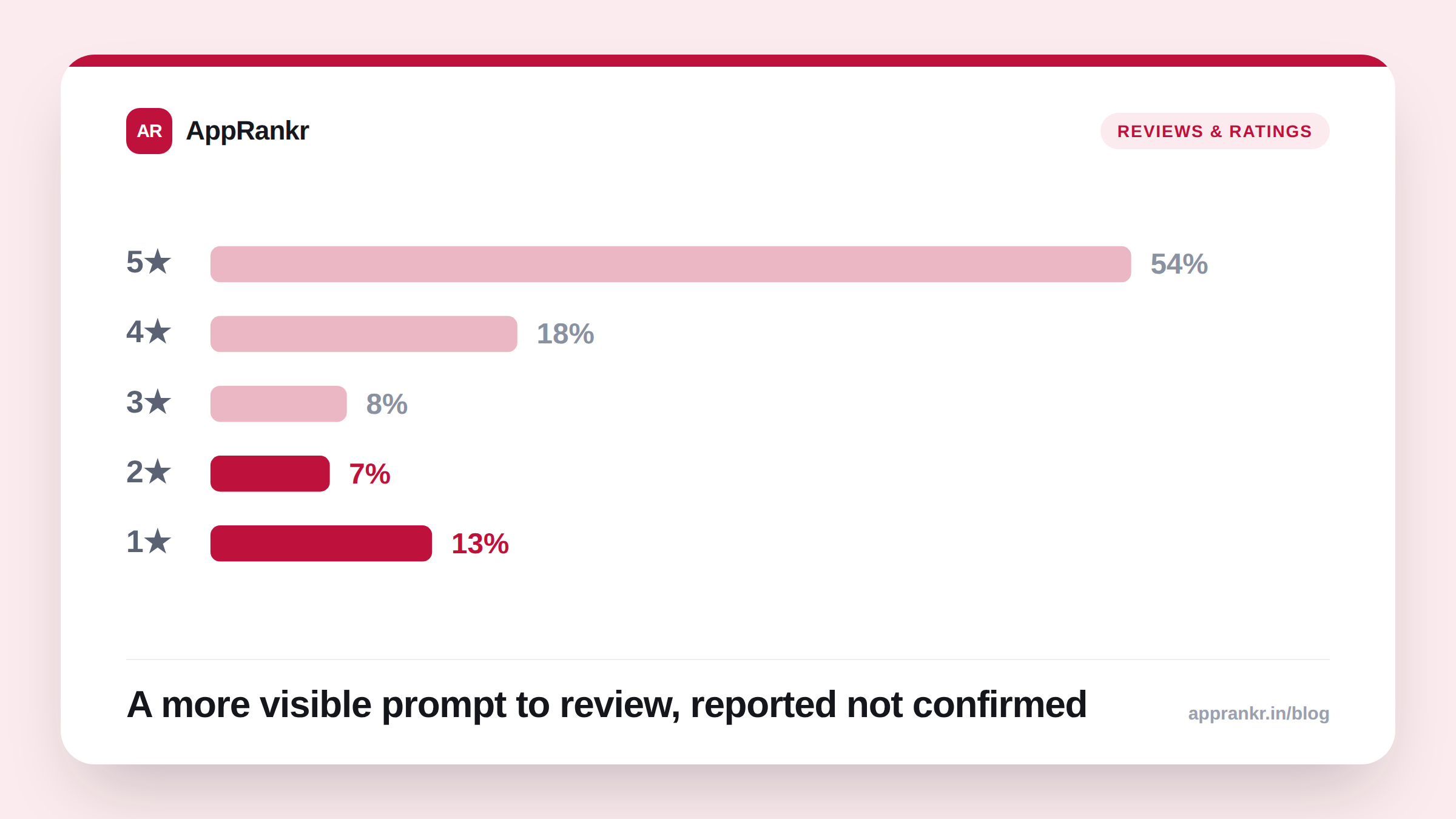
Google Play's New Contribution Hub Wants Users to Leave More Reviews
Reporting on Google Play Store v53.2 describes a new Contribution Hub on the 'You' tab, built to prompt more ratings and reviews. Here's what's reported, and why review volume is worth watching.
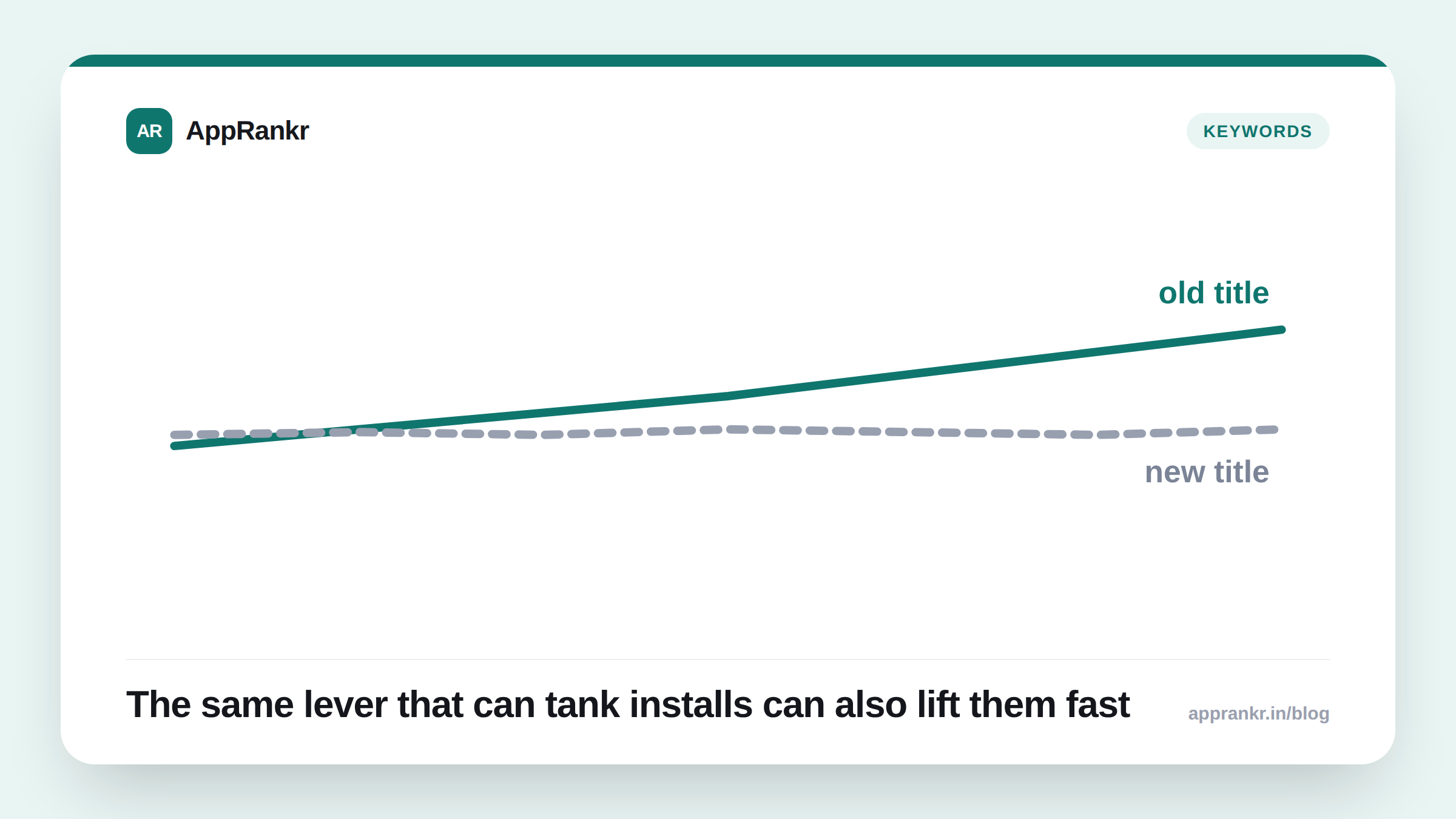
You Acquired an App. Changing Its Title Is the Riskiest Move You Can Make
Reporting says the app title is the single highest-weighted ranking signal on both app stores. Here's why a rebrand after acquisition needs a plan, not just a new name.
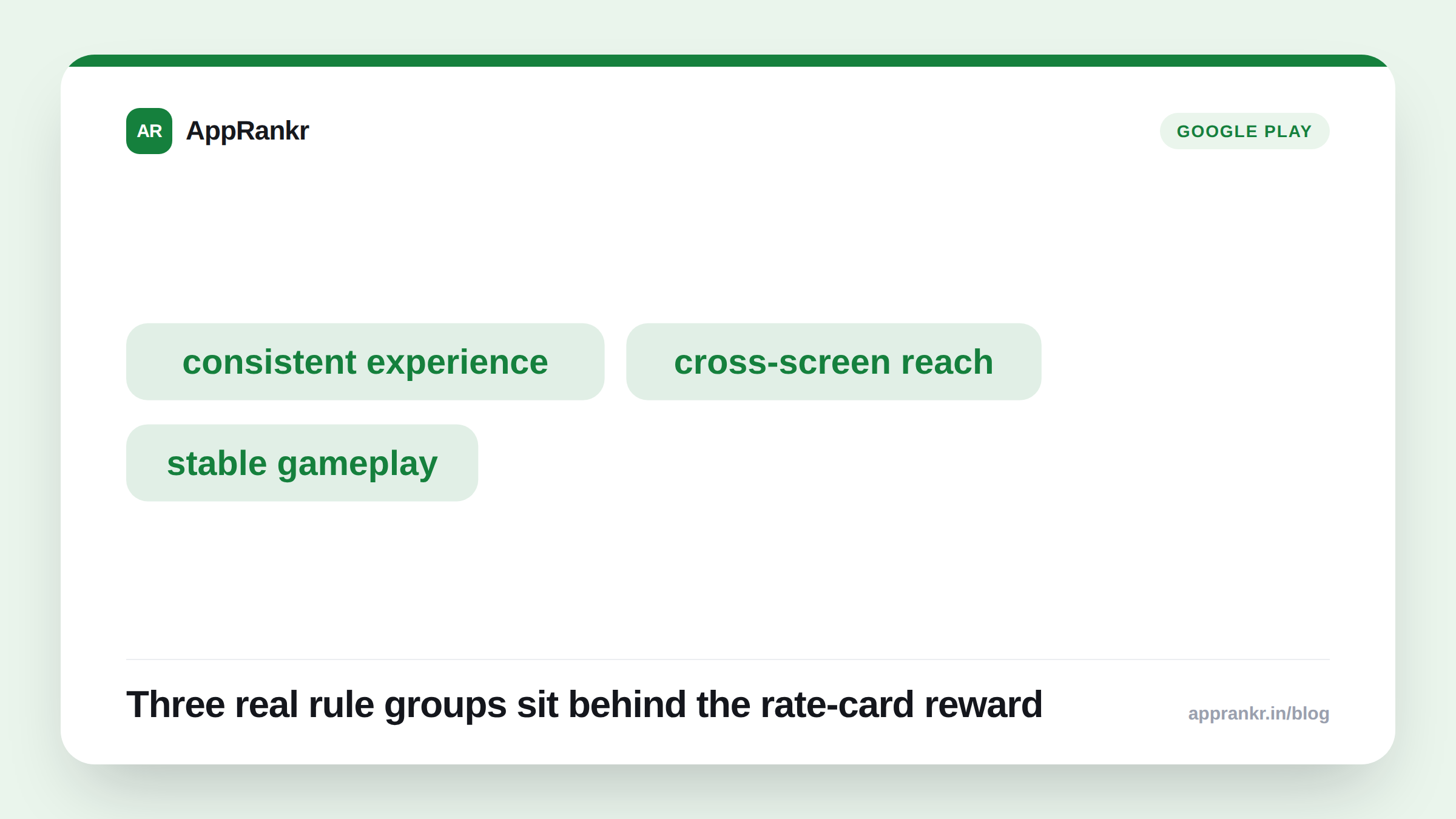
Google Play Games' Revamped Level Up Program: What Enrollment Actually Requires
Android's own guidelines confirm Level Up enrollment opens September 1, 2026, with real user-experience requirements behind the rate-card reward. Here's what's actually required, and who this doesn't apply to.
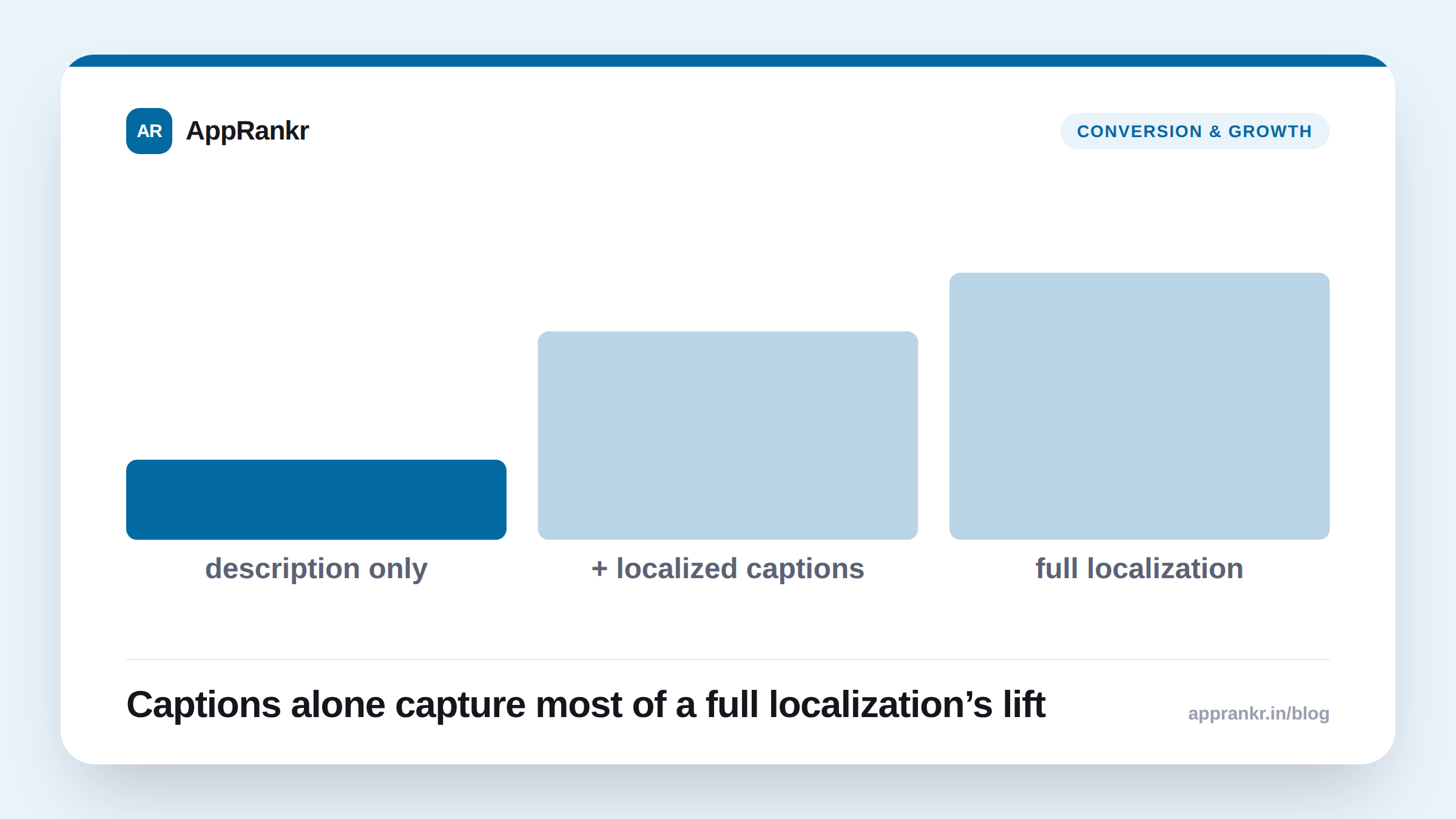
Localized Screenshots: The ASO Lever Most Teams Localize Last
Industry reporting ties localized screenshot text to real conversion gains in non-English markets, often more than translating the description alone. Here's what's reported, and where to start.
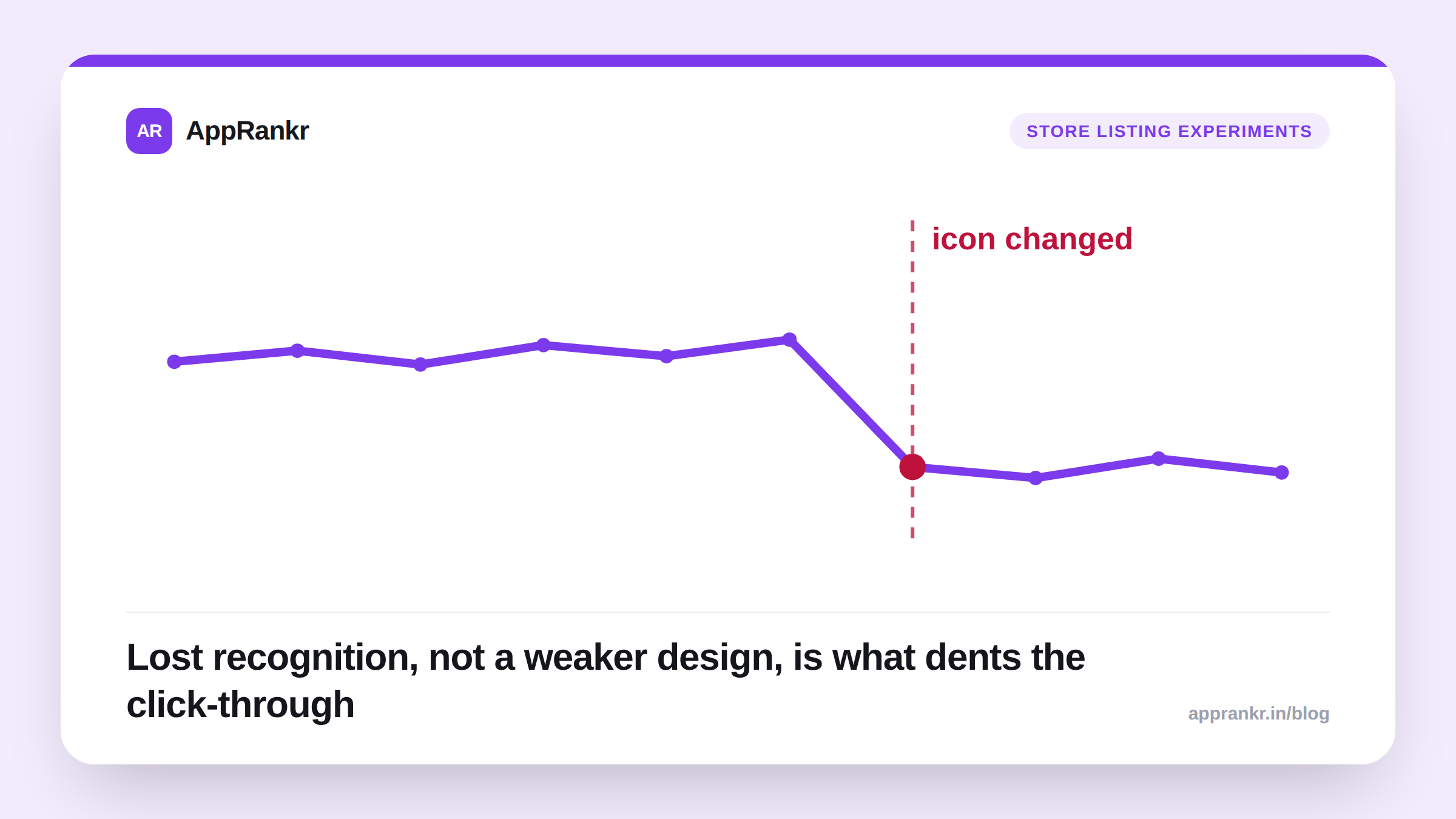
Why Changing Your App Icon Can Tank Your Click-Through Rate
Industry reporting ties icon changes to real click-through dips, driven by lost recognition among people who already know your old icon. Here's why that happens, and the brand-name question.
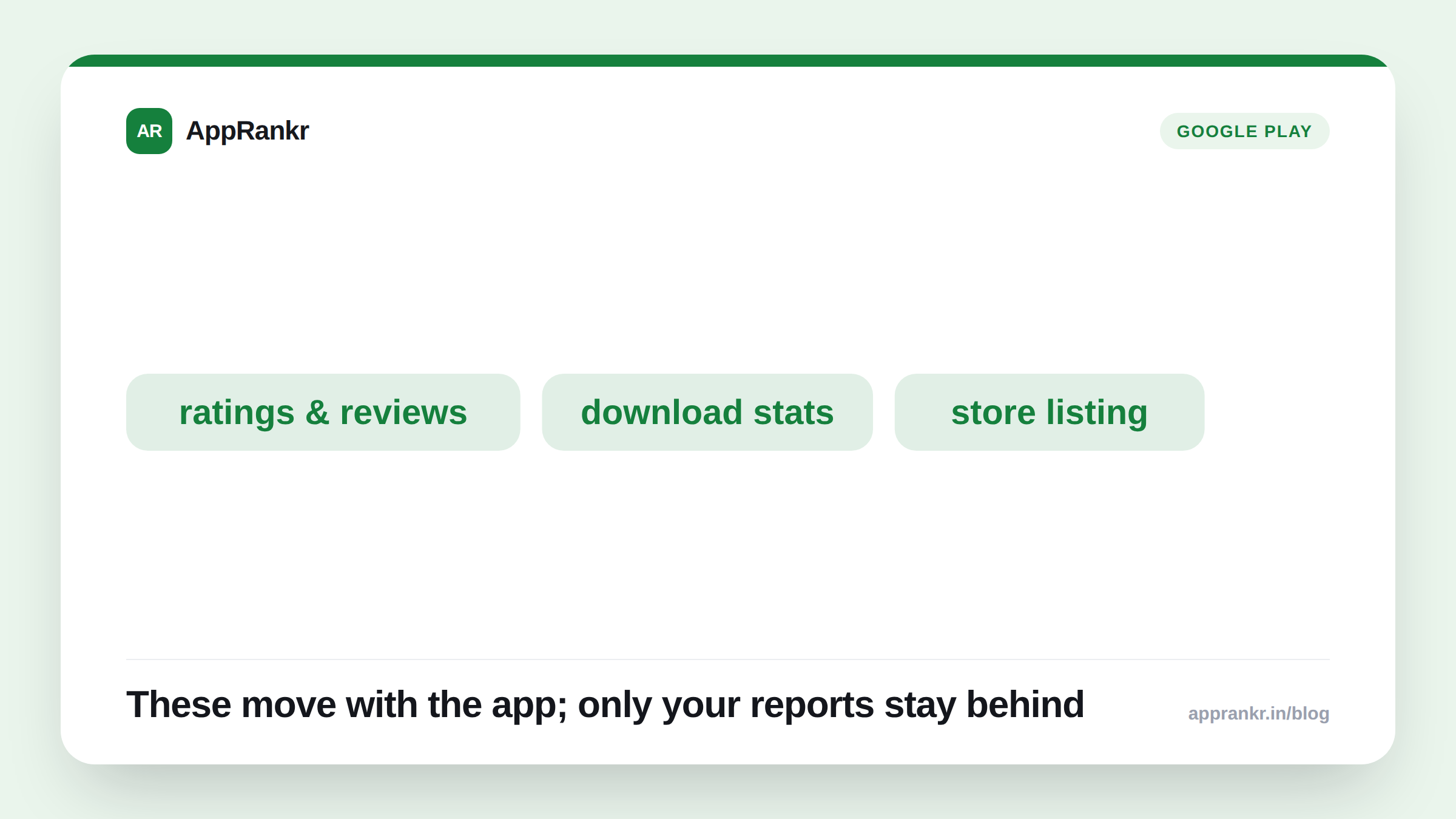
Moving a Google Play App to a New Developer Account: What Happens to Your Rank
Reporting on Google's own transfer process says ratings, reviews, and download stats move with the app, not the developer account. Here's what that means for your rankings.
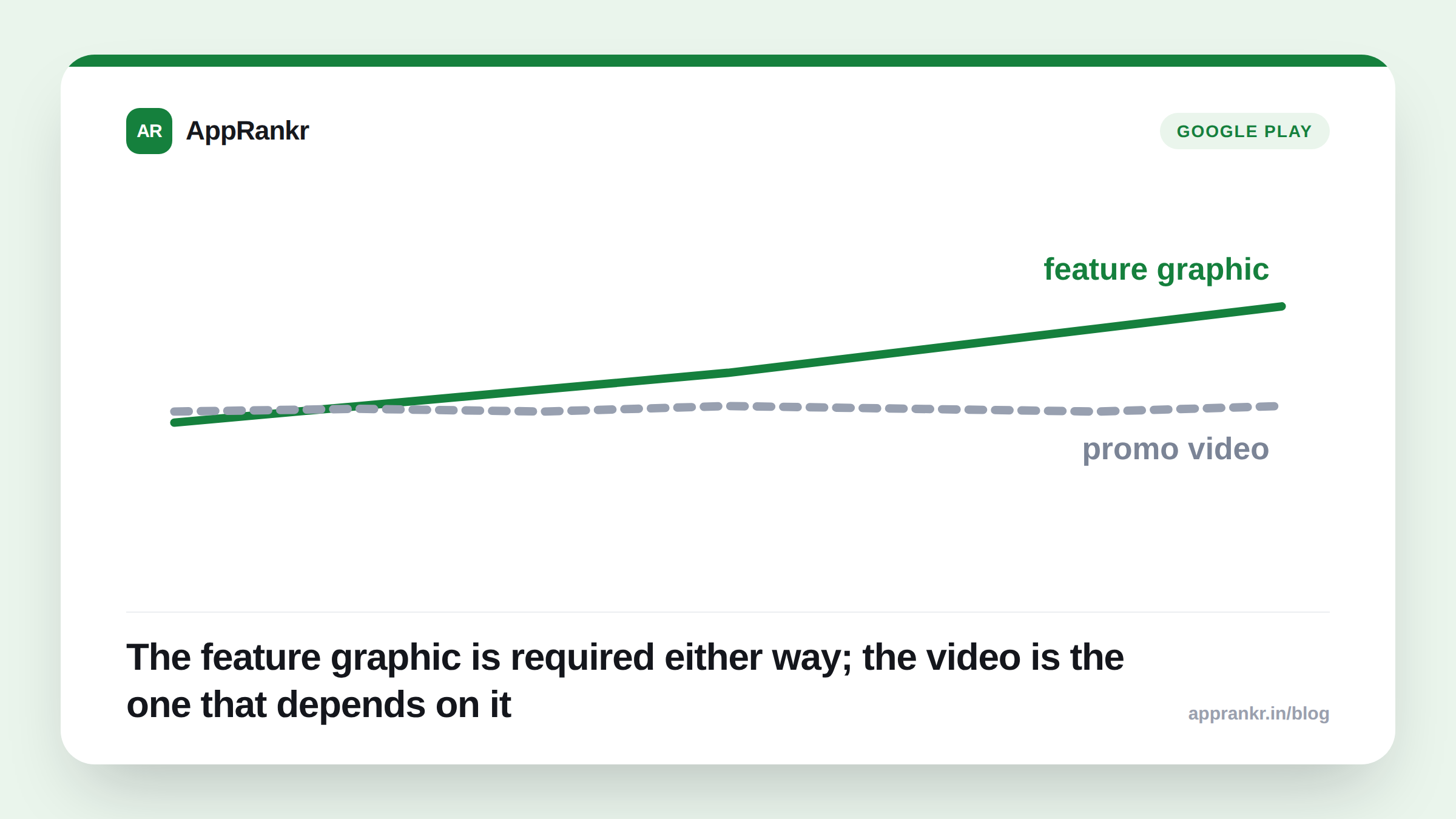
Google Play's Feature Graphic: Does It Only Matter If You Have a Video?
Google Play requires a feature graphic to publish any store listing at all, video or not. Here's what it actually does, and the one rule that ties it to your promo video.
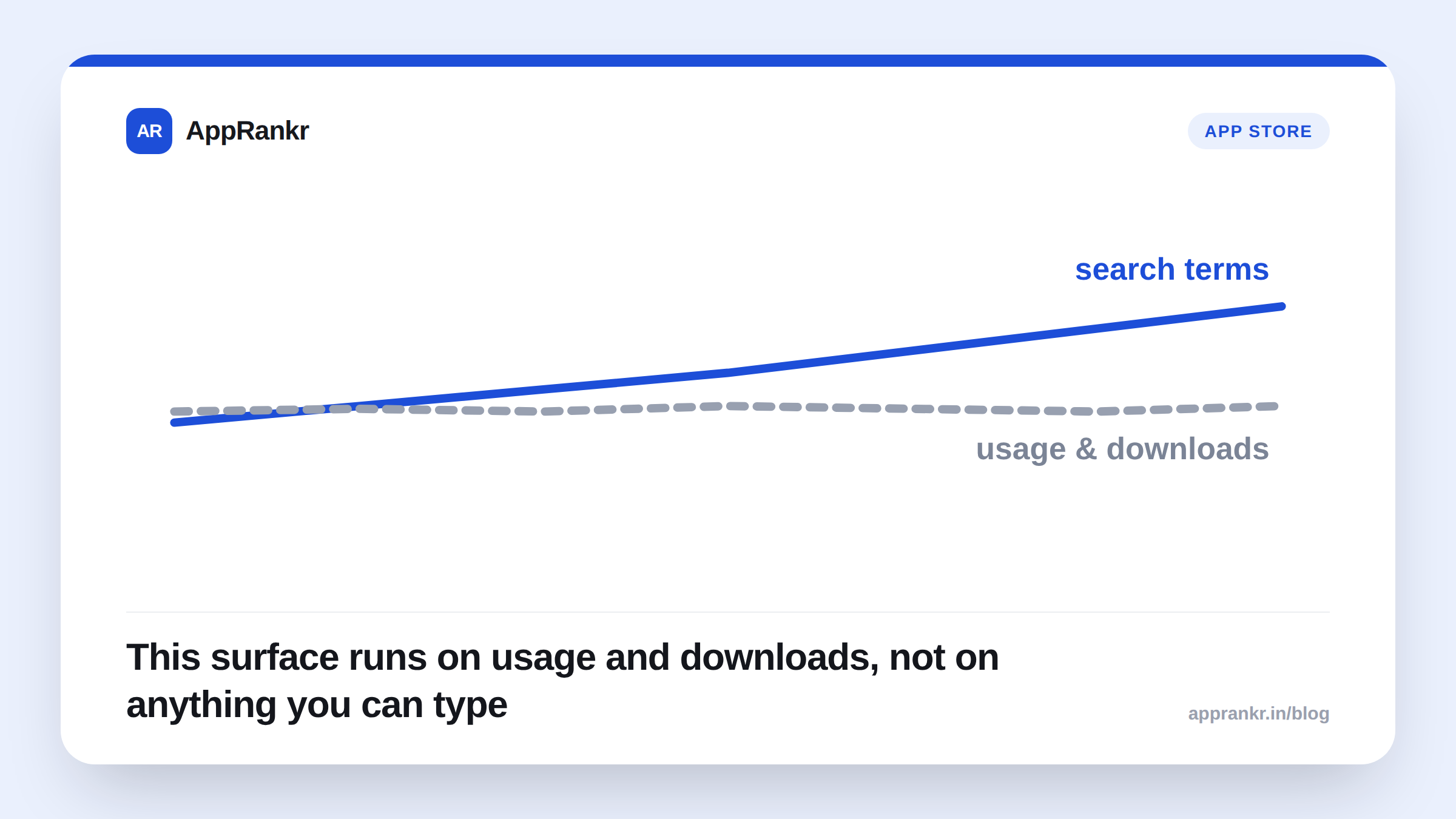
Apple's Personalized Collections: A Discovery Surface You Can't Directly Target
Apple's own page confirms Personalized Collections now surface apps based on usage and downloads, not search terms. Here's what's live, and what it means if you can't target it directly.
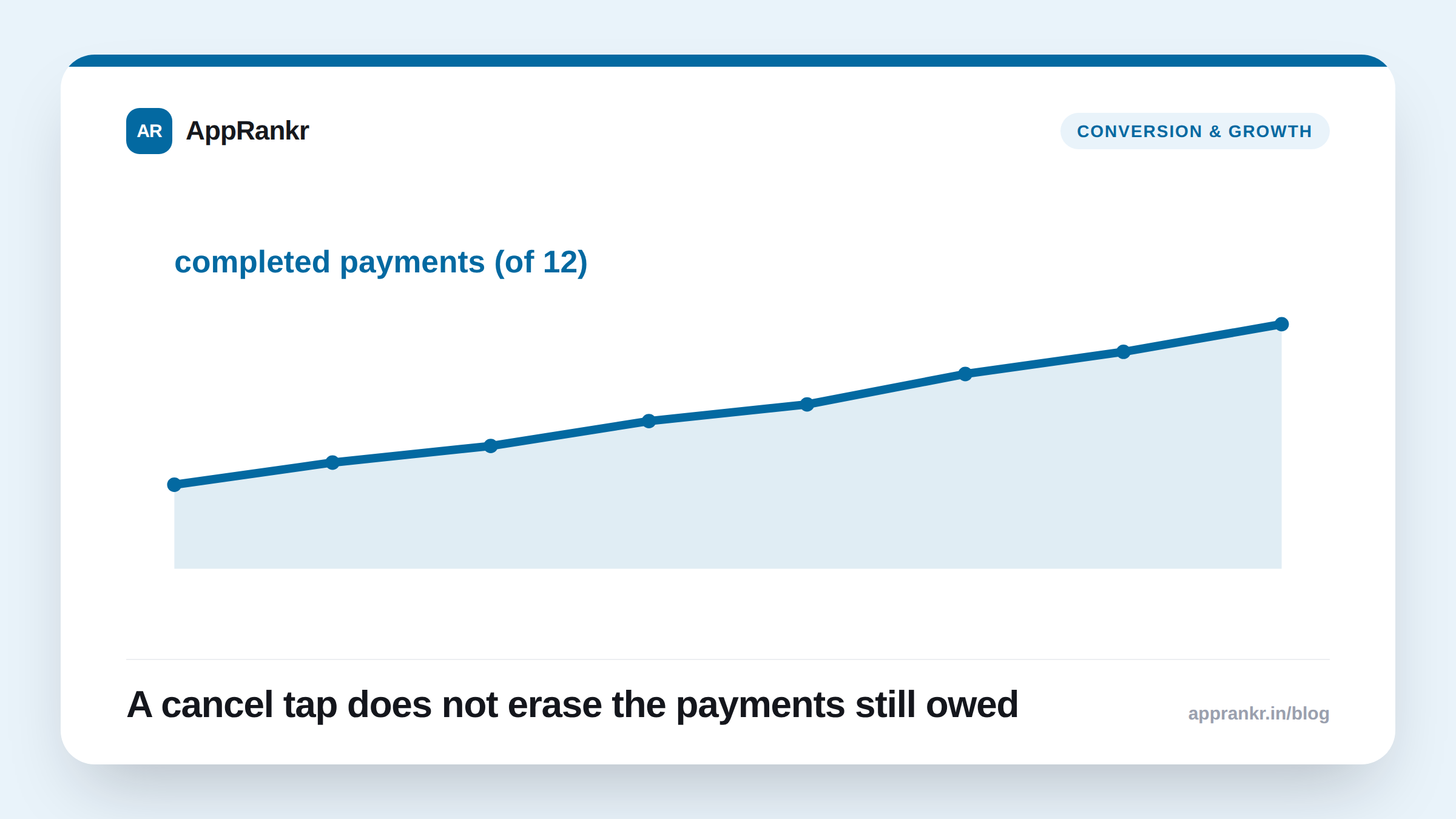
Apple's 12-Month Commitment Subscriptions: A Real Retention Lever, Not Just a Price Trick
Apple's own developer news confirms monthly subscriptions with a 12-month commitment are live outside the US and Singapore. Here's what it actually does to cancellations, and what it doesn't.
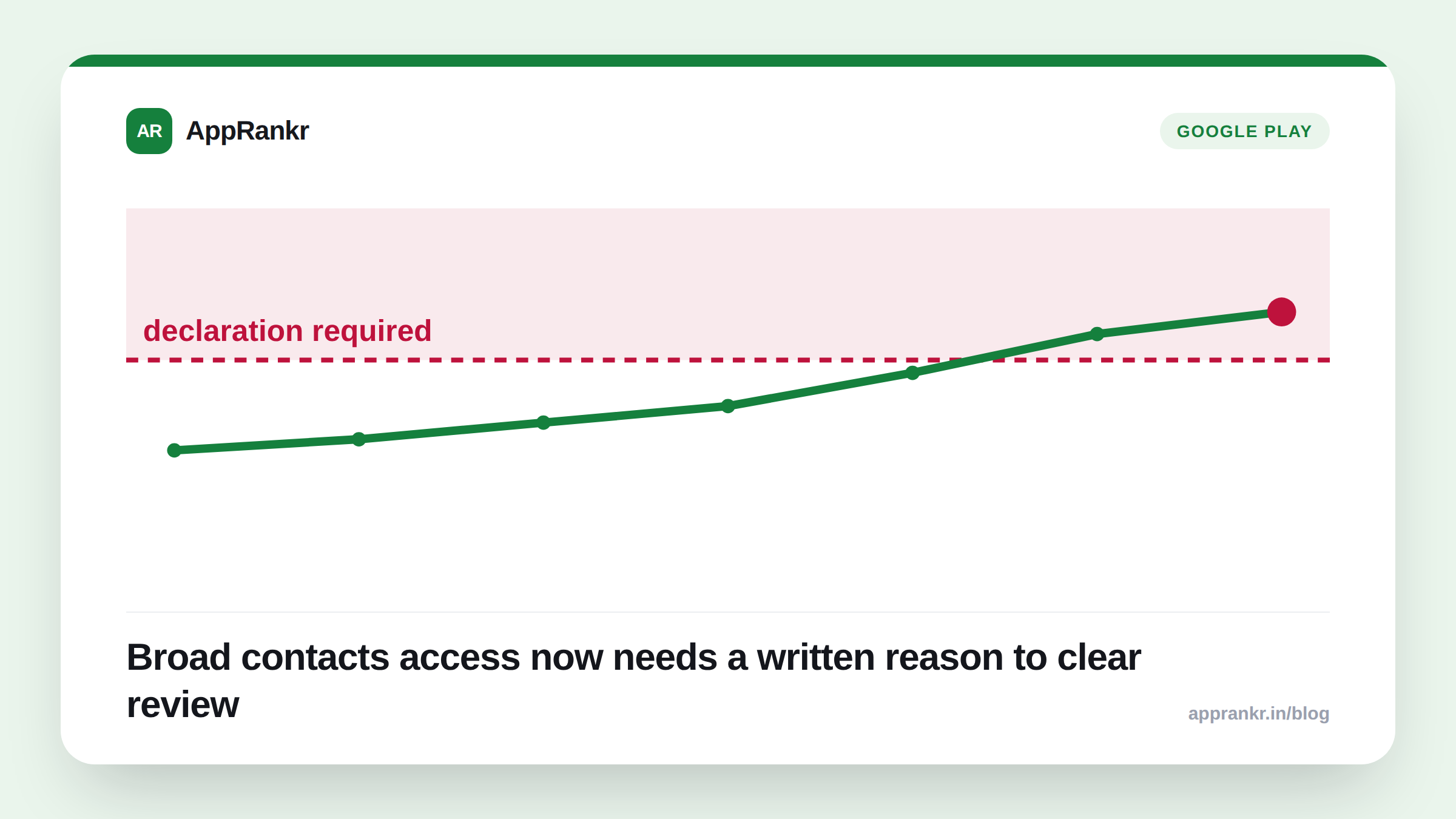
Google Play's Contact Picker Switch: What Your READ_CONTACTS Permission Now Requires
Android's own Contact Picker page confirms a privacy-preserving alternative to broad contacts access. Reporting says Play Console is now prompting a declaration for apps that still request READ_CONTACTS. Here's what's confirmed and what's still reported.
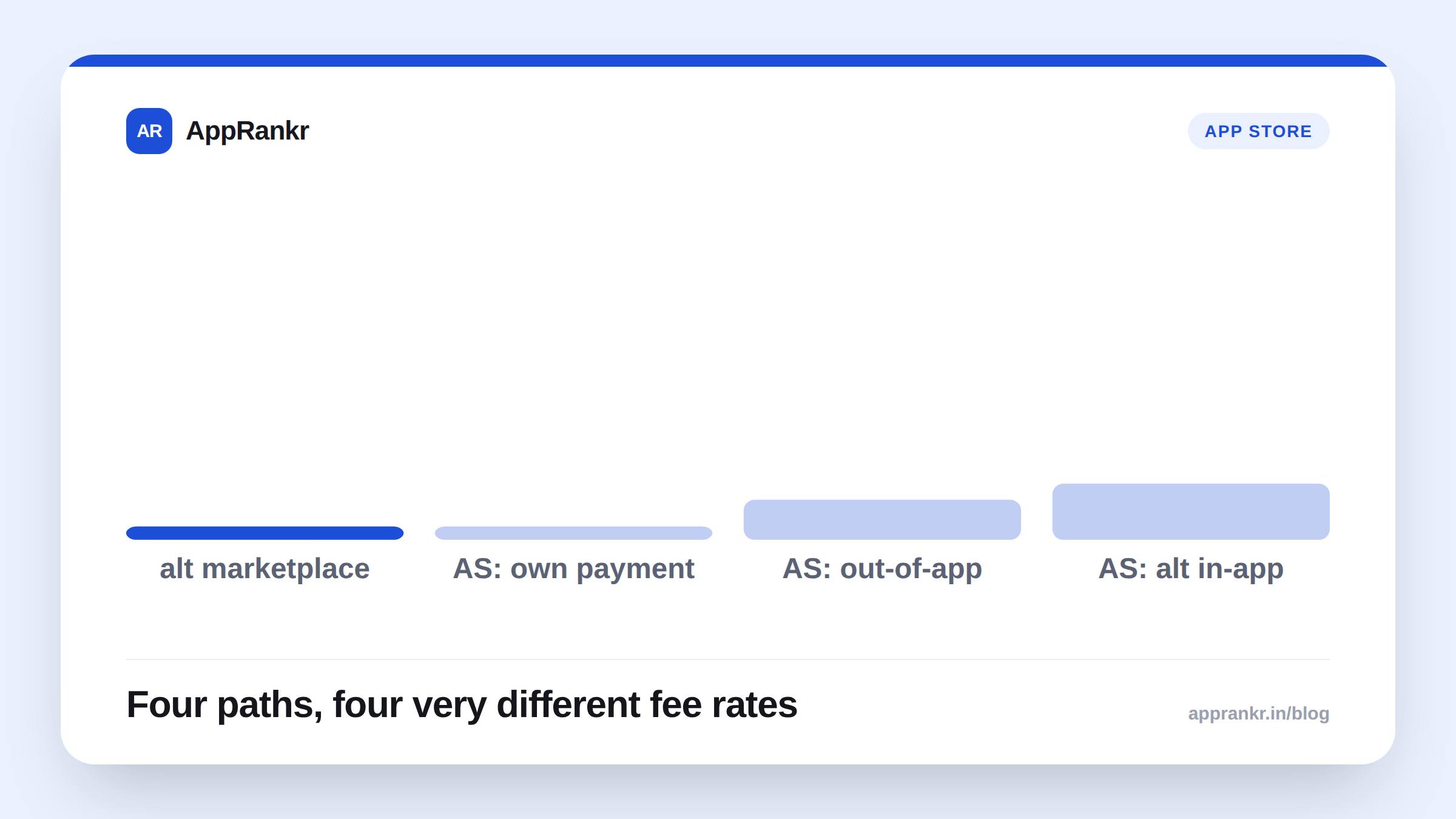
Apple's Brazil Changes: Alternative Stores, Alternative Payments, Real Fee Numbers
Following a CADE settlement, Apple's own page lists exact new fees for alternative marketplaces and payments in Brazil. Here's what's confirmed, not a rumor or a guess.
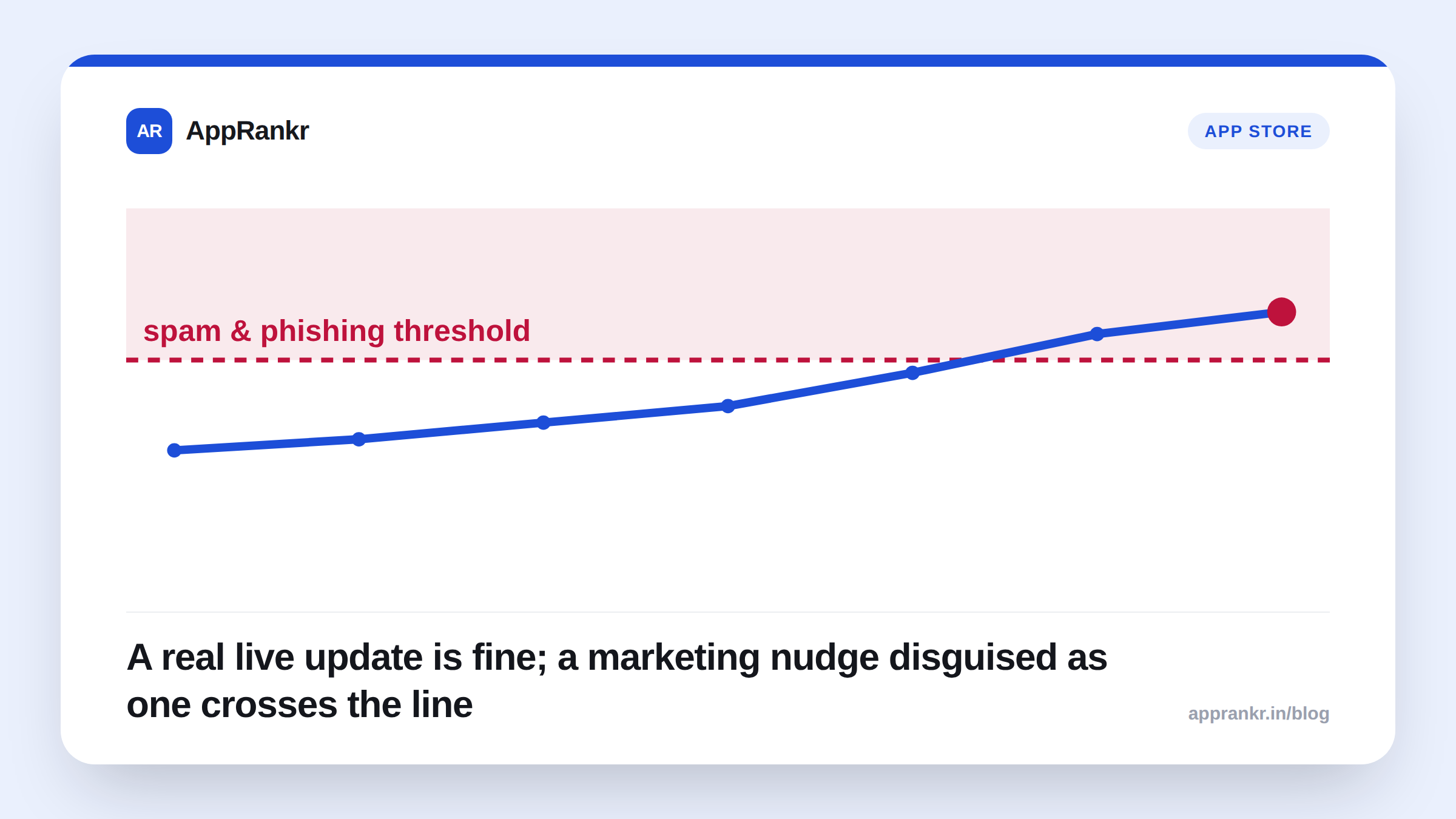
Apple's New Rule 4.5.3: Live Activities Can't Be Used to Spam Users
Apple's own App Store Review Guidelines now name Live Activities directly in its anti-spam rule. Here's the exact wording, and what still counts as a legitimate use.
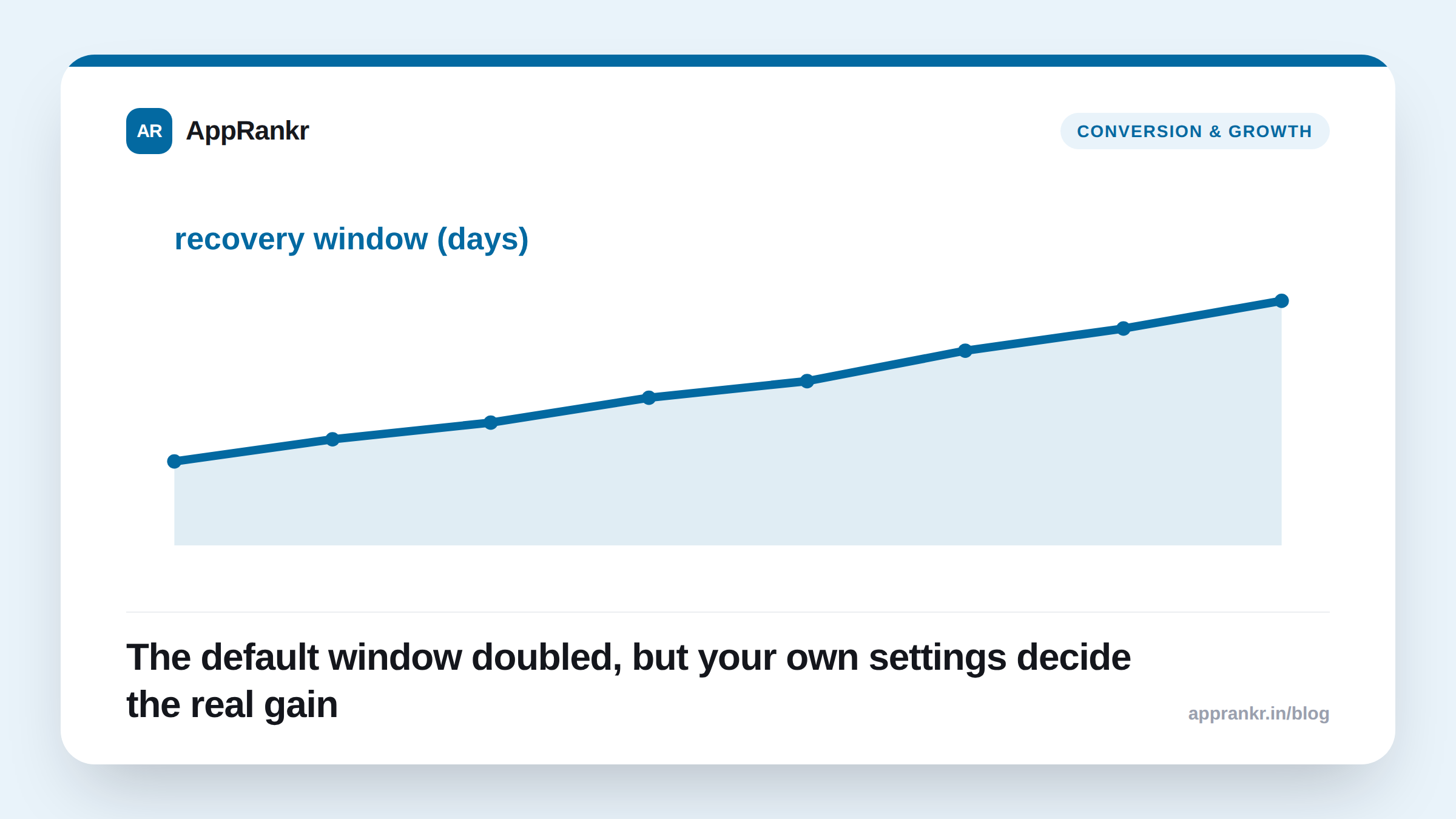
Google Play's 60-Day Recovery Window: A Real Lever Against Subscription Churn
Google extended its default subscription payment recovery period from 30 to 60 days. Here's how grace period and account hold actually split that window, and why your own settings still matter.
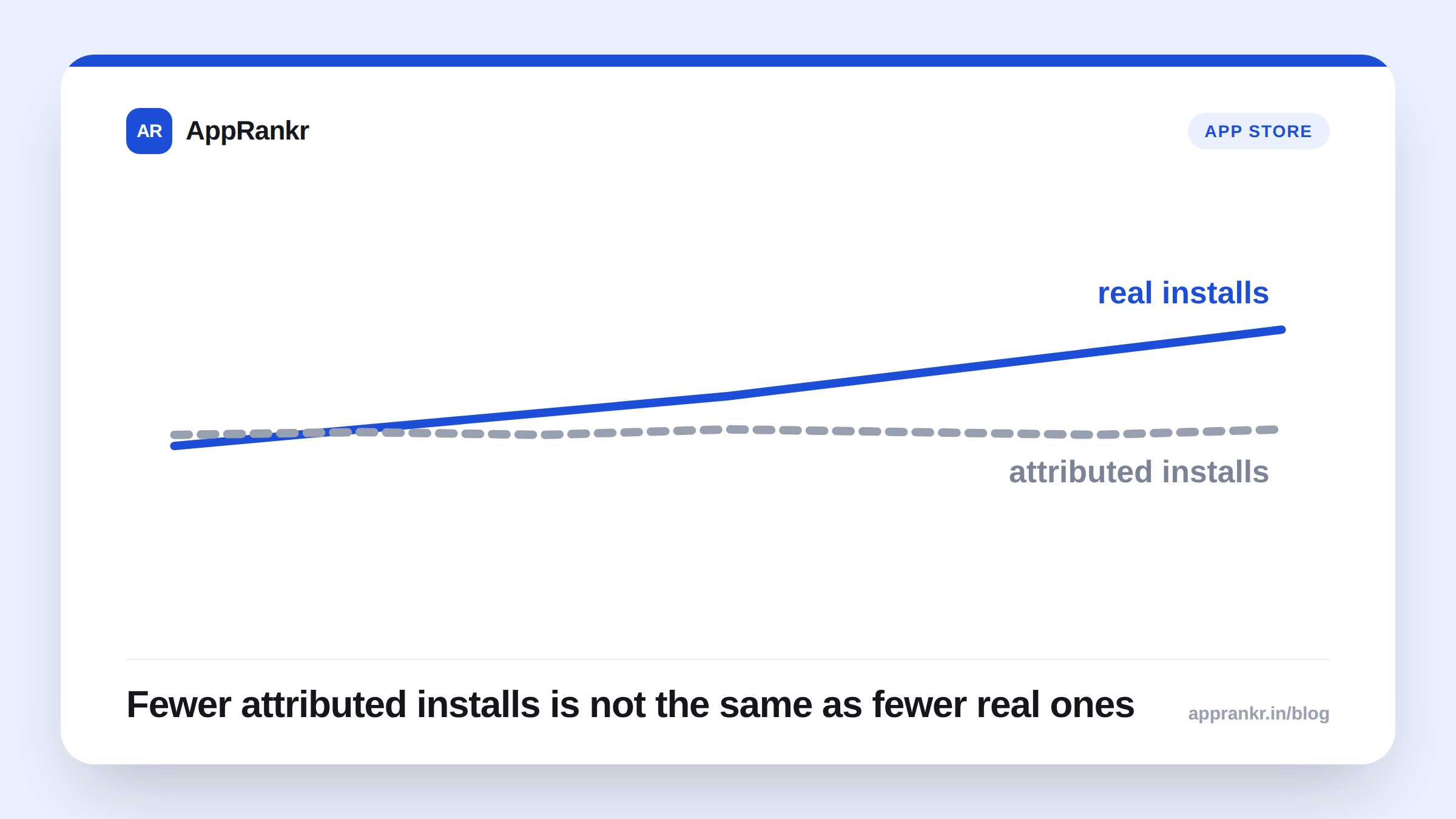
Apple Search Ads' September 2026 Attribution Change: What It Means for Your Numbers
Reporting says Apple Ads dropped attribution for age and gender targeted ad groups starting September 1, 2026, and added a touchpoint timestamp. Here's what that likely does to your reported numbers.
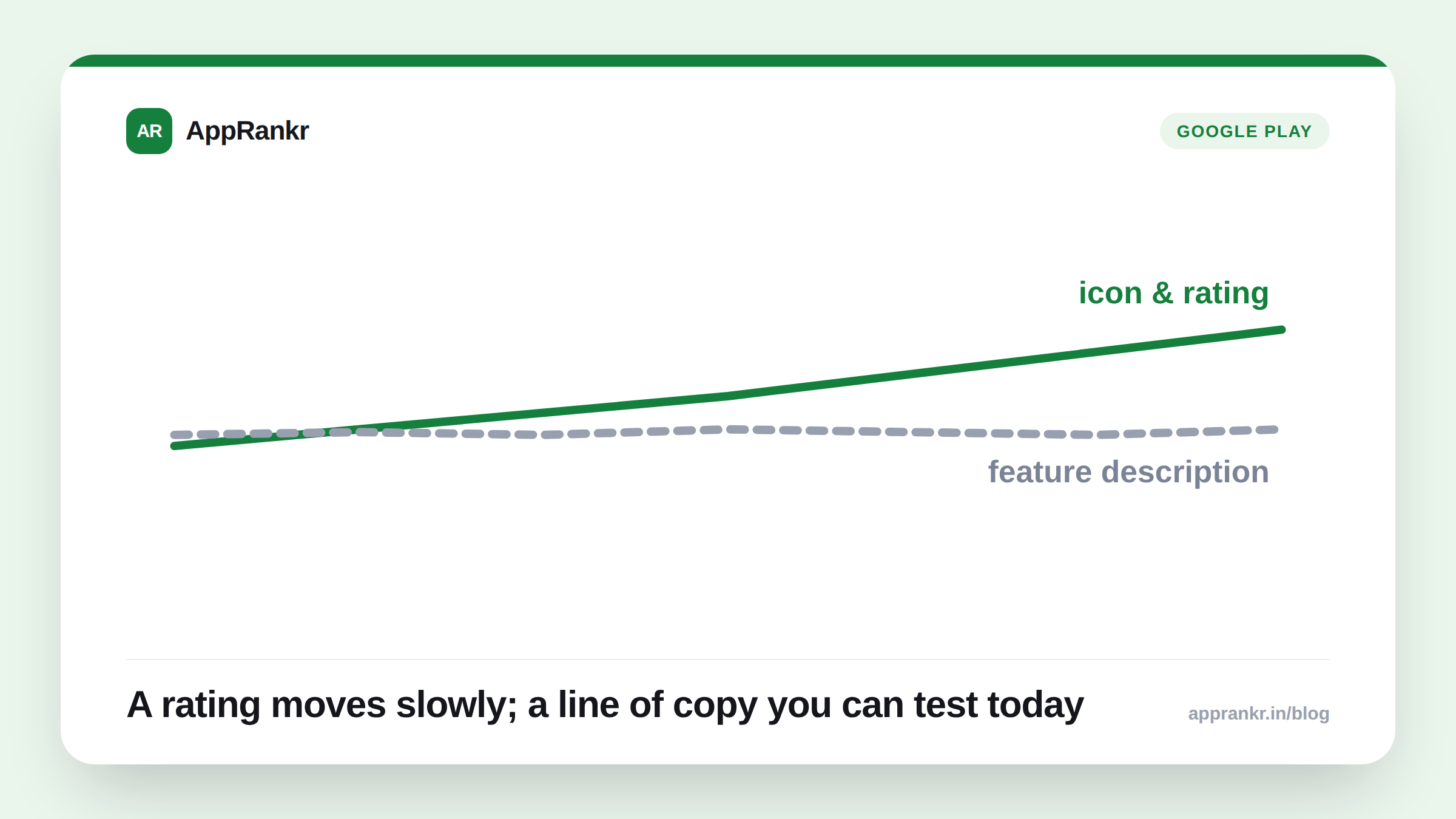
Google Play's Similar Apps Cards Now Show a Line of Copy, Not Just a Rating
A September 2026 Play Store update adds a short description to Similar Apps cards. Here's what's reported, and why it turns a passive discovery surface into one worth testing.
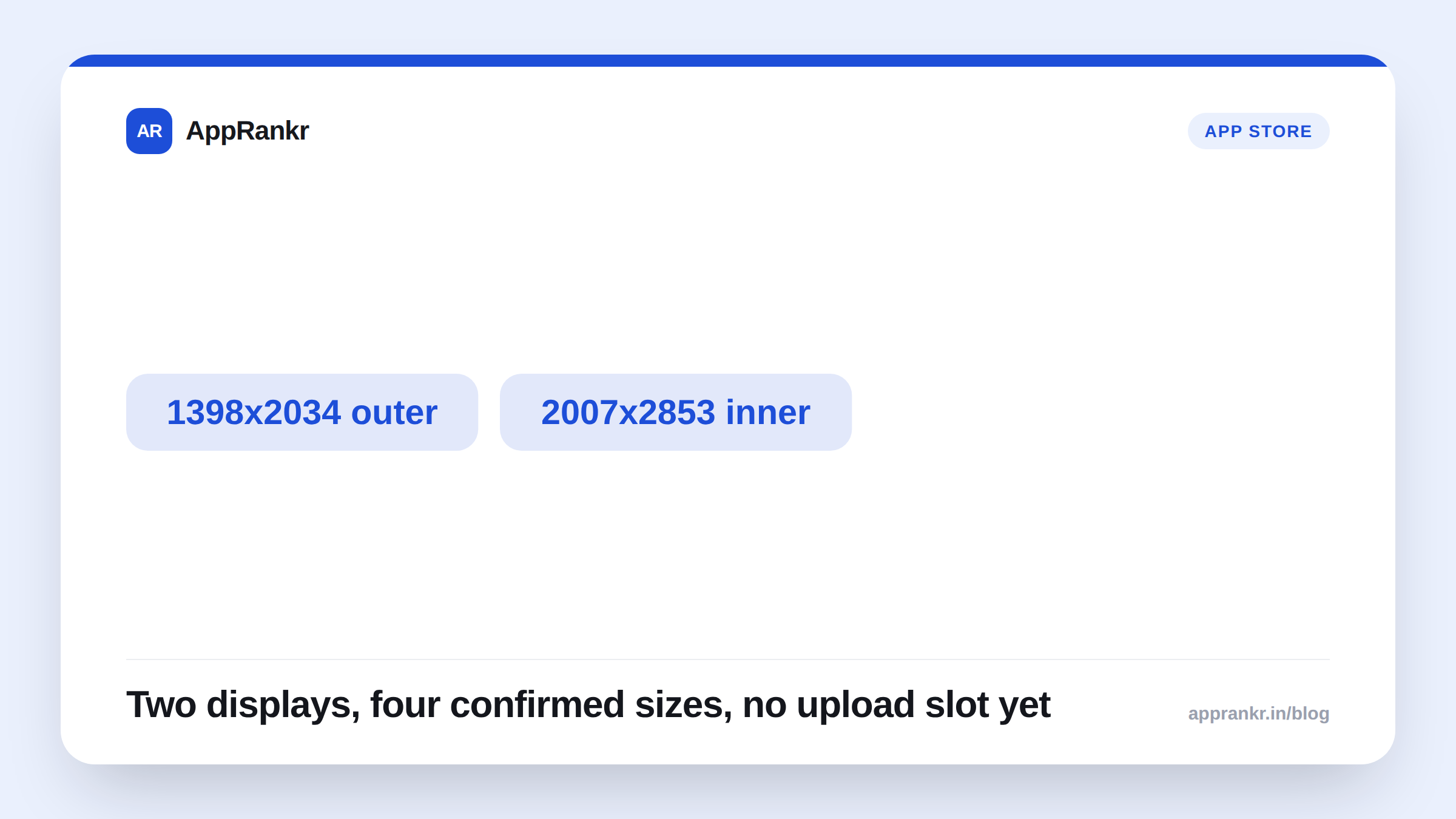
iPhone Duo Screenshot Specs: Two Displays, Two Full Sets of Assets
Apple's own App Store Connect docs already list exact screenshot sizes for iPhone Duo's outer and inner displays. Here's what's confirmed, and why upload isn't live yet.
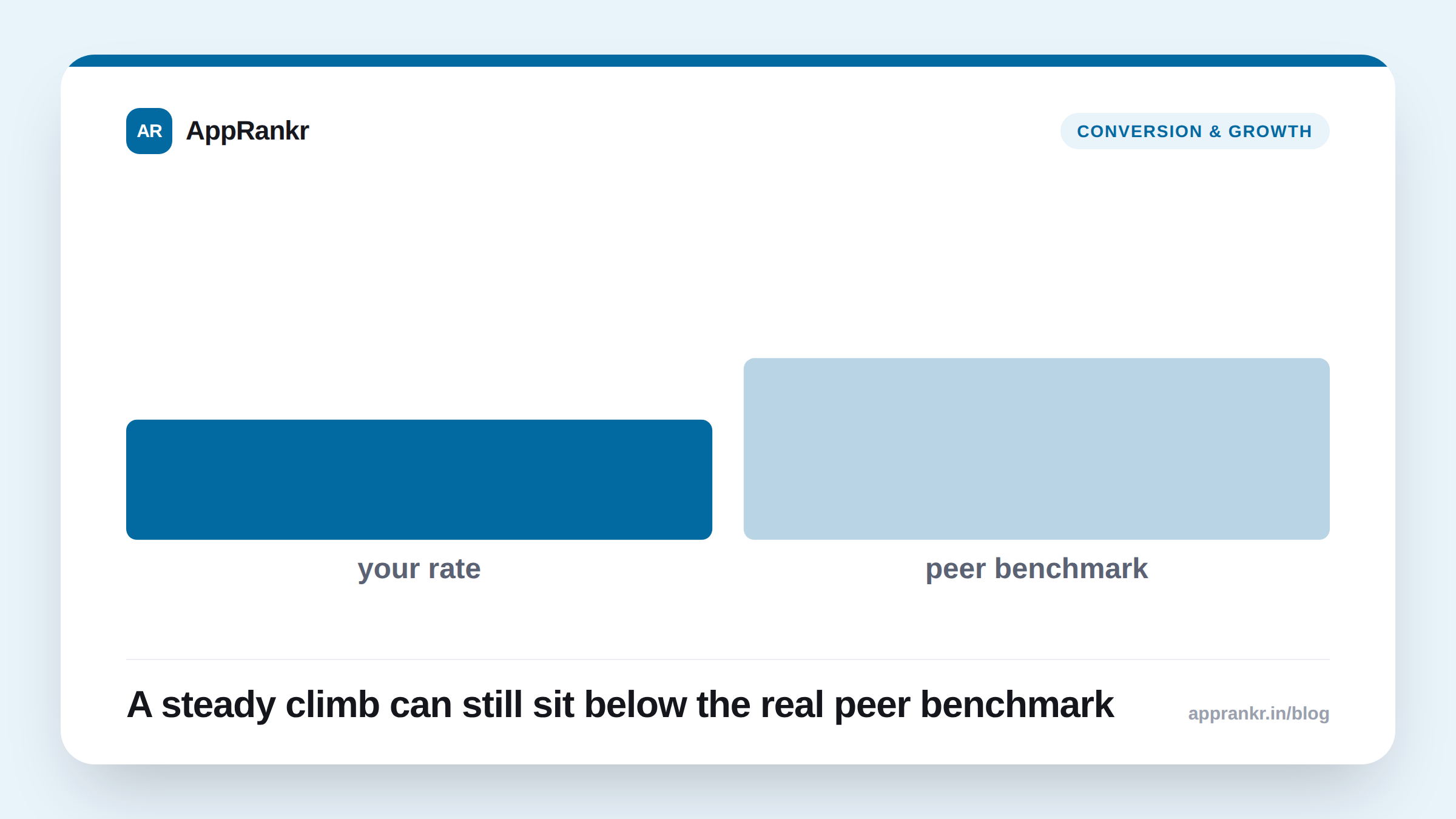
App Store Connect's New Peer Benchmarks: Comparing Your Conversion to Similar Apps
Apple's biggest Analytics update yet adds peer-group benchmarks for download-to-paid conversion and proceeds per download. Here's exactly what Apple's own announcement confirms.
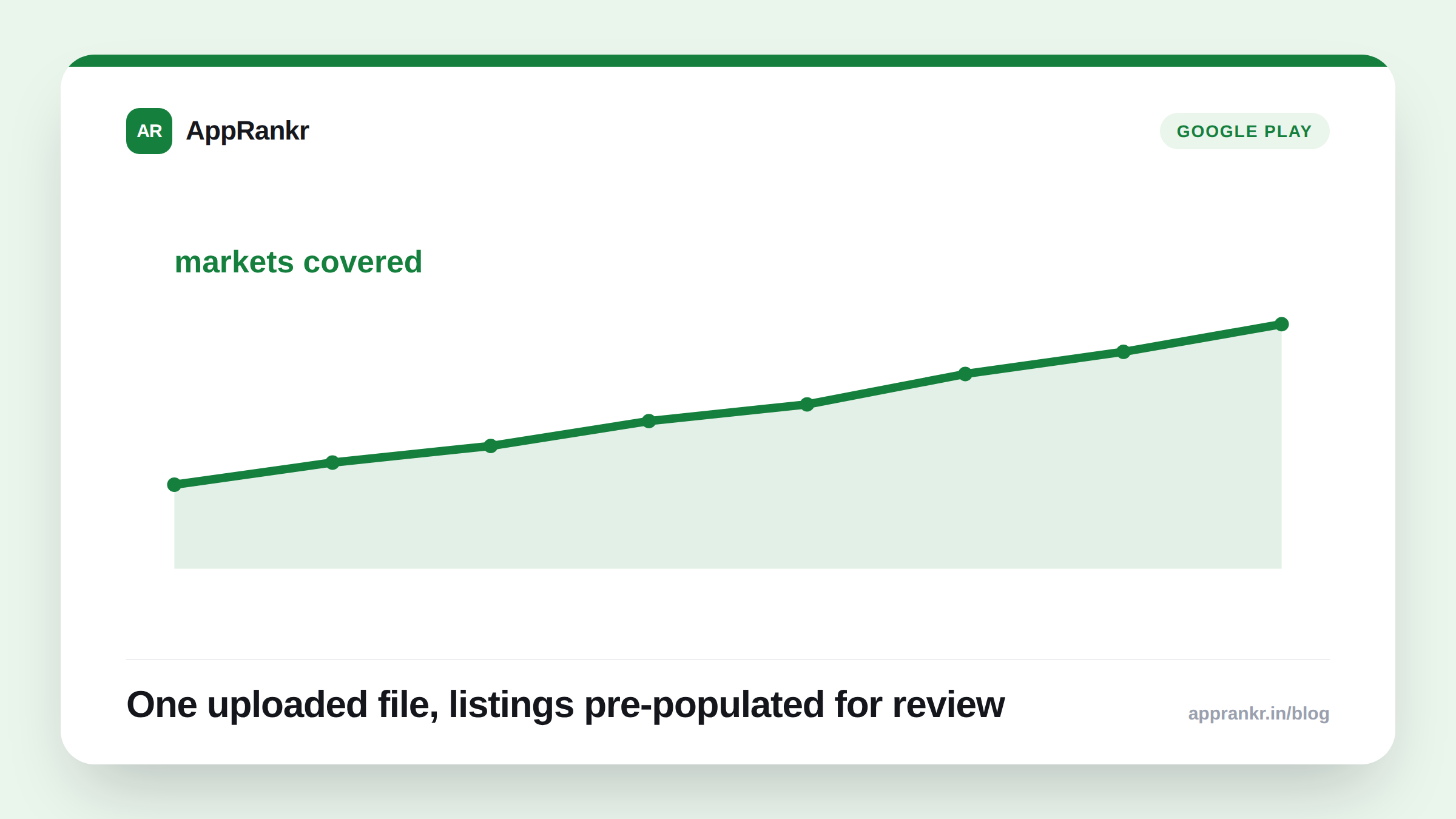
Google Play's New AI Localization Tool: Upload a Spreadsheet, Get Listings in 80+ Markets
Google Play Console now uses Gemini to pre-populate store listings across languages from one uploaded file. Here's what Google's own I/O 2026 announcement confirms.
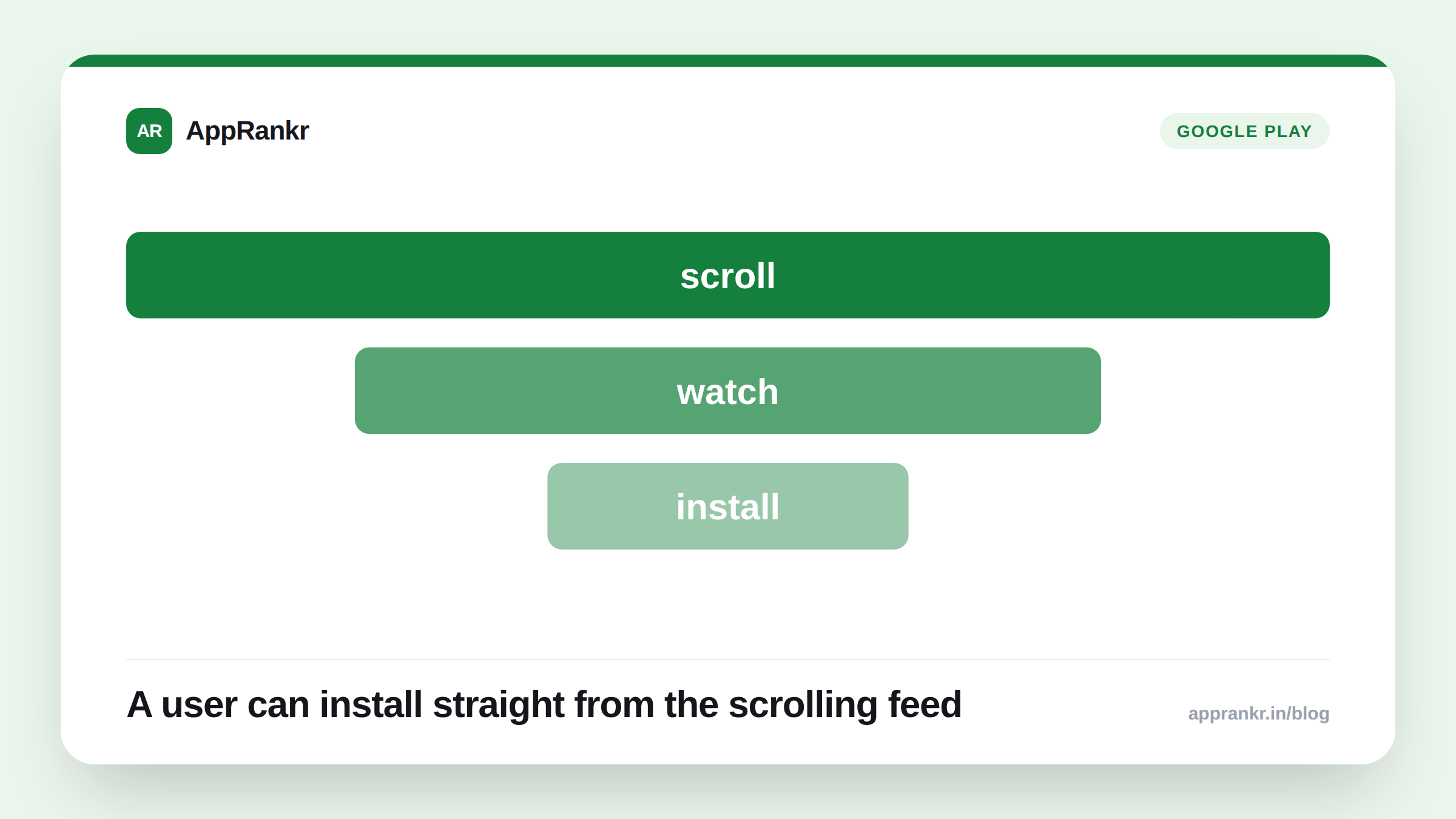
Google Play Shorts: A New Video Discovery Feed, and What It Requires Now
Google Play's new short-form video feed lets users install straight from a scrolling clip. Here's what Google's own pages confirm about rollout, and a real workflow change developers need to know.
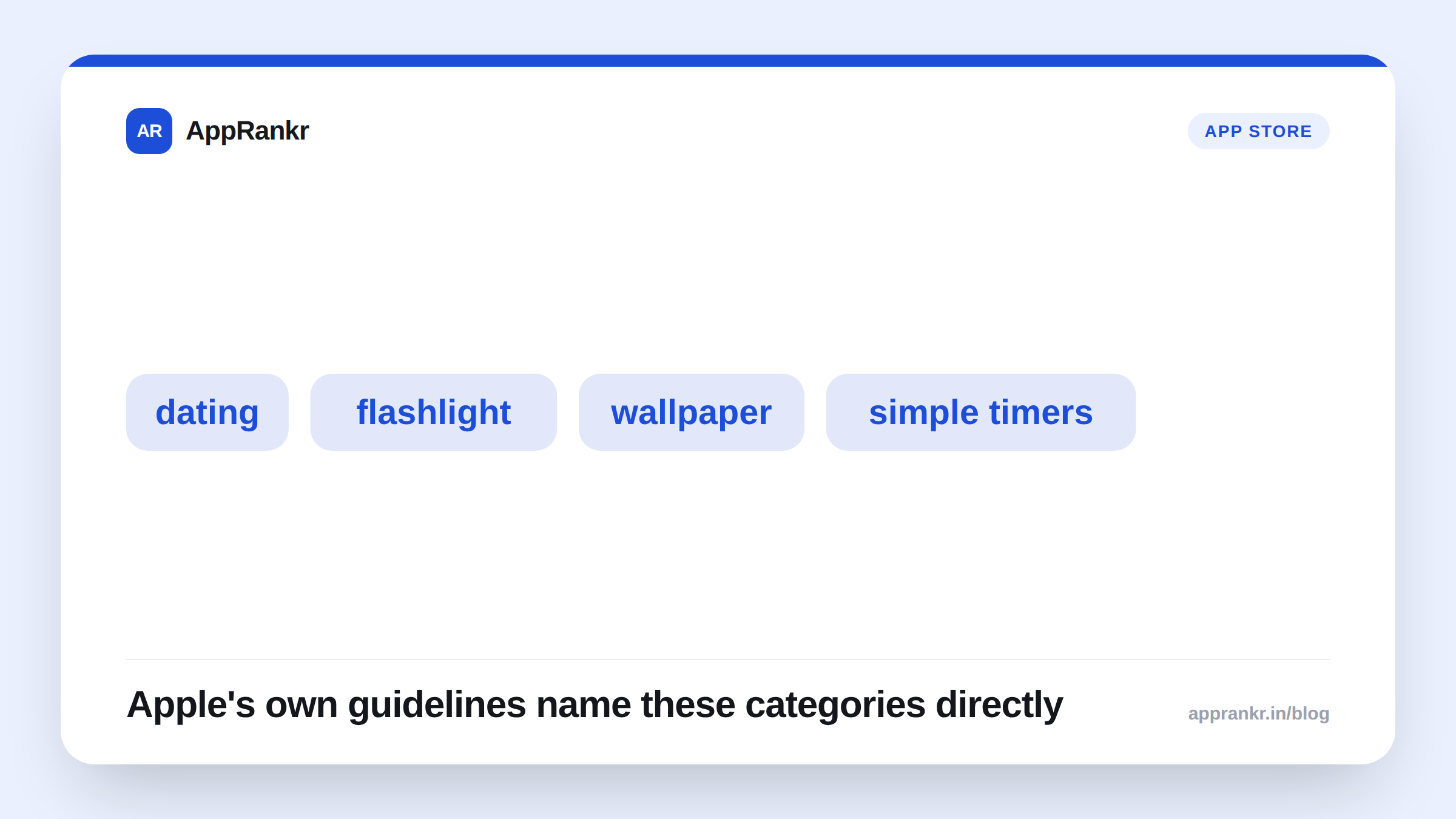
Apple's Low-Value App Rule: Which Categories Now Risk Rejection or Removal
Apple's own App Store guidelines name specific app categories that face rejection or removal unless they're meaningfully different. Here's the exact wording, and what it means if your app is one of them.
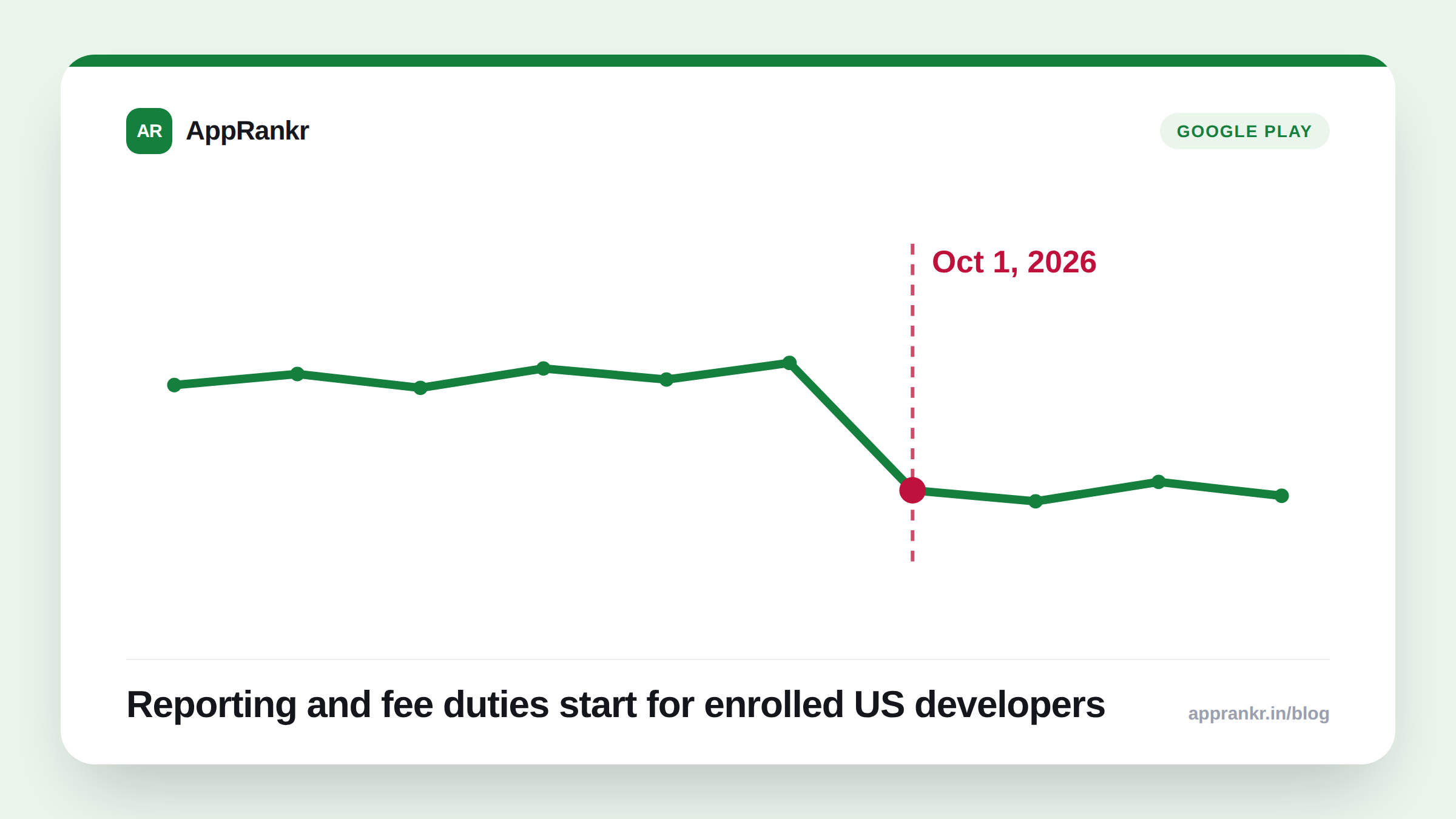
Google Play's October 1 Fee Deadline for Alternative Billing and External Links
Developers using Google Play's US alternative billing or external content links programs must start reporting transactions and paying fees on October 1, 2026. Here's what that actually requires.
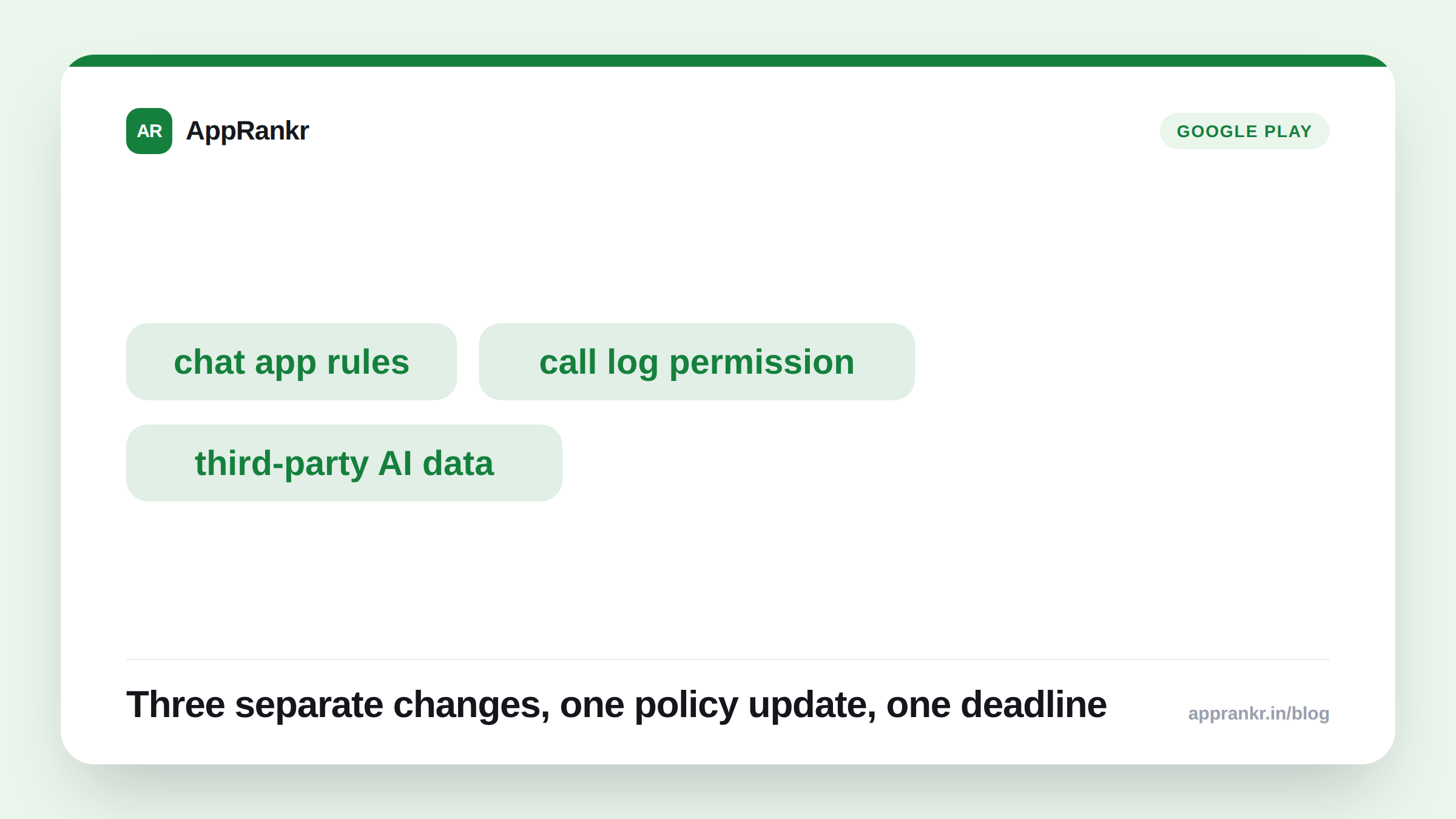
Google Play's July 2026 Policy Update: Chat Apps, Call Log Permissions, and AI Data
Google's July 15, 2026 policy update changes rules for anonymous chat apps, removes a common use for the Call Log permission, and confirms user data rules cover third-party AI too. Here's what's actually required.
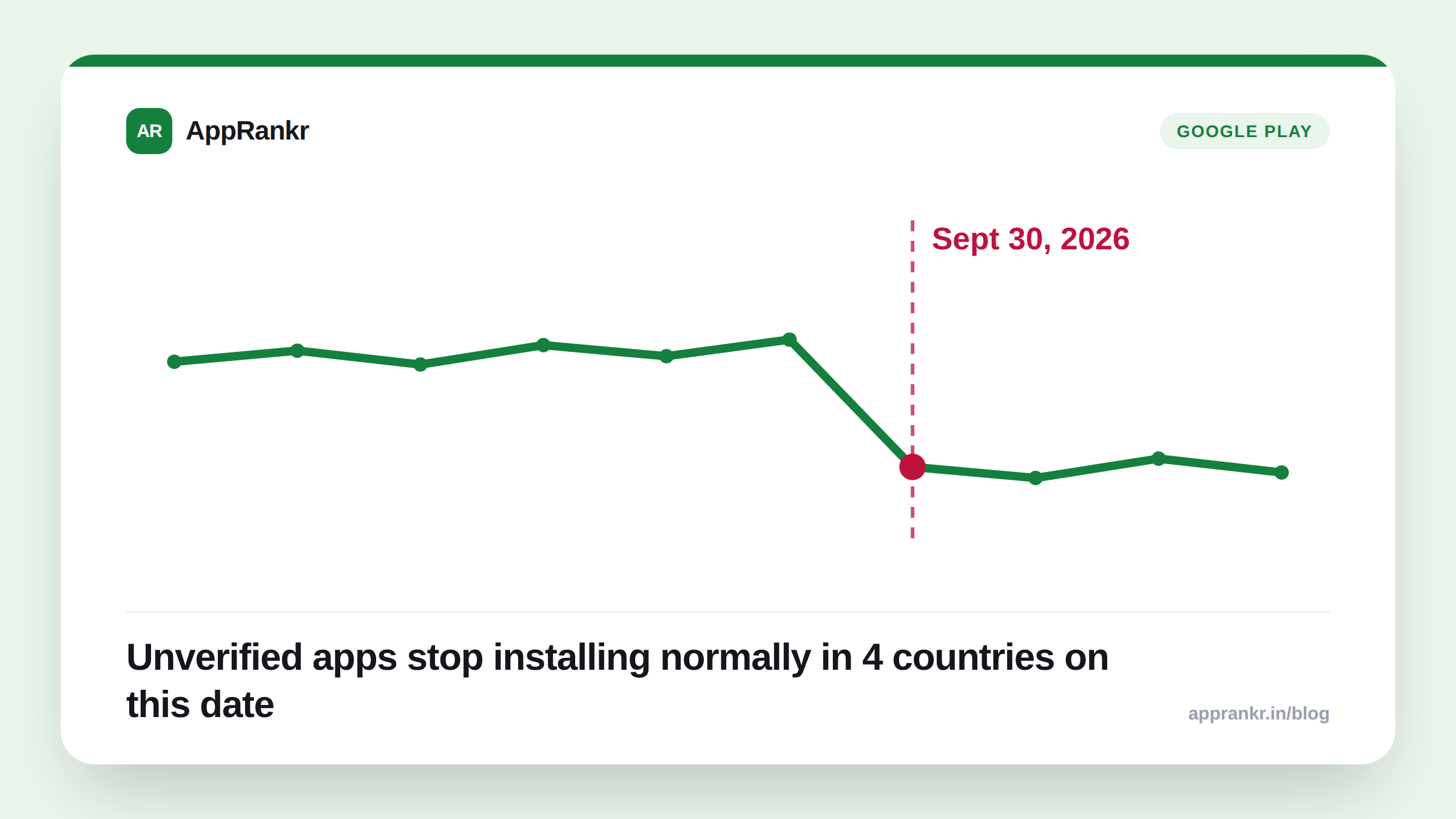
Android Developer Verification: What the September 30 Deadline Actually Blocks
Google starts blocking normal installs of unverified developers' apps in four countries on September 30, 2026. Here's what Google's own page confirms, across every store it covers, not just Google Play.
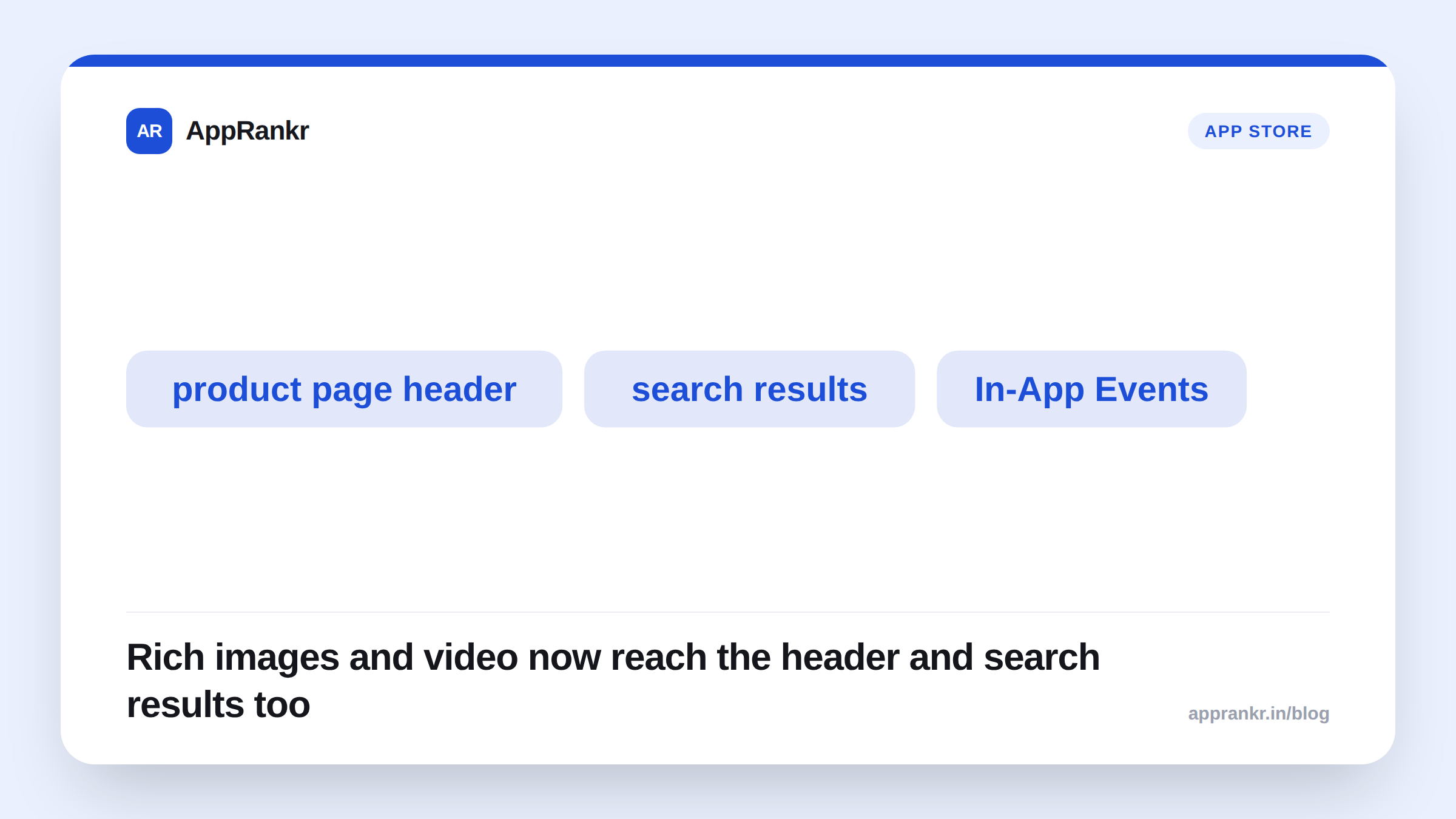
Apple's New App Store Creative Assets: A Discovery Surface Beyond Screenshots
Apple is adding rich image and video placements to product page headers and search results this fall. Here's what Apple's own page confirms, and what's still just a preview.
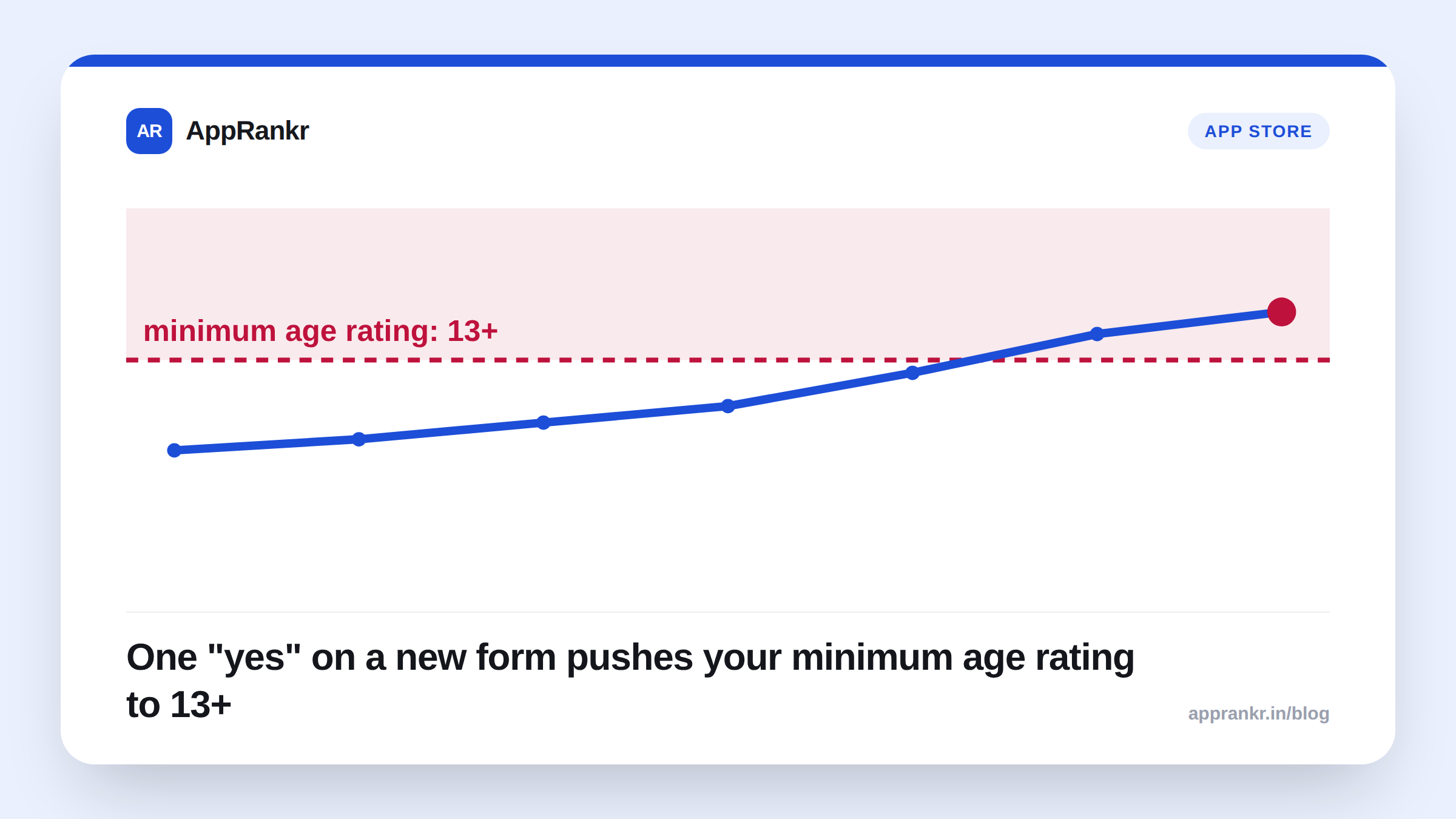
Apple's New Social Media Capability Disclosure: What It Actually Changes
Apple now requires apps to declare social media capabilities in the age rating questionnaire. Here's Apple's own definition, and what a wrong answer can do to your age rating.
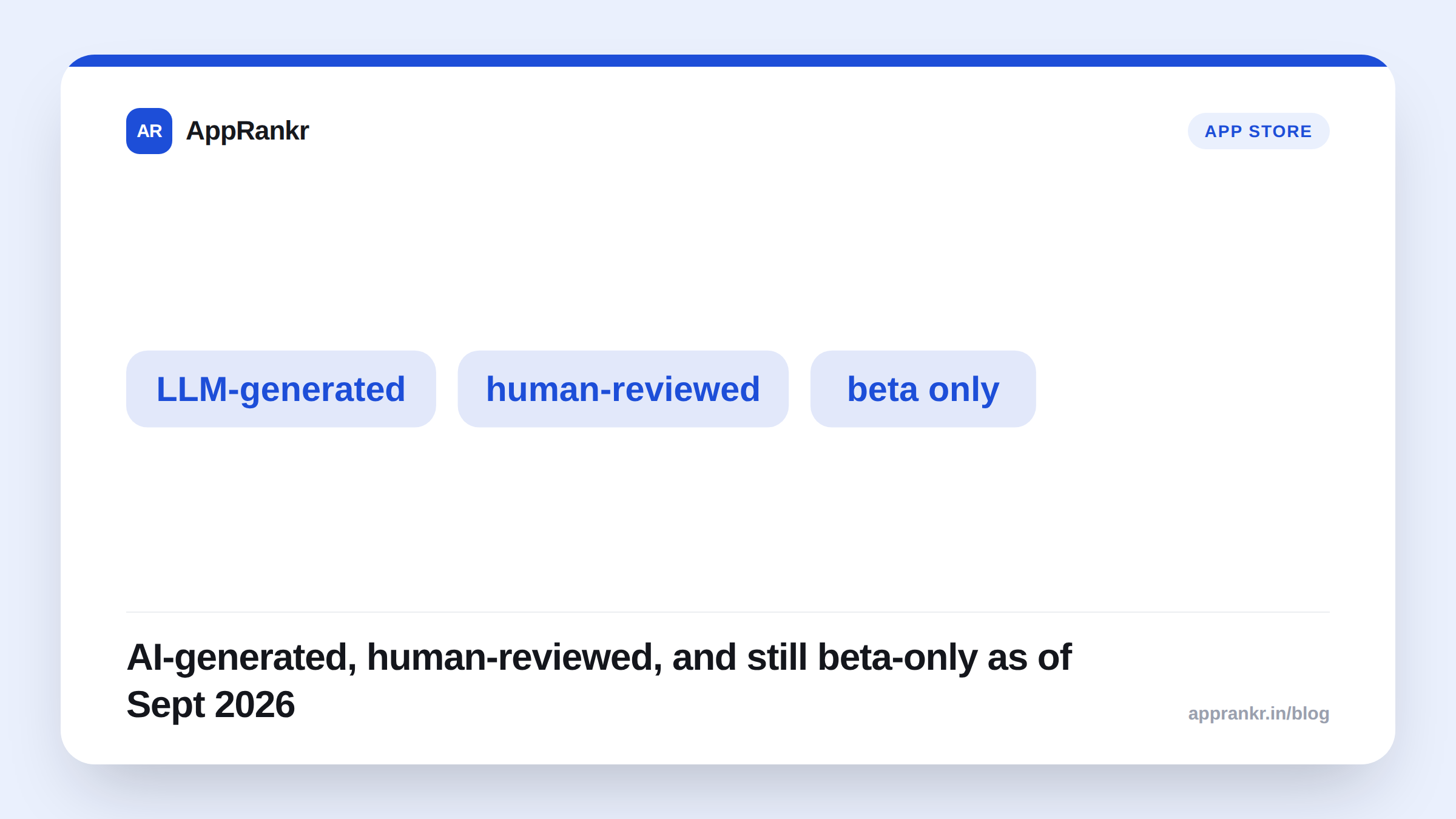
Apple's AI-Generated App Store Tags: What They Are and What They Aren't Yet
Apple is using its own LLMs to generate descriptive tags for apps in App Store search. Here's what's confirmed, what's still beta-only, and what it means for ASO.
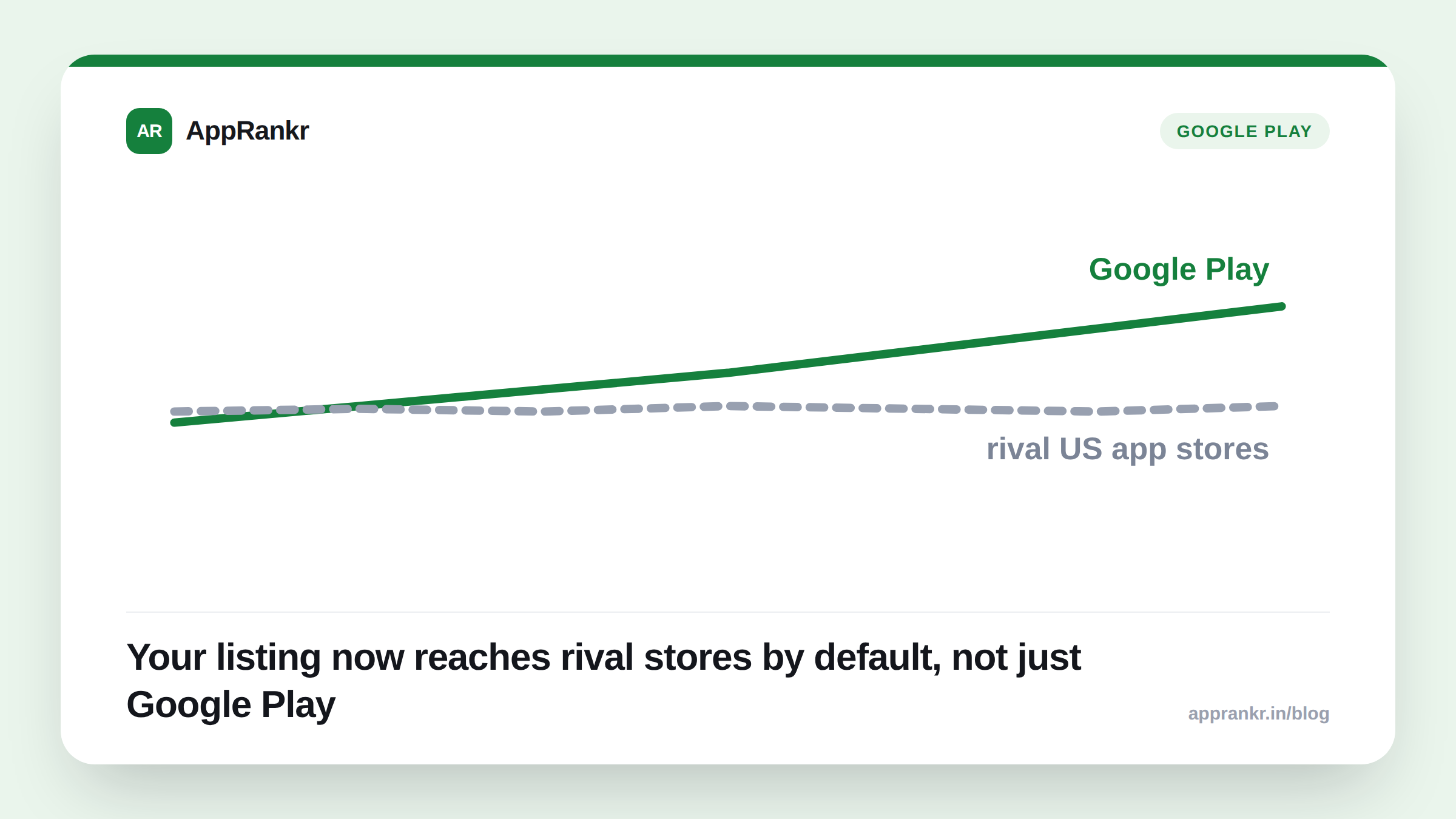
Your Google Play Listing Is Now Shared With Rival US App Stores by Default
Since July 22, 2026, Google Play automatically shares US app listings with third-party Android app stores unless developers opt out. Here's what Google's own page confirms.
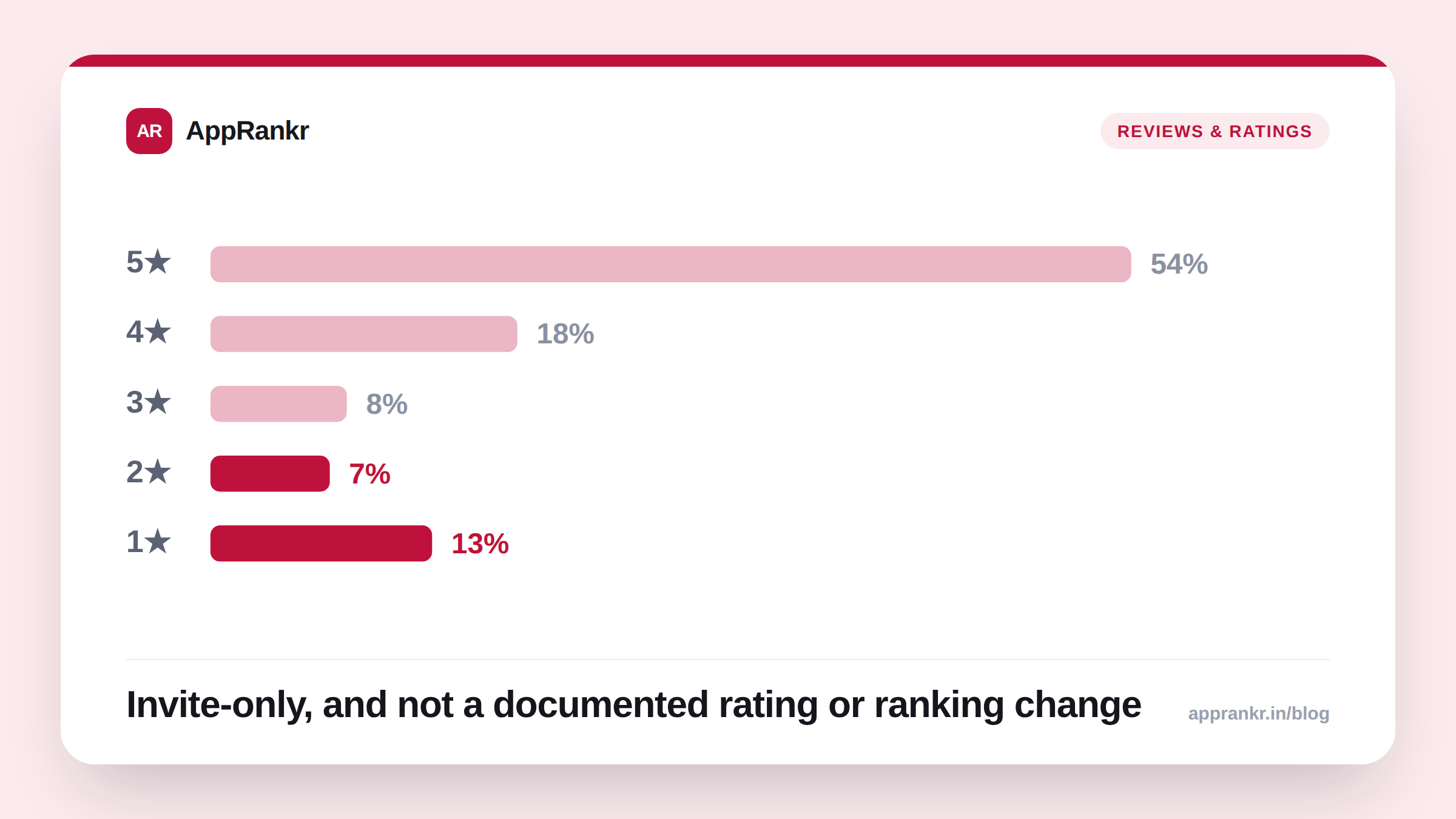
Google Play's Trusted Contributor Badge: What It Means for the Reviews on Your App
Google now marks some Play Store reviewers with a Trusted Contributor badge. Here's what Google's own help page says about how it works and what it means for the reviews you see.
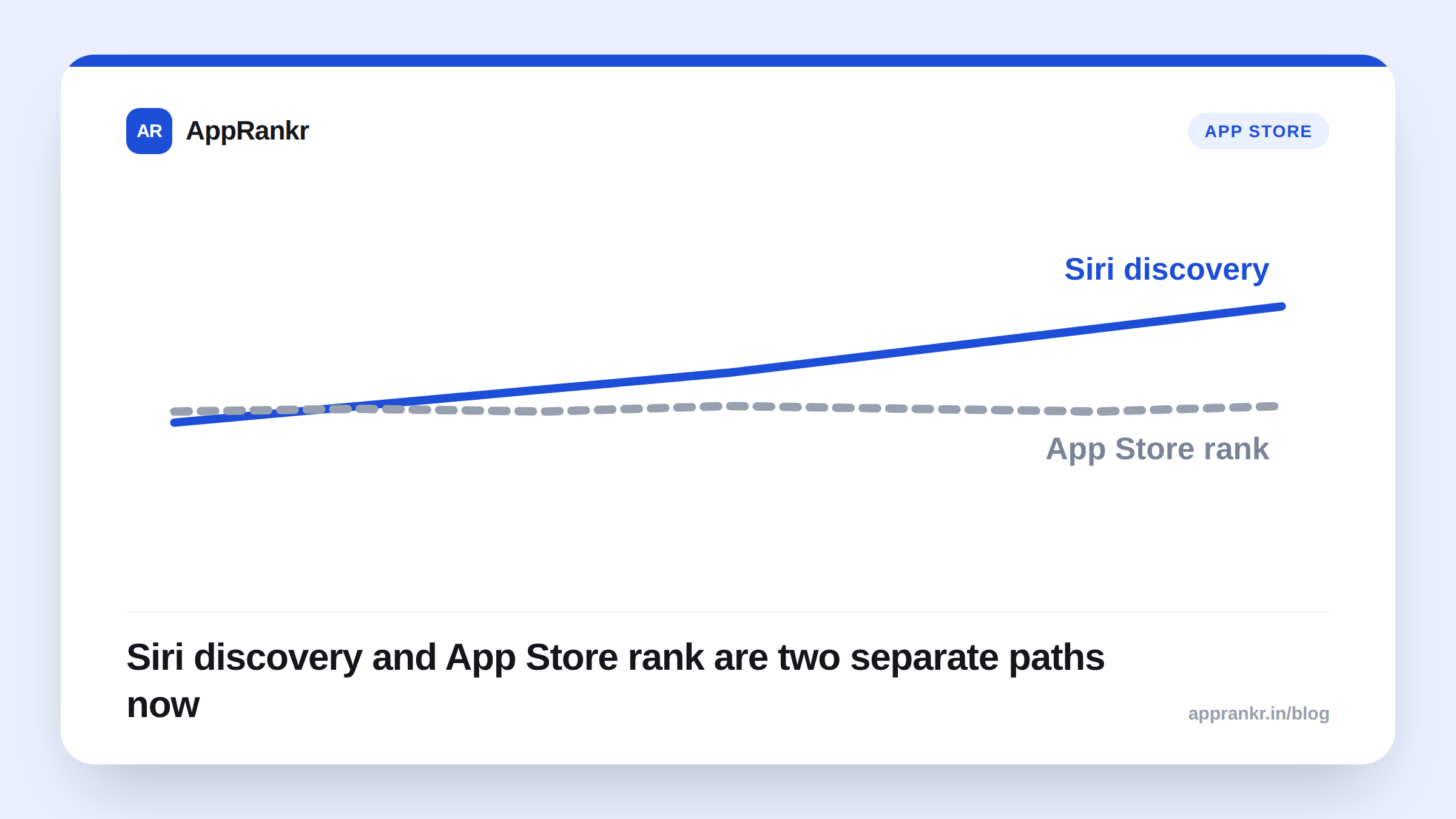
What Apple's App Intents Framework Means for Getting Found by Siri
Apple's App Intents framework lets Siri and Spotlight surface specific actions inside your app, not just the app itself. Here's what it actually does and why it matters for discovery.
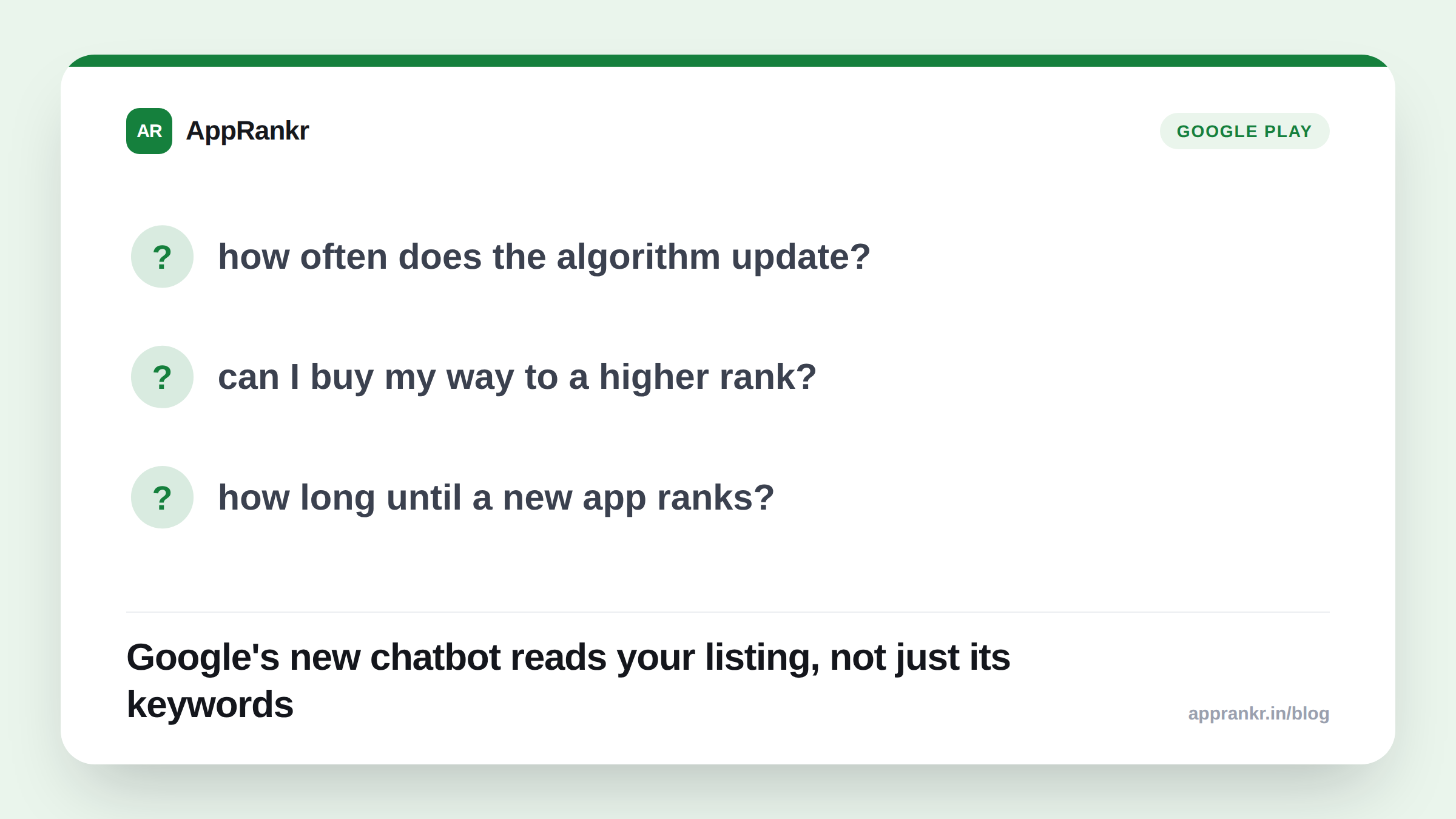
Ask Play: Google's New AI Chatbot in the Play Store, and What It Means for Your Listing
Google Play now has a Gemini-powered chatbot called Ask Play that recommends apps in conversation. Here's what it is, what it reads, and what that means for your store listing copy.
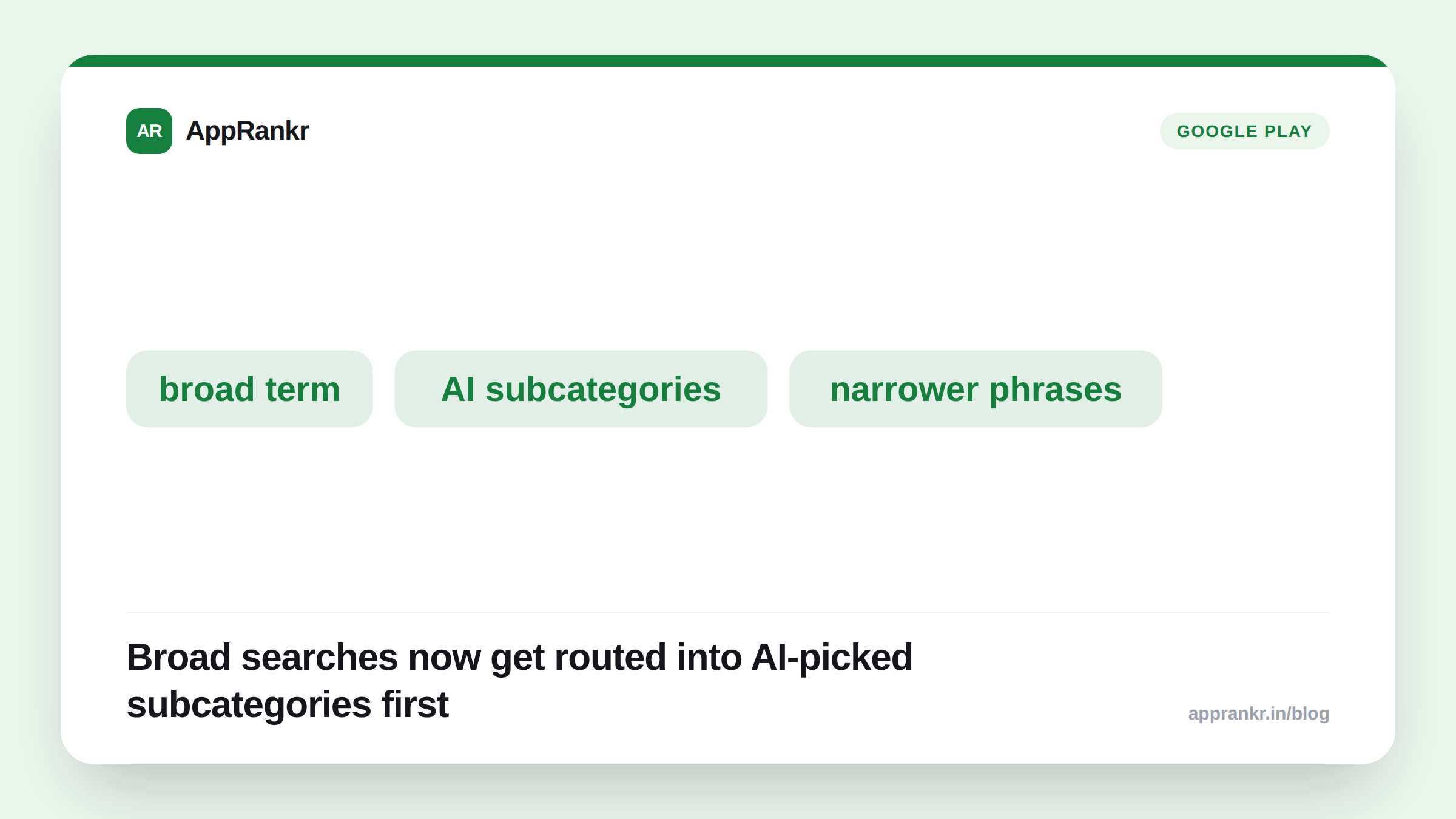
Google Play's Guided Search Means #1 for a Broad Keyword Isn't Enough Anymore
Google Play now sorts broad search queries with an AI-organized results layer before showing plain rankings. Here's what actually changed and what it means for your keyword list.
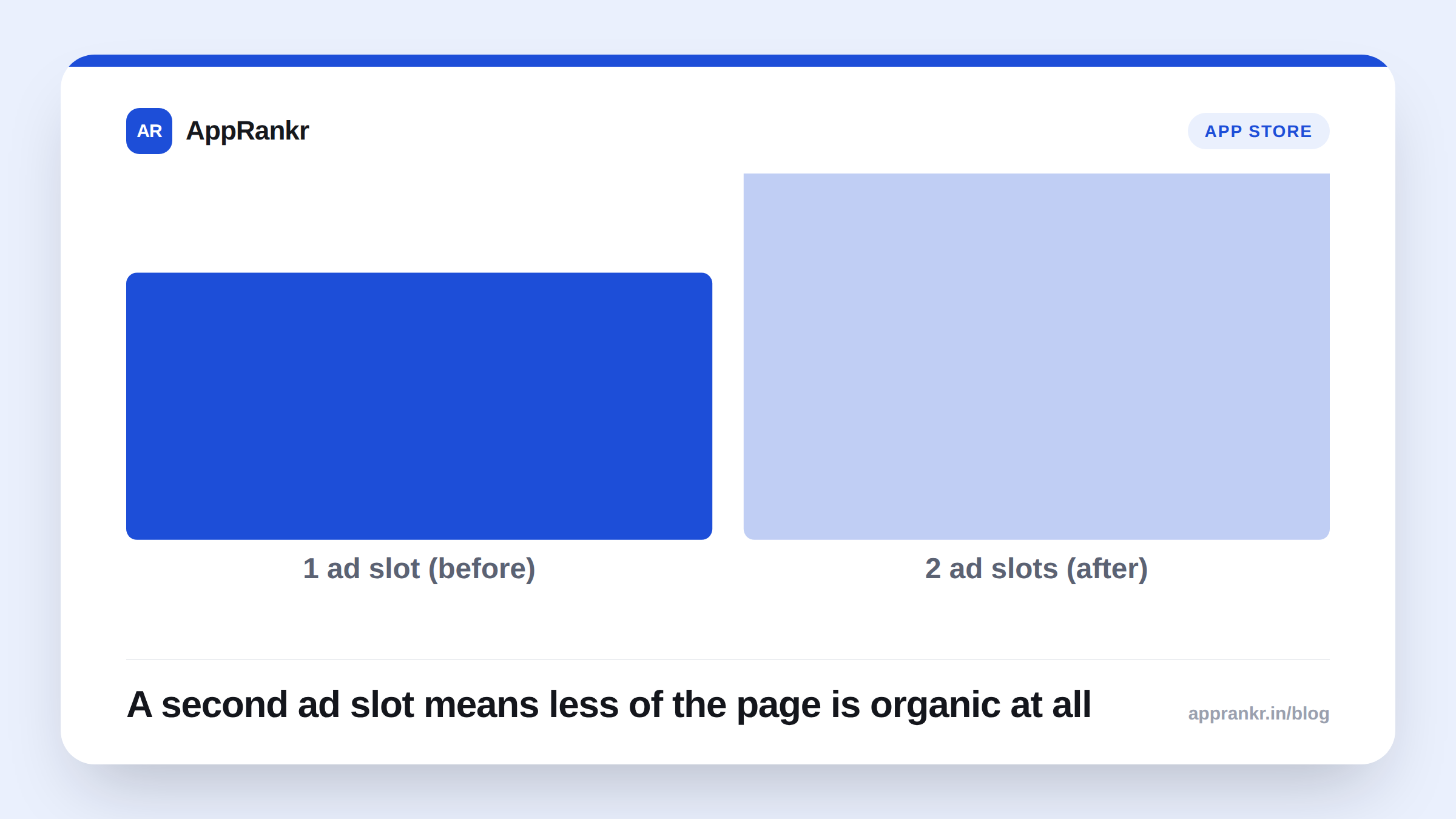
Apple Added More Ad Slots to App Store Search: What It Means If You Don't Advertise
Starting March 2026, App Store search results carry more than one ad slot per query. Here's what's confirmed about the rollout, and what it means for organic-only apps.
Apple's Custom Product Pages Can Now Rank in App Store Search: Here's What Changed
Custom product pages used to be an ad-only tool. Apple's own docs now confirm they can appear directly in organic search results for keywords you assign. Here's what that actually means.
Does Your App Ever Show Up in Google's AI Overviews? What the Data Actually Shows
Google's AI Overviews now appear on a huge share of searches. Here's what independent research actually shows about which content gets cited, and where that leaves an app's own listing.
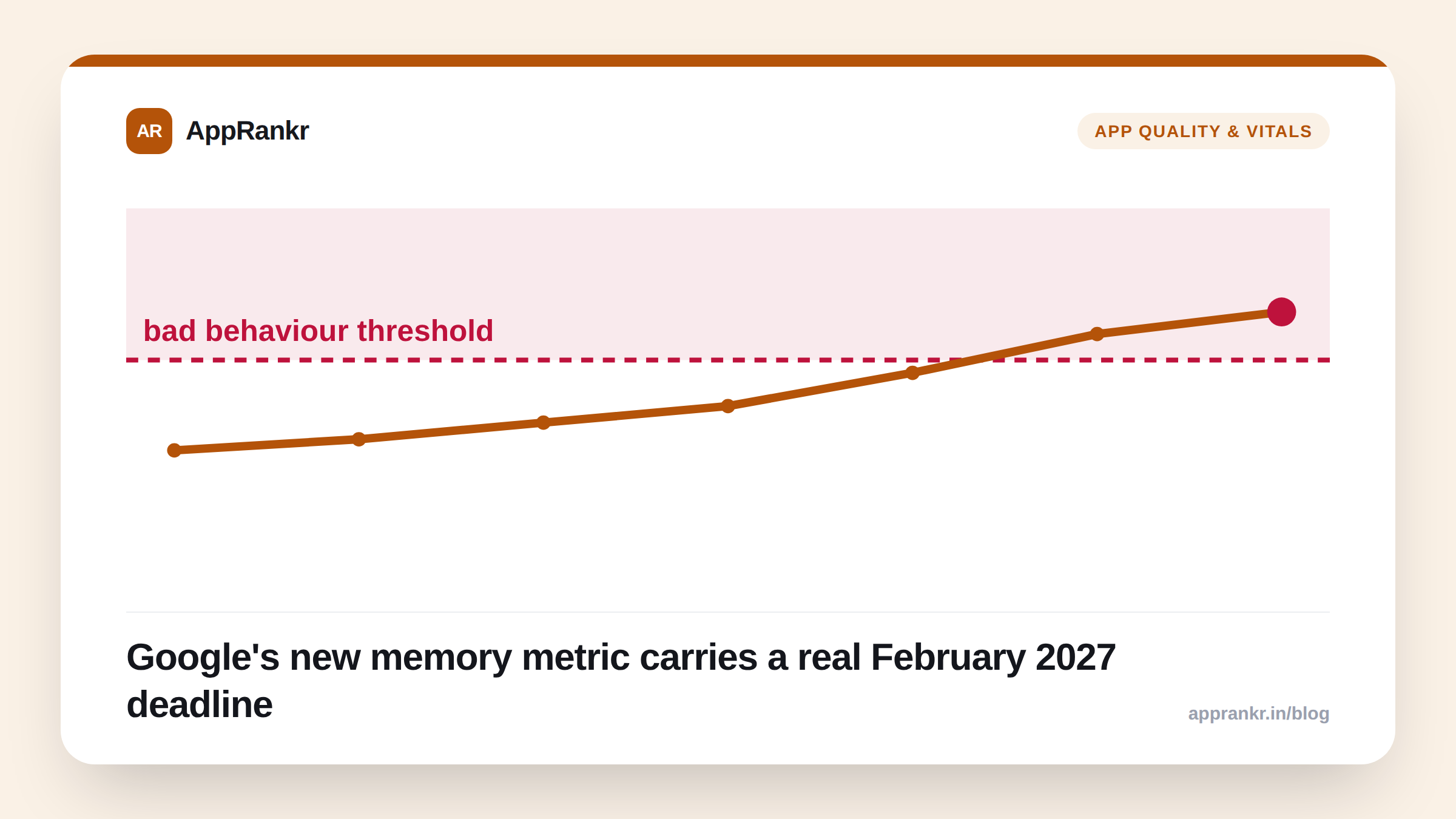
Does Memory Usage Affect Your Google Play Ranking? Google's New Vitals Metric, Explained
Google just added memory usage as a real Android vitals metric, with store visibility impact starting February 2027. Here's what's actually confirmed, not guessed.
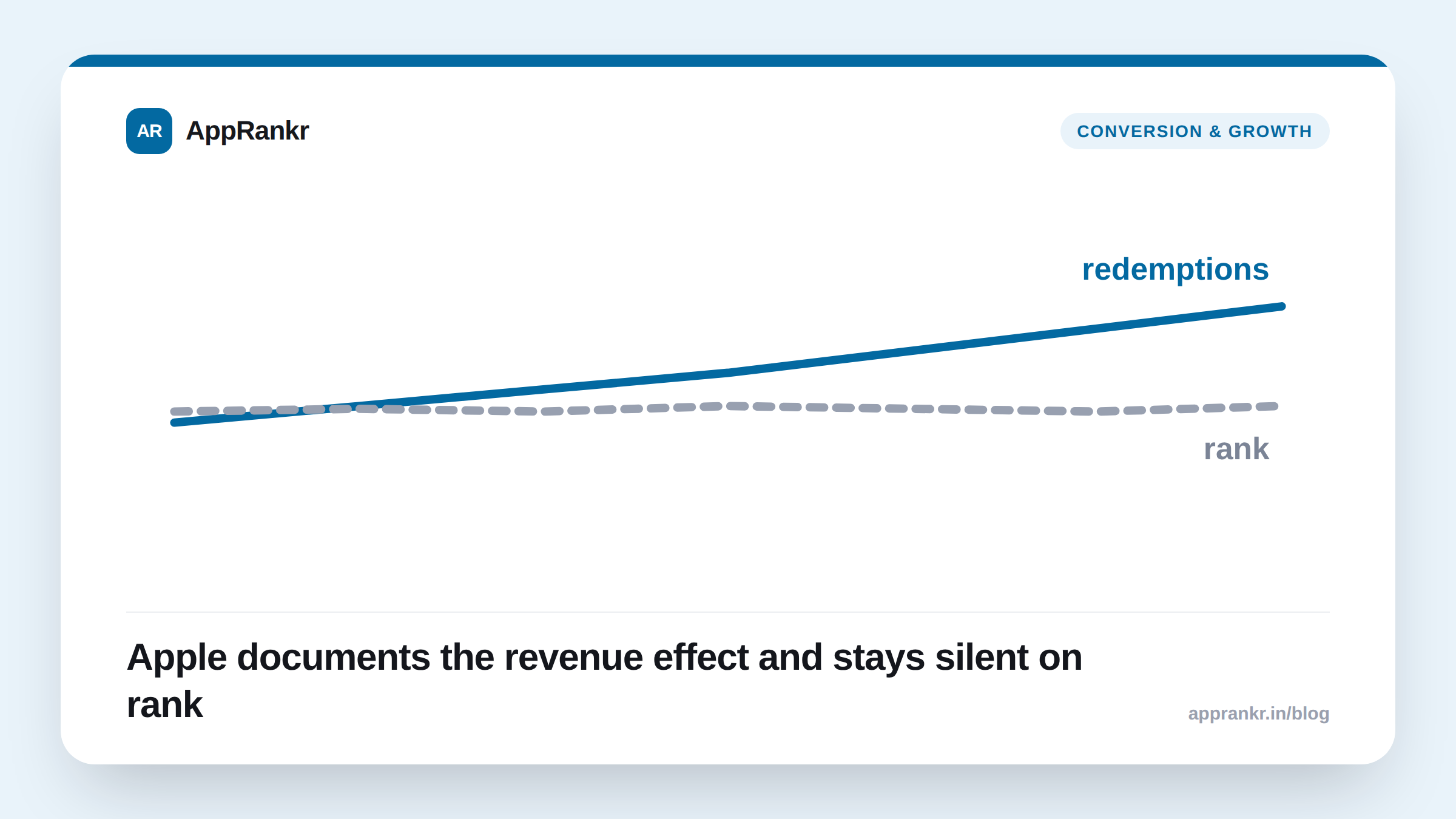
Do Apple Offer Codes Affect Your App Store Ranking, or Just Revenue?
Apple documents offer code rules and limits in real detail. It stays quiet on whether a redemption counts toward ranking. Here's the honest gap.
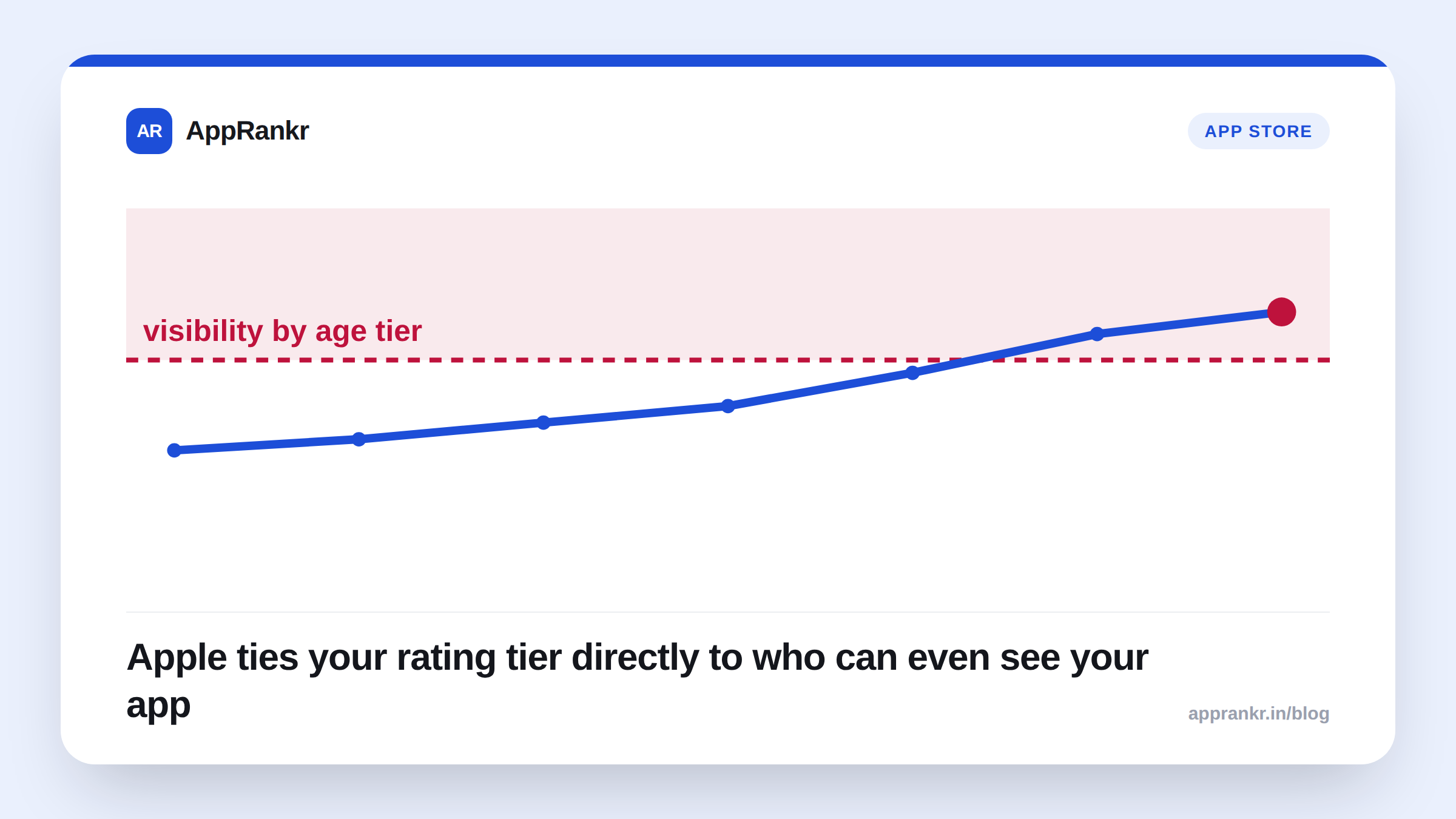
Does Your App's Age Rating Affect Search Visibility?
Apple says age rating drives visibility and parental controls directly. Apple also just expanded its rating tiers, with a 2026 deadline attached. Here's what's confirmed.
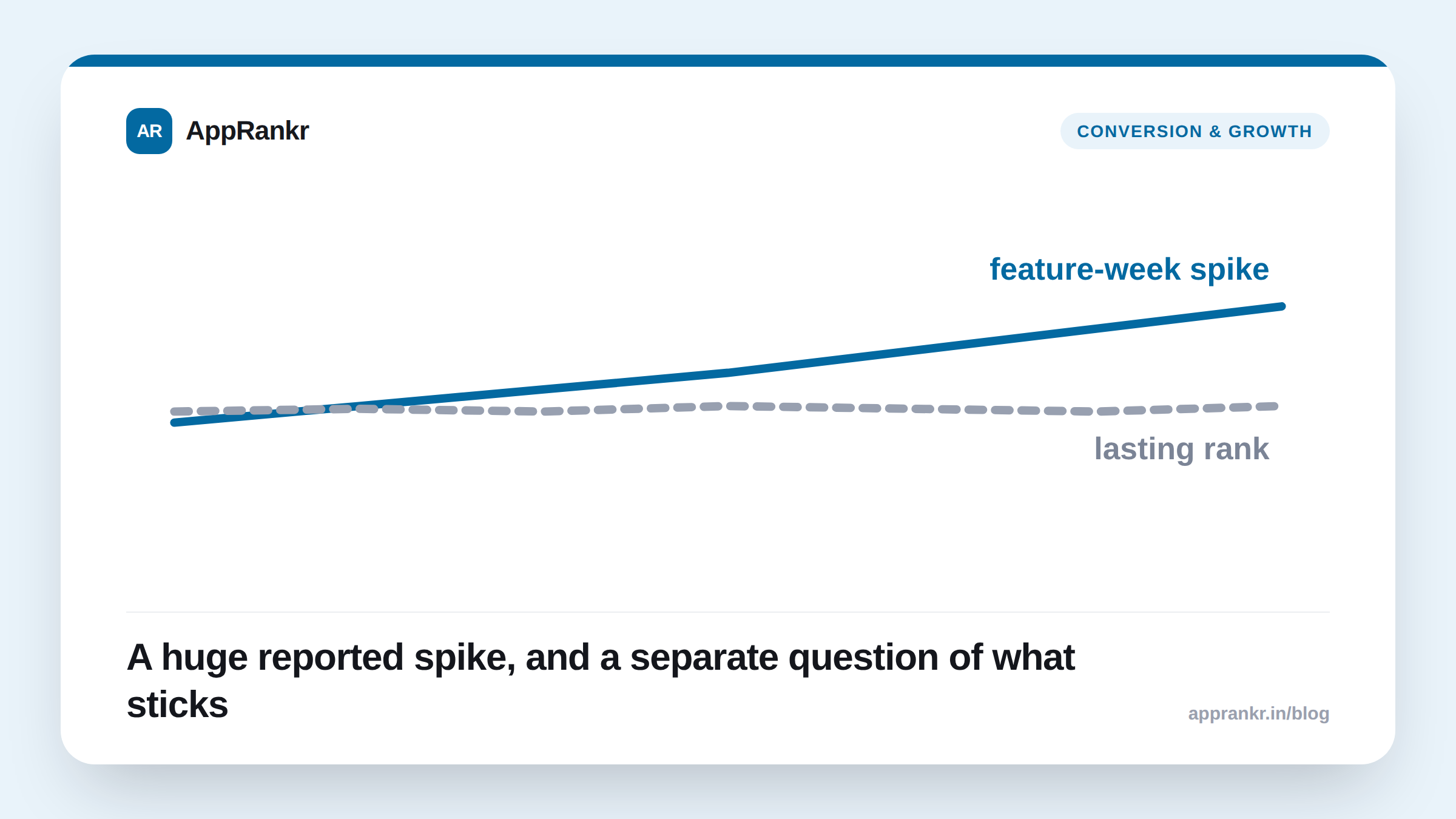
Does Getting Featured by Apple Actually Move Your Long-Term Ranking?
Sensor Tower data reported by TechCrunch shows a huge short-term download spike from Apple features. Whether that turns into a lasting rank lift is a separate, less certain question.
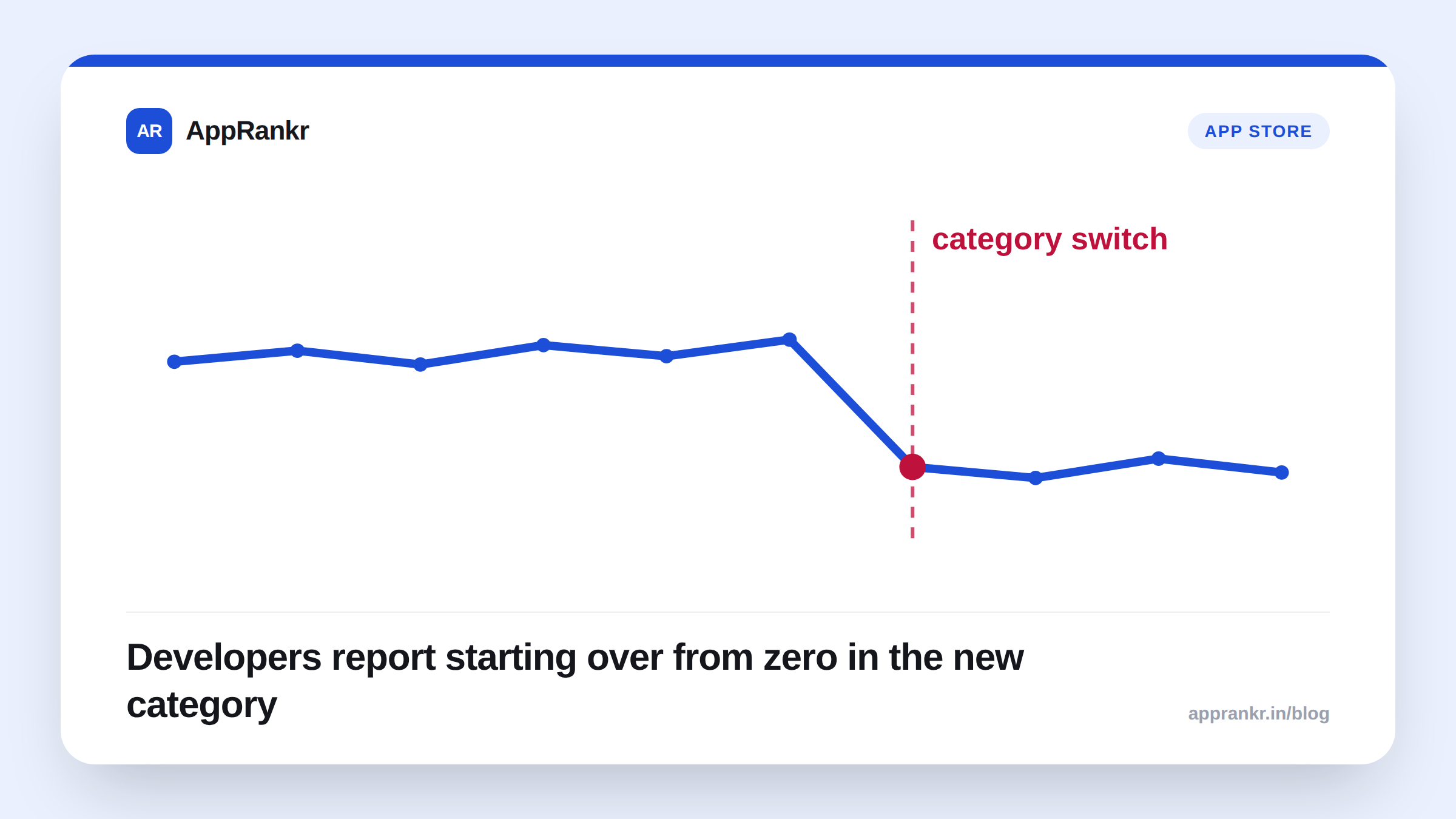
Does Changing Your App's Category Reset Your Rankings?
Apple's own docs explain how to set a category. They stay quiet on what happens to your rank when you switch one. Here's what real developers have reported.
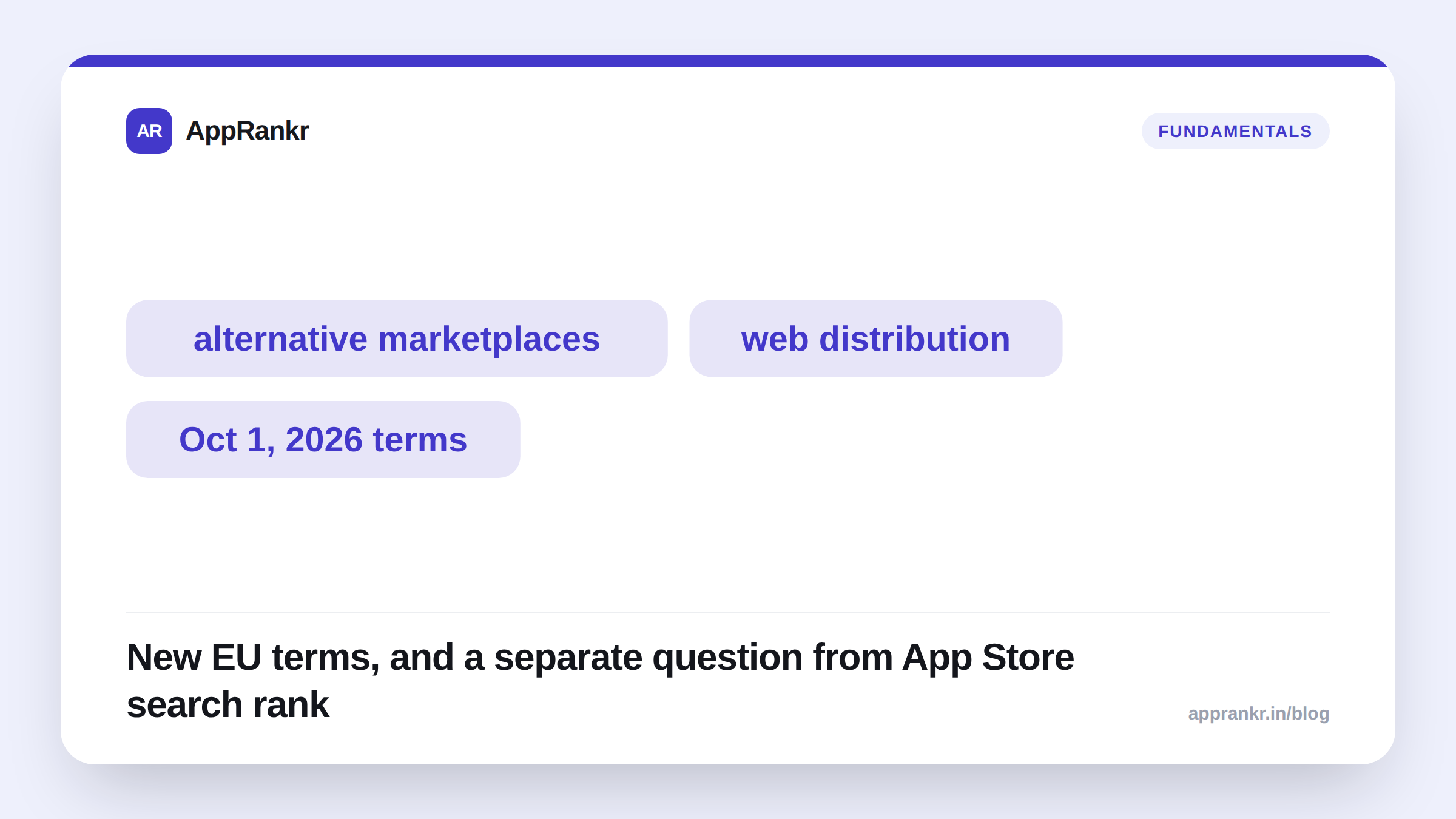
If You Distribute Outside the App Store in the EU, Does Your App Still Rank in App Store Search?
Apple's EU rules let you distribute through alternative marketplaces or the web. Here's what Apple's own docs say about your App Store search visibility if you do.
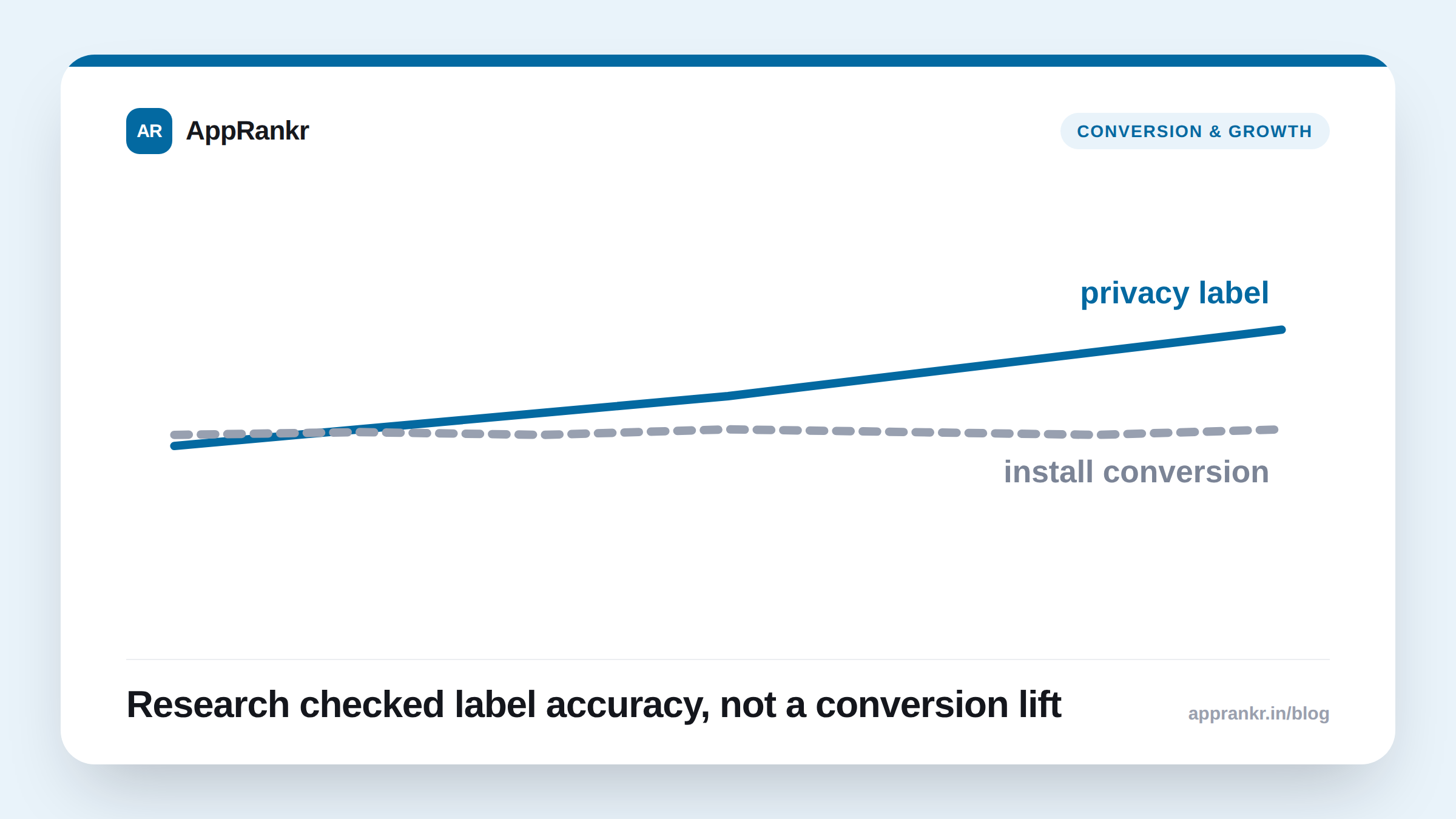
Does Your Privacy Nutrition Label Actually Affect App Store Conversion Rate?
Apple made privacy labels mandatory years ago. Academic research has since checked how well they hold up and how many apps even fill them in right. Here's the real data.
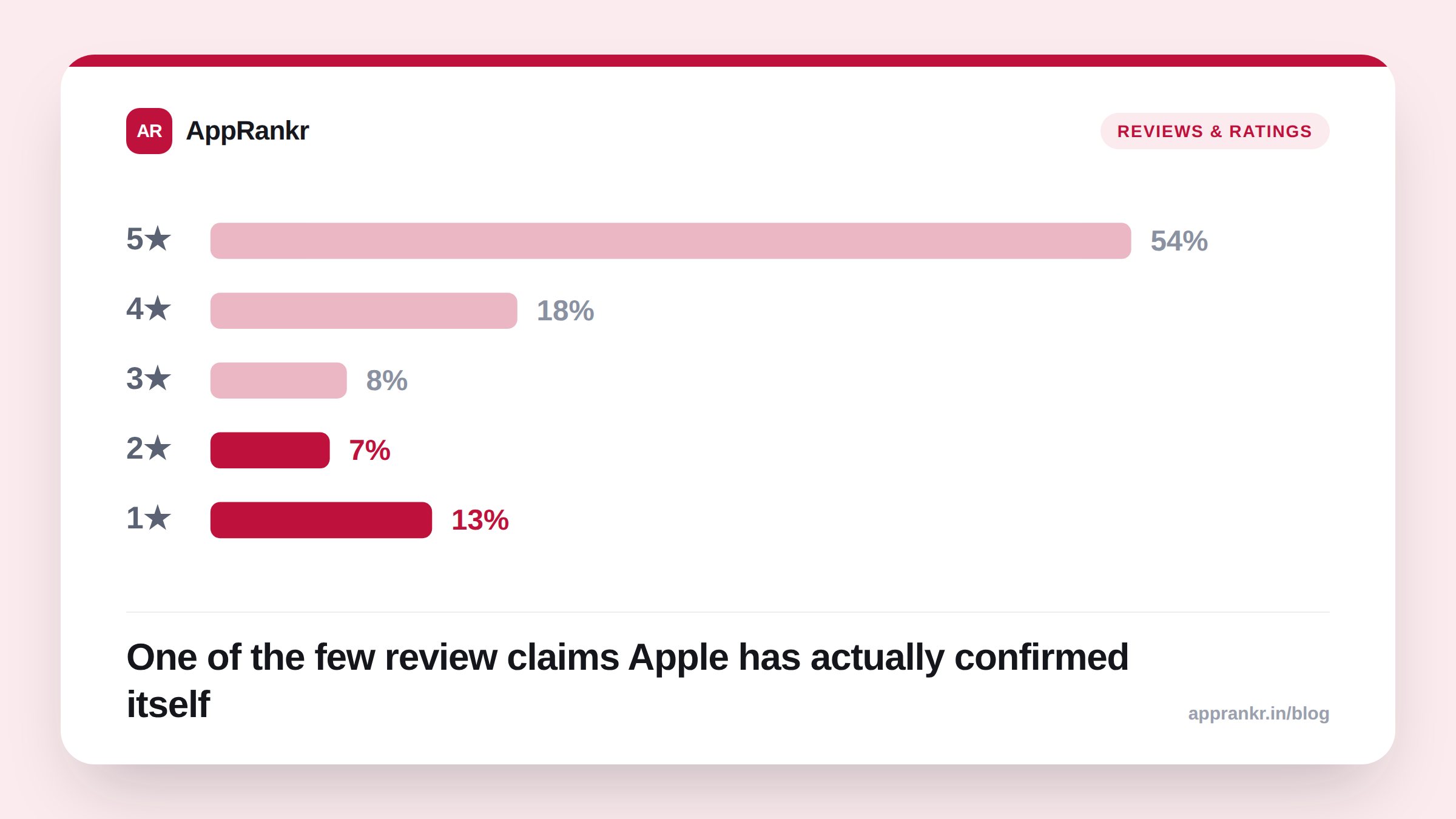
Does Responding to App Store Reviews Actually Improve Your Rating or Ranking?
Apple's own guidance links review responses to a better rating and better discoverability. Here's exactly what Apple says, and how to actually respond through App Store Connect.
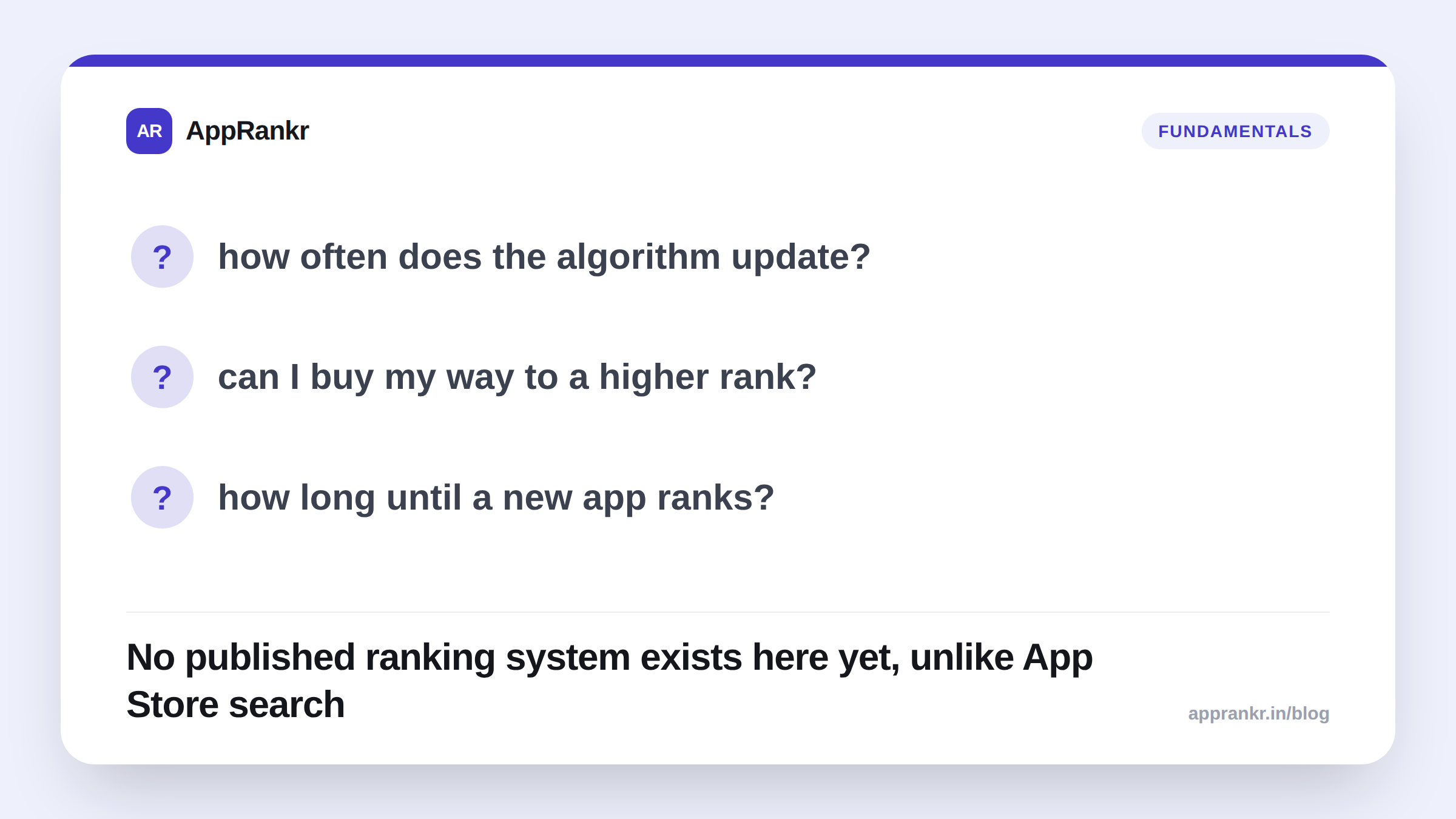
How Do You Get Your App Listed in ChatGPT's App Directory?
OpenAI opened its App Directory to outside developers. Here's what the actual submission rules require, and what OpenAI itself says about ranking inside it.
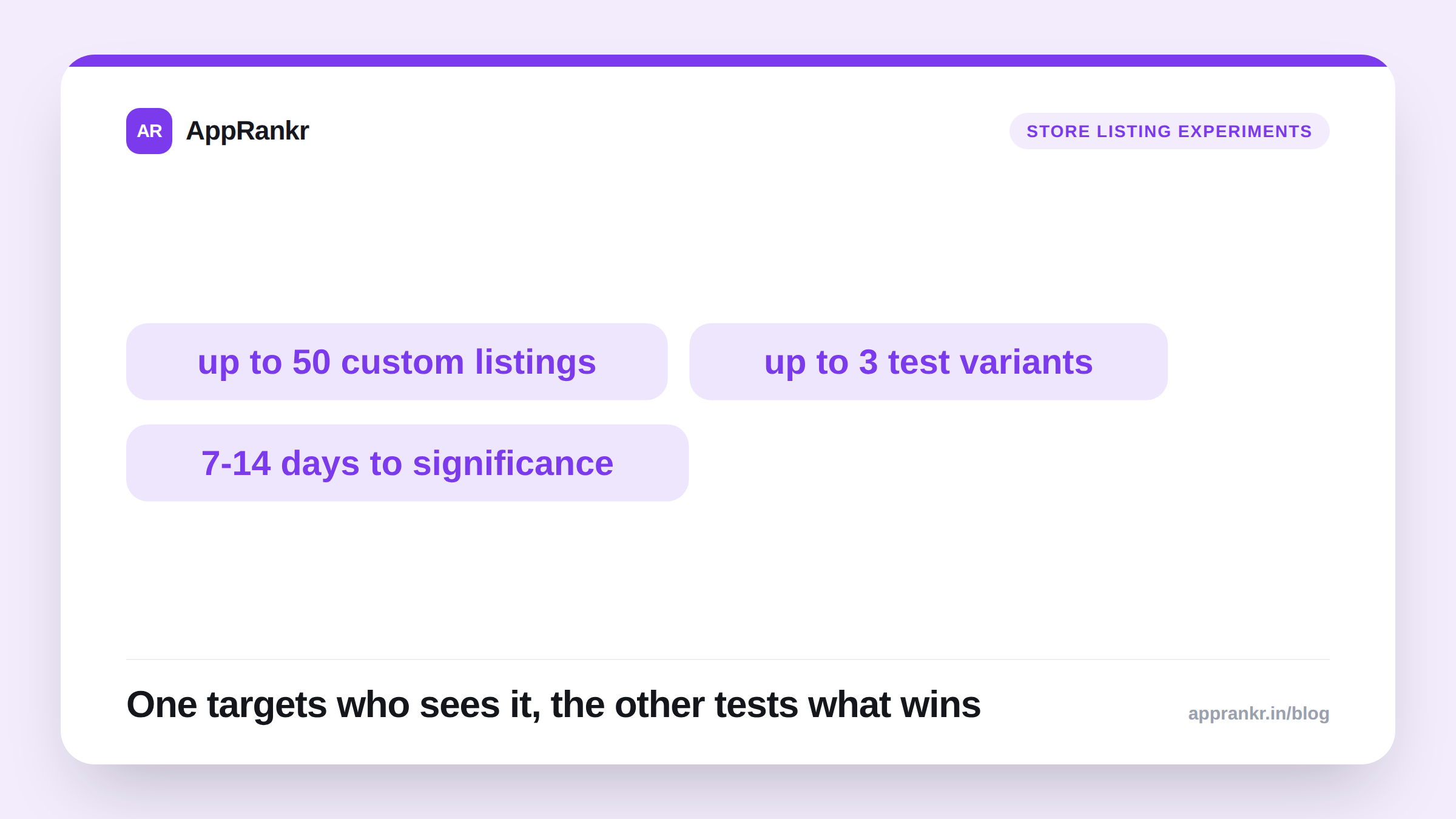
Custom Store Listings vs. Store Listing Experiments: When to Use Which
Google Play gives you two separate tools that sound similar and do different jobs. One targets who sees your listing. The other tests what converts best. Here's the real distinction.
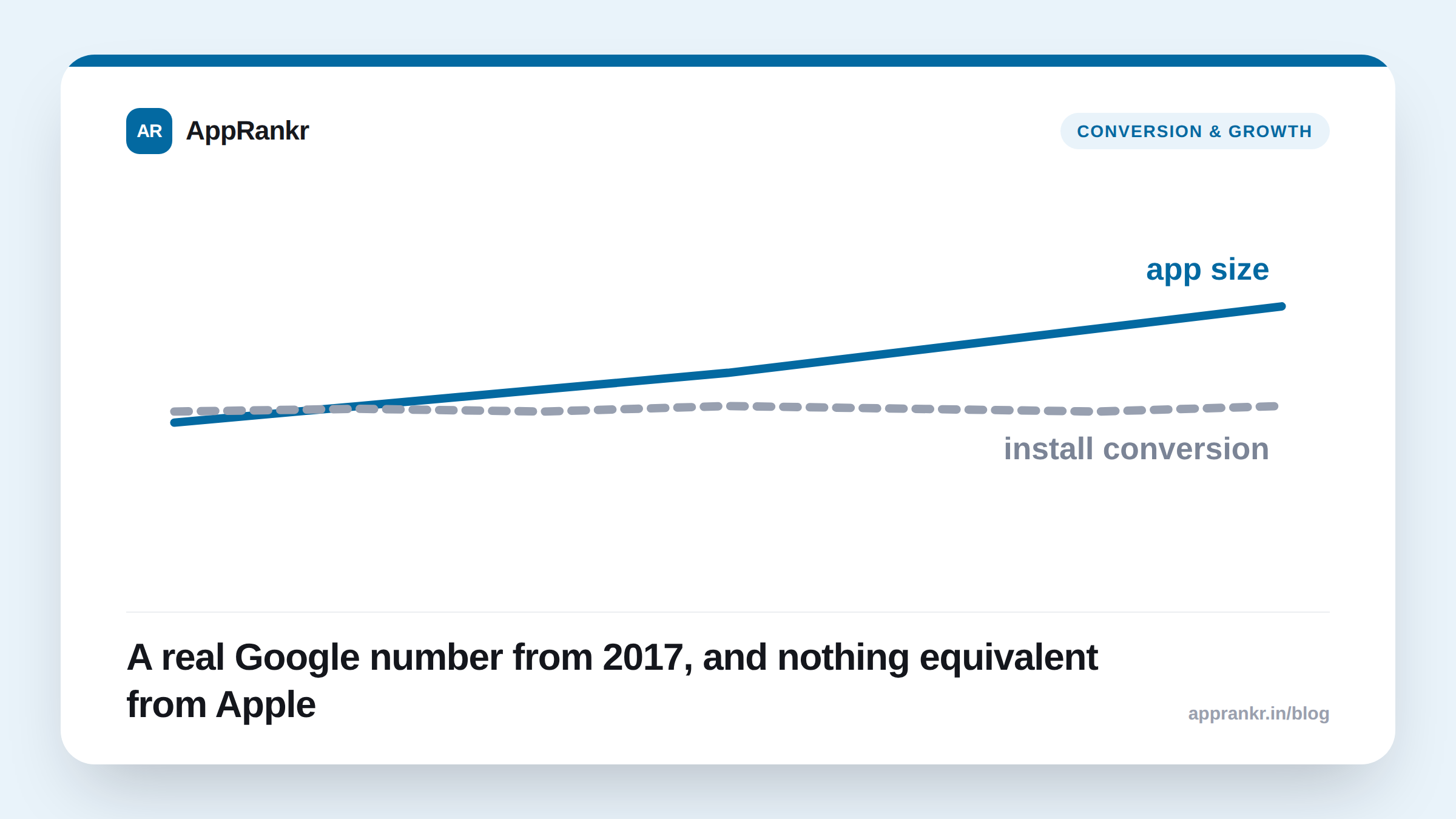
Does Your App's Download Size Actually Affect Conversion Rate?
Google published a real number on this back in 2017. Apple never has. Here's the actual data, how old it is, and why the same logic doesn't automatically carry over to iOS.
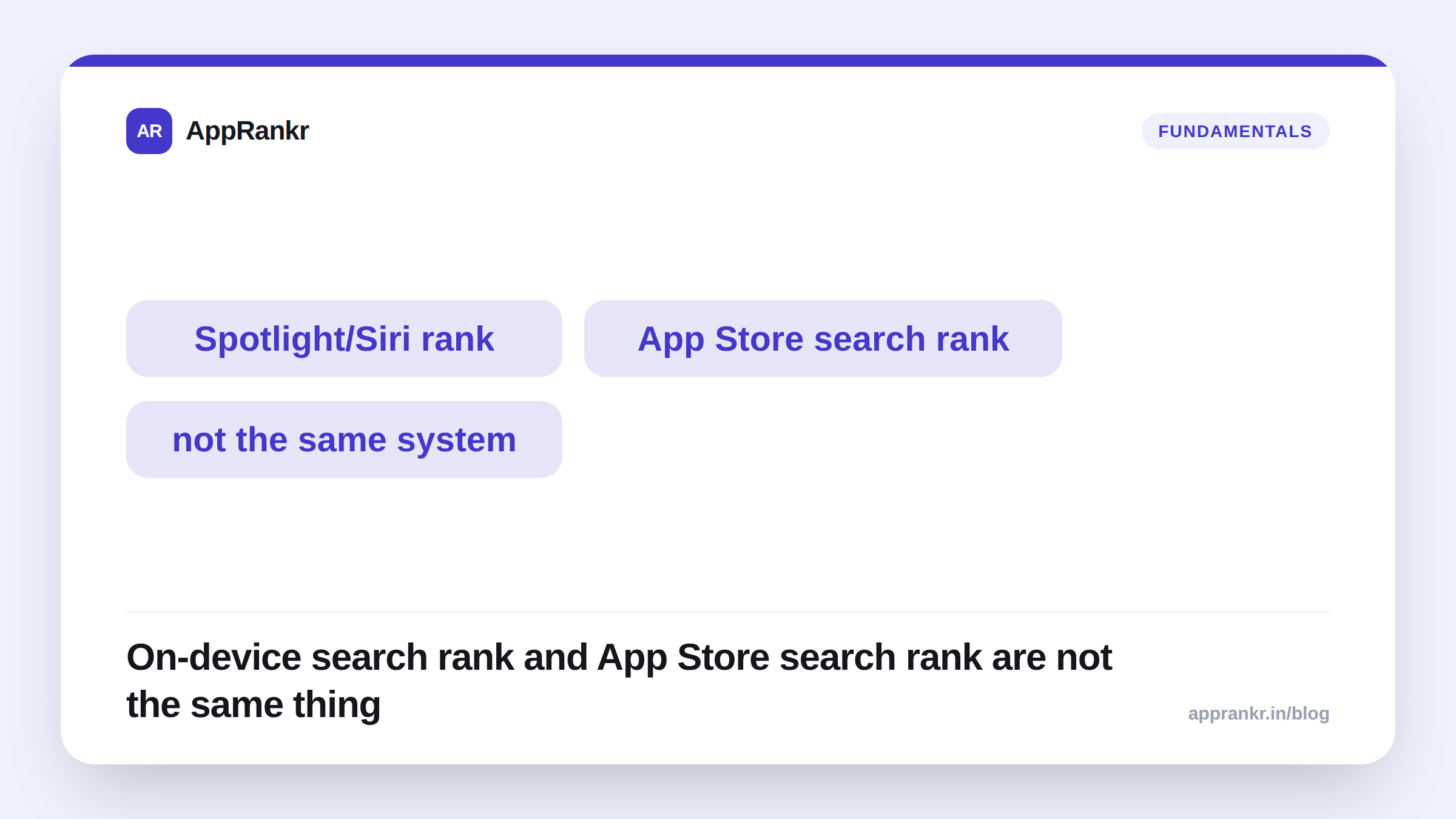
Does Deep Linking Actually Affect Your App Store Ranking?
Apple's own documentation talks about search ranking and deep links in the same breath. It's easy to misread as an App Store ranking claim. Here's what it actually means.
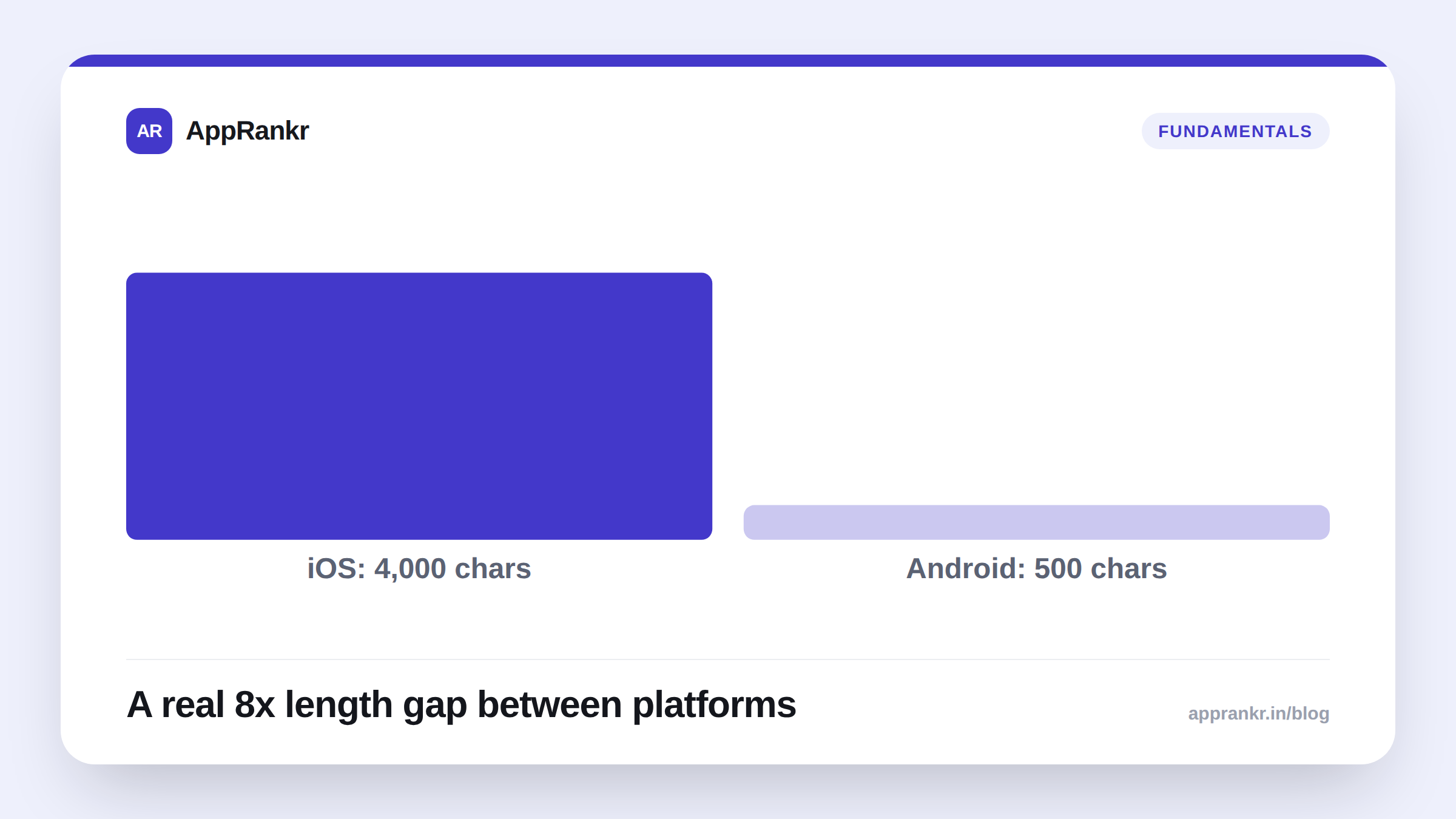
Does Your 'What's New' Release Notes Text Actually Matter for ASO?
Apple requires it. Google caps it at a tenth of Apple's length. Neither confirms it's searchable. Here's what's actually documented about release notes and ASO, and what's just industry consensus.
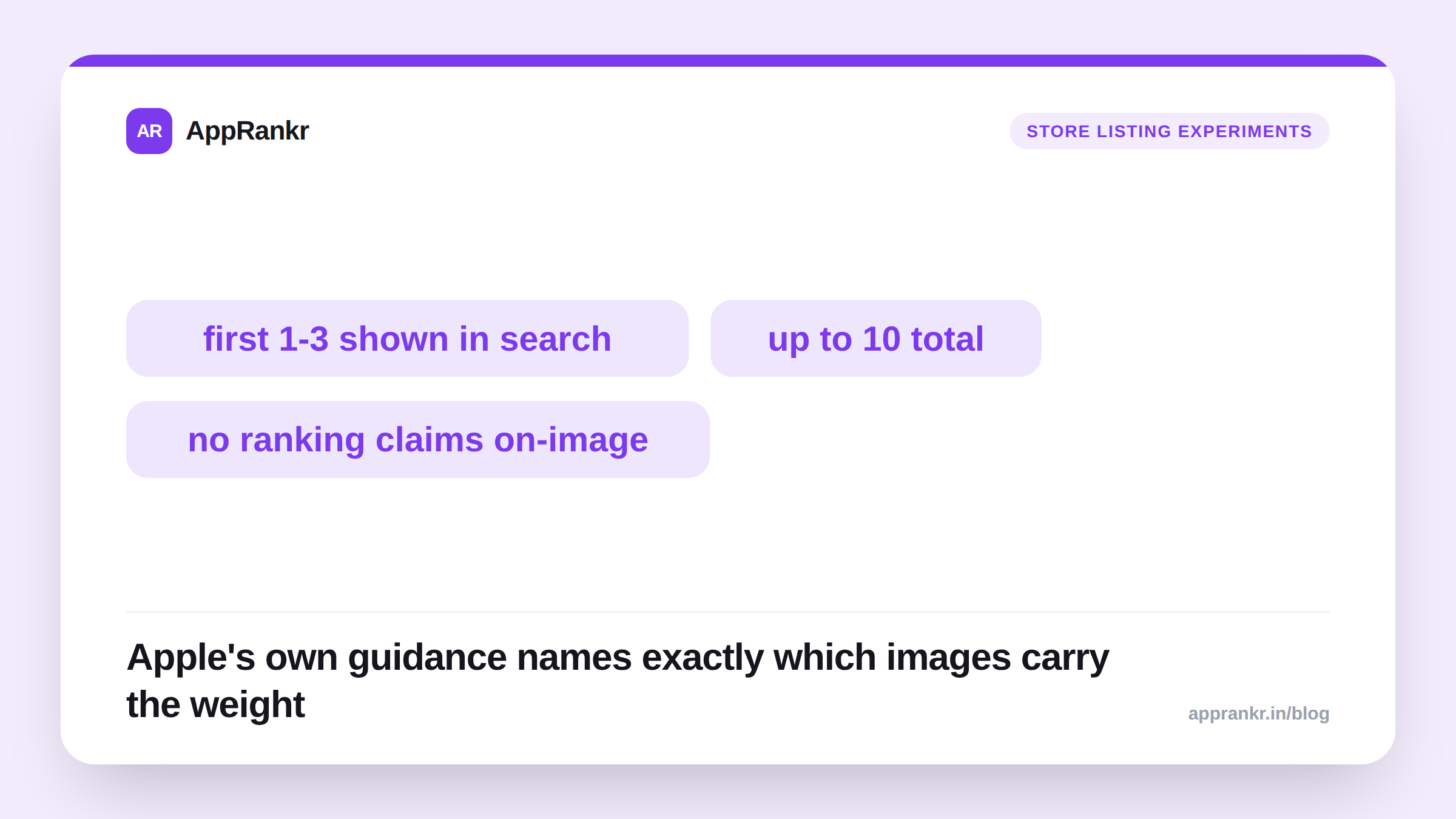
Does Your App Store Screenshot Pass the 3-Second Test?
Apple's own guidance says your first screenshot is what shows up in search results. Here's what that actually means for how you order and design your screenshot set.
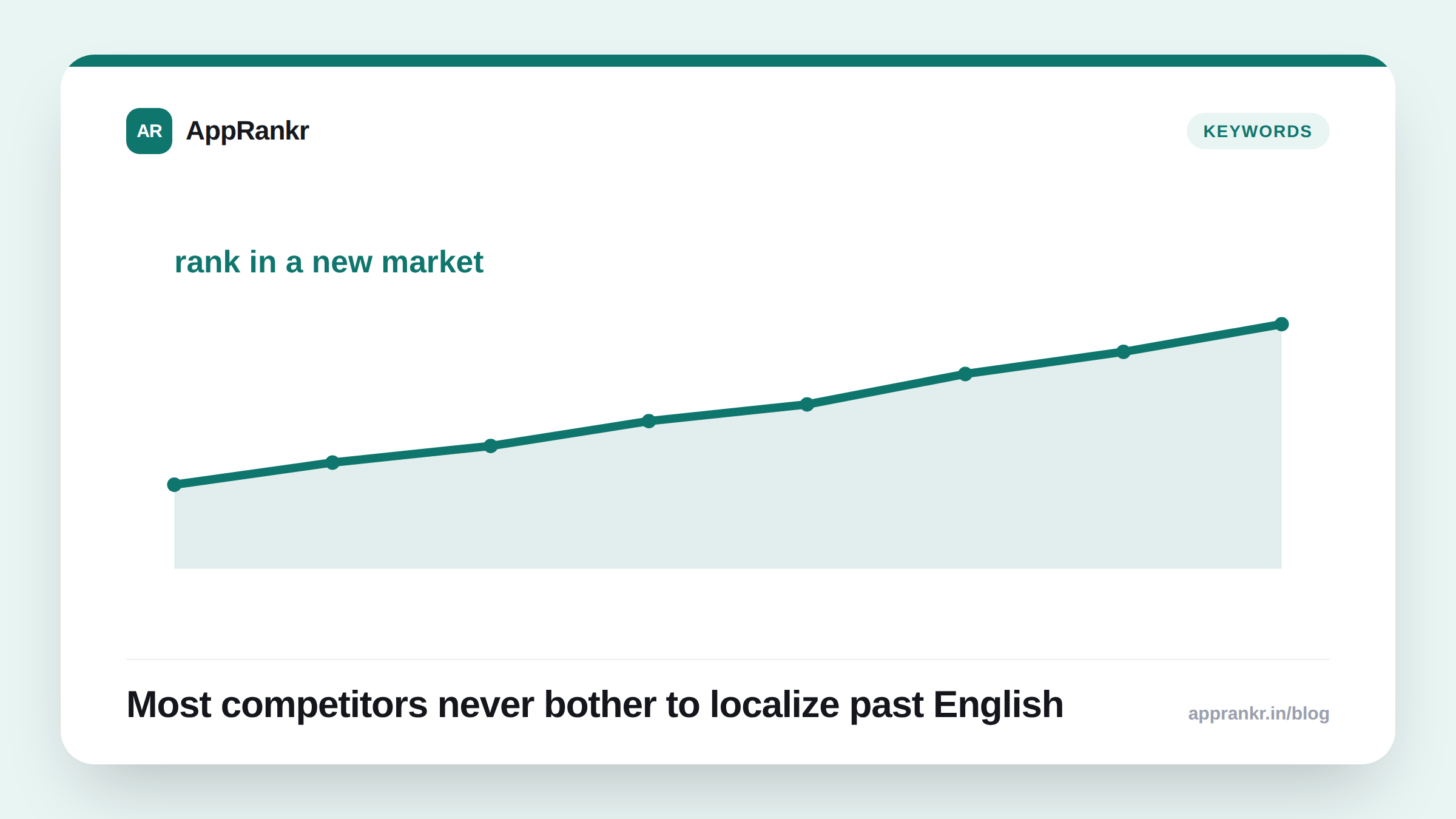
Finding Less Competitive Keywords in International App Store Markets
Most developers localize into English and stop. Here's what Apple and Google actually let you do with per-country storefronts, and why the competition outside the US and UK is often thinner.
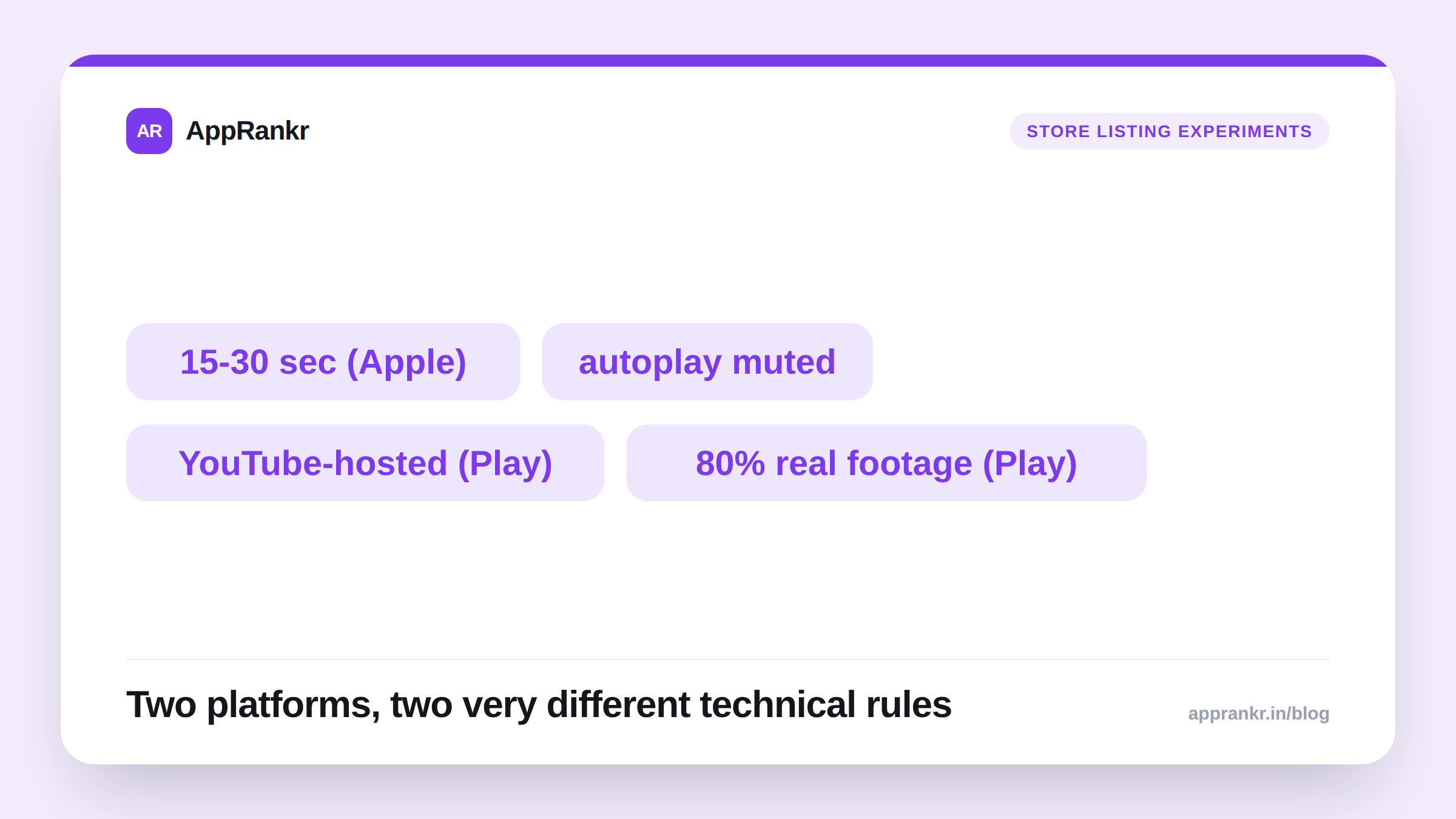
How to Structure an App Preview Video That Actually Converts
Apple's App Previews autoplay muted. Google Play videos have to live on YouTube. Here's what the actual technical specs require, and how to structure a video around both.
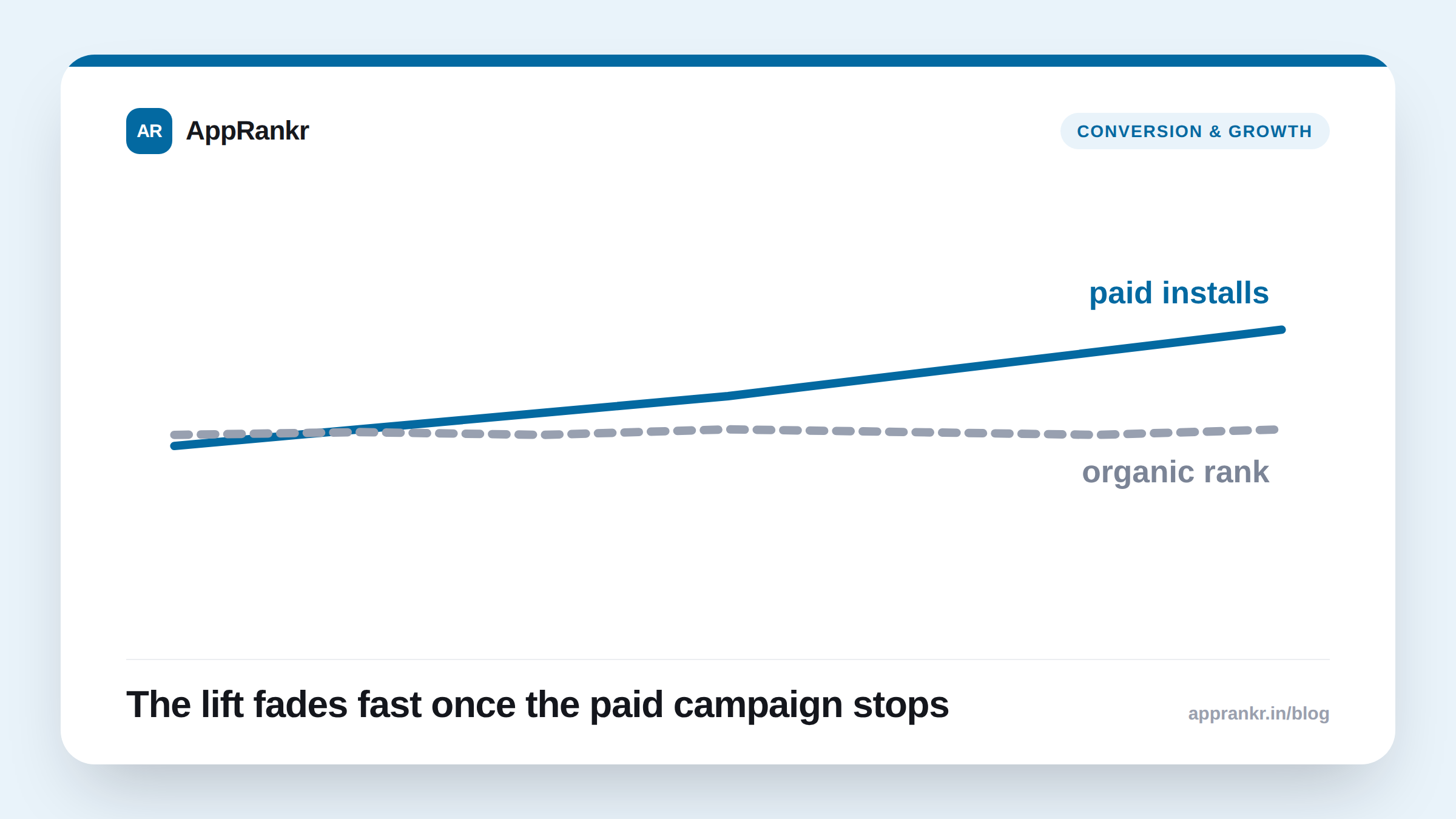
Should You Use Apple Search Ads to Kickstart Organic Growth?
A common pitch says paid installs jumpstart your organic ranking too. Here's what Apple and Google actually publish about paid installs, and what's really just industry theory.
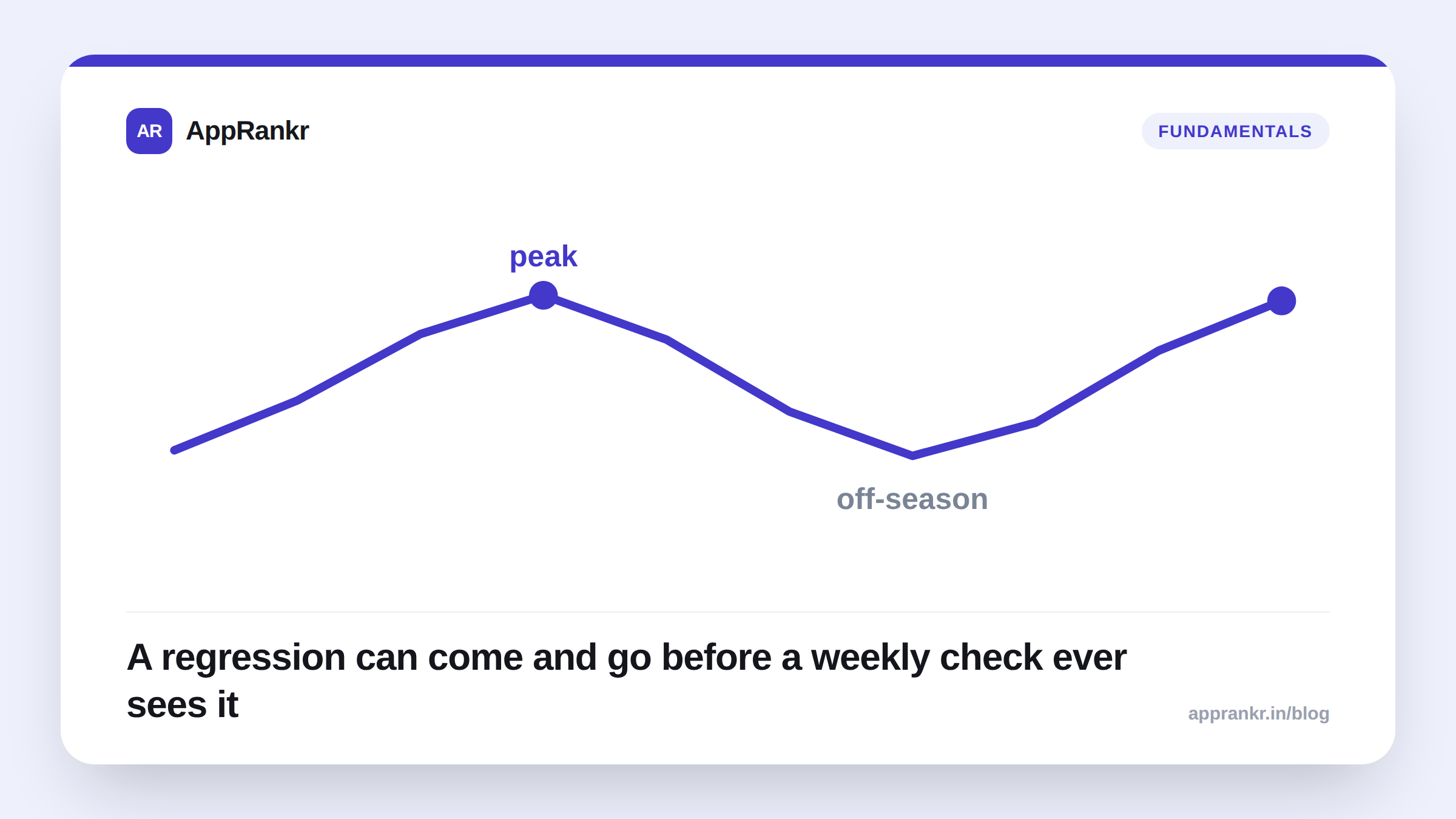
Why You Should Stop Doing ASO Manually (And What to Automate)
Checking rankings by hand once a week feels manageable, until it isn't. Here's why manual tracking misses real regressions, and what to actually hand off to automation.
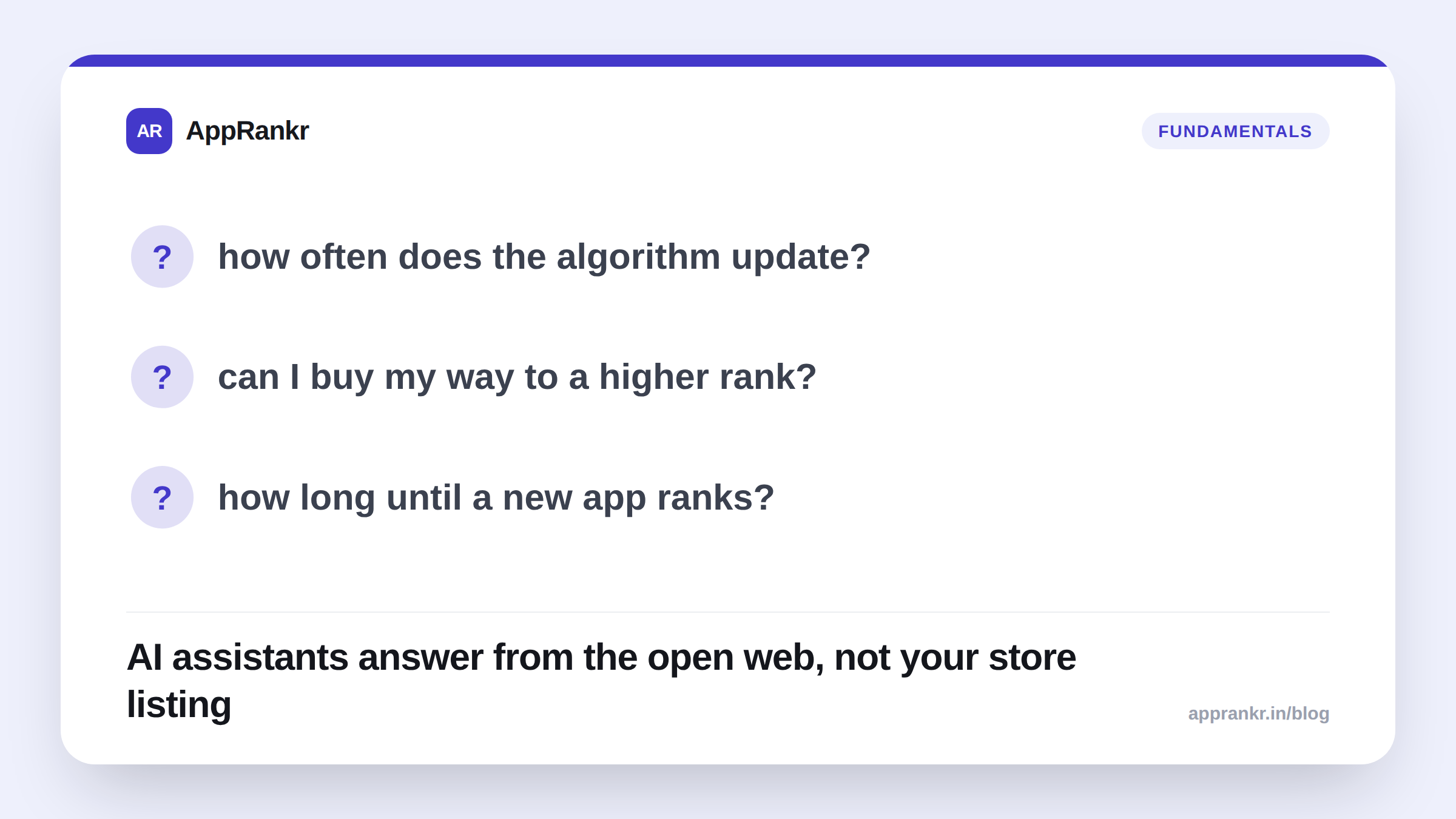
How to Get Your App Discovered by ChatGPT and AI Assistants
A growing share of app recommendations happen inside a chat, not a store search bar. Here's what's real, what's vendor marketing, and what you can actually do about being the app an AI assistant mentions.
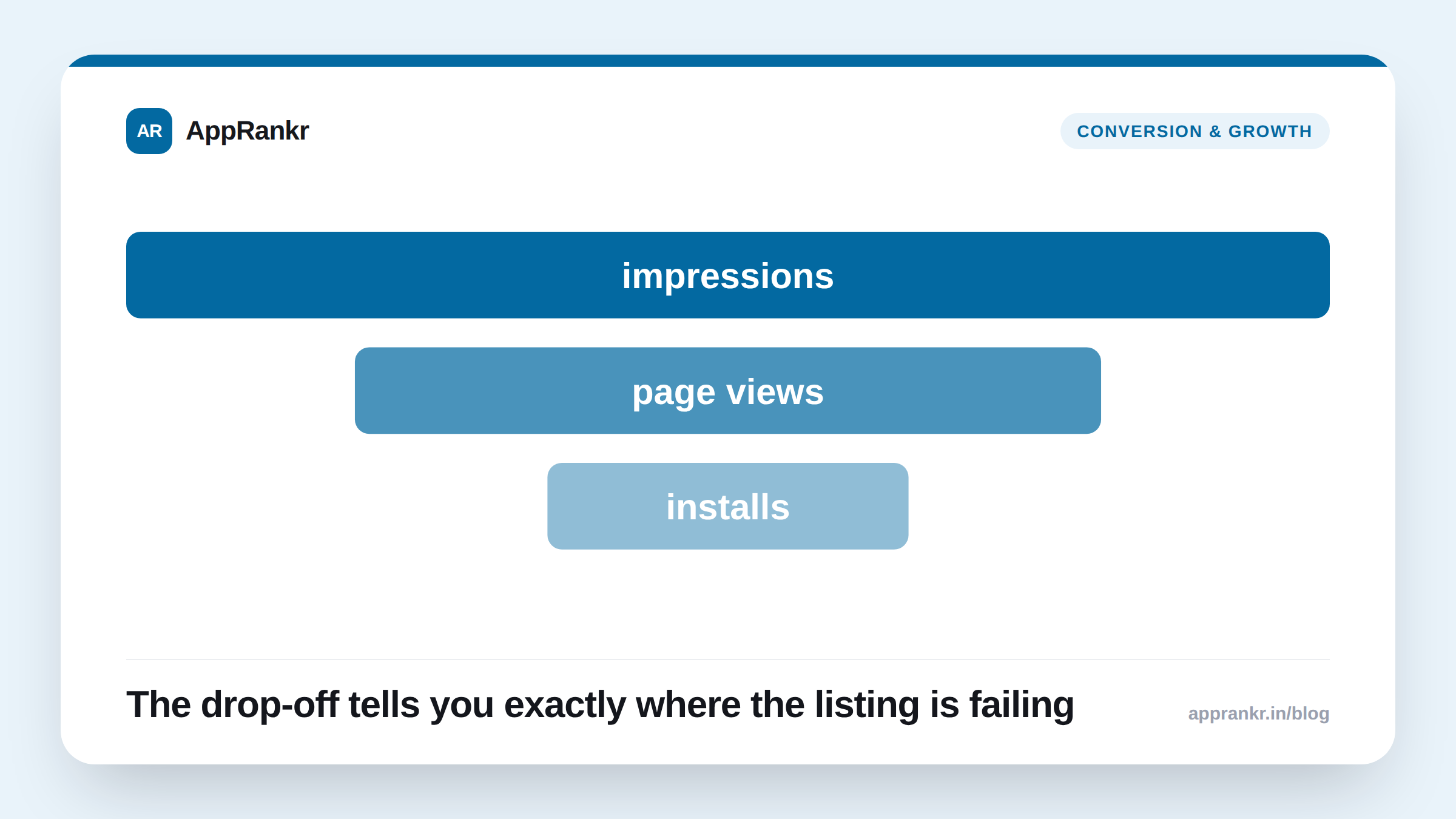
Impressions Are Up, Downloads Aren't: Fixing a Stuck App Store Conversion Rate
Your listing is getting seen more than ever. Installs haven't moved. Here's what Apple and Google actually measure when they say conversion rate, and where a stuck listing usually breaks.
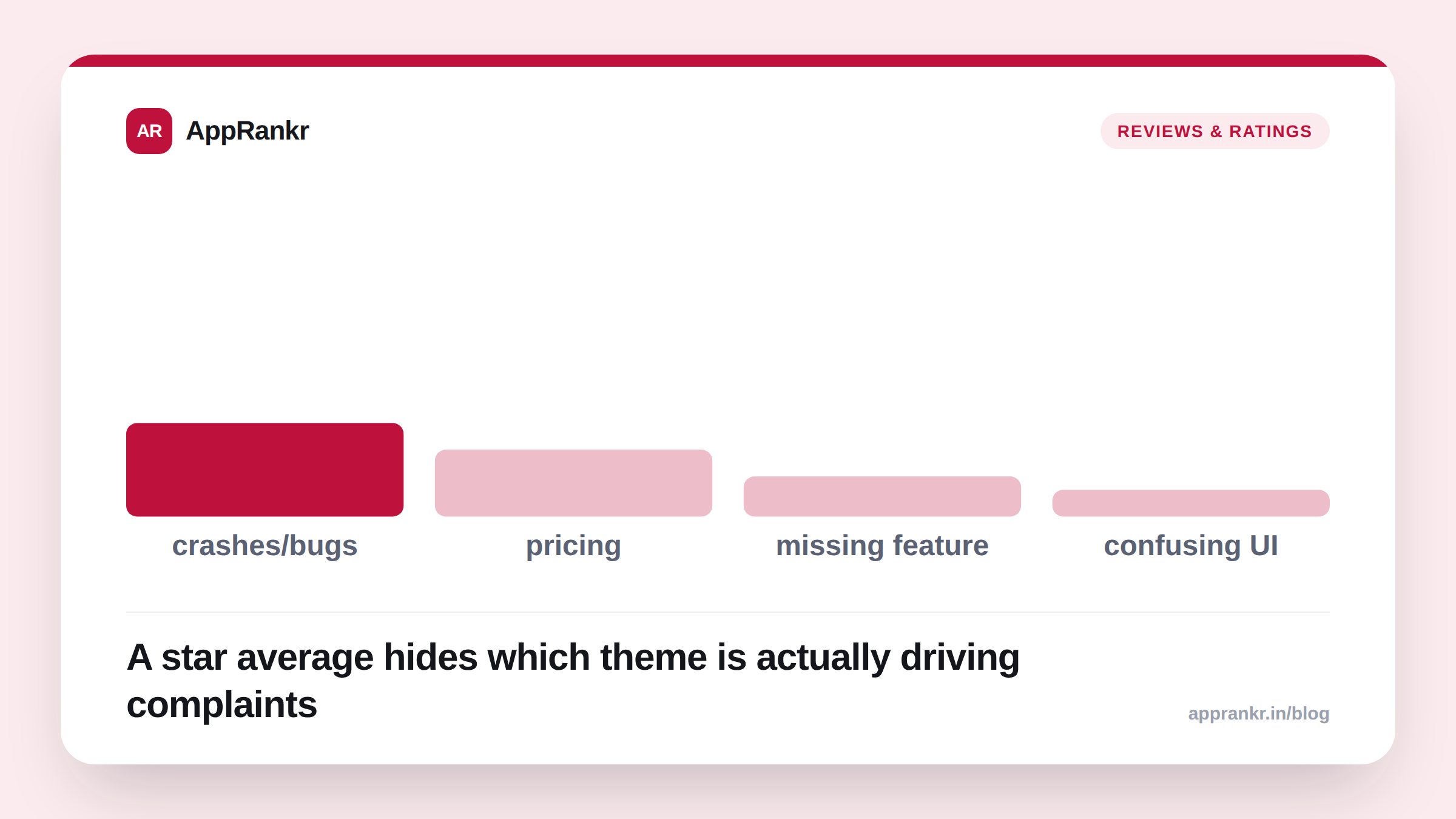
What Thousands of App Reviews Can Tell You That Star Ratings Can't
A star average tells you how people feel. It doesn't tell you why. Here's how real teams mine review text for product, pricing, and roadmap signal, and what the academic research behind it actually found.
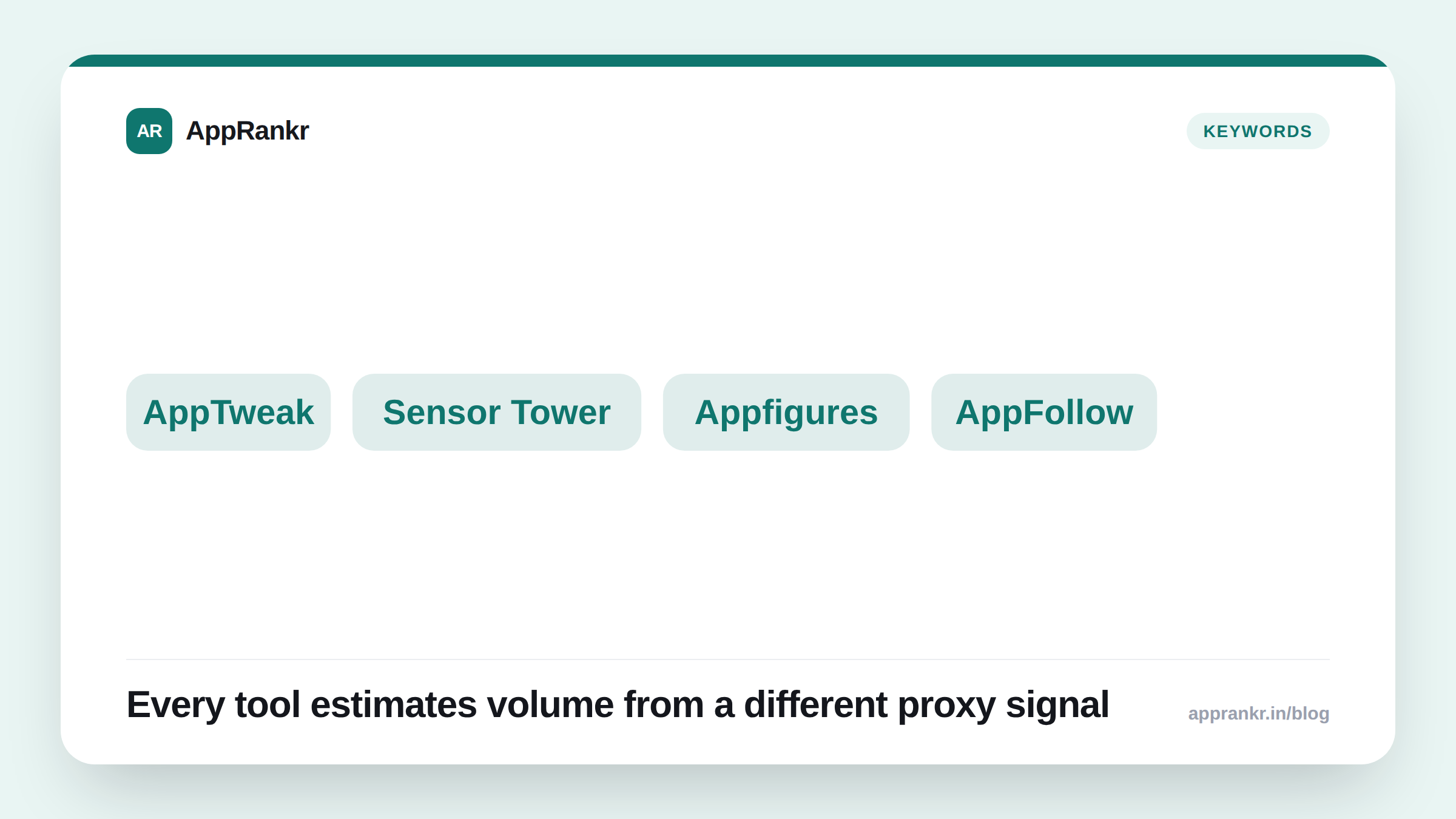
Why Do ASO Tools Show Different Keyword Data? (And How to Pick One to Trust)
AppTweak says one thing. Sensor Tower says another. Appfigures disagrees with both. Here's the real reason ASO tools never match on keyword volume, and how to actually use the numbers anyway.
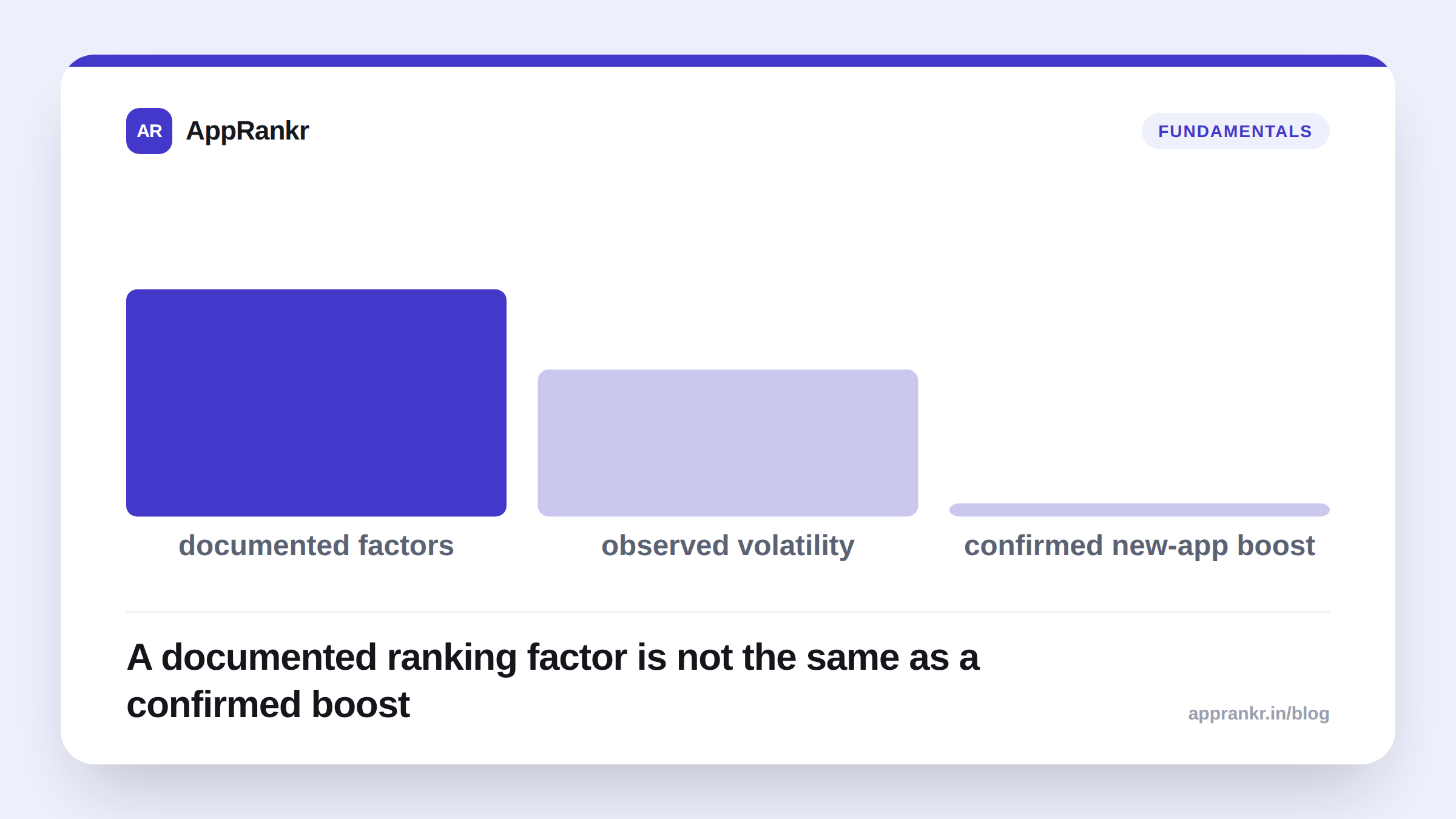
Why Didn't My New App Get the Launch Boost?
You've seen other new apps, even weaker ones, get a visibility bump in their first days that yours never got. Here's what's actually documented about new-app treatment, and what isn't.
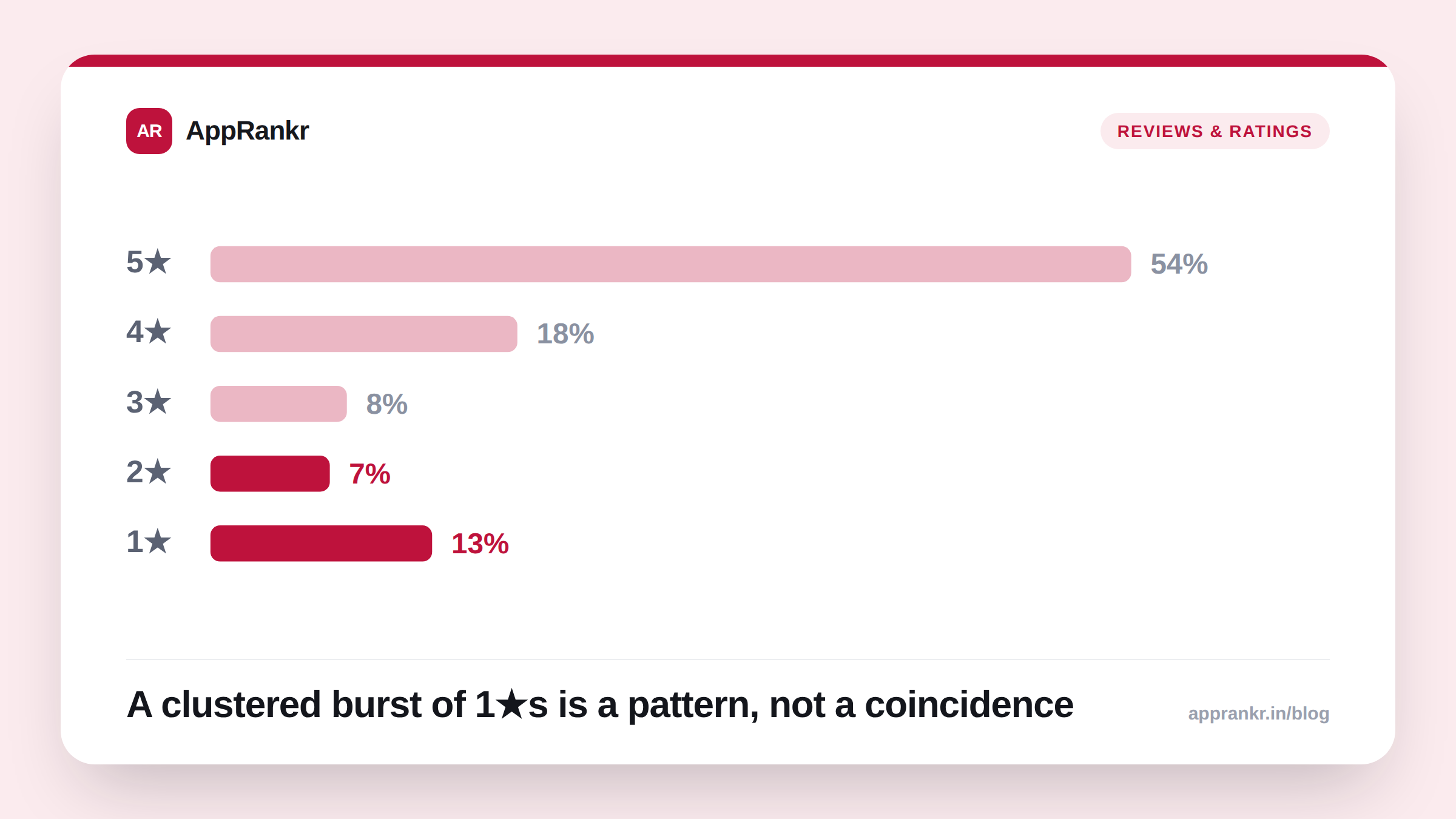
Competitor Review Bombing: How to Spot It and What You Can Actually Do
A sudden burst of fake 1-star reviews, all around the same time, often traces to a rival — not a real product problem. Here's how to tell the difference and what to do about it on Google Play and the App Store.
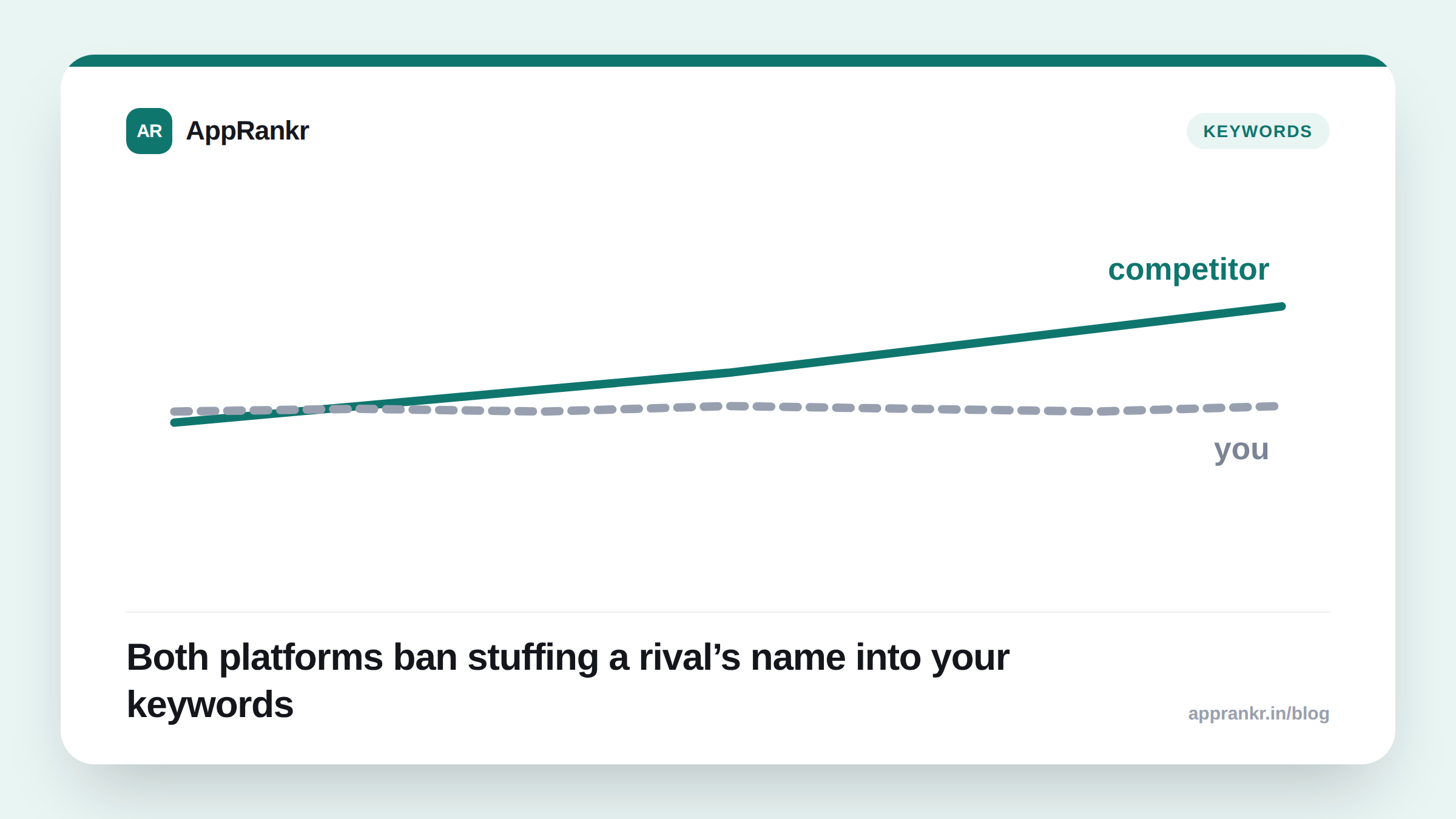
Why a Competitor Outranks You When Someone Searches Your Own App Name
Someone searches your app's exact name and a rival shows up above you. That's not a fluke — it's a competitor stuffing your brand name into their own metadata, and both platforms actually ban it.
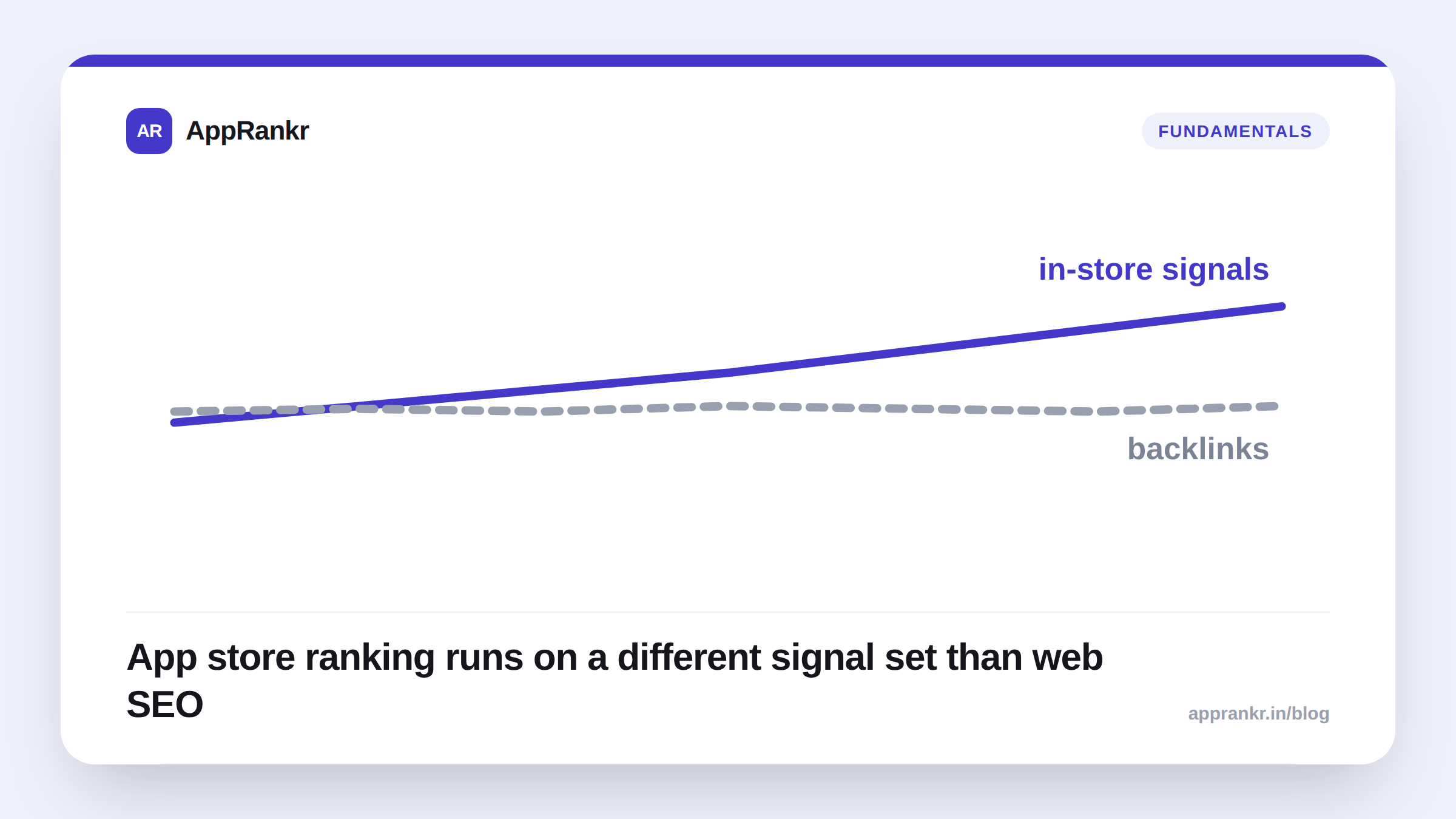
Do Backlinks Actually Affect Your App Store Ranking?
Web SEO agencies sell 'app backlink' packages promising a ranking boost. Here's what Google's and Apple's own ranking documentation actually lists as factors — and what it never mentions.
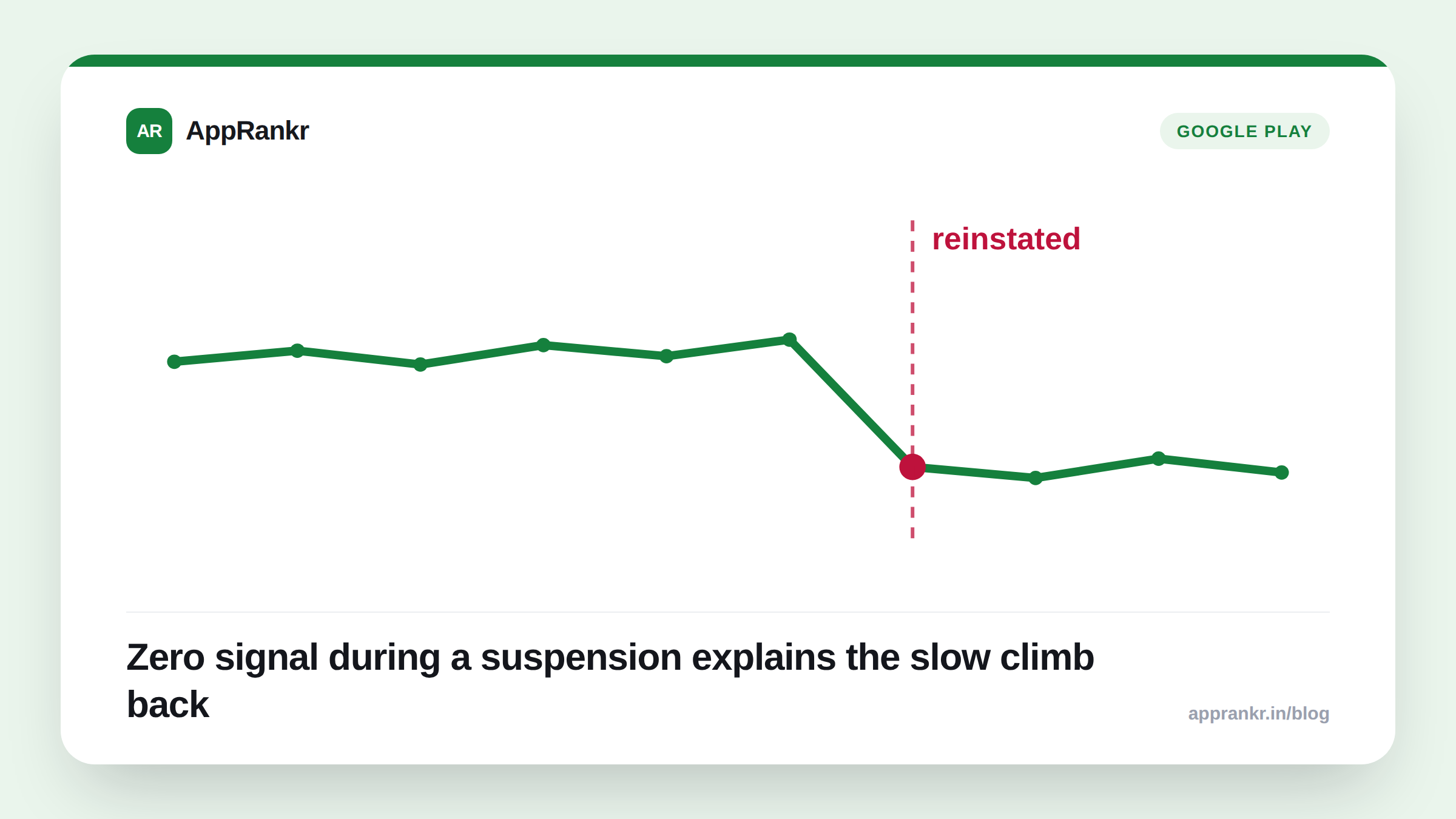
Why Your Ranking Doesn't Bounce Back After Your App Is Reinstated
Your app got suspended, you appealed, Google or Apple reinstated it — but your search ranking never came back to where it was. Here's what's documented, what isn't, and what to actually check.
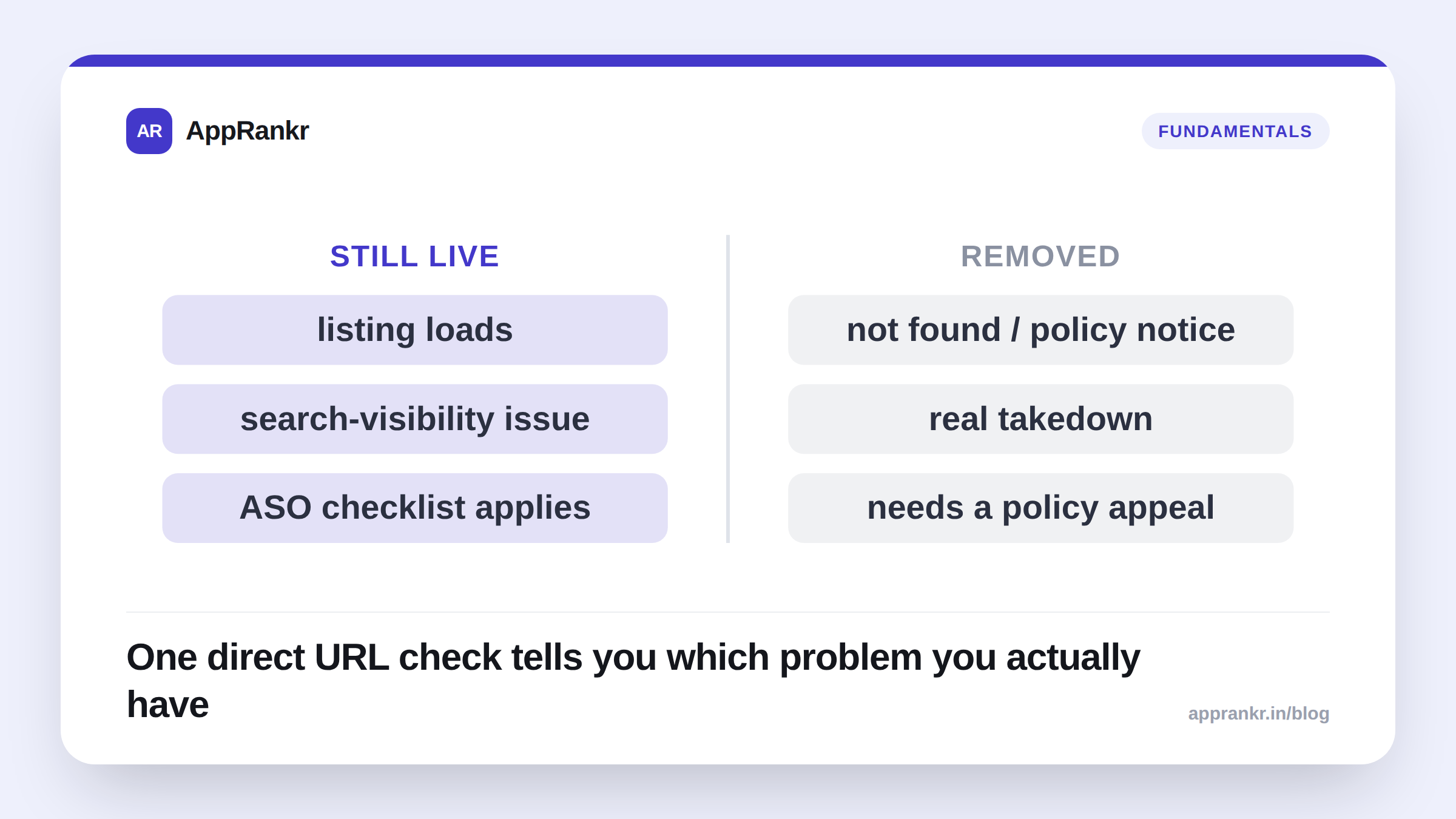
My App Disappeared From Search — Delisted, or Just Not Ranking?
Real developer-community reports split into two very different problems: an app pulled from the store, and an app still live but invisible in search. Here's how to tell which one you have in under five minutes.
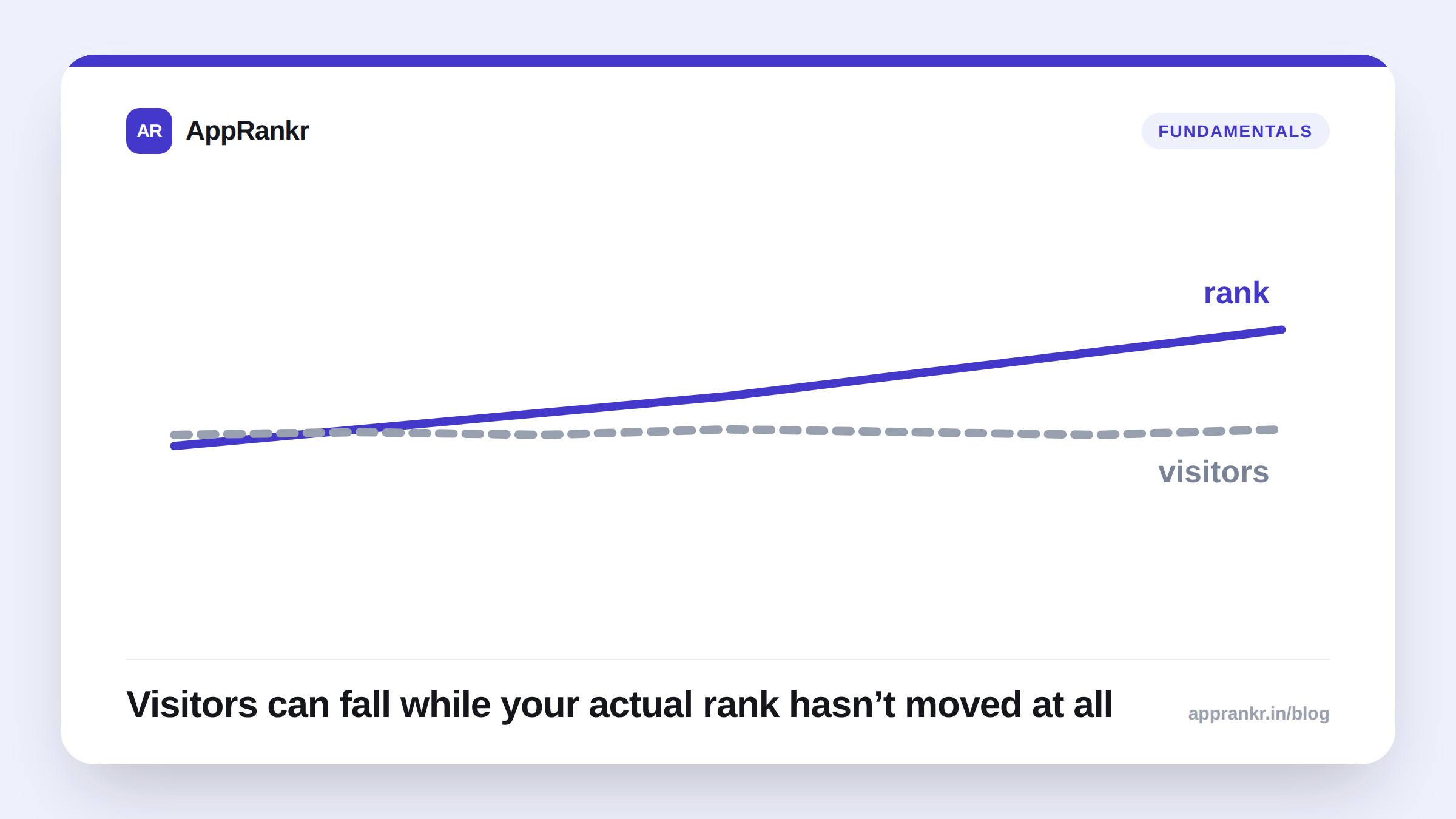
Sudden Drop in Play Store Visitors: Is It Your Rank, or Demand?
A visitor/impression cliff and a keyword-rank cliff look identical on a traffic dashboard but come from different causes. Here's the checklist real developers use to tell them apart.
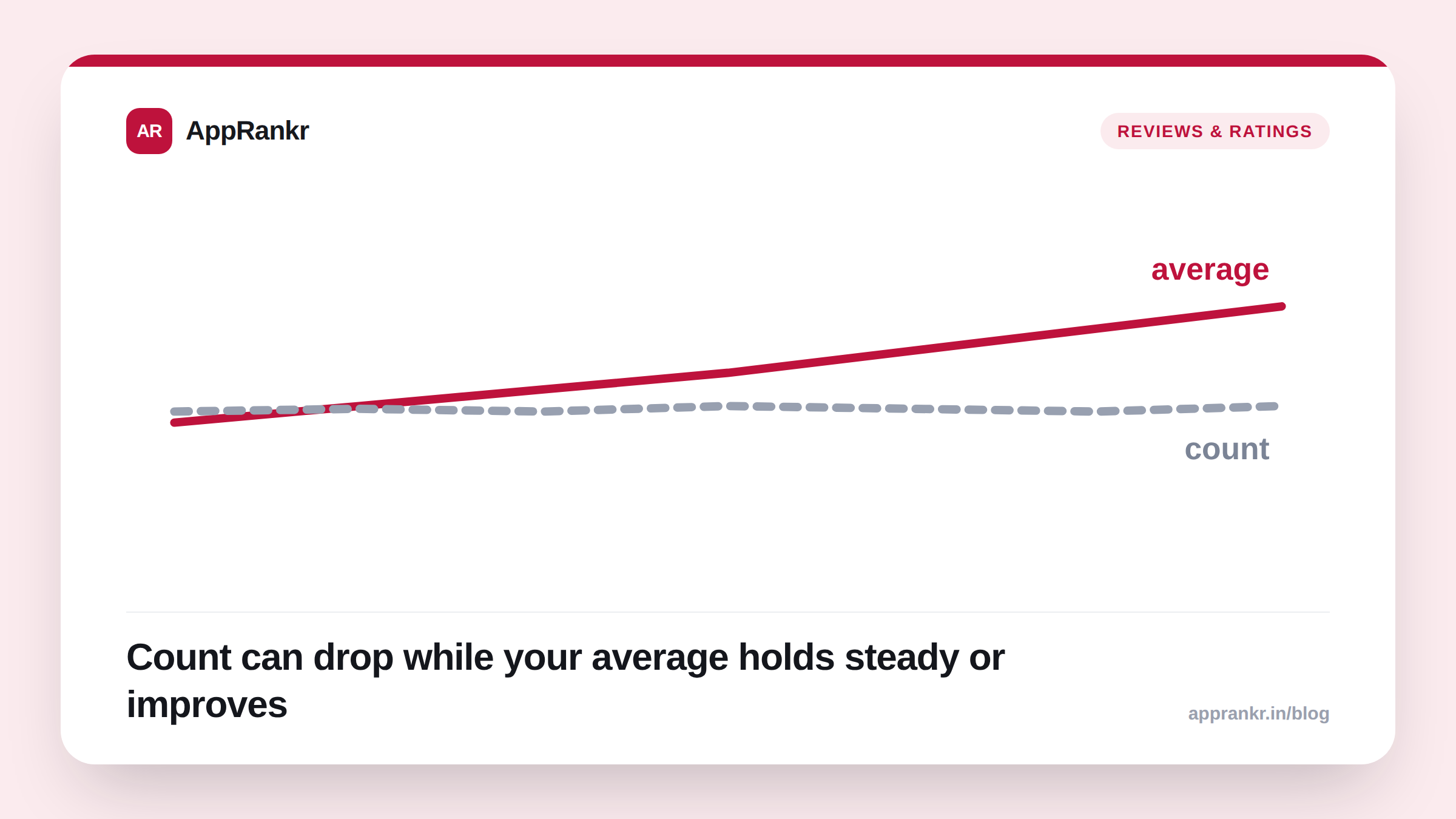
Why Does Google Play Remove Some of My App's Ratings?
A drop in your rating count that you didn't cause usually traces to one of a few documented causes: policy enforcement, a platform migration, or a ratings recalculation. Here's how to tell which.
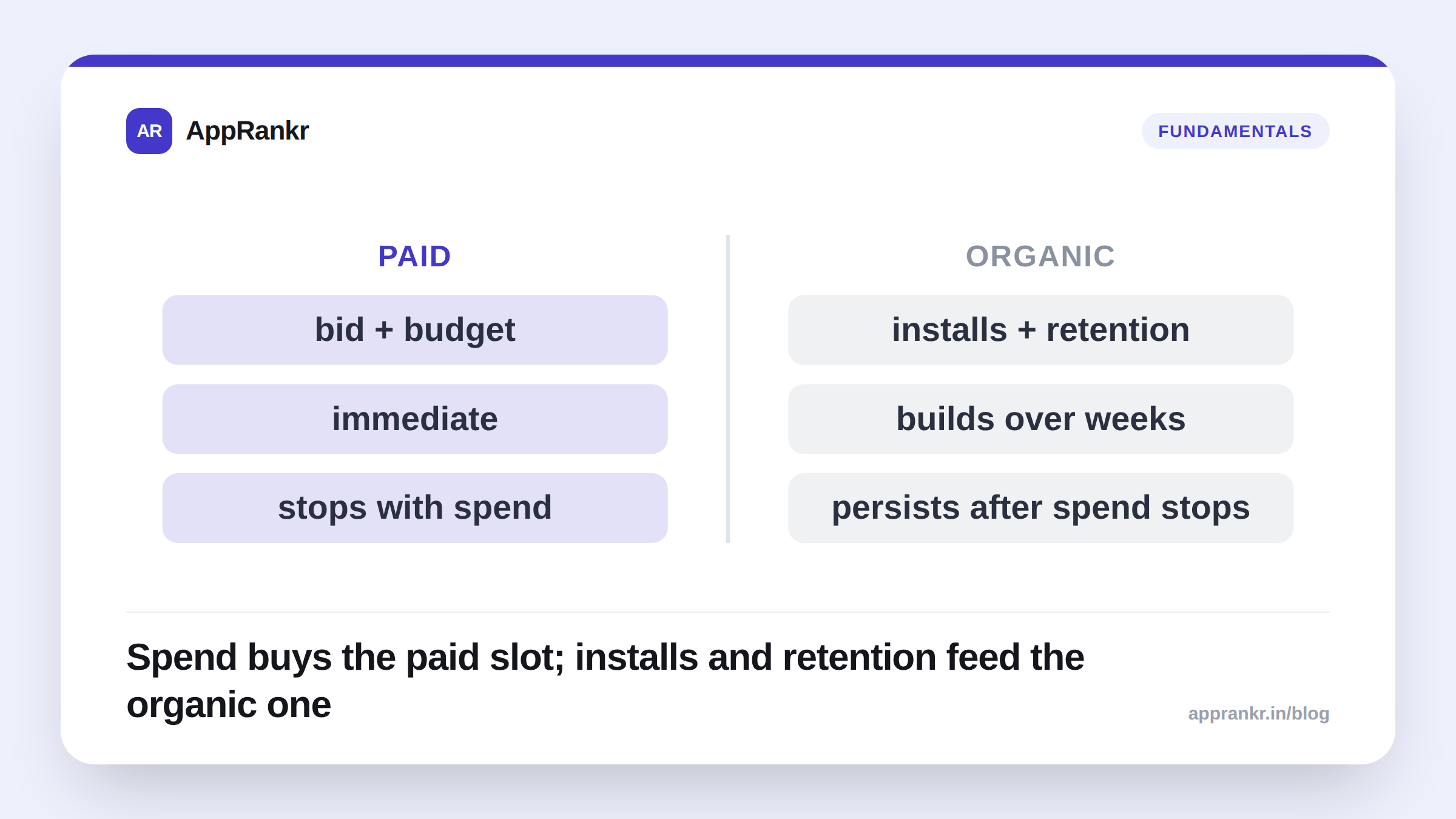
Do Search Ads Affect Your App's Organic Ranking?
Running Apple Search Ads or Google Ads for App campaigns doesn't buy you organic rank, but the two aren't unrelated either. Here's what actually connects them.
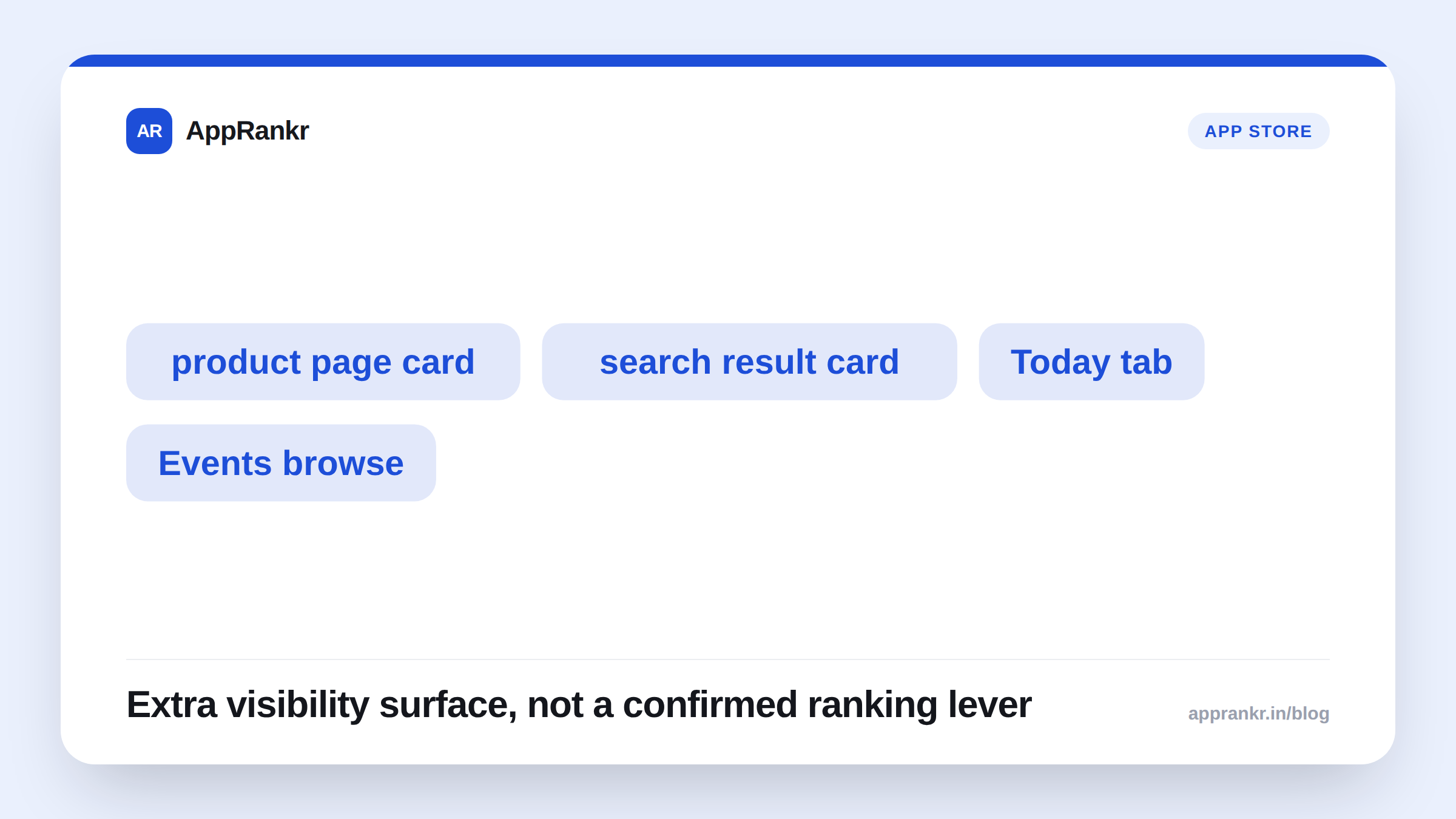
Do In-App Events Help Your App Get Discovered on the App Store?
Apple's In-App Events surface on search, Today, and product pages. Here's what they actually are, where they show up, and what they realistically do for discovery.
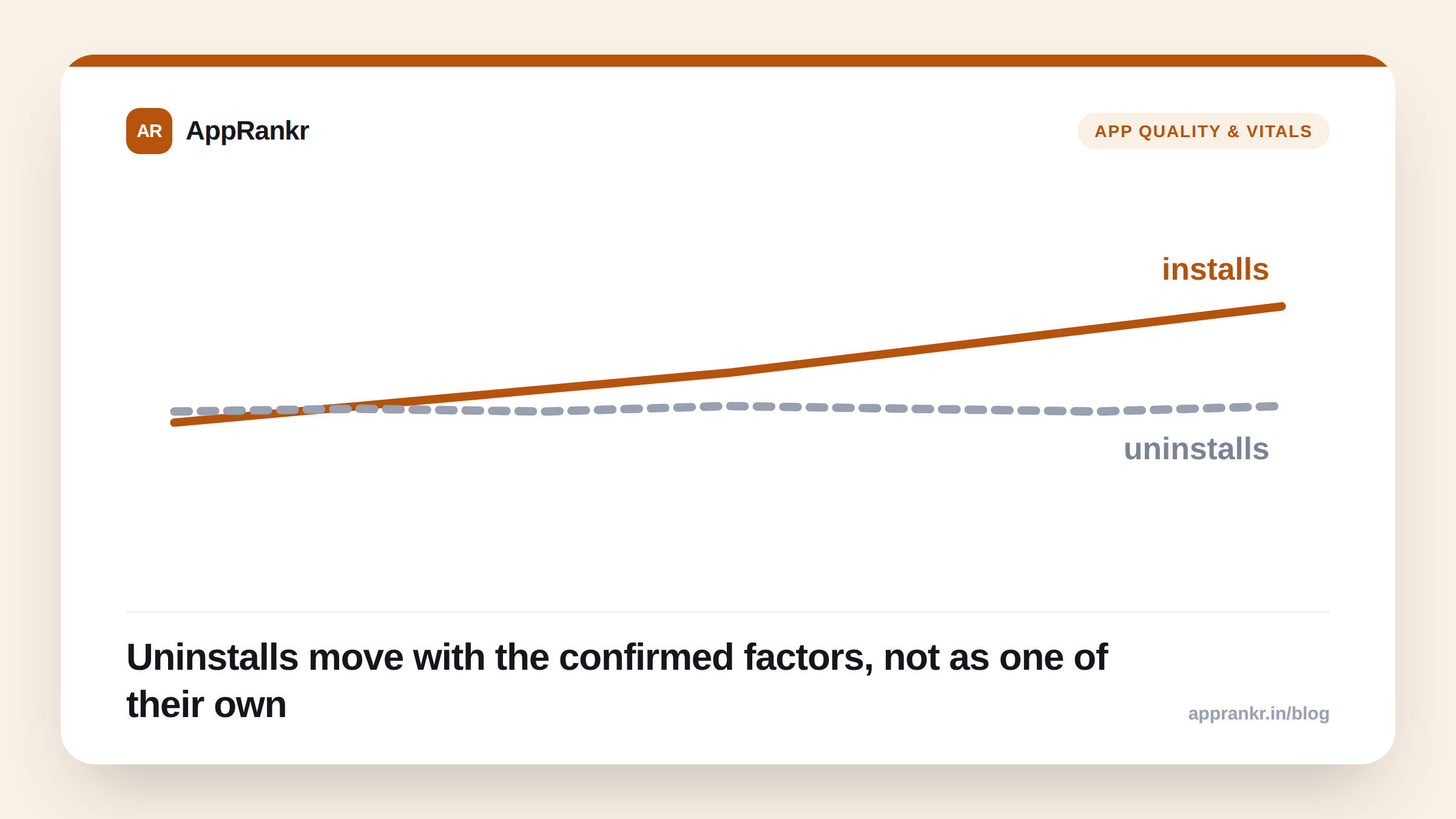
Uninstall Rate and Google Play Ranking: What's Confirmed vs Assumed
Google has never named uninstall rate as a ranking factor the way it has crash rate. Here's what's actually documented, what's inferred, and what to do about it either way.
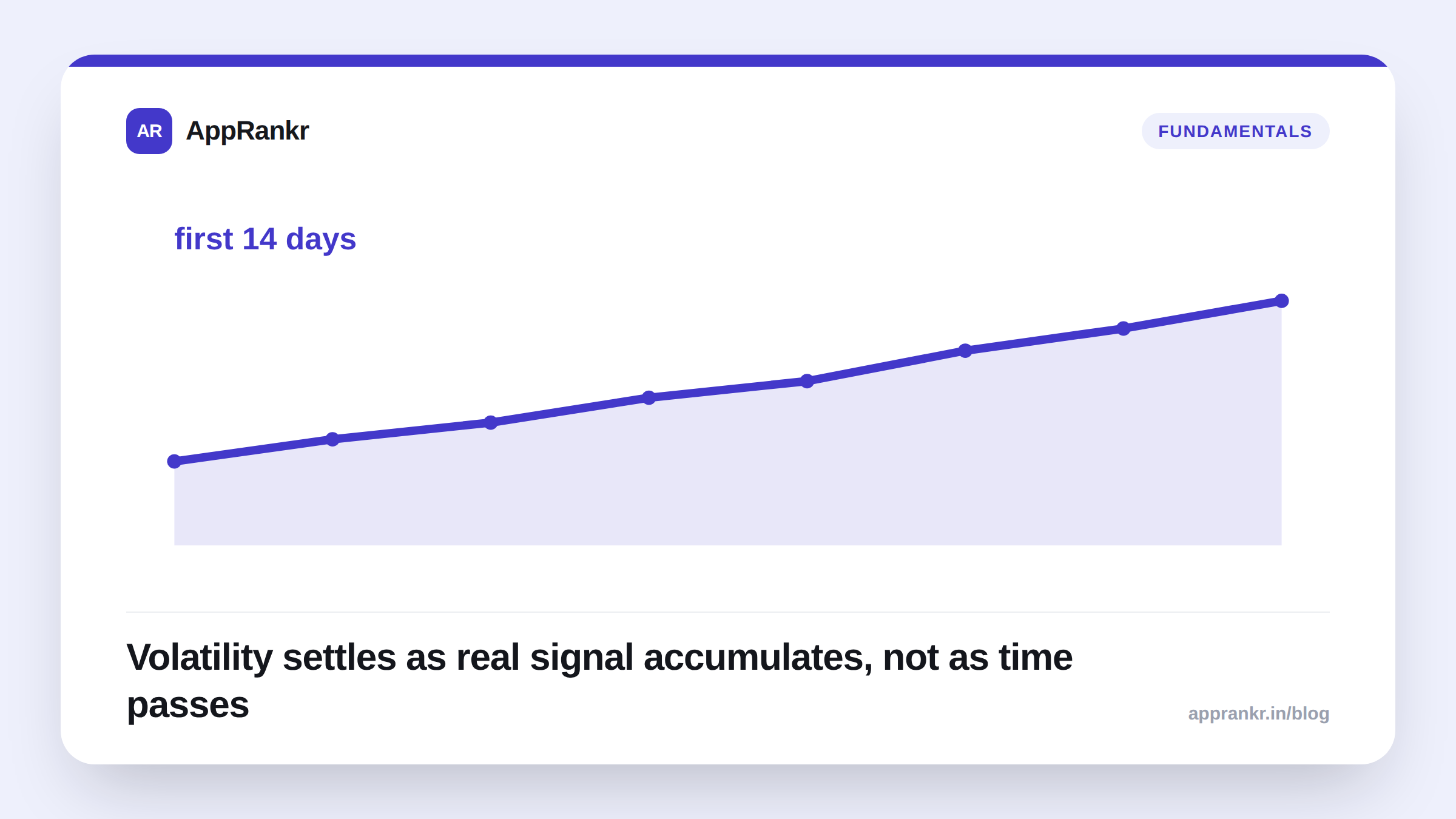
New App Launch: How Rankings Actually Behave in the First Two Weeks
A new listing doesn't rank like an established one, and the volatility in the first two weeks isn't a sign anything's wrong. Here's what's actually happening and what to check instead of panicking.
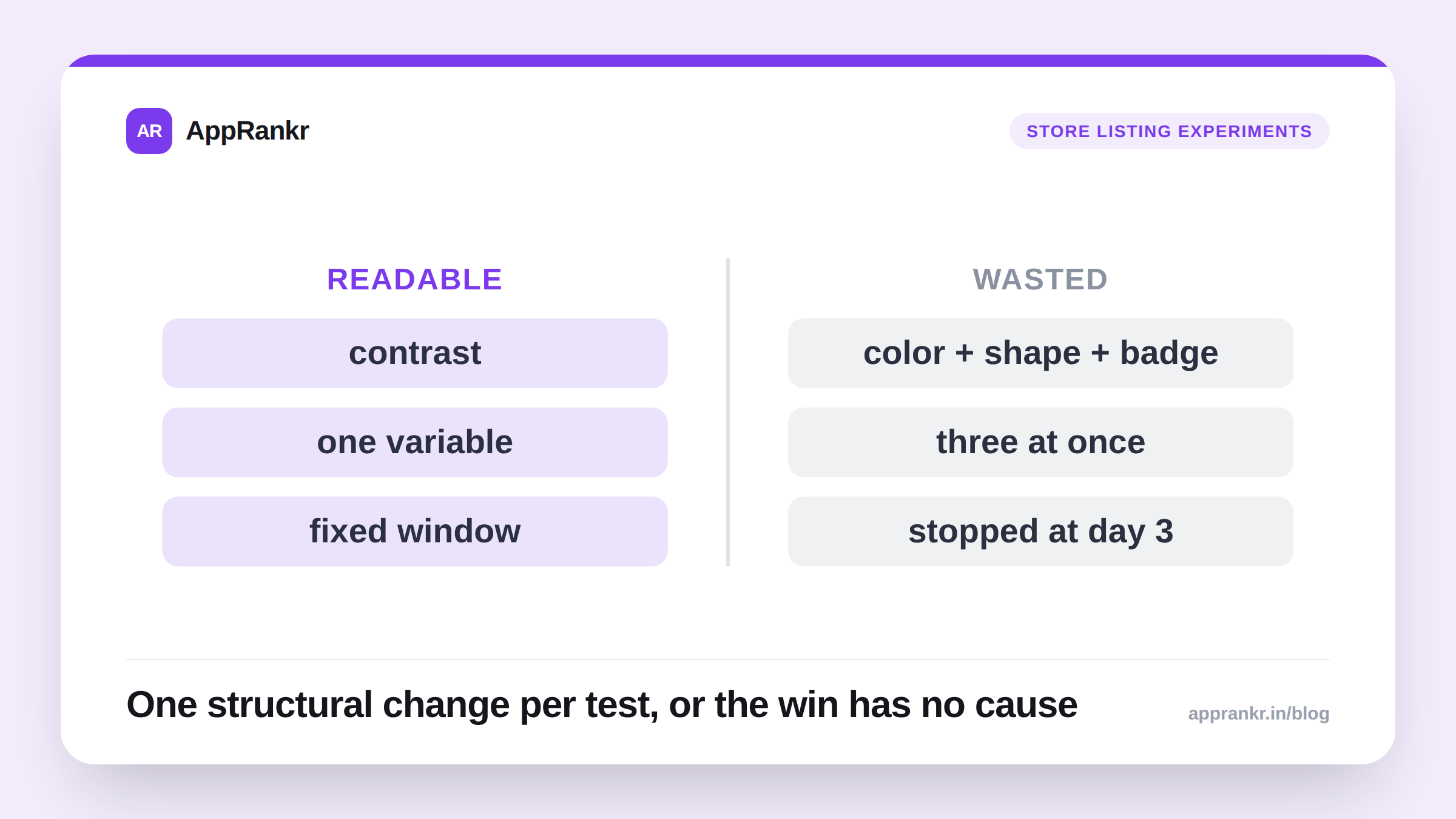
App Icon A/B Testing: What to Test and How to Read the Result
The icon is the one element shown before someone even reaches your listing. Here's how to design an icon test that isolates the variable and produces a readable answer.
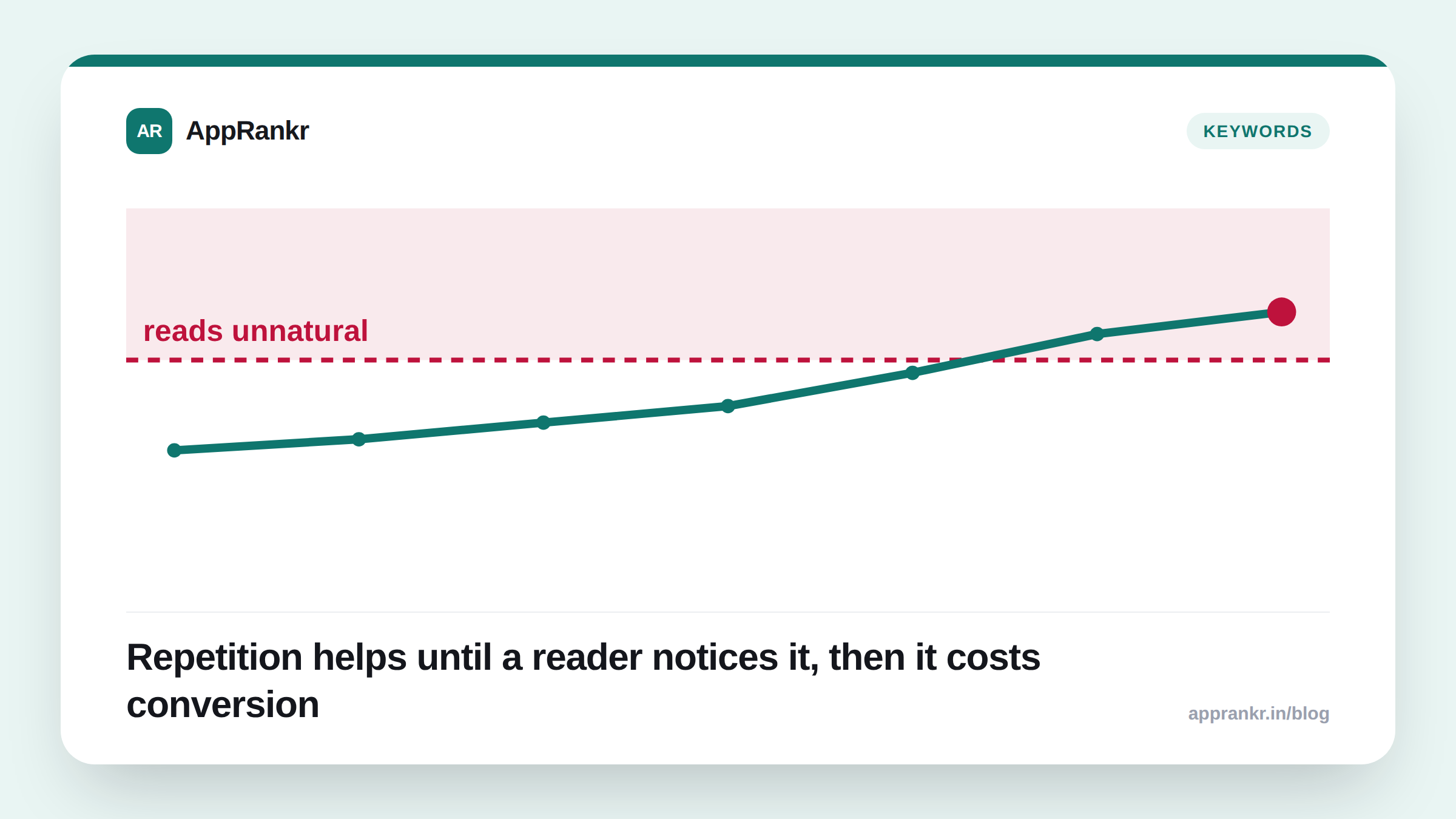
Keyword Stuffing: Where the Line Is on Google Play and App Store
Repeating a keyword helps until it doesn't. Here's the actual difference between a well-optimized listing and one that reads as stuffed, on each store.
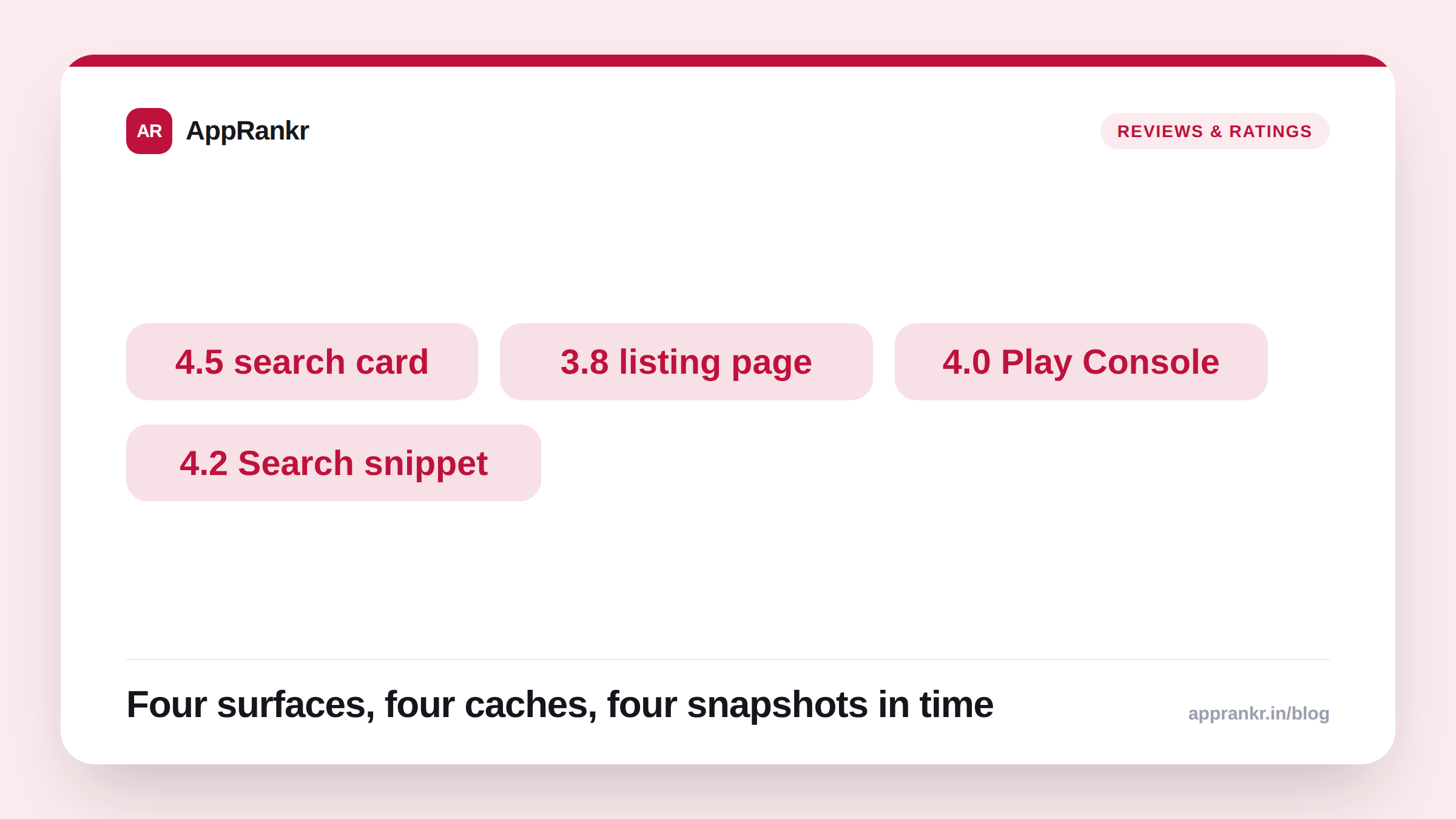
3.8, 4.0, 4.5: Why Your App's Rating Looks Different Every Time You Check It
Same app, same region, same afternoon — and the star rating shown seems to change depending on where you're looking. Here's what's actually different about each place you're checking it.
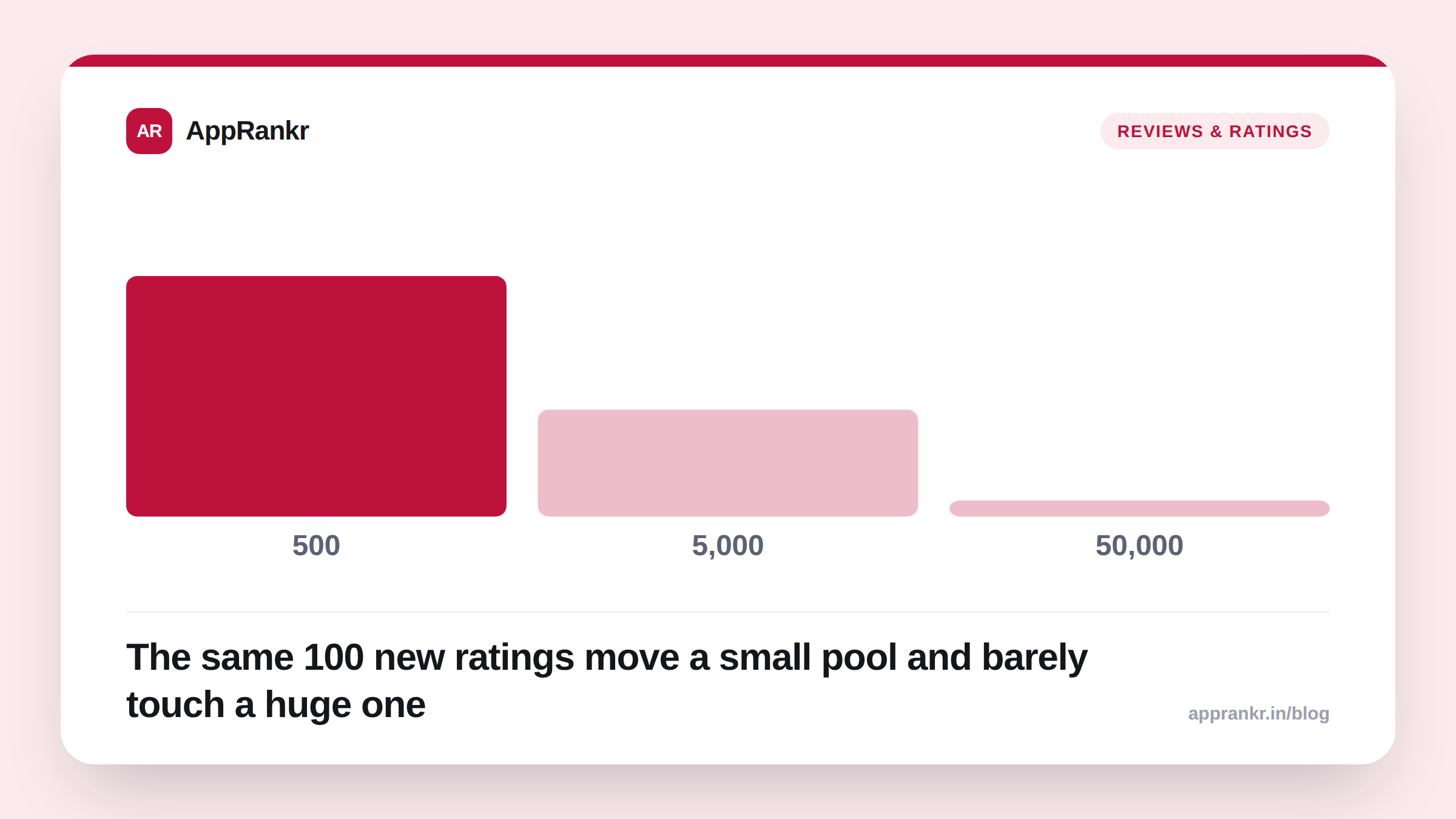
The Arithmetic Behind Why 100 New 5-Star Ratings Barely Move Your Average
You're getting more reviews and ratings than ever, but the number on your listing hasn't moved. It's not a delay or a bug — it's what averaging a batch of new ratings into a huge existing pool actually does.
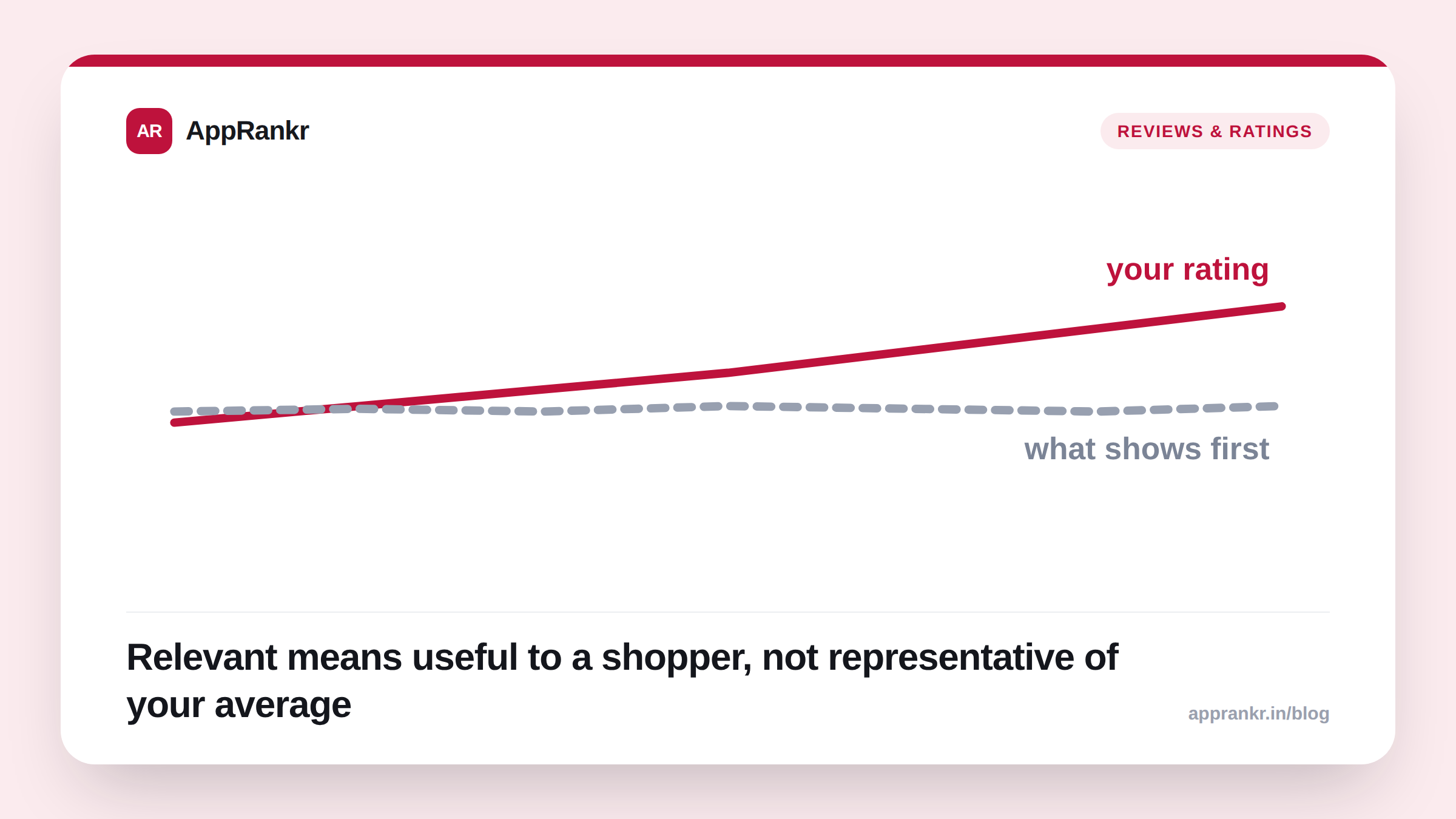
Why Google Play's 'Most Relevant' Review Is Often Your Worst One
Your average rating is healthy, but the first review a visitor sees on Google Play is a detailed 1-star complaint. Here's why 'Most relevant' optimizes for something other than your average.
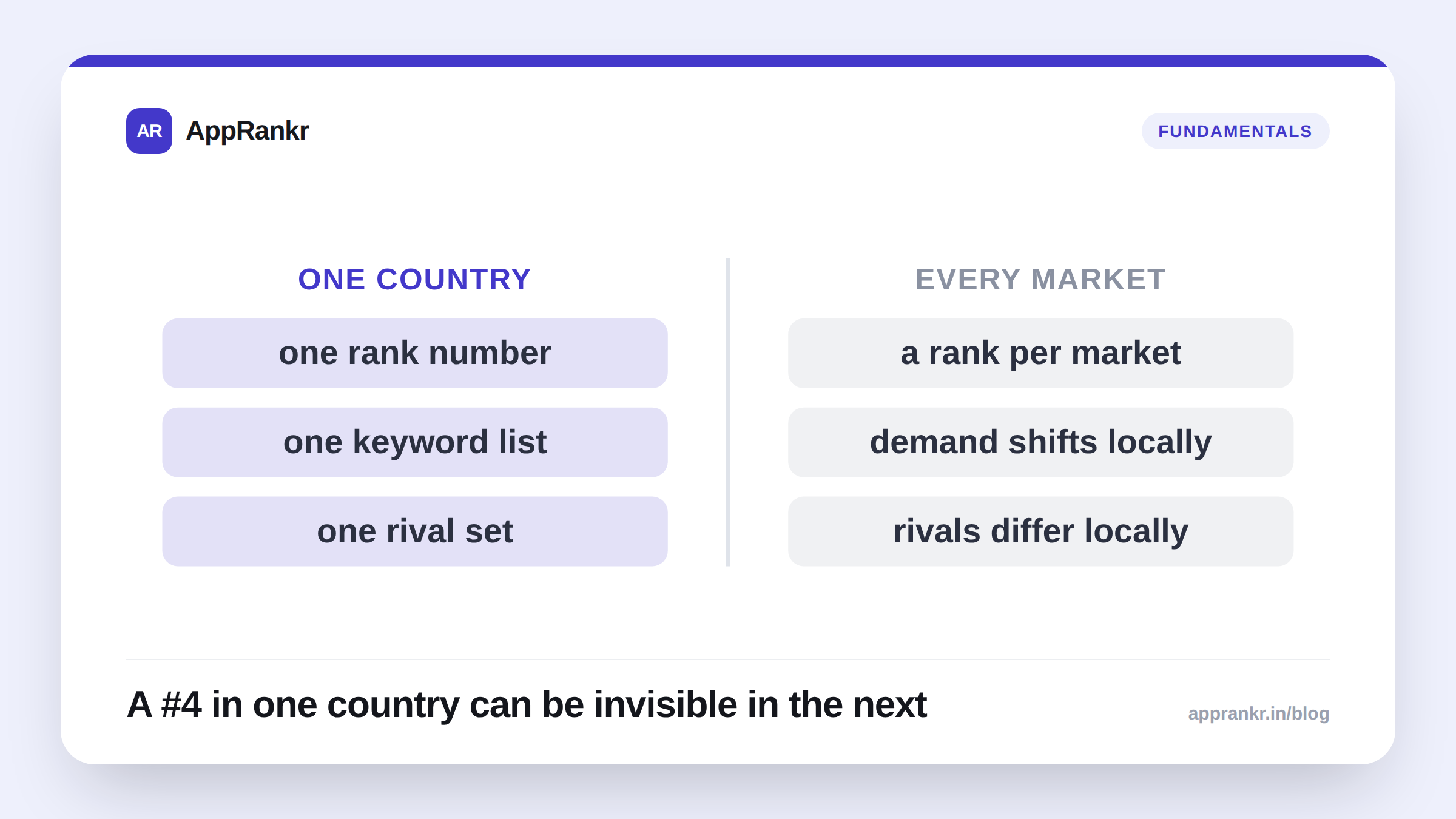
Tracking App Rankings Across Countries: What Actually Changes Market to Market
A #4 in India and a #180 in the US can be the exact same keyword, same listing, same day. Here's what genuinely differs between markets, and what doesn't.
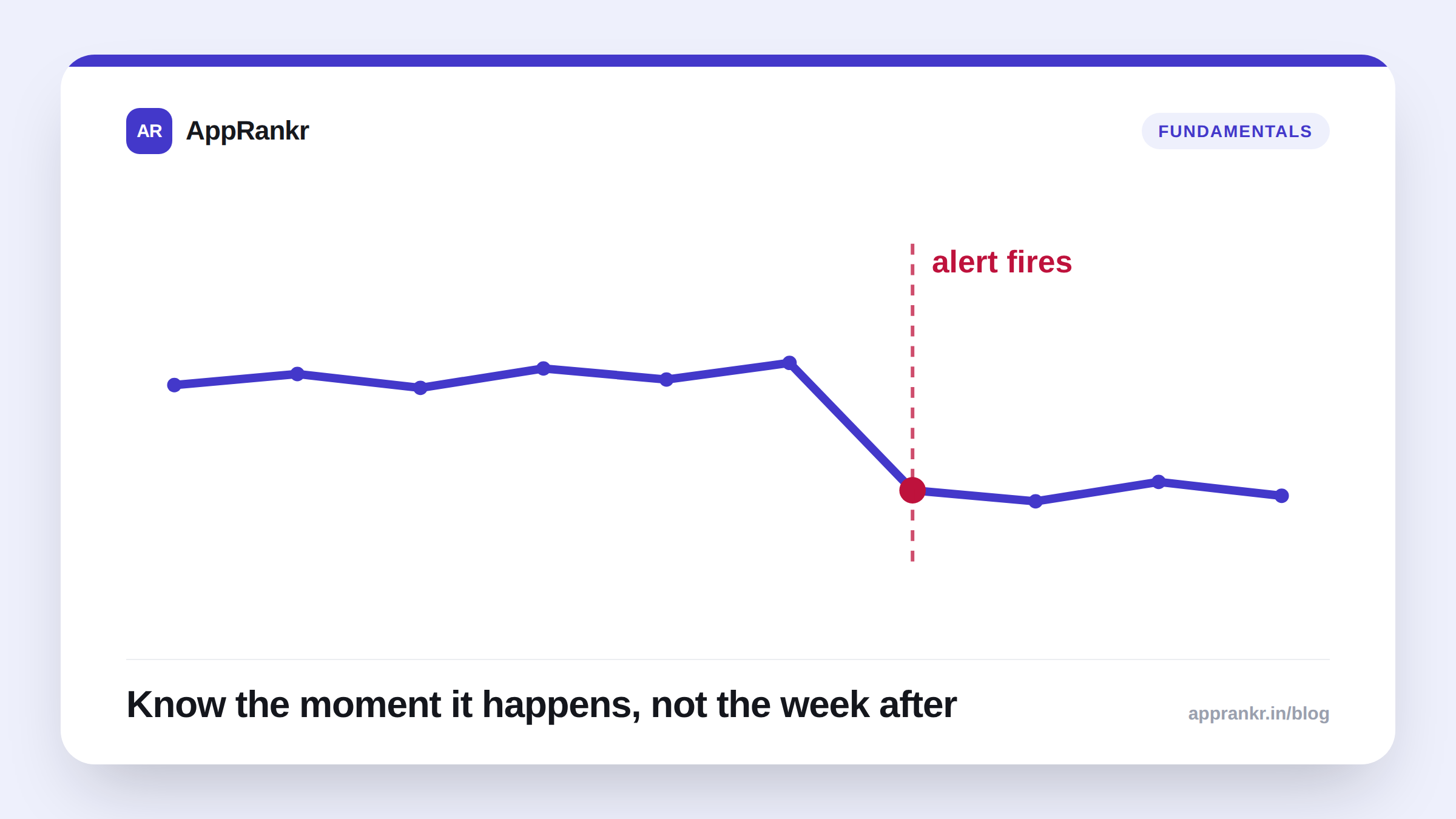
Setting Up Rank-Drop Alerts: How to Know the Moment It Happens
Finding out a keyword fell out of range during next week's manual check means it already cost you days of visibility. Here's how to set up alerts that catch it same-day instead.
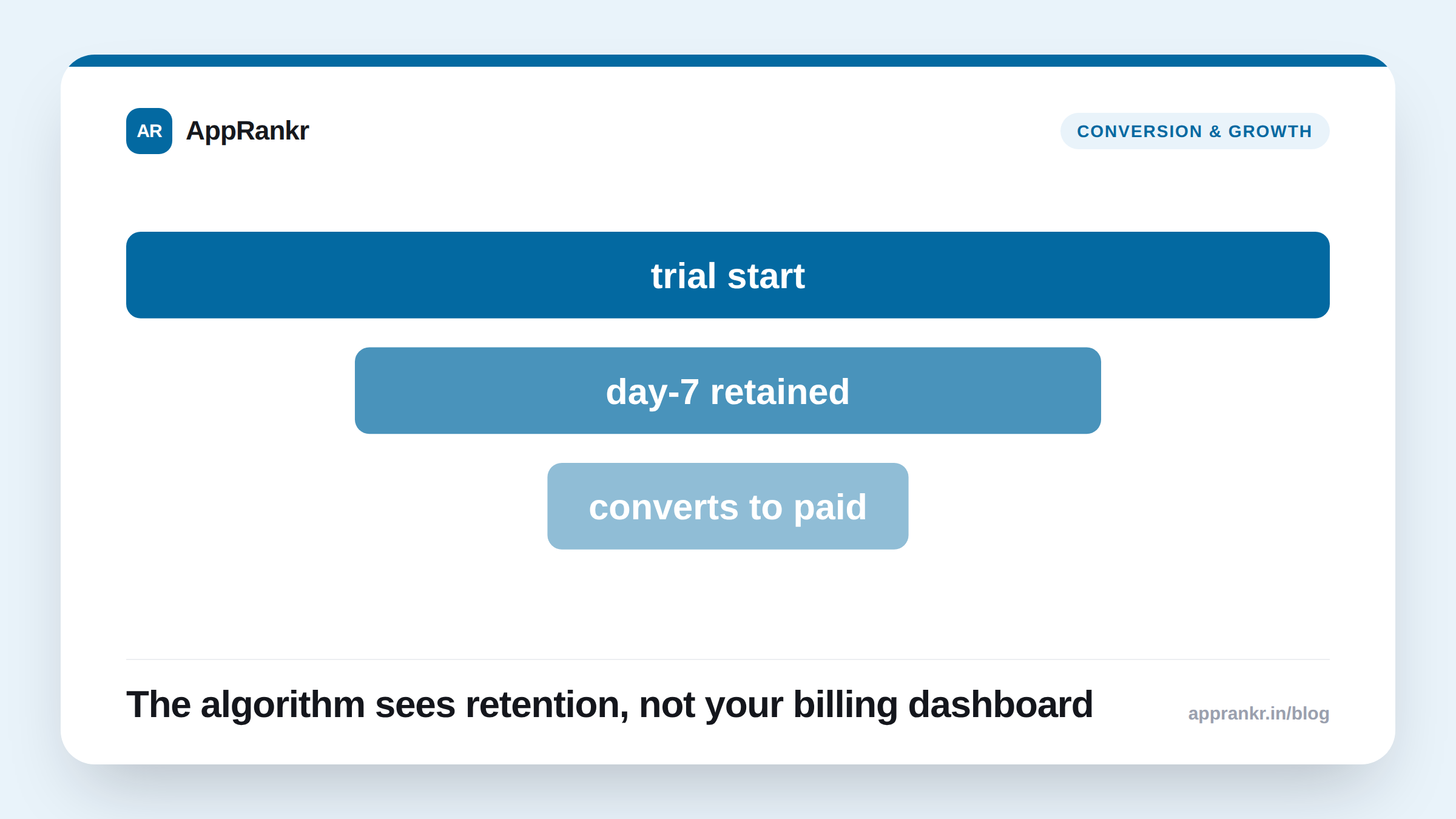
ASO for Subscription Apps: What Trial-to-Paid Signals Actually Do to Your Rank
Your trial-to-paid conversion rate is a business metric the store algorithm never sees directly. Here's what it sees instead, and why that gap changes how you should optimize.
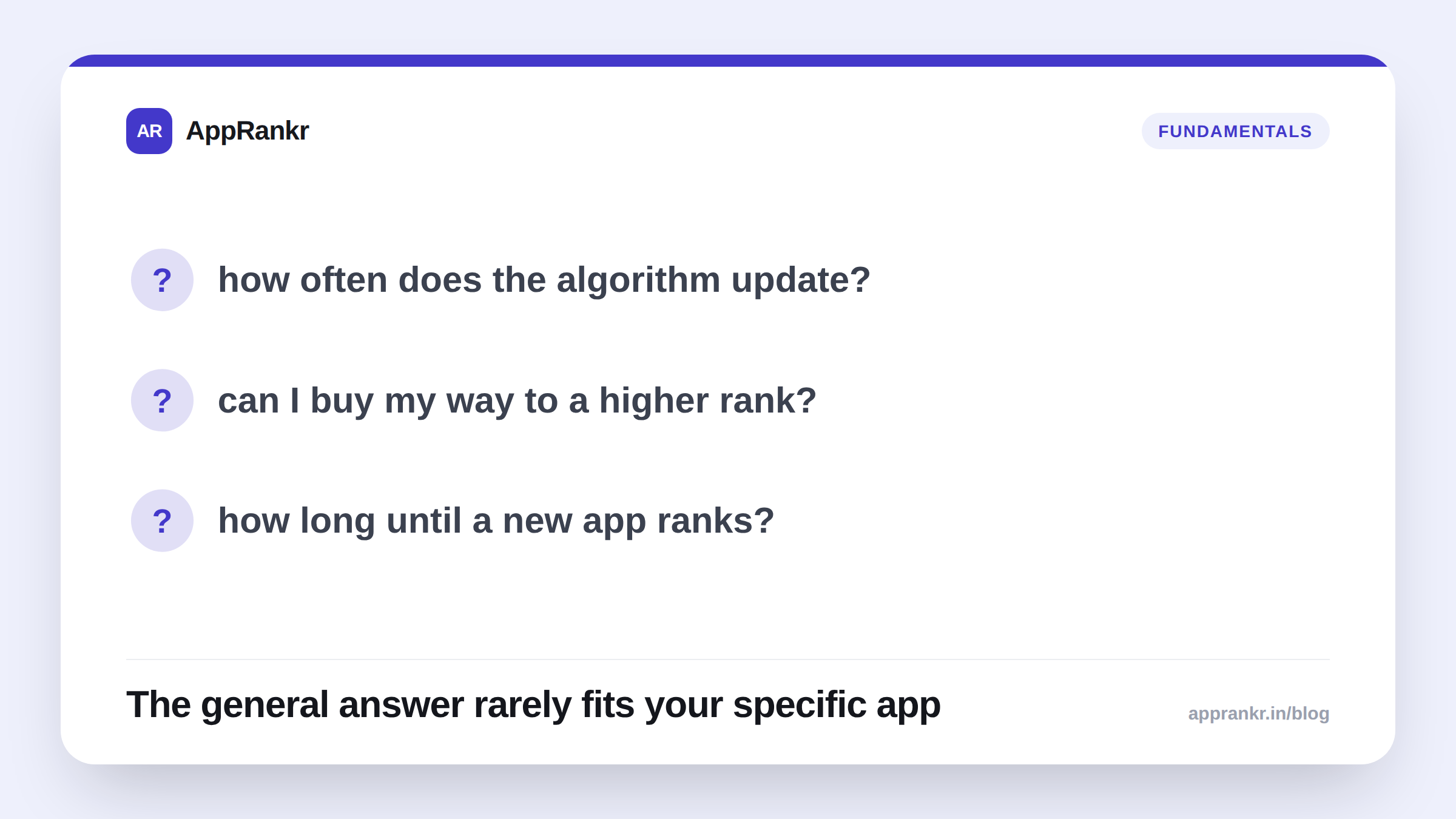
The Questions Everyone Asks ChatGPT About App Rankings, Answered With Real Data
The app-ranking questions people now ask an AI assistant instead of a search engine, answered directly, with the actual mechanics behind each answer.
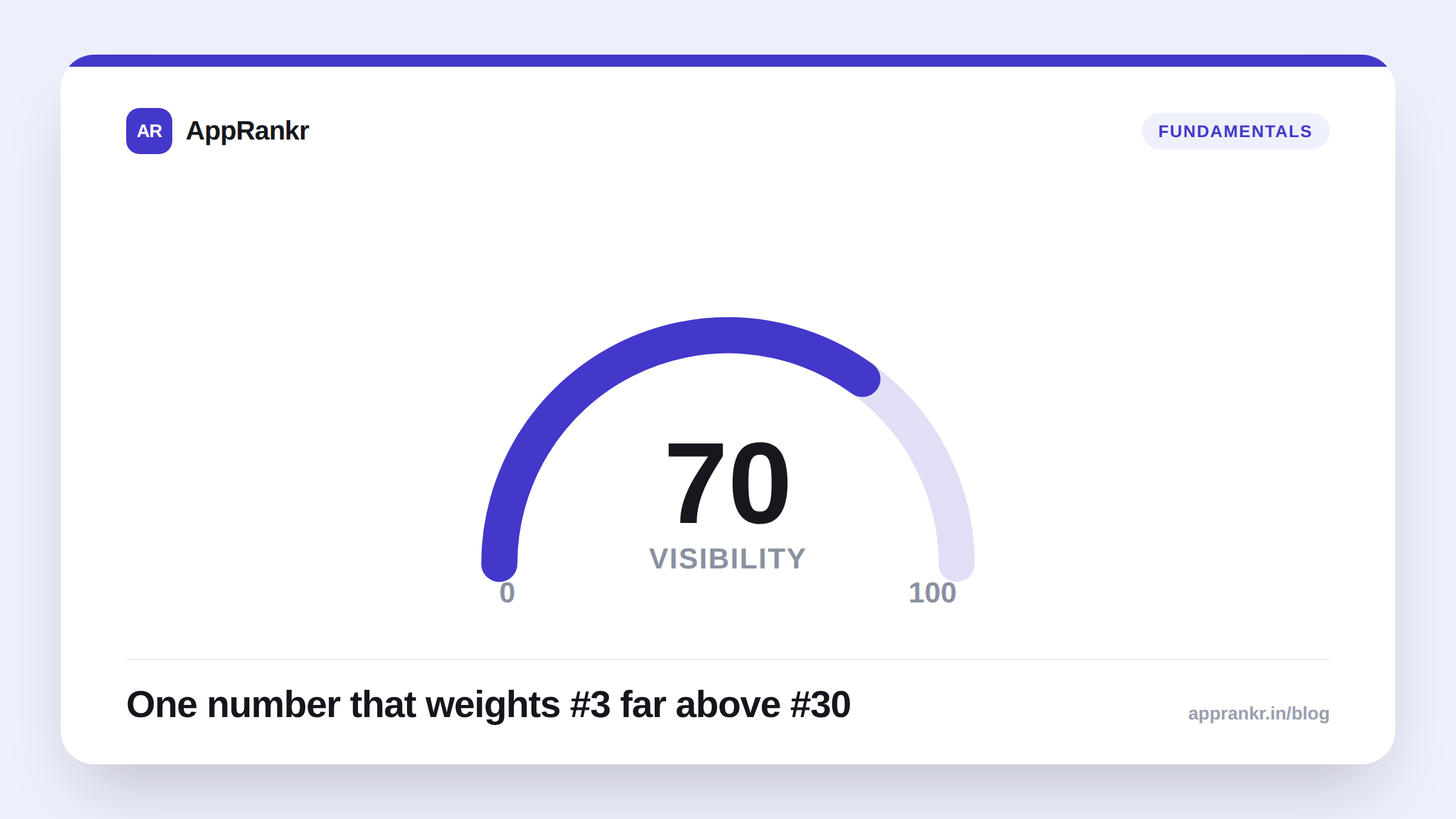
What Is a Visibility Score in ASO? How It's Calculated
One number meant to summarize where you stand across every keyword you're tracked on. Not any single keyword's rank. Here's what actually goes into it and why it's weighted the way it is.
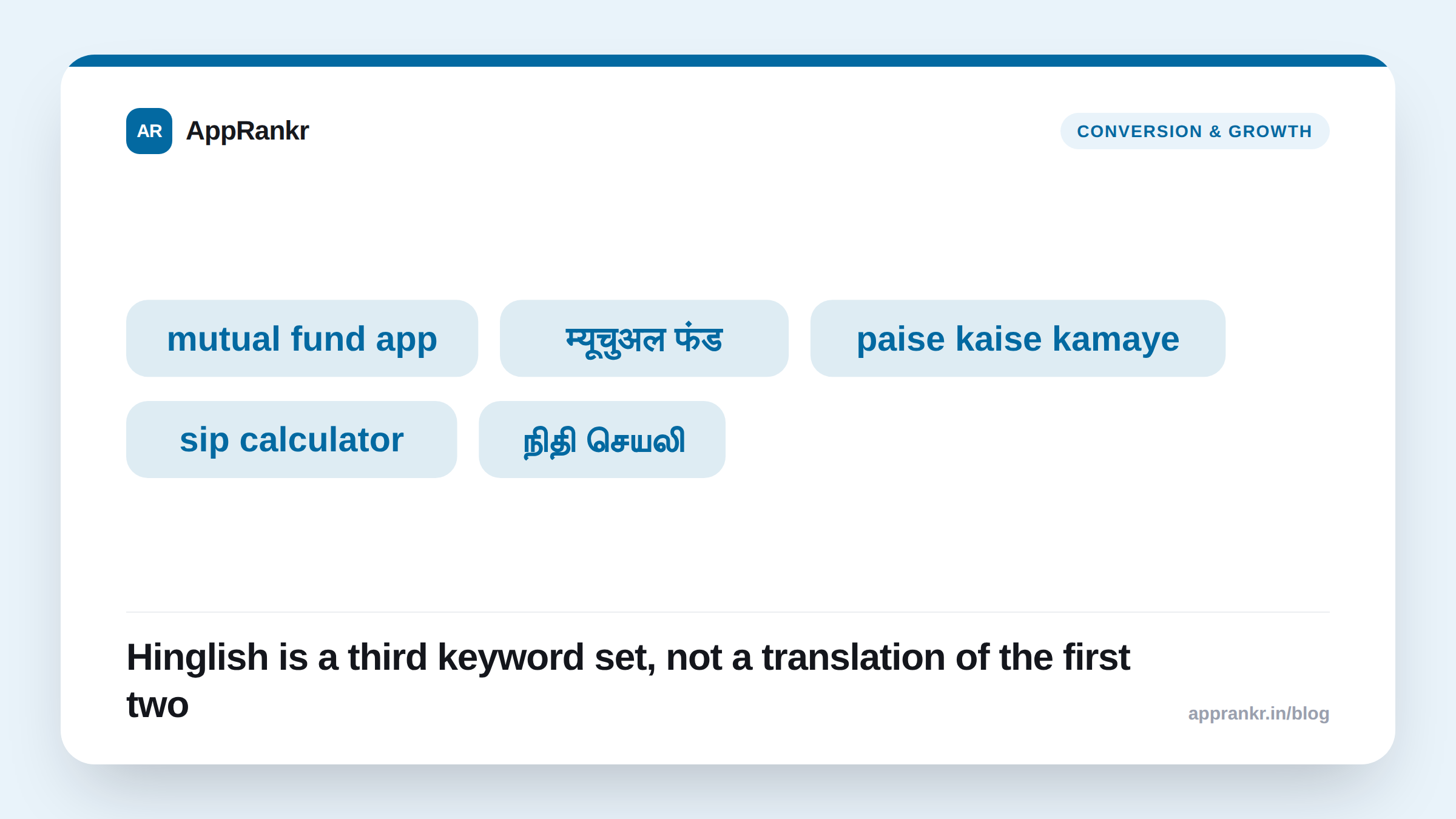
How to Localize Your App Store Listing for India: Hindi, Hinglish, and Regional Keywords
India isn't one market. Localizing for it well means Hindi, Hinglish, and regional-language keywords together, not a straight English-to-Hindi translation.
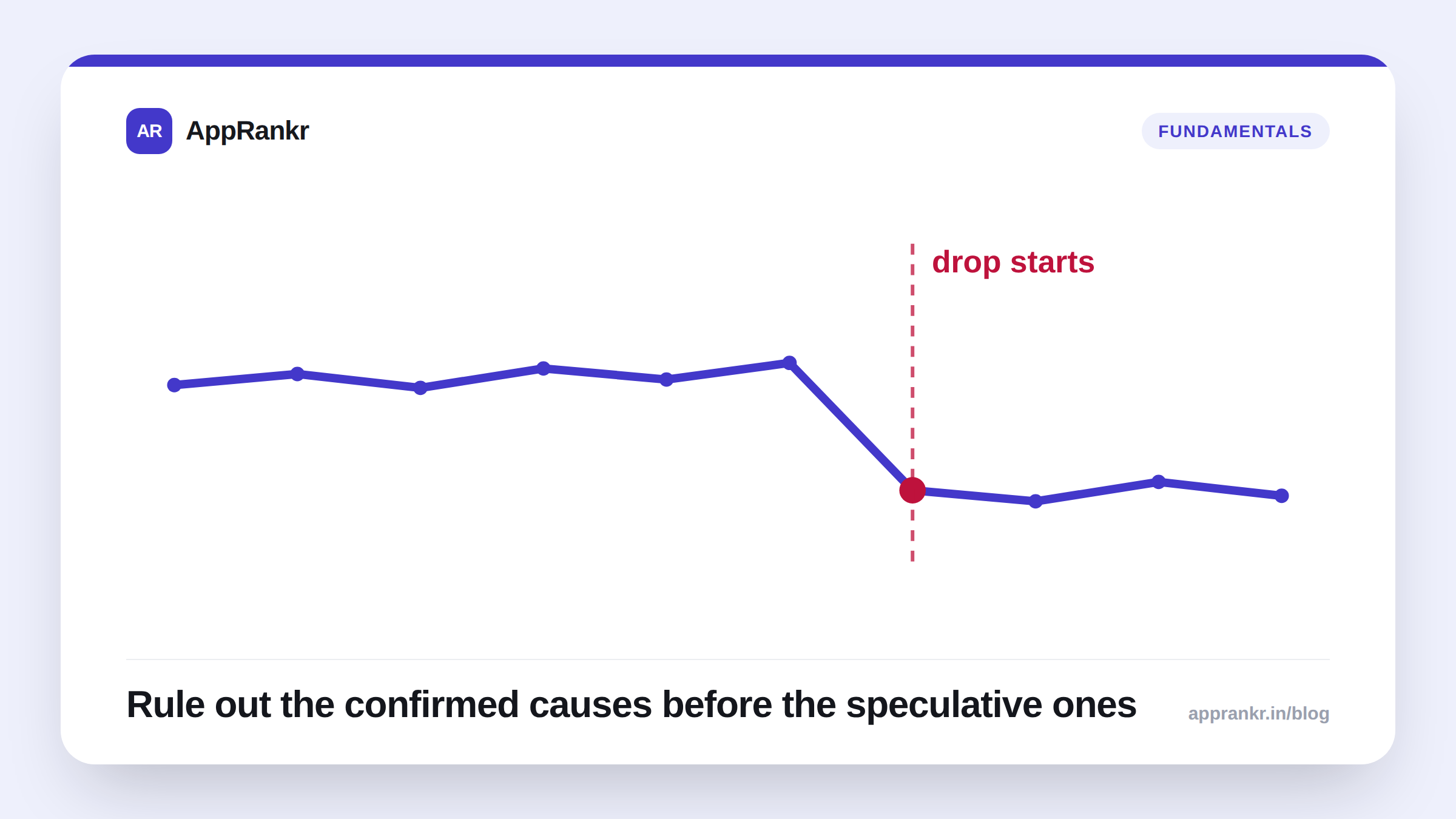
Why Did My App's Ranking Drop? A Diagnosis Checklist
A sudden rank drop has a real cause, and it's almost always one of a short list. Here's the order to check them in, before you start guessing.
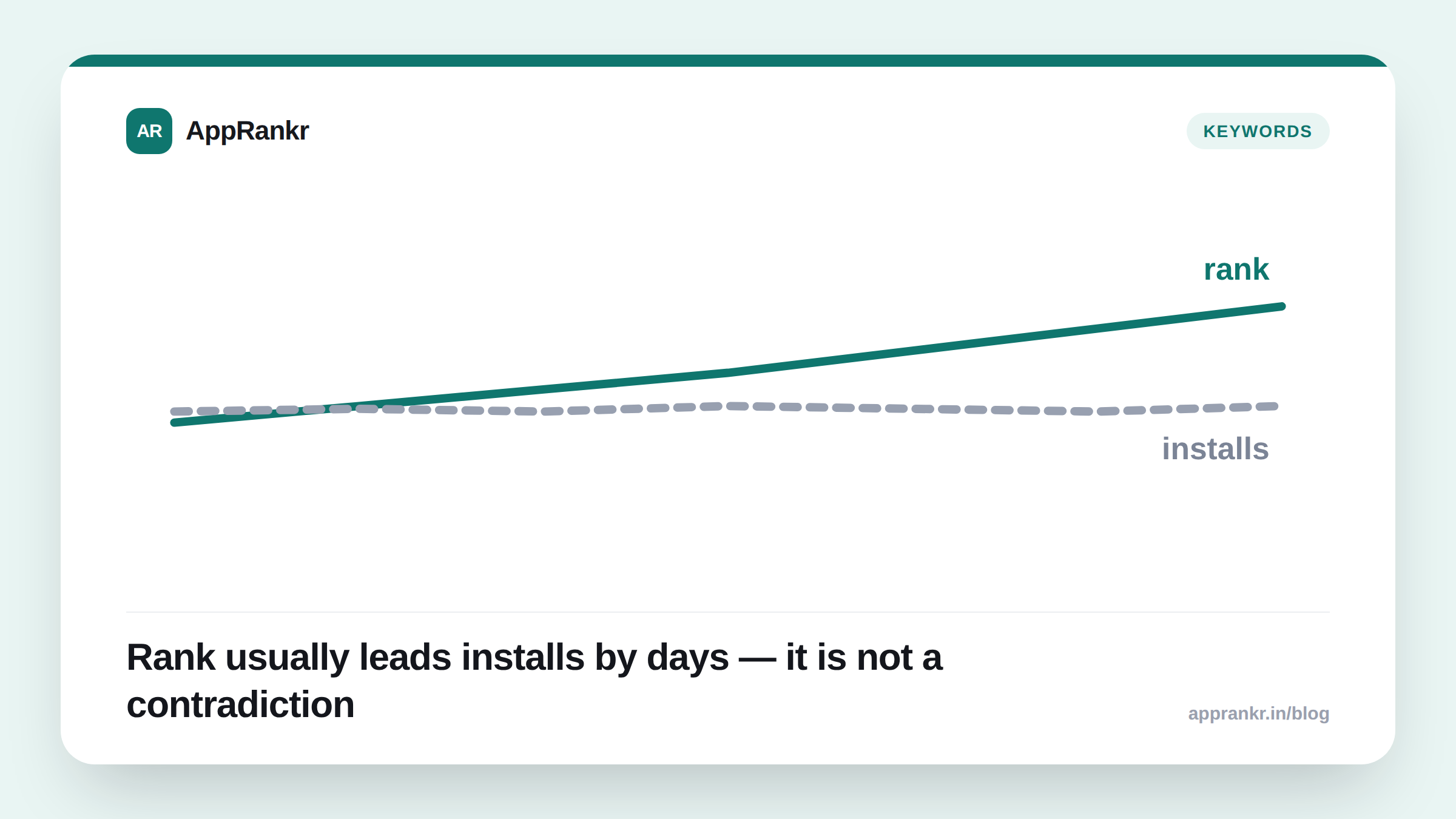
My Keyword Rank Fell But Downloads Didn't Change: What's Going On?
Rank and downloads are related, not identical. Here's why a keyword position can drop with no visible change to installs, and when that's actually fine.
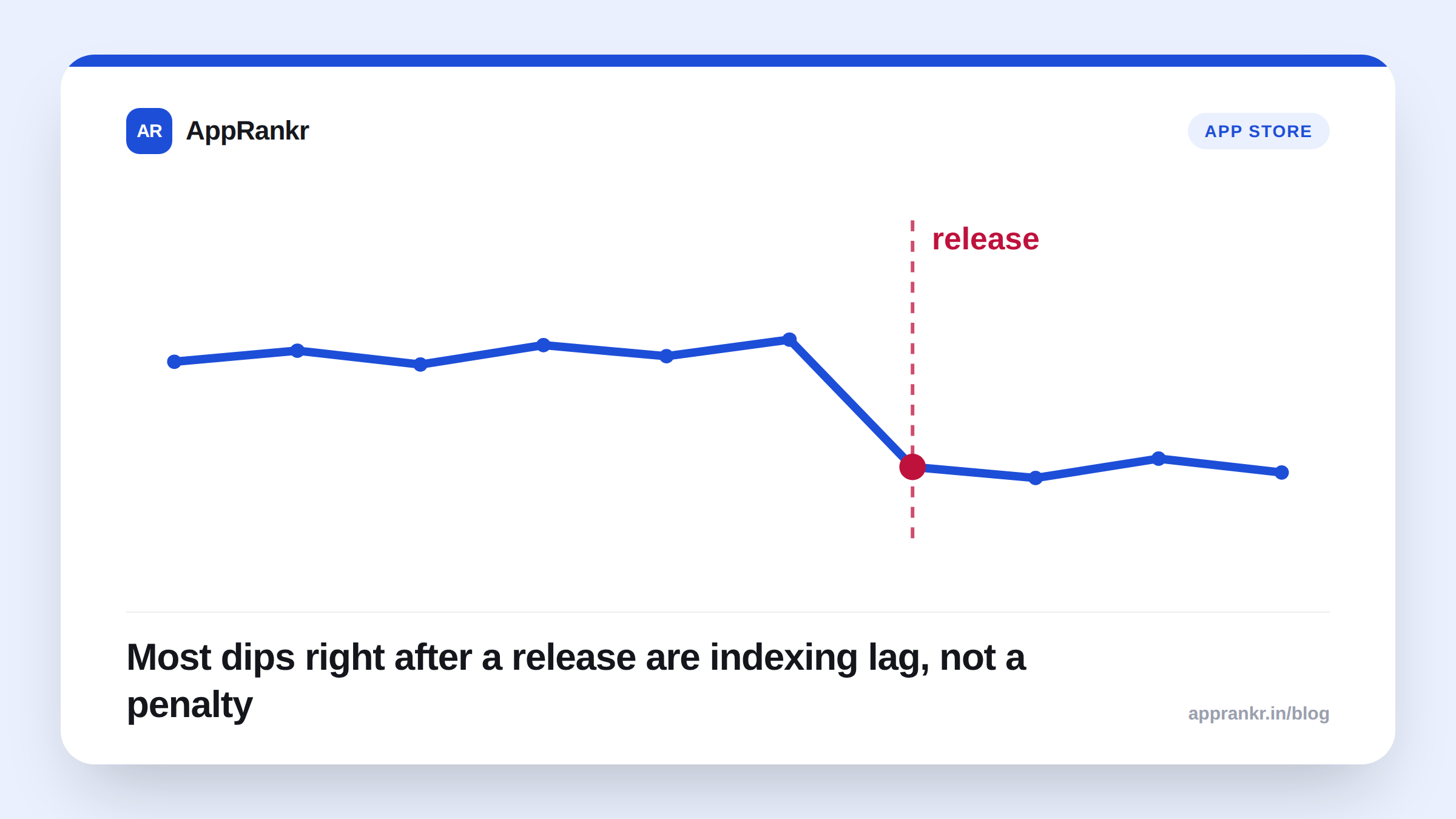
App Store Ranking Dropped After an Update: What to Check First
A rank dip right after you ship a new version has its own short list of causes, separate from the usual ones. Here's what to rule out first.
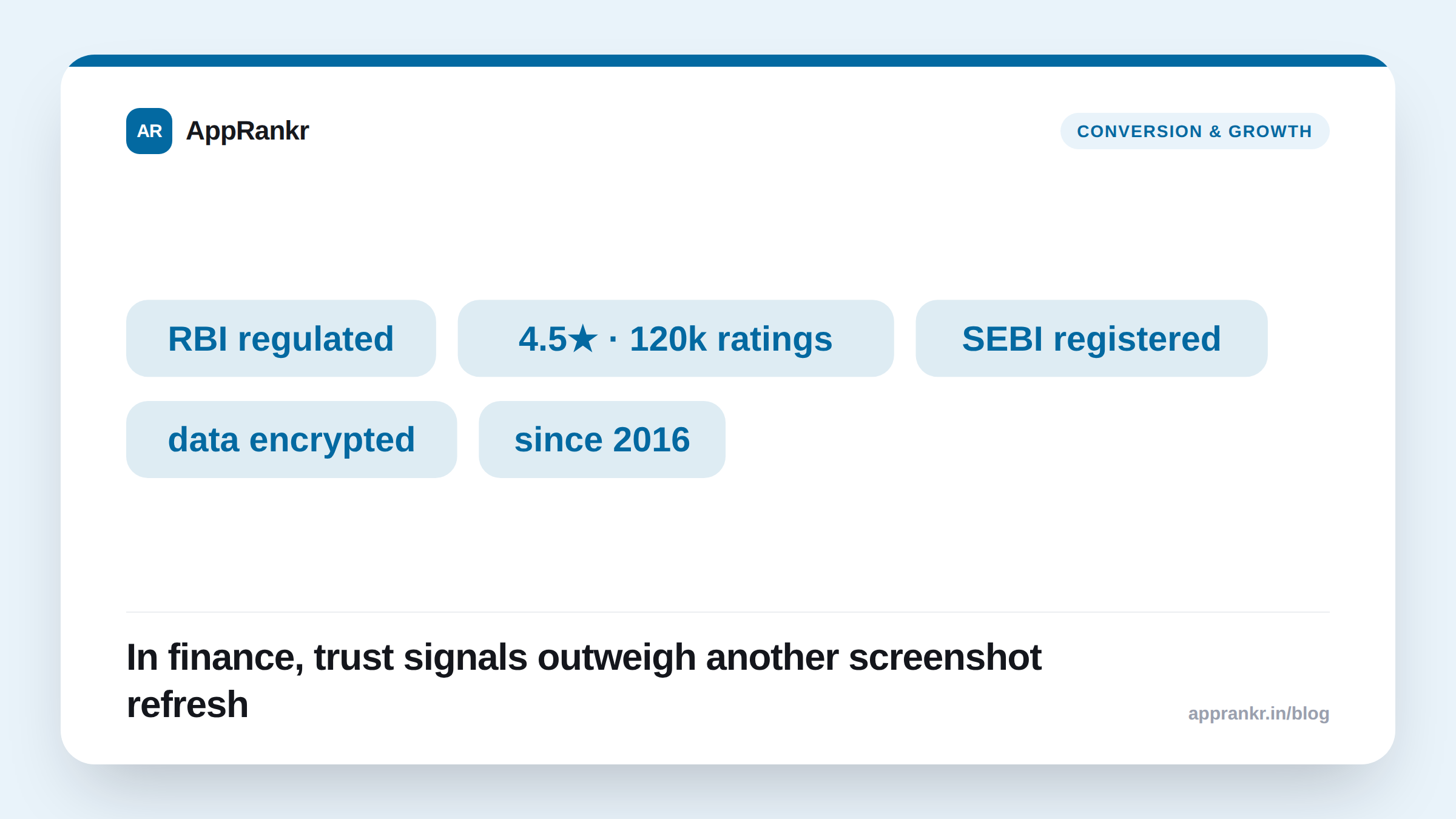
ASO for Fintech Apps: Trust Signals Over Screenshots
A finance app's store listing has to clear a trust bar a game or utility app never faces. Here's why a regulatory badge often converts harder than a polished UI tour.
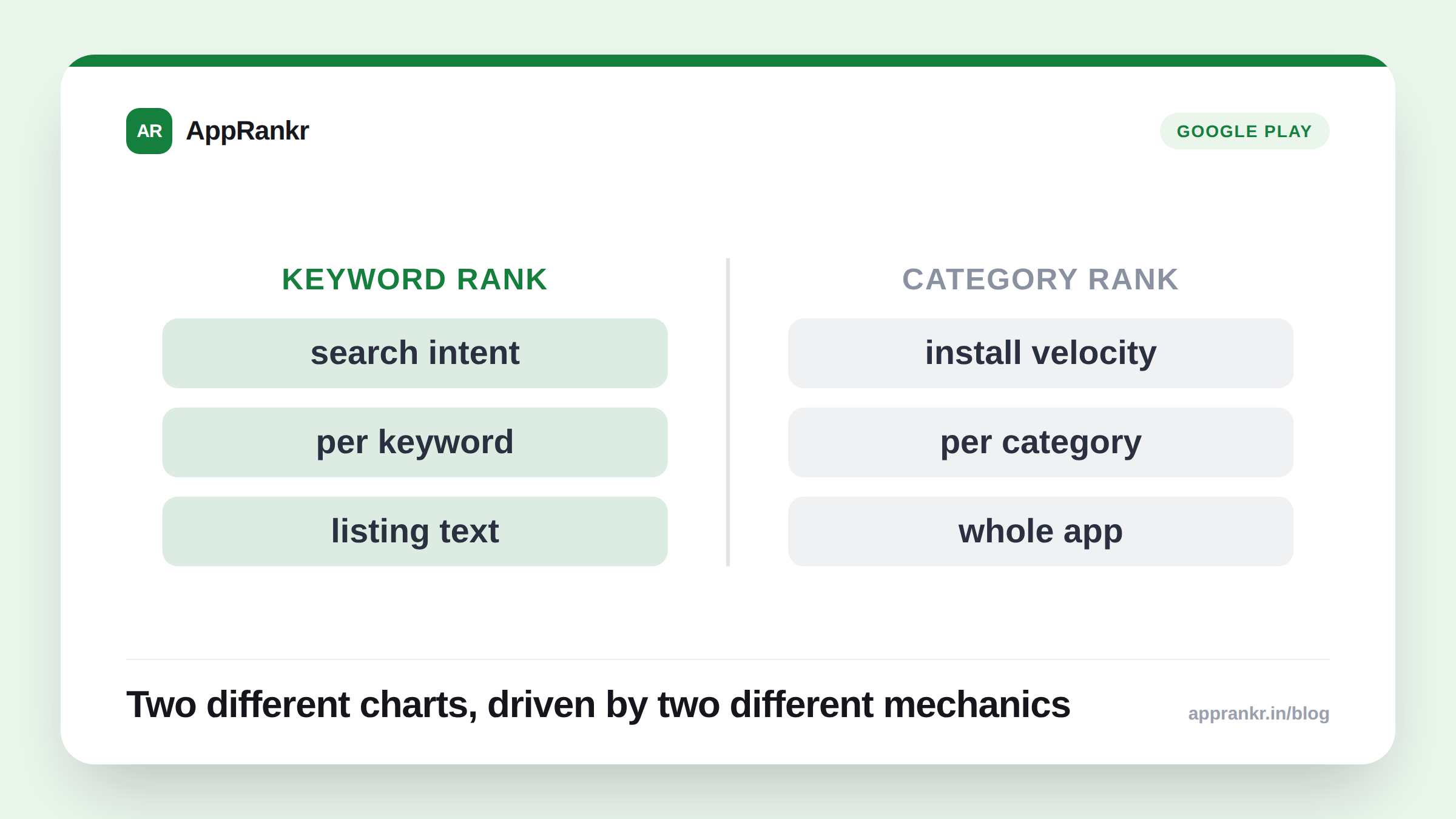
Category Rank vs. Keyword Rank: What's the Difference?
An app can rank #1 in search for its exact keyword and still be nowhere in its category's top chart. Both are real signals. They just measure completely different things.
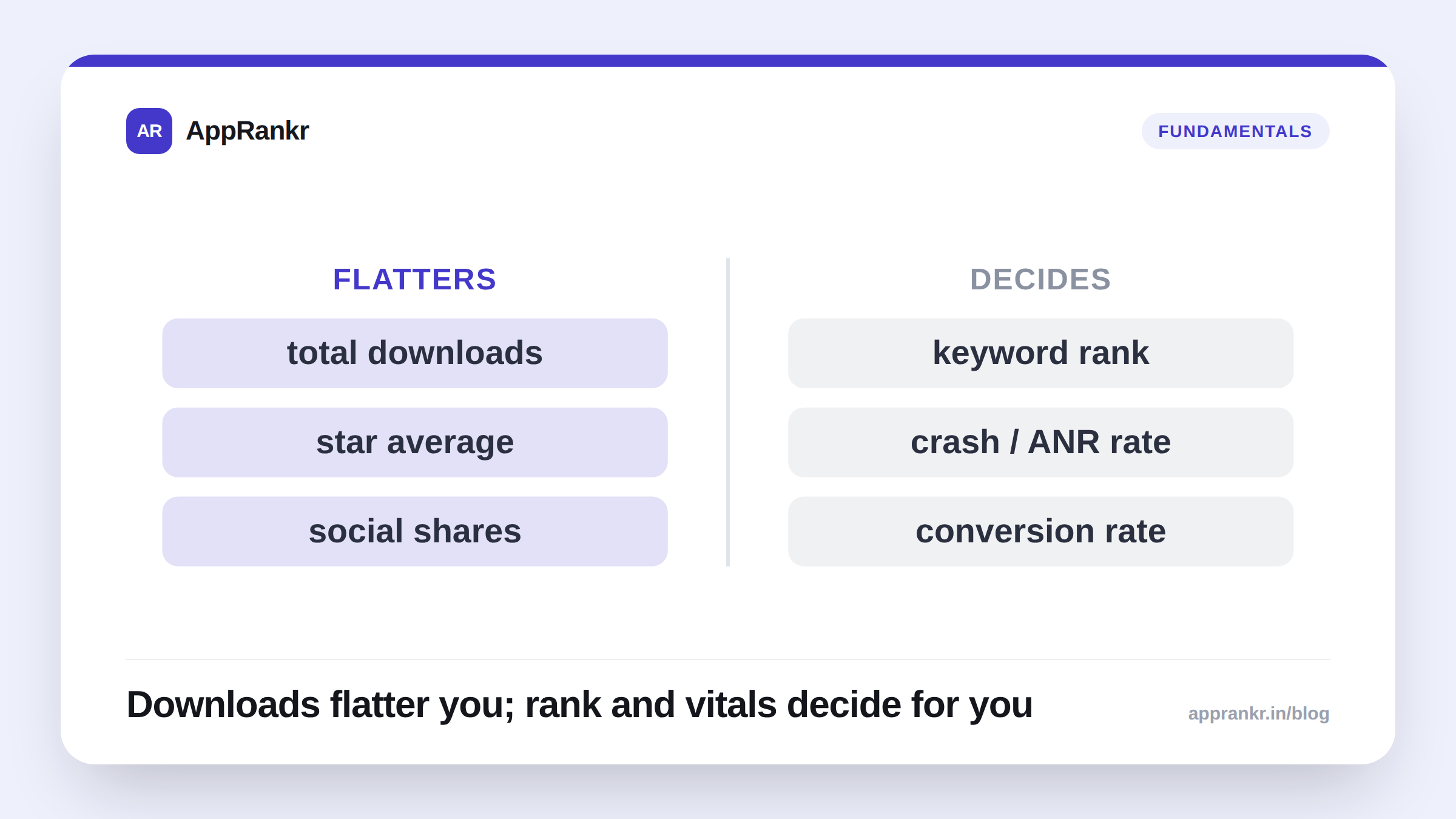
Do App Downloads Affect Your Store Search Ranking?
Total downloads and average star rating are the numbers everyone screenshots. Neither is what either store has confirmed actually moves search rank.
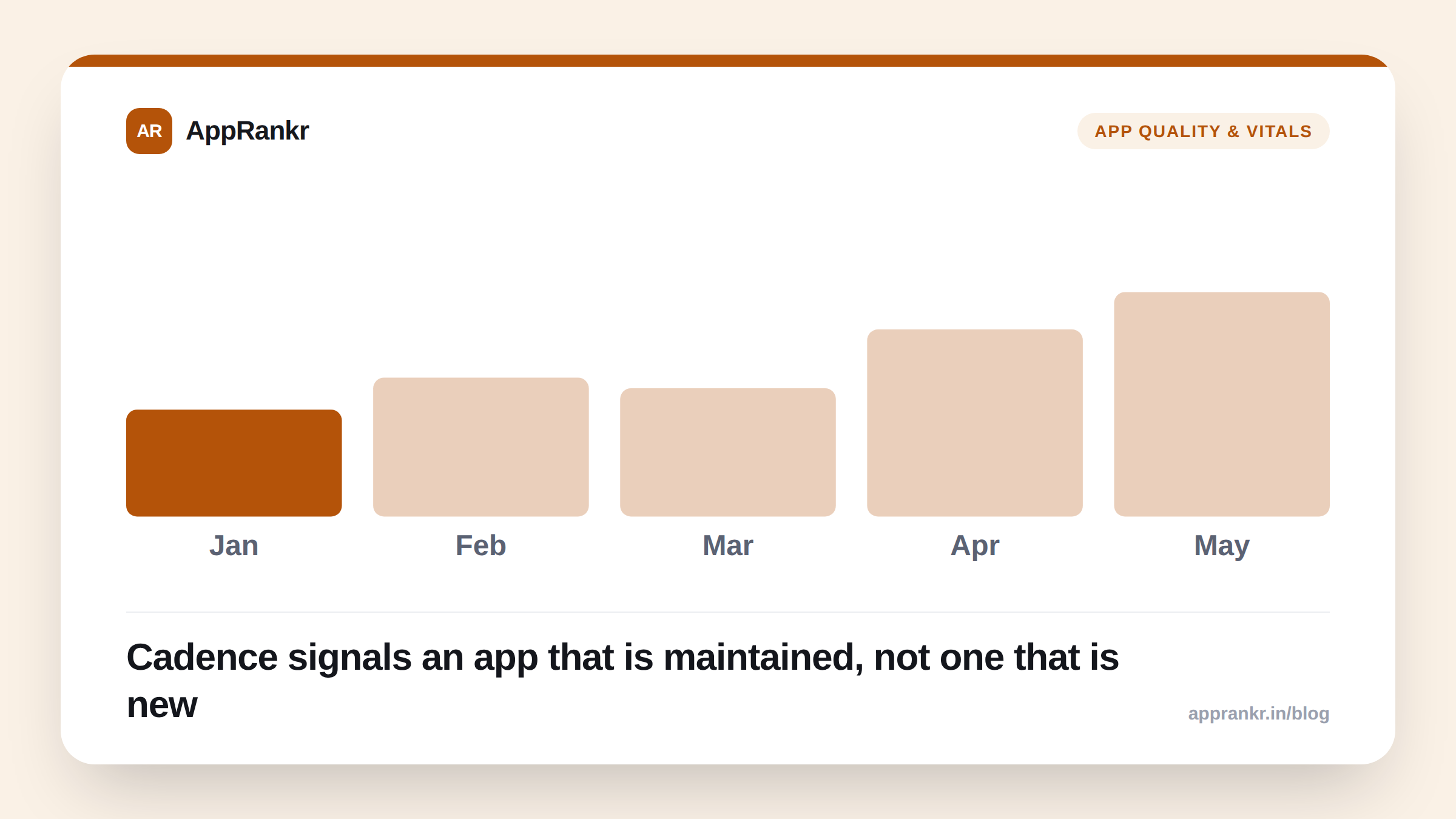
Does Updating Your App More Often Improve Its Ranking?
Both stores' own developer guidance nudges toward regular updates, but 'update often' isn't a rank hack on its own. What changes in the update is what seems to matter.
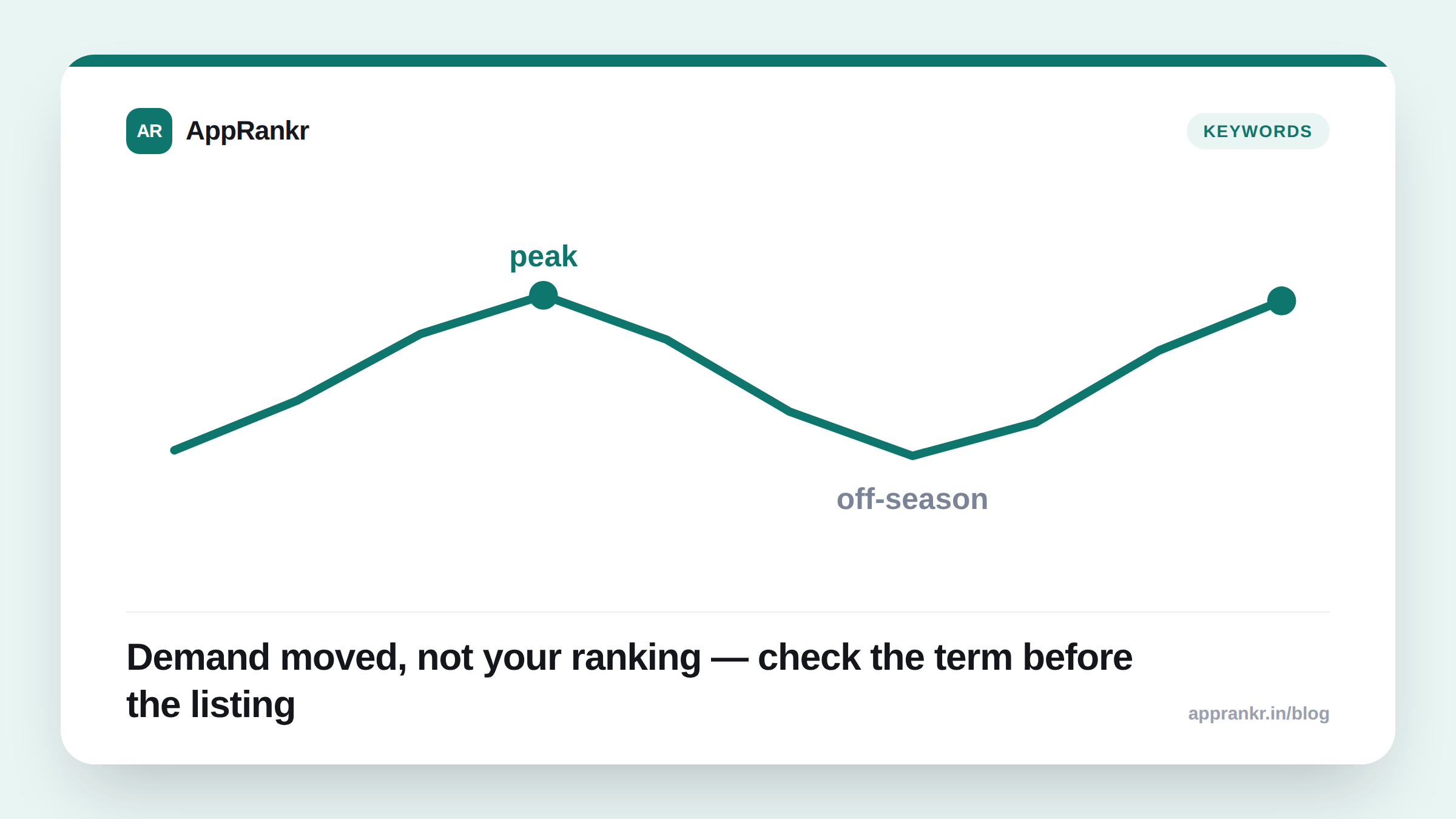
How to Find and Use Seasonal Keywords for Your App
Search terms for the same app category swing hard by calendar date, tax-saving searches in February, gifting searches before a festival. Most keyword lists never account for it.
How Often Should You Check Your App Store Rankings?
Daily checks and full keyword-coverage checks answer different questions. Here's why you need both, on different clocks, and what changing either one too rarely actually costs you.
Tracking Your App's Keyword Universe Over Time
Individual keyword rank gets all the attention, but the size of your tracked keyword list over time is a ranking-health metric almost nobody actually watches.
Does Retention Rate Affect App Store Ranking?
Retention rate gets cited constantly as a ranking factor, but unlike crash rate or ANR, neither Apple nor Google actually confirms it directly. Here's what's real, what's inferred, and what to do about it anyway.
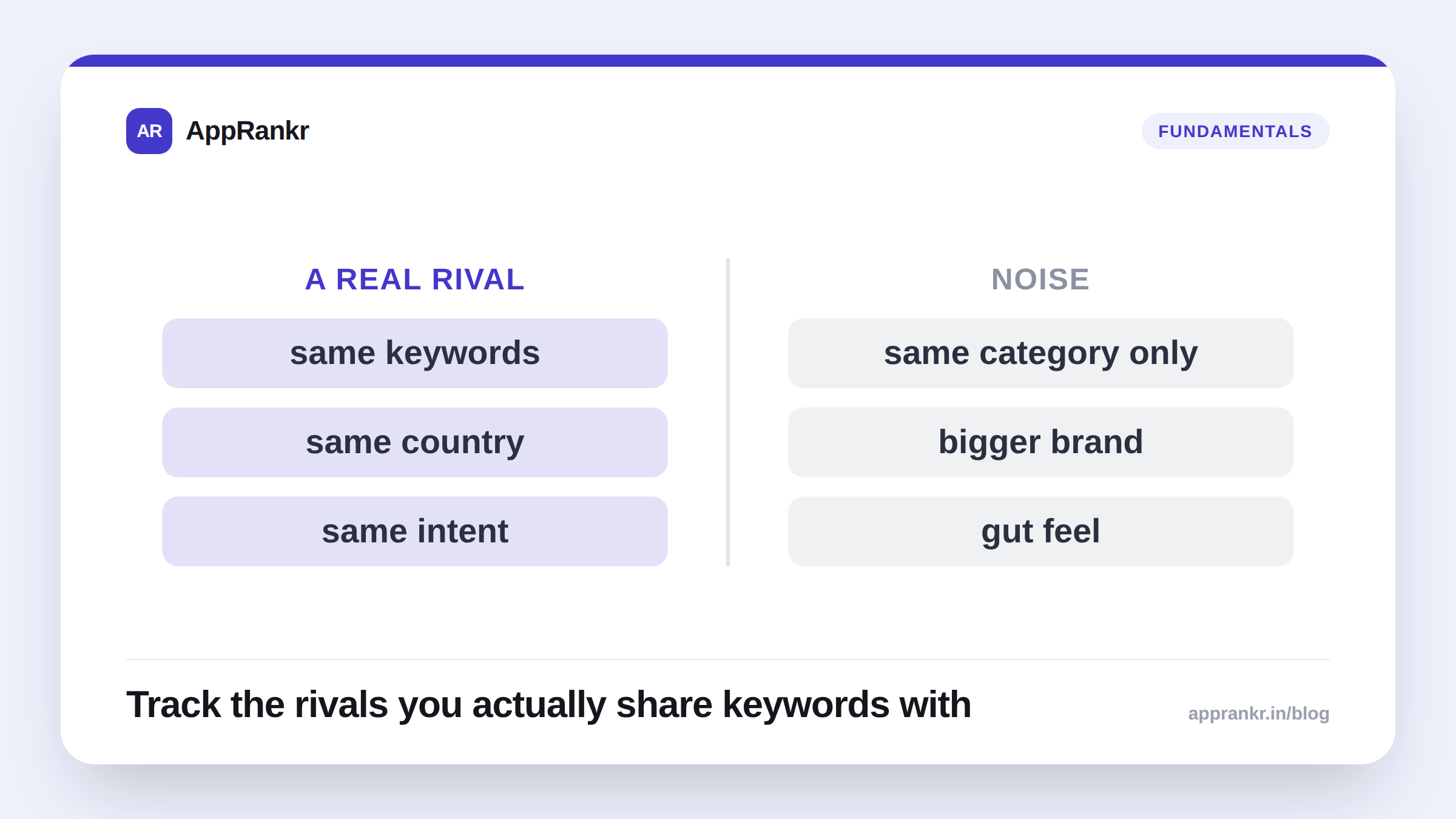
How to Track Competitor Apps the Right Way
The most common mistake in competitive ASO tracking isn't picking the wrong rivals. It's accidentally tracking your own sister apps as if they were competitors.
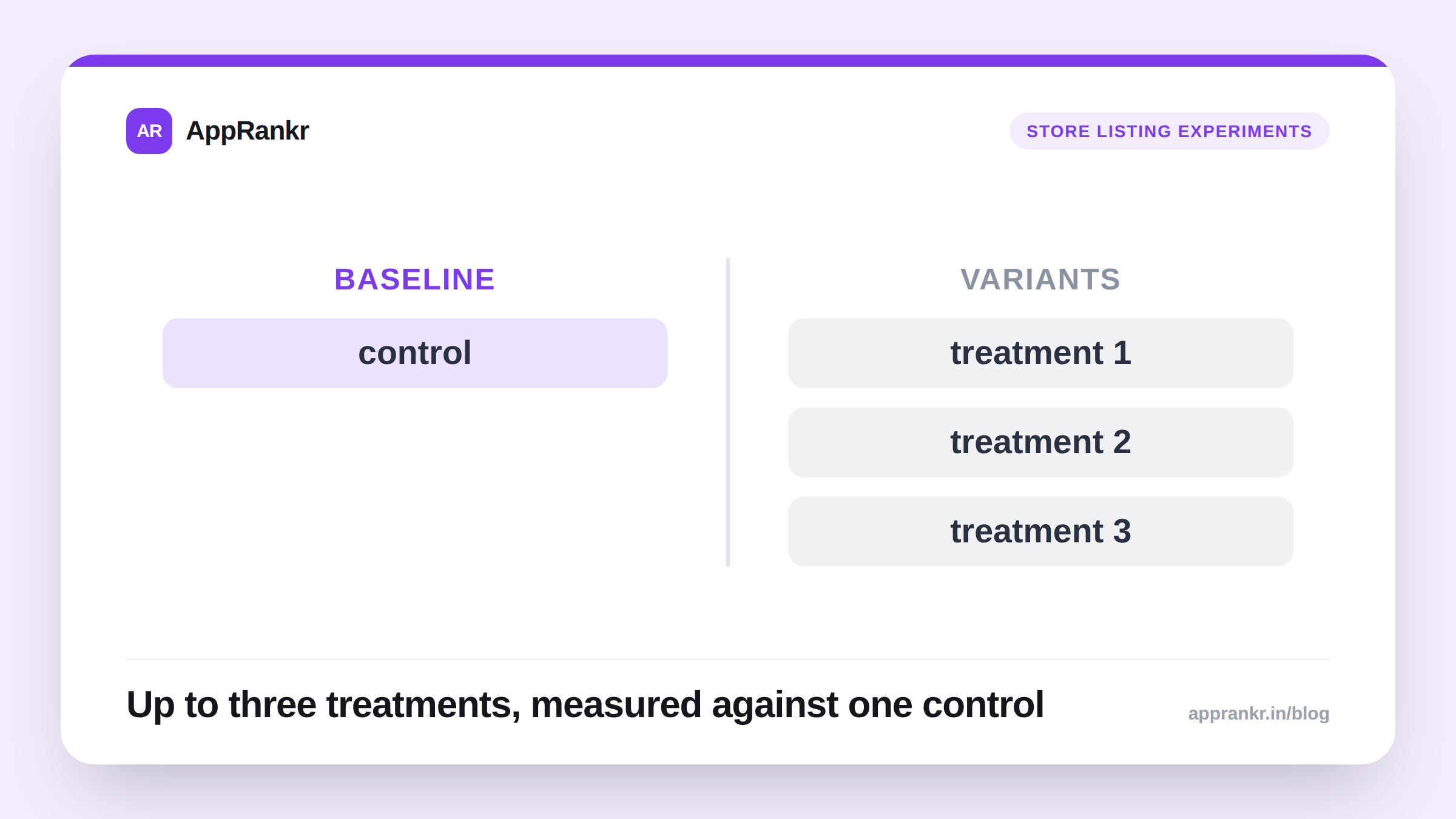
Apple Product Page Optimization: What It Is and How to Use It
Apple's version of A/B testing your app's listing works differently from Google Play's, fewer testable elements, no text fields, and a separate feature entirely for audience targeting. Here's how it actually works.
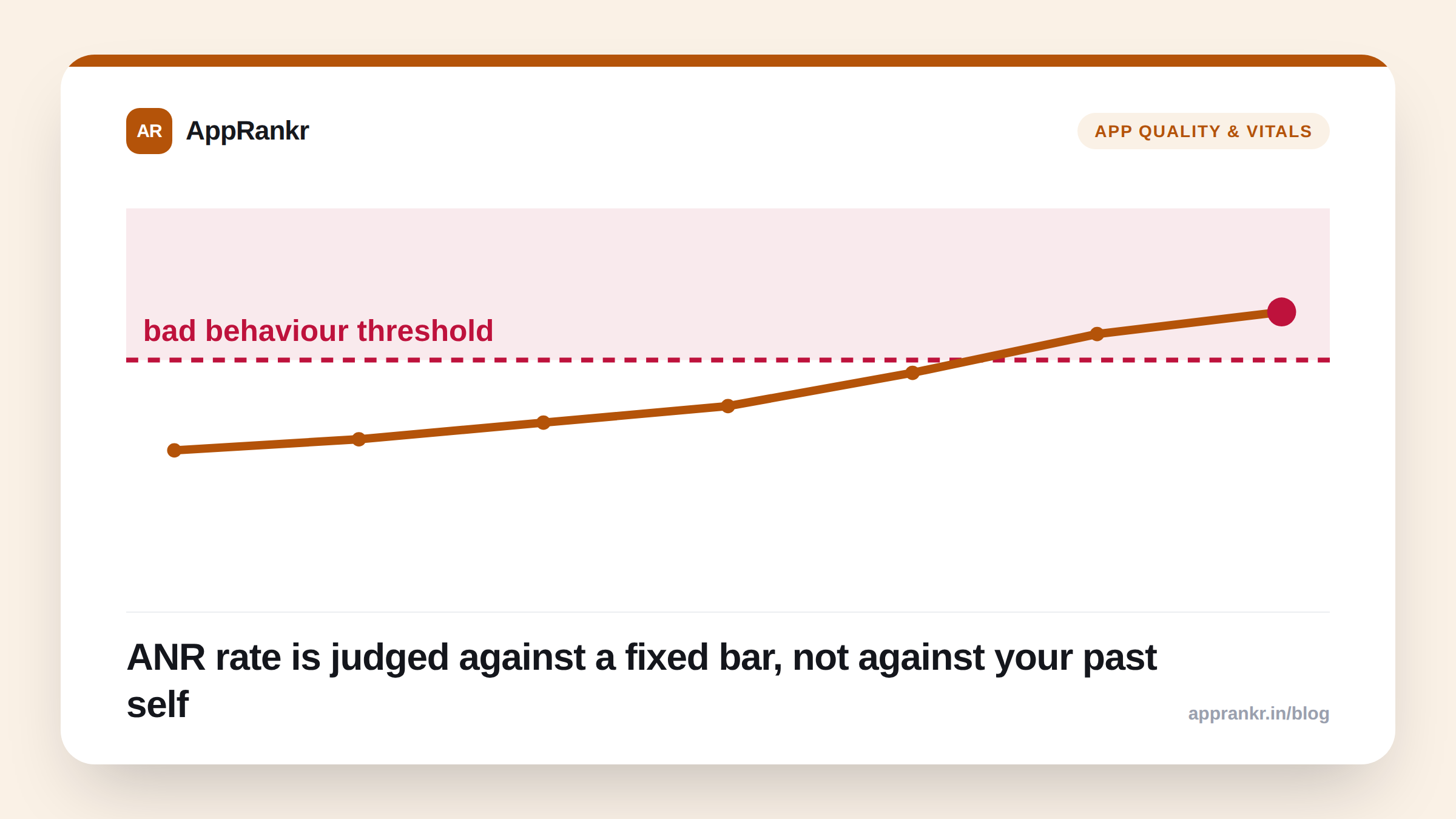
What Is ANR Rate? Does It Affect Google Play Ranking?
ANR (App Not Responding) is a confirmed Android vitals ranking signal, distinct from crash rate and easy to miss if you only watch crash dashboards. Here's what it is and where to check it.
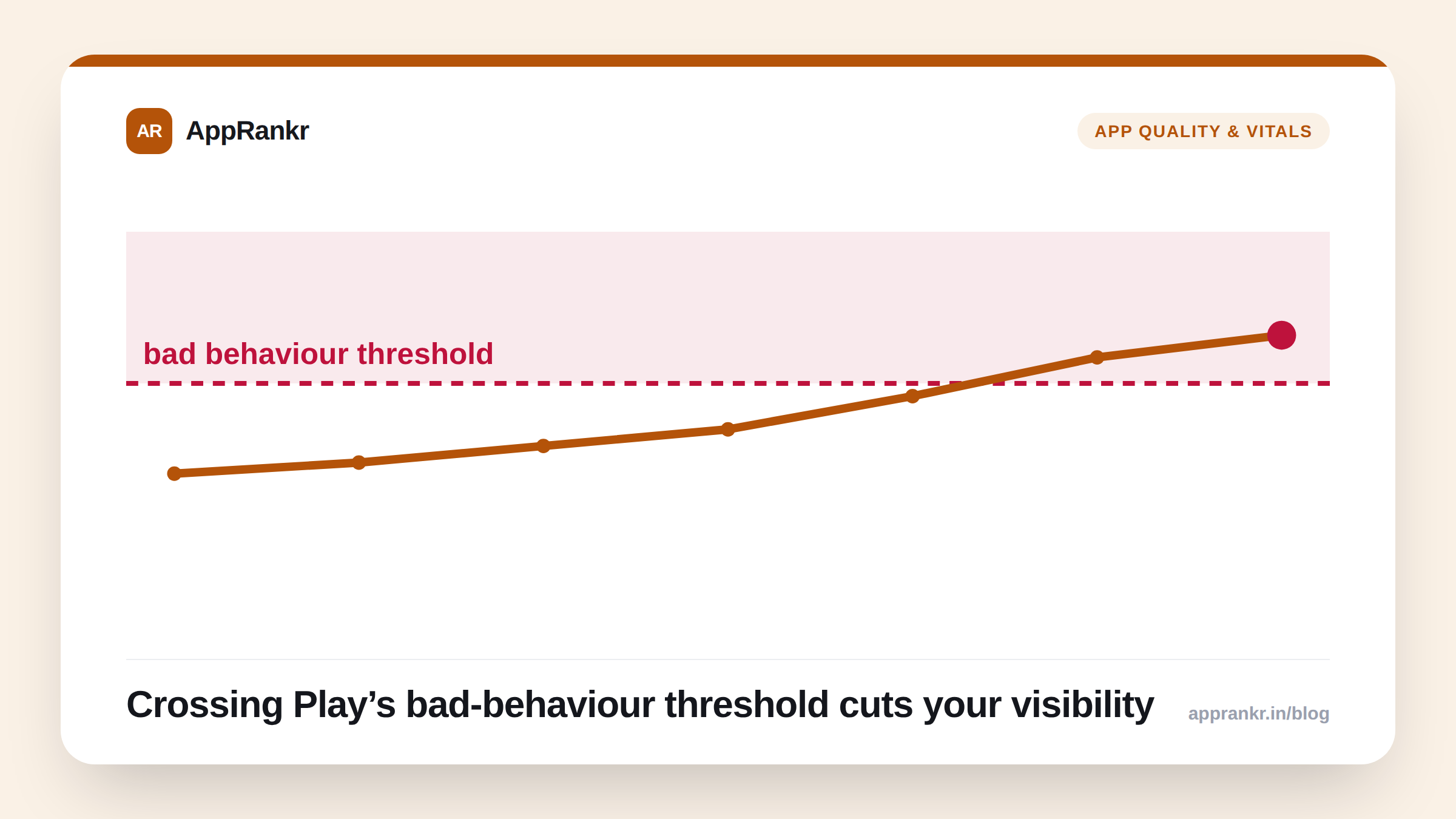
Does Crash Rate Affect Your Google Play Ranking?
Google explicitly ties crash rate to store visibility through Android vitals' bad behavior thresholds. Here's what's confirmed, where to check your number, and what actually happens if you cross the line.
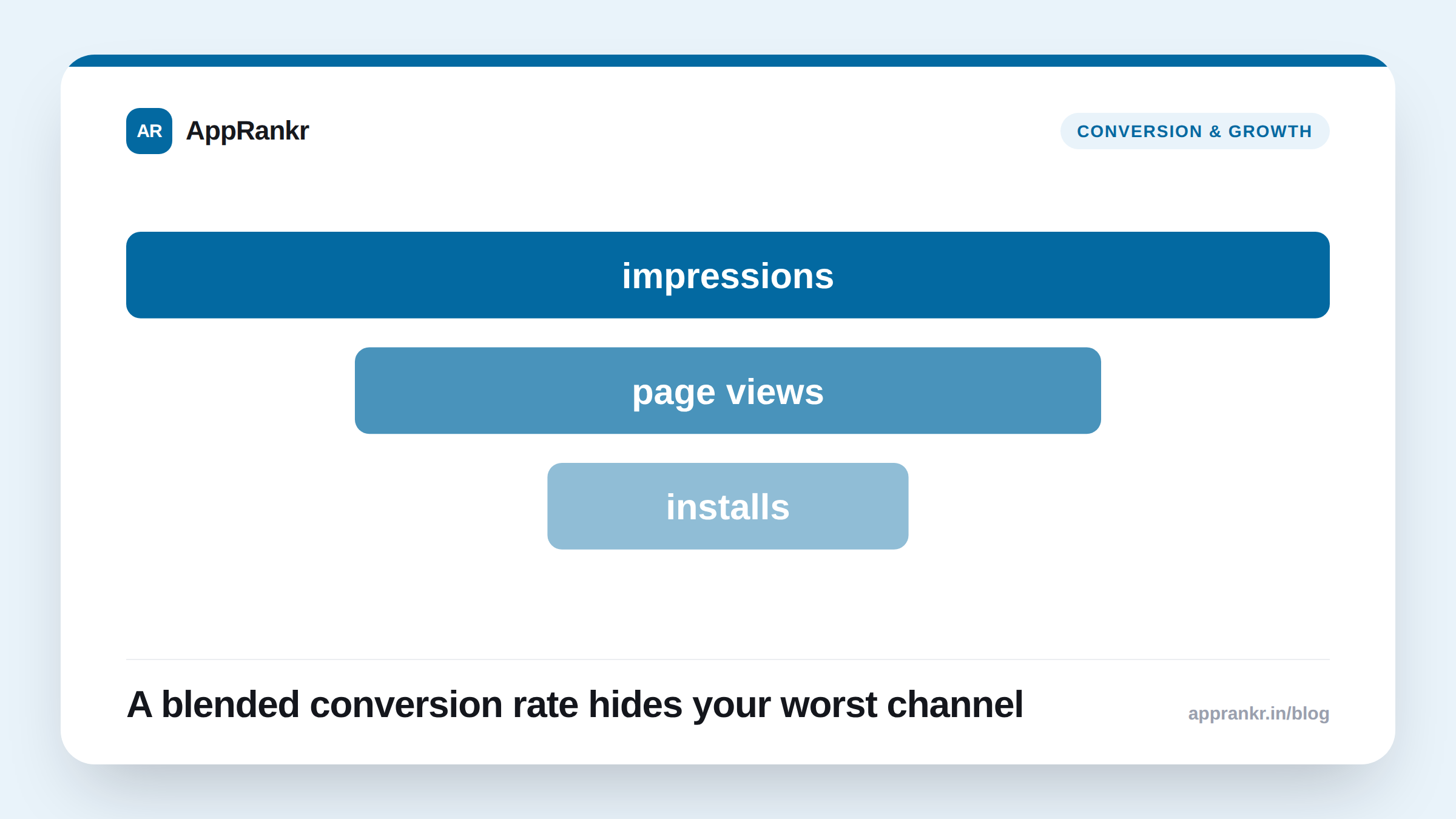
How to Measure Conversion Rate by Acquisition Channel
Why a single blended conversion rate hides more than it tells you, and how to break install conversion down by organic search, browse, paid, and referral traffic.
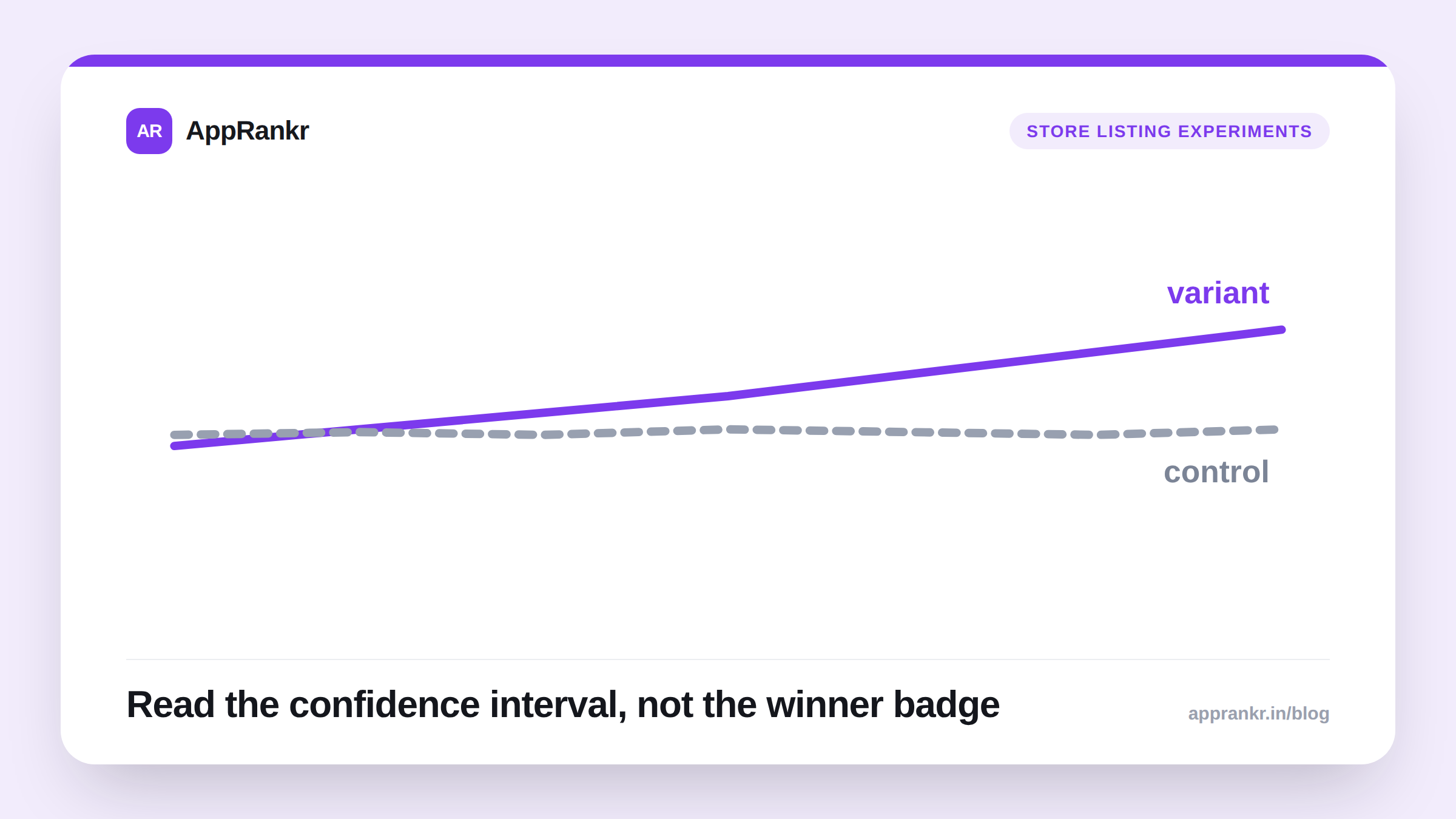
How to Read Google Play Store Listing Experiment Results
What the numbers in a Play Console store listing experiment actually mean (conversion rate, lift, confidence) and how to avoid the most common misreadings.
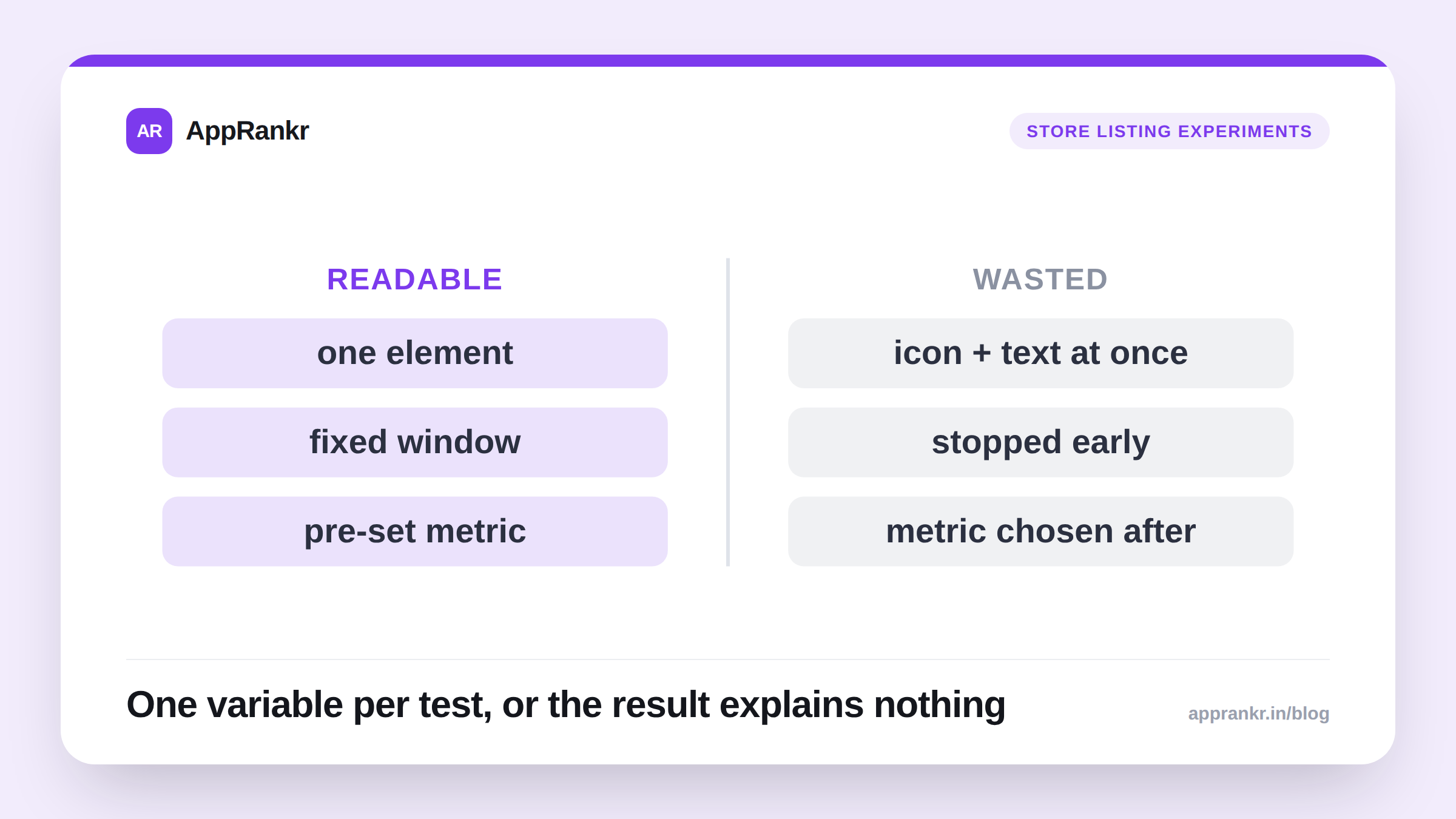
How to Run Google Play Store Listing Experiments
A practical walkthrough of Play Console's Store Listing Experiments. What you can test, how to structure a test that actually tells you something, and how long to let it run.
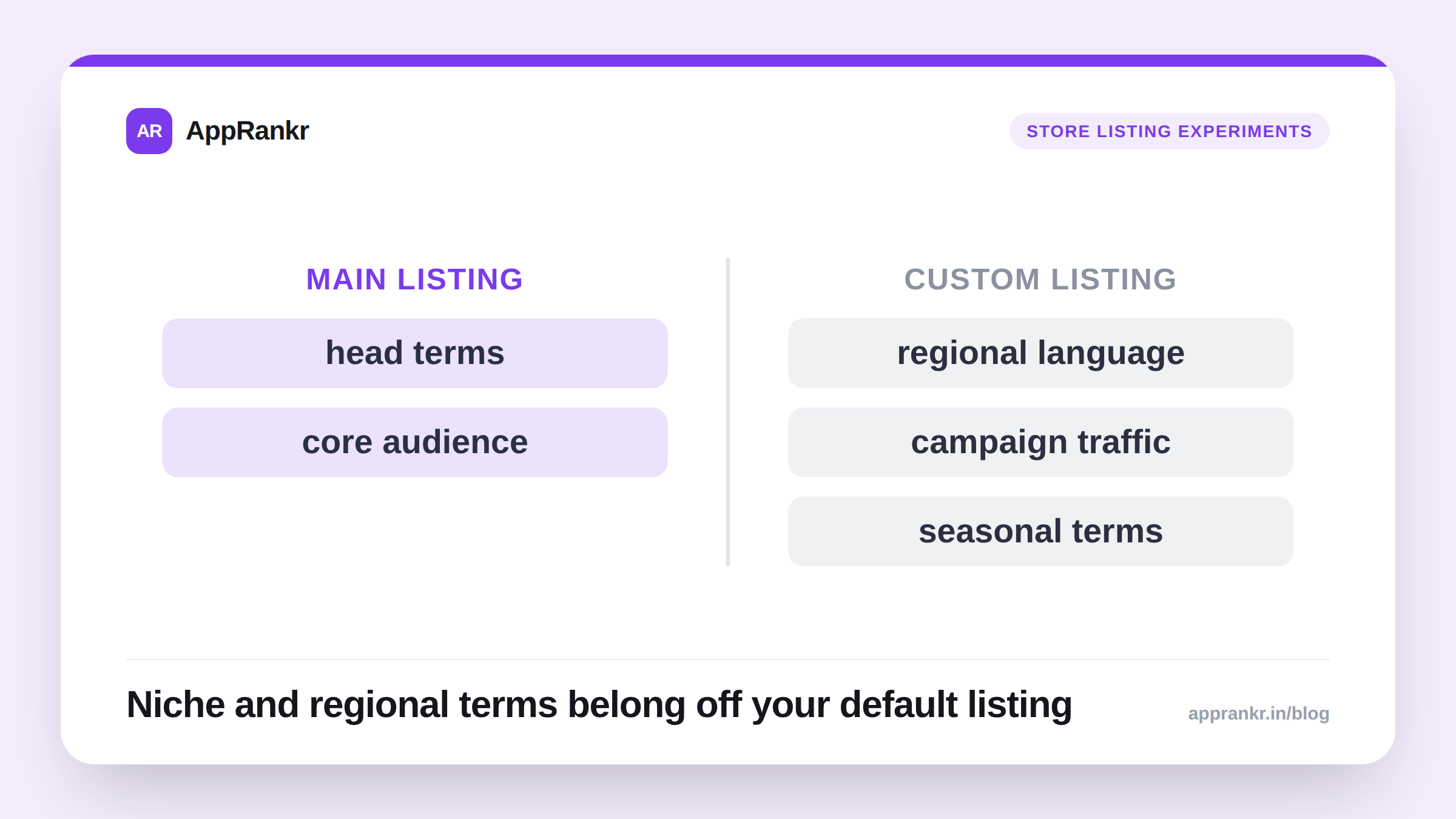
What Is a Custom Store Listing on Google Play?
How Custom Store Listings work on Google Play, what you can and can't target with them, and when a custom listing actually earns you a better conversion rate.
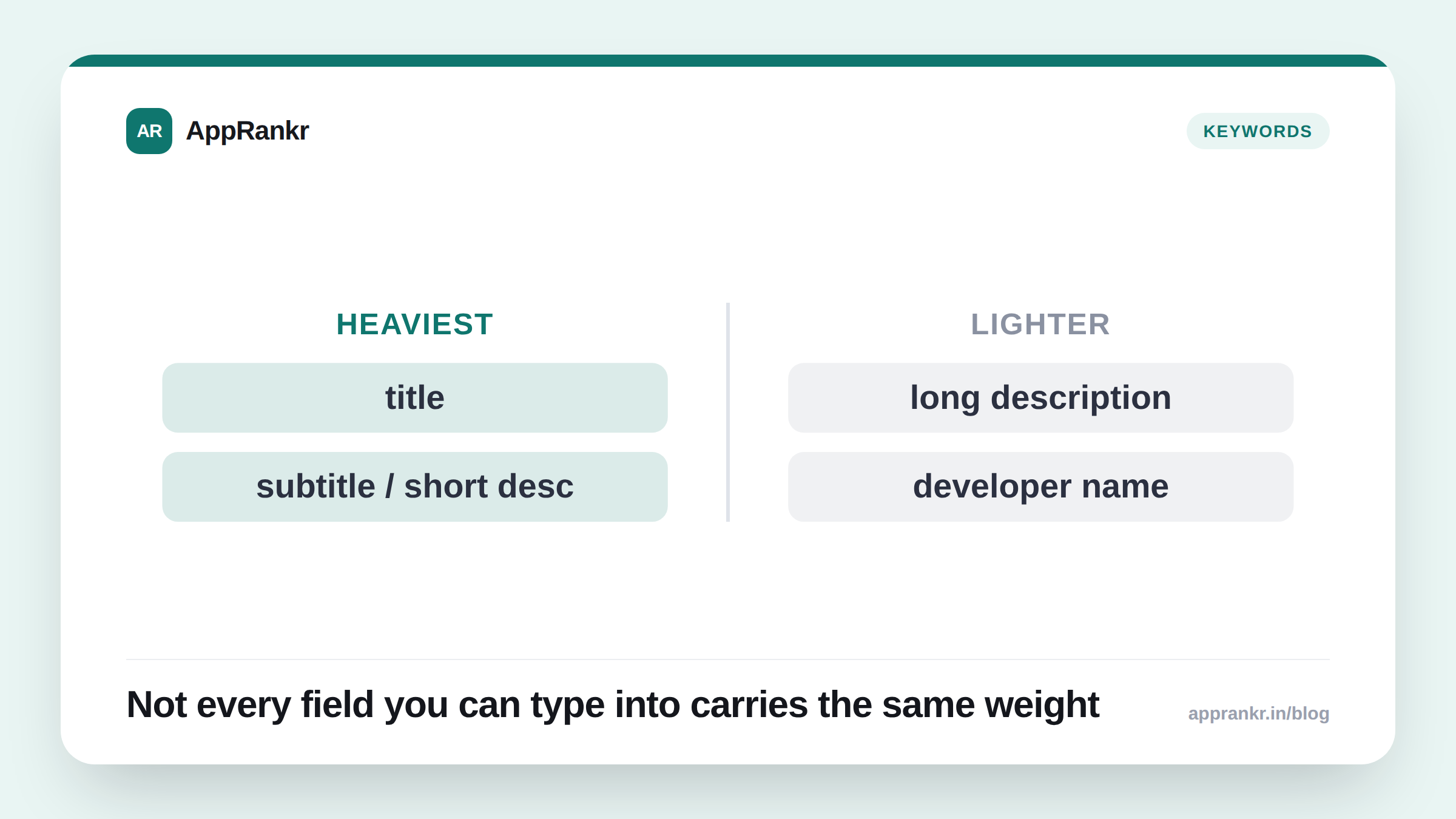
Title, Subtitle, Description: What Actually Gets Indexed
A field-by-field breakdown of which parts of your app listing are searchable, how much each one is weighted, and the specific mistakes that waste the space.
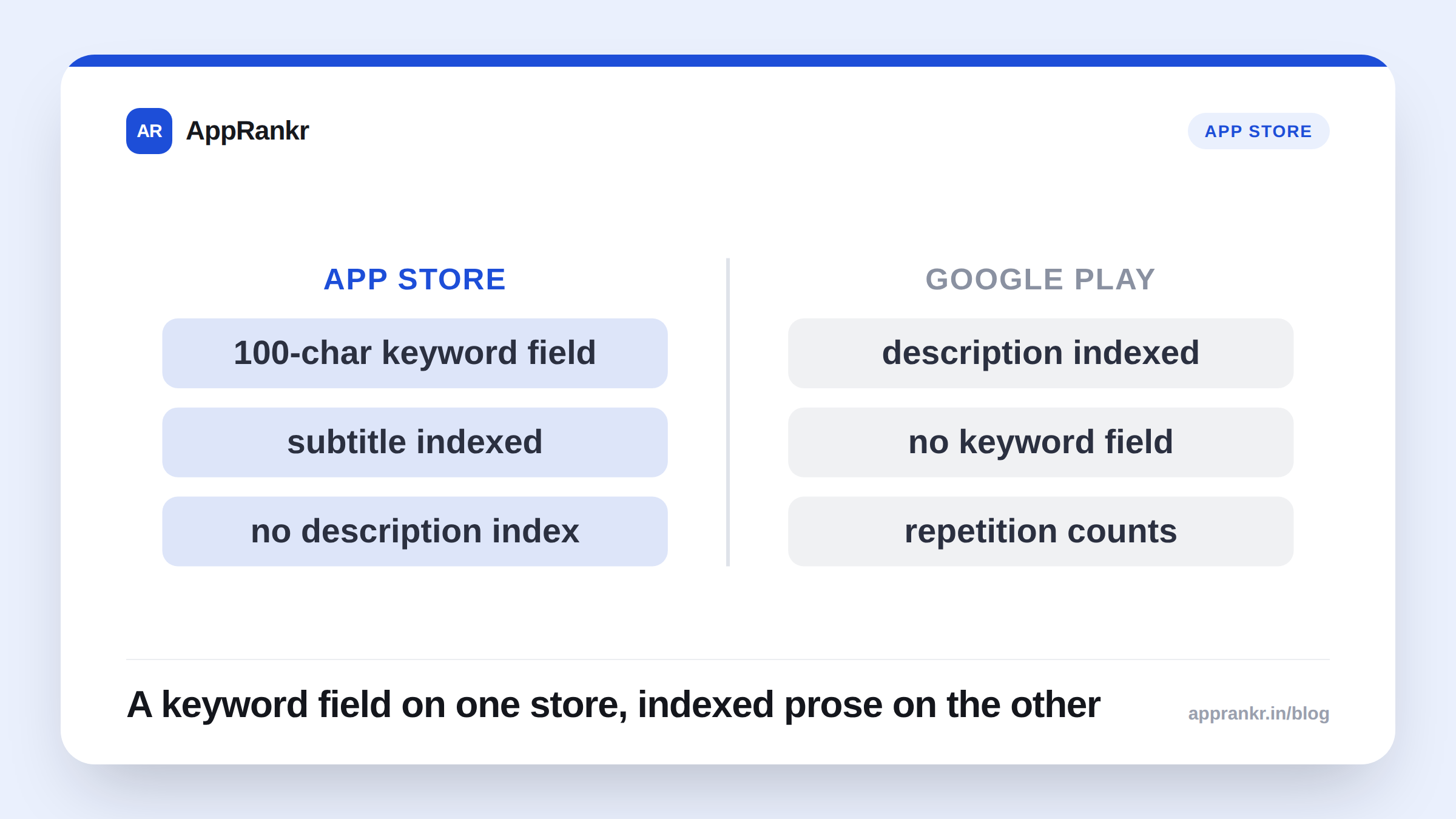
iOS vs Android ASO: Where The Rules Genuinely Diverge
The App Store and Google Play look similar on the surface but reward different tactics. Here's exactly where a copy-paste ASO strategy between platforms breaks down.
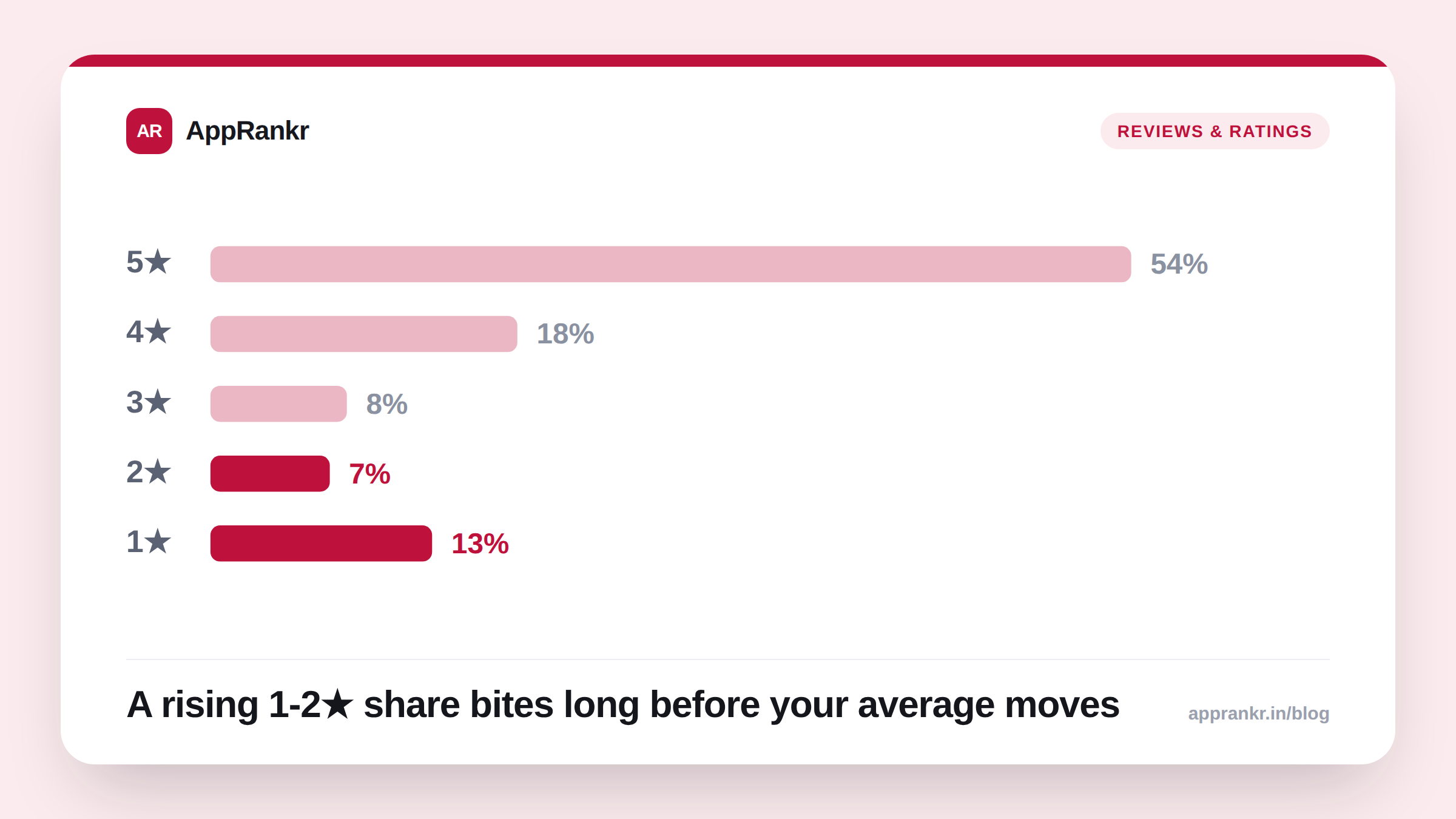
Do 1-2 Star Reviews Hurt Your App Store Ranking?
Low ratings cost you more than install conversion. There's real, documented reason to believe they suppress search visibility too. Here's the mechanism and what to actually do about it.
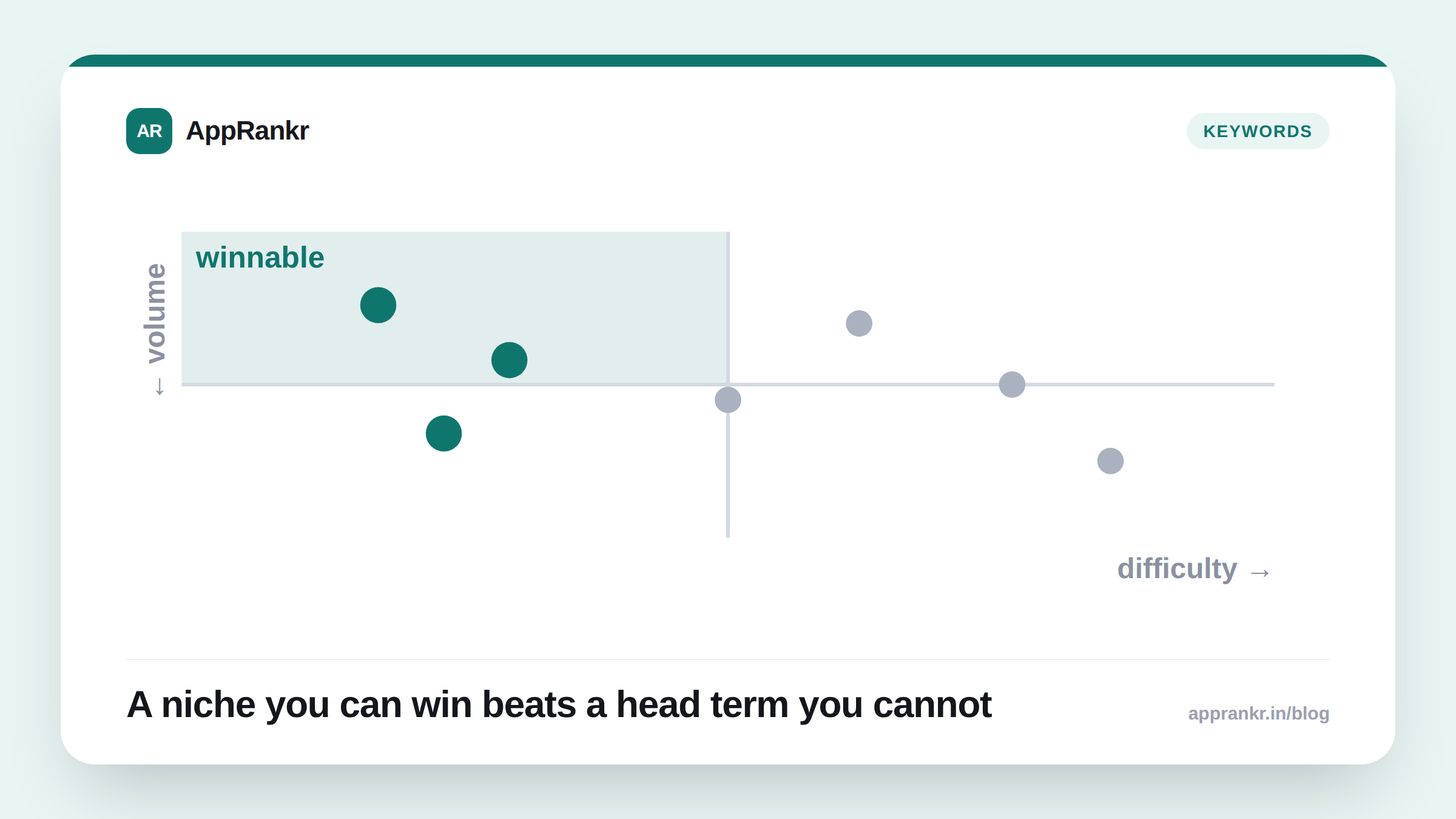
Keyword Research for Apps: Volume vs. Difficulty
How to actually choose which keywords to chase, balancing how many people search a term against how realistic it is you'll ever rank for it.
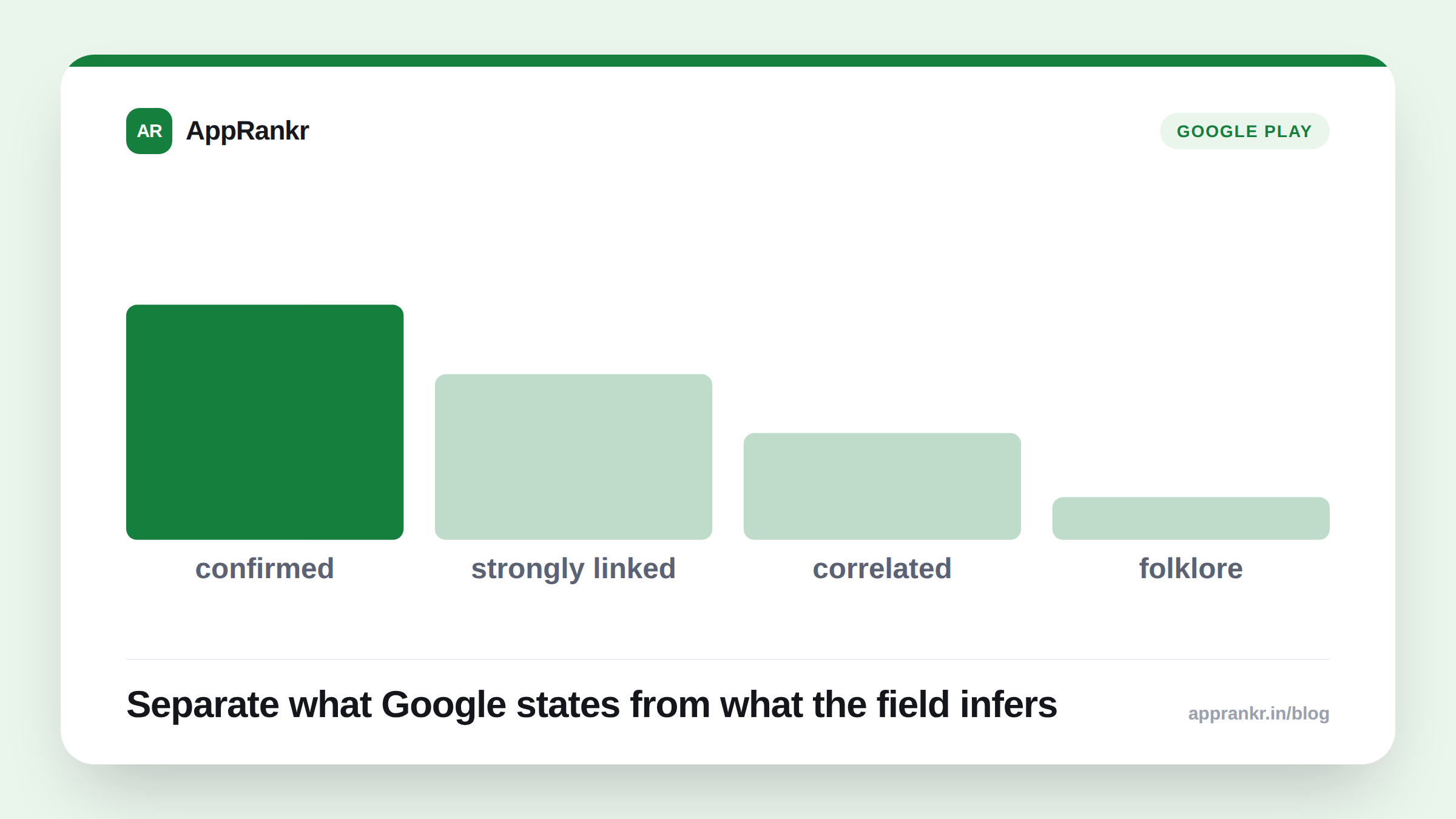
Google Play Ranking Algorithm: What We Actually Know
Google has never published its Play Store ranking formula. Here's what's actually confirmed, what's strongly inferred from testing, and what's just ASO folklore.
App Store Optimization 101: What Actually Moves Your Rank
A plain-language breakdown of what App Store Optimization really is, which levers you control, and which ones you don't, for anyone starting from zero.