Key points:
- Install velocity is a big ranking input. Paid ads add installs on top of your organic pace. Stop the ads, and that extra pace disappears.
- The drop isn’t always a full reset. Paid keyword installs can send real relevance signals. Some benefit can last.
- What sticks depends on install quality, not count. Users who churn fast don’t help your engagement signals.
- A gradual spend wind-down, not an abrupt stop, is a reported way to soften the drop.
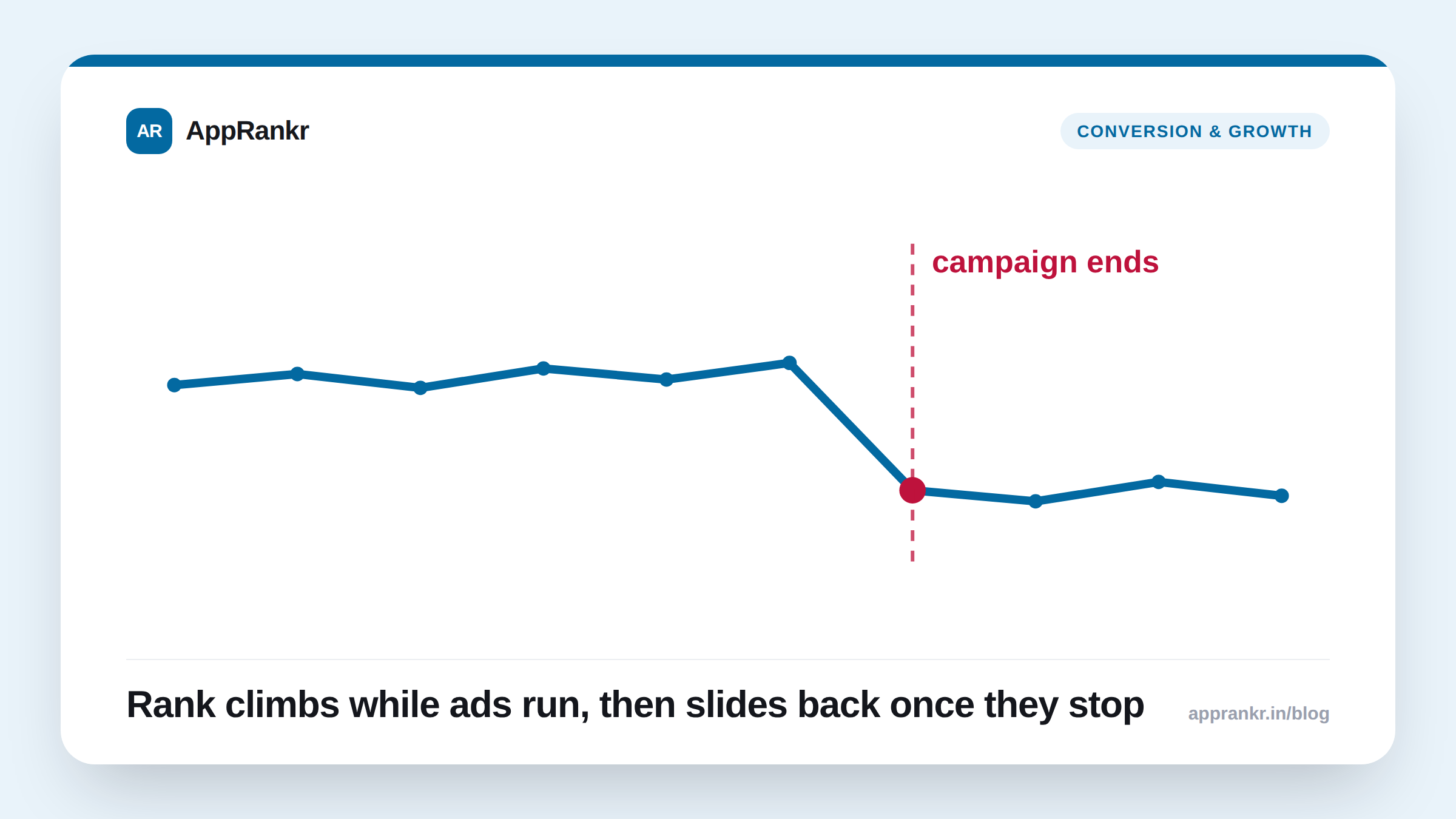
You run paid ads. Your search rank climbs. It feels like real progress. Then you stop the campaign, and the rank slides back down. That’s not a bug. And it’s not always a full reset either.
Why the drop happens
Install velocity is one of the heaviest inputs into search ranking. It’s your app’s recent installs, measured against competitors in the same window. Paid ads add installs on top of your normal organic pace. While a campaign runs, your total velocity looks stronger than your organic pace alone. Stop the ads, and that added volume disappears right away. Your rank drifts back toward wherever organic pace alone puts you.
| While ads run | After ads stop |
|---|---|
| Velocity = organic + paid installs | Velocity = organic installs only |
| Rank reflects the combined pace | Rank reflects organic pace alone |
| Feels like a real, earned gain | Reveals how much was actually paid |
Why some of the gain can still stick
The drop isn’t always a full return to where you started. Paid keyword installs send real relevance signals to the algorithm. They tie your app more strongly to those specific search terms. That signal doesn’t have to vanish the moment spend stops. If the users you bought were genuinely relevant, and stuck around, some of that gain can last.
The deciding factor is install quality. Not install count. A campaign that bought a lot of installs from users who opened the app once and left doesn’t leave much behind. Churn works against the retention signals rank now depends on. A smaller campaign that brought in a real fit for your app can leave a modest, lasting improvement instead.
Real-world scenario: A team ran a month-long campaign targeting their most relevant keywords, not the cheapest ones available. Their rank for those terms climbed while it ran. When they stopped, rank did drop. But it settled a few spots above where it started, not all the way back down. Their paid-acquired users stuck around at close to their normal organic rate. They credited that for keeping part of the gain instead of losing all of it.
What to actually do about it
- Target keywords genuinely relevant to your app. Not just cheap ones. Relevant installs feed signals that can outlast the campaign.
- Watch retention on your paid-acquired users specifically. If they churn fast, expect the gain to fully reverse once spend stops.
- Wind spend down slowly instead of stopping all at once. A gradual taper is a reported way to soften the drop.
- Set expectations before the campaign, not after. A paid boost is real, but partly temporary. Budget for that instead of treating any drop as a failure.
AppRankr’s Rank Tracker tracks your keyword position daily. You can see exactly how much of a paid campaign’s gain holds after you stop spending, not just guess at it.