Key points:
- Google’s own developer blog post, dated September 29, 2026, introduces Usage-Based Billing for Play subscriptions.
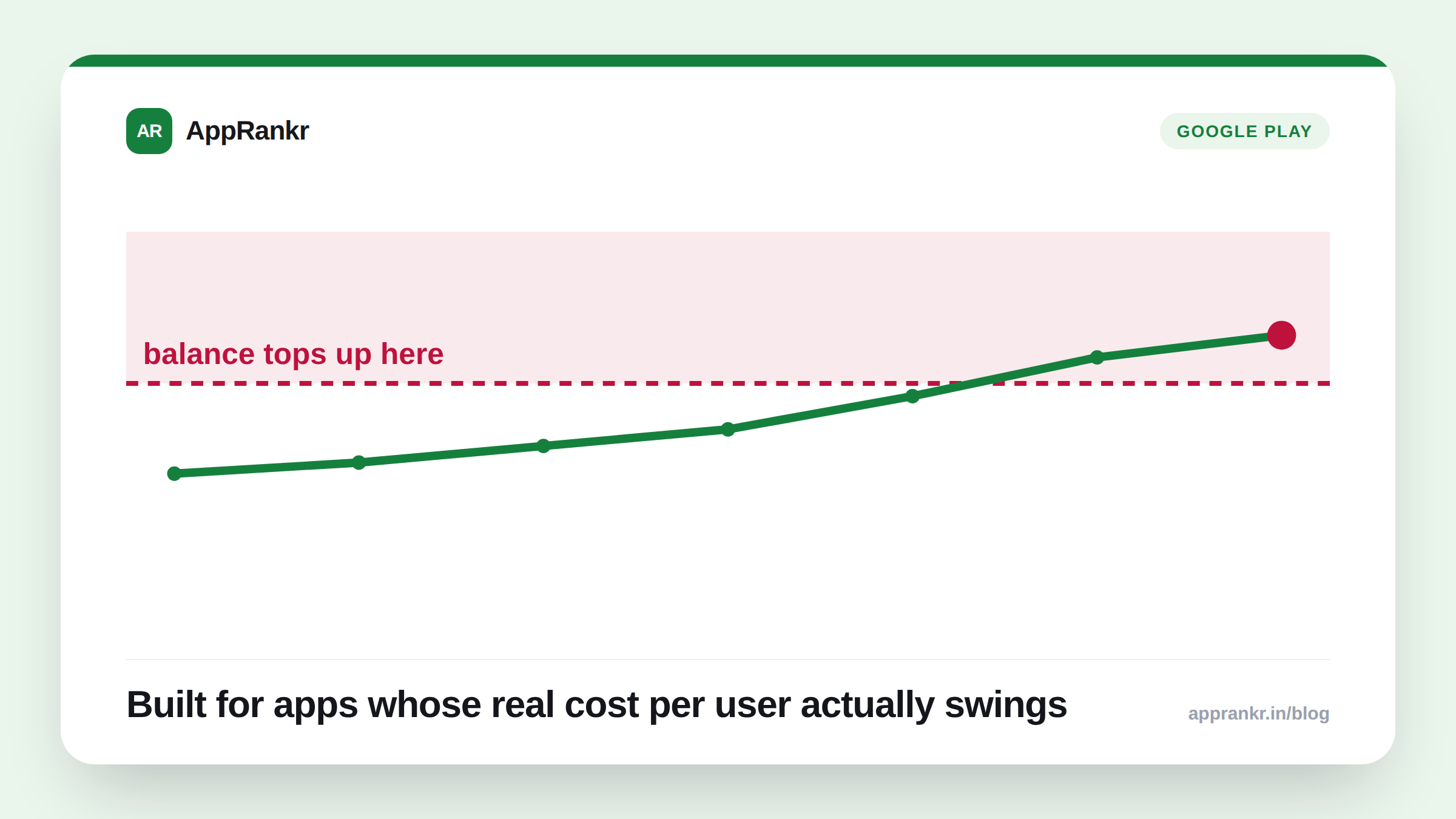
- Per Google’s own words, it’s prepaid metered billing. A user’s balance tops up on its own once it falls below a threshold the developer sets.
- It’s built for apps with costs that vary by user. Google’s own example is AI generation tools.
- Exact availability, pricing, and eligibility aren’t stated in Google’s own post. Early access runs through your Play partner manager.
A flat monthly plan assumes every user costs you about the same. For an AI app, that’s rarely true. Google’s own new billing model is built around that exact gap.
What Google’s own post actually says
Per Google’s own words, Usage-Based Billing “enables you to set up prepaid metered billing where users can automatically top up their balance whenever it falls below a set threshold.” The goal, in Google’s own words, is “uninterrupted service for your users while protecting your margins.”
| Detail | What Google’s own post confirms |
|---|---|
| Billing shape | Prepaid, metered, with auto top-up |
| Trigger | Balance falls below a set threshold |
| Built for | Apps with swinging compute costs, AI tools named directly |
| Funding details | Not stated |
| Availability | Not stated for this feature |
Why a flat subscription breaks for AI apps
A normal subscription charges the same price no matter how much a user actually uses that month. For most apps, usage evens out fine across the user base. An AI app running image generation or inference per request doesn’t even out the same way. A light user and a heavy user can cost wildly different amounts to serve. Both pay the same flat fee either way.
Usage-Based Billing ties the balance to real use instead. Per Google’s own words, the account refills on its own once it runs low. No cutting the user off mid-task. No eating the cost gap as the developer.
Real-world scenario: An AI image app ran a flat monthly plan, priced around what a typical user cost to serve. A small group of heavy users generated far more images than most, and each image cost real compute. The flat price covered an average user fine. It lost money on the heaviest ones, every single month. Reading Google’s own post on Usage-Based Billing, the team saw a model built for this exact problem. Rather than raise the price for everyone just to cover a few heavy users, a metered balance would let cost track real usage. The auto-refill kept it smooth, no manual recharge needed from the user.
What’s genuinely unconfirmed here
Google’s own post stays light on mechanics. It doesn’t say how the prepaid balance gets funded. It doesn’t say what increments it charges in. It doesn’t say how a user gets notified before or after a top-up happens. No release date. No list of eligible app types. No word on regional rollout. The post does say several features announced alongside this one are live now or rolling out through an Early Access Program. It never confirms Usage-Based Billing is one of them.
What to actually do about it
- Check whether your own cost per user actually swings enough to matter. This model solves one specific problem. A flat-cost app gains little from switching to metered billing.
- Talk to your Google Play partner manager for real eligibility details. Per Google’s own post, that’s the stated path to show interest as programs open. Not a public signup form.
- Don’t plan pricing around mechanics Google hasn’t confirmed. No word yet on funding increments, notification behavior, or refund handling. Wait for real documentation before you commit engineering time.
- Watch the Play Billing subscriptions docs for updates. Google’s own post points there directly for anything added after the announcement.
AppRankr’s Rank Tracker tracks your real store visibility, a separate thing from your billing model, but worth checking together whenever a pricing change might shift conversion.