Key points:
- Apple’s own Brazil distribution page confirms alternative app marketplaces and alternative payment processing. Starting with iOS 26.5.
- A 5% Core Technology Commission applies to paid apps and digital goods sold through an alternative marketplace.
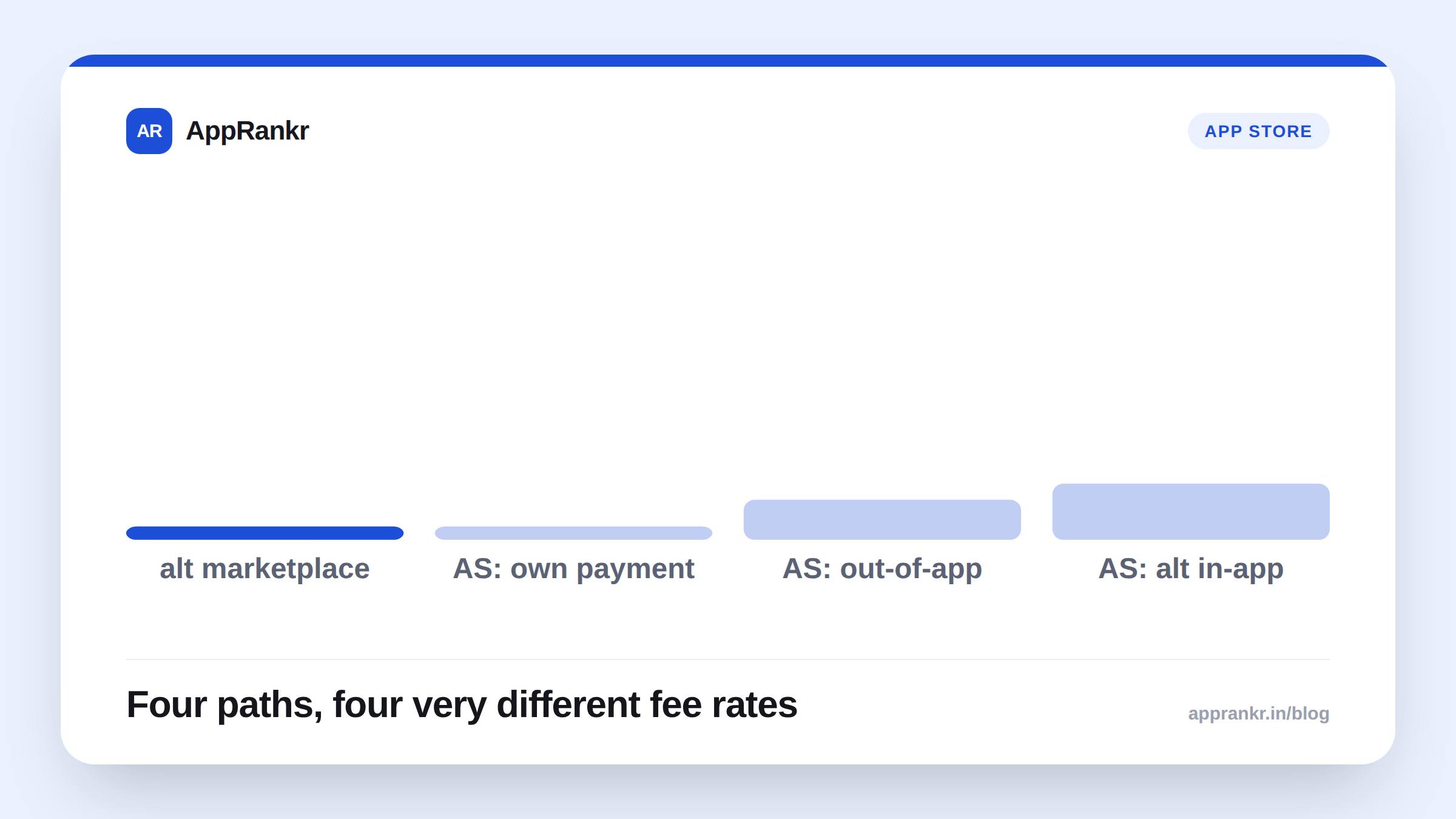
- On the regular App Store, alternative in-app payments carry a 21% fee on digital goods. Out-of-app offers carry 15%. Both per Apple’s own numbers.
- Developers must track and report alternative payment transactions monthly. Within 15 days of month end, per Apple’s own page.
A settlement with Brazil’s regulator turned into a real, numbered fee sheet. Not a policy statement. Apple’s own page lists exact percentages for exact cases. Here’s what it says.
What Apple’s own page confirms
Apple’s own Brazil page lists three paths now open to developers. Starting with iOS 26.5. Distribute on an alternative app marketplace. Run your own store, with Apple’s OK. Or stay on the regular App Store, but add an alternative payment option next to Apple’s own.
The fees get specific fast:
| Path | Fee | On what |
|---|---|---|
| Alternative marketplace | 5% Core Technology Commission | Paid apps, digital goods, subscriptions |
| App Store, alternative in-app payment | 21% | Digital goods and services |
| App Store, Apple’s own payment | 5% | Same transaction, using Apple’s processor |
| App Store, out-of-app offer (link to a website) | 15% | Purchases within 7 days of the link tap |
Small Business, Mini Apps, Video Partner, and News Partner members get a lower 10% rate on several of these. Auto-renewing subscriptions also drop to 10% after year one.
The part easy to miss: reporting and child safety
This isn’t just “pick a payment option, done.” Apple’s own page makes developers track and report alternative payment sales every month. Due within 15 days of month end. Tax collection on those sales falls on the developer too. Not Apple.
Child safety rules stack on top. Kids-category apps can’t use out-of-app website offers at all. For every other app, alternative payment options for anyone under 18 need a parental gate. Out-of-app website offers stay off-limits for that age group too.
Real-world scenario: A subscription app in Brazil switched to an alternative in-app payment processor. They expected a flat, simple cut compared to Apple’s own 30% baseline. Apple’s own page showed the real number: 21% on digital goods through an alternative processor. Not the deeper cut they’d guessed. They rebuilt their margin math around Apple’s actual rate. They also added the monthly reporting step to their billing pipeline before their first sale went through the new processor.
What to actually do about it
- Match your fee rate to your actual path. 5%, 21%, and 15% cover different cases. Confirm which one fits your setup first.
- Build the monthly reporting step into your process now. It’s due within 15 days of each month’s end. Not a one-time task.
- Check your app’s audience against the child safety rules. A Kids-category app faces different limits than a general-audience one.
- Confirm your status against the July 6, 2026 deadline. If you haven’t agreed to the updated terms yet, fix that before it blocks your next app update.
AppRankr’s Rank Tracker tracks your real Google Play and App Store visibility. Separate from billing or payment routing. A fee change like this hits your margins, not your search rank. Keep the two apart when you read your own numbers.