Key points:
- Apple’s own App Store Review Guidelines, section 4.3(b), say it may remove certain apps “if they are not updated, improved, or do not attract customers.”
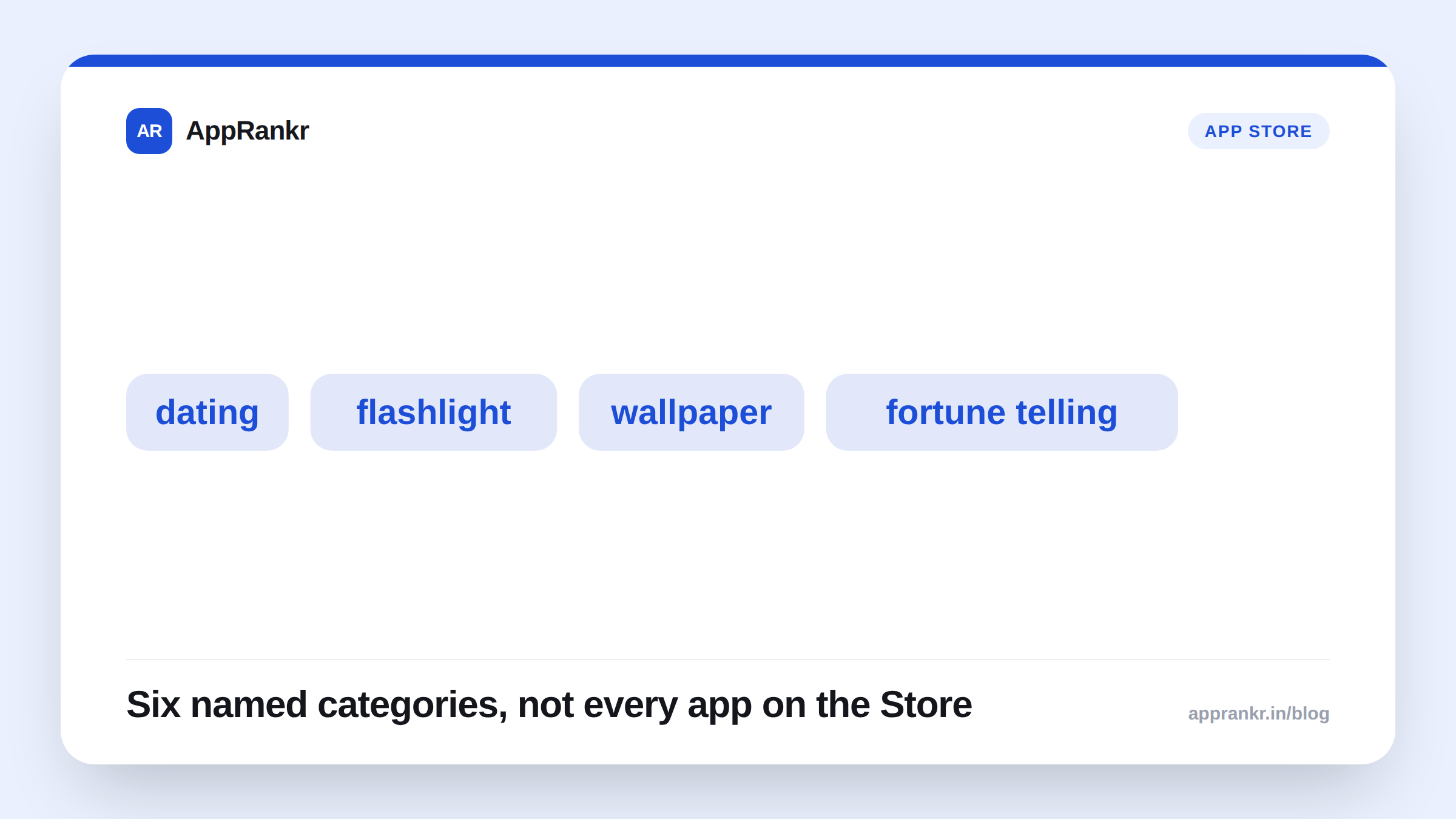
- This covers six named, saturated categories only. Dating, flashlight, sound effects, wallpaper, simple timers, fortune telling.
- It’s a removal clause for apps already live. Not just a bar on new submissions.
- No download number appears in Apple’s own wording. Multiple outlets tied this addition to a June 8, 2026 guideline revision.
A rejection for a new app is one thing. Apple’s own guidelines now spell out something else. Pulling an app that’s already live, just for sitting there unchanged.
The exact wording, and who it actually reaches
Apple’s own guideline 4.3(b) gives the reason first. Some app categories are so full that one more copy just adds noise. A new entry in these categories only gets in with a real, meaningful difference. Then comes the live-app part. Apple’s own words: “We may remove these apps from the App Store going forward if they are not updated, improved, or do not attract customers.”
| Scope | What’s true per Apple’s own wording |
|---|---|
| Categories named | Dating, flashlight, sound effects, wallpaper, simple timers, fortune telling |
| Applies to | Live apps, not just new submissions |
| Removal trigger | Not updated, not improved, or no customers |
| Threshold given | None stated |
A second, separate part of this same section covers something else. Apps Apple calls mediocre or low-effort. Its own examples: drinking games, fart and burp apps. Repeat submissions like that can cost a whole Developer Program account. A much bigger, account-wide risk, not just one app’s removal.
Why the narrow scope actually matters here
It’s easy to read a headline about Apple pulling apps for “not attracting customers” and assume it covers everything. It doesn’t, per the guideline’s own text. This sits in one section about crowded categories. The ones where a new, near-identical app adds nothing new. An app outside those six names isn’t touched by this clause at all.
That’s a far narrower rule than “Apple culls old apps.” It’s a cleanup tool for a few spots Apple’s own text already flags as a known problem. Not a general activity test for every app on the Store.
Real-world scenario: A developer kept a flashlight app running, unchanged for three years, still pulling a steady trickle of downloads. Reading Apple’s own wording closely, they noticed “not updated, improved, or do not attract customers” was an “or,” not an “and.” Steady downloads alone might not be enough if the app never got touched either. They shipped one real change, a new strobe pattern, and logged it as a genuine update rather than leaning on download numbers alone.
What to actually do about it
- Check if your app sits in one of the six named categories. Outside those, this specific clause doesn’t reach you, no matter how old or unchanged your app is.
- Read the three conditions apart from each other. A real update or improvement is the safer bet for an app with modest downloads in a named category.
- Don’t mix this up with the low-quality clause nearby. That one risks your whole developer account. This one is about a single app.
- Treat a long-unchanged app in a named category as due for a real update. Not a resubmission with nothing actually new in it.
AppRankr’s ASO Inspector reviews your current listing, a useful check before deciding what a real update to an older app should actually include.