Key points:
- Google Play’s own discovery documentation lists ads as their own labeled channel. Separate from the ranking factors it names directly: user relevance, quality, and editorial value.
- No official Apple document states that Apple Search Ads installs get different or preferential treatment in organic search ranking.
- The idea that paid installs directly boost organic rank shows up often across ASO vendor content. It traces back to industry theory and observation, not a published platform statement.
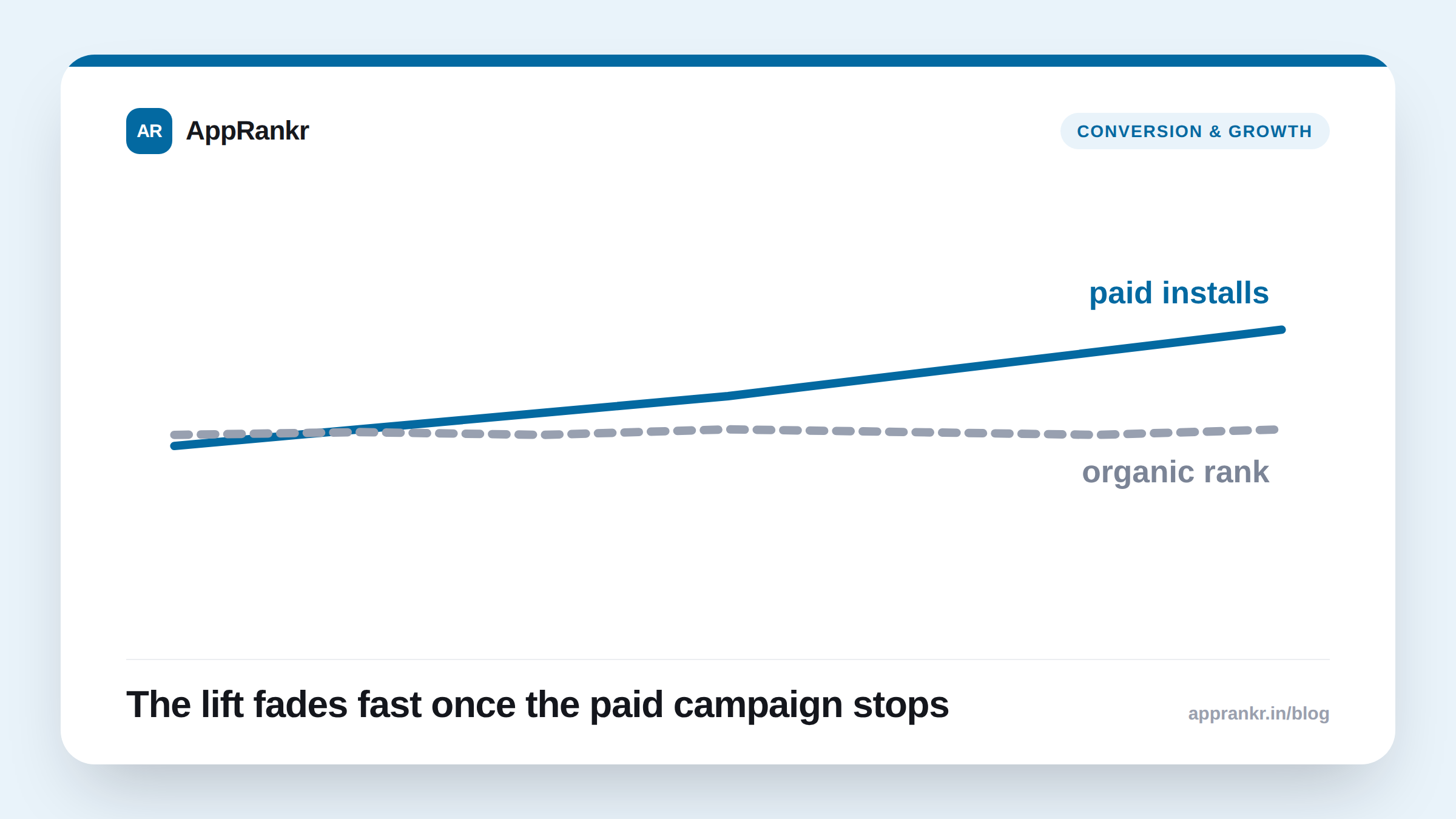
- One real account from a growth team found organic lift from a paid push faded fast once the campaign stopped. More consistent with temporary visibility than a lasting ranking change.
A common pitch shows up in almost every ASO sales call. Run paid ads for a few weeks, and your organic rank follows the lift. It sounds fair. It’s also not something Apple or Google has put in writing. Here’s what’s real, and what’s just industry folklore repeated so often it starts to sound official.
What Google actually publishes
Google Play’s own App Discovery and Ranking page names specific factors behind how apps get surfaced. User relevance. Quality. Editorial value. Ads get their own separate mention. Some developers choose to advertise on Google Play, and those ads are clearly marked and shown alongside other content. That’s a structural separation. Not a claim that ad-driven installs feed into the ranking factors listed right next to it.
That distinction matters. Google is telling you ads are their own lane. Not an input into the algorithm it describes on the same page.
What Apple has and hasn’t said
Apple runs Apple Search Ads as a real, sizable product. What Apple hasn’t published, anywhere we could find, is a direct line confirming or denying that ASA installs carry extra weight in organic search rank. That silence cuts both ways. Don’t tell a client “Apple confirms paid installs help your rank.” Apple hasn’t confirmed that. You can’t rule it out either, since Apple hasn’t addressed it at all.
What you’ll find instead, across ASO vendor blogs, is a consistent theory. More installs, from any source, add to your overall popularity signal. Ranking considers that signal. That’s plausible. It’s also different from “paid installs get a special boost.” The stronger, more specific claim actually being sold.
| Claim | Documented? |
|---|---|
| Ads are shown as a separate channel from organic results | Yes, by Google |
| More total installs can feed general popularity signal | Plausible, not confirmed outright by either platform |
| Paid installs specifically get preferential ranking treatment | Not documented by either platform |
A real account of the lift not holding
One growth team’s own published account is worth a close read here. After running a paid campaign, they saw organic numbers rise alongside it. Then they watched that same lift fade fast once the campaign stopped. That pattern looks more like extra visibility while ads were live. Not a lasting change to the app’s real rank. It’s one account, not a controlled study. Still a useful check against the stronger version of the pitch.
Real-world scenario: A shopping app’s team ran a two-week Apple Search Ads campaign to “kickstart” a stalled keyword rank, on an agency’s advice. The target keyword’s own rank did improve during the campaign. It moved from around 40 to the low 20s. Ten days after turning the ads off, the same keyword drifted back near where it started. What likely happened is simple. The ad itself won placement and drove eyes while it ran. Rank benefited from the extra attention and installs in that window. Nothing about the actual listing had changed to hold that spot once the paid push stopped. The team’s real fix, later, was a metadata change that held its rank with zero ads running.
What to actually do with a paid budget
- Use paid ads to test what converts, not to fake a ranking signal. A/B testing your listing against real paid traffic tells you something concrete about your conversion rate.
- Don’t budget for ads specifically expecting a lasting organic lift. If it happens, treat it as a bonus. Not the plan.
- Fix the listing itself first. A metadata or creative change that improves conversion holds its results with or without paid traffic running behind it.
- Track your organic position separately from your ad spend. That way you can actually tell the two apart instead of crediting one for the other’s work.
AppRankr’s Rank Tracker keeps a clean, daily record of your organic keyword position. You can see exactly what moves when ads are running and what happens once they stop, instead of guessing from memory.