Key points:
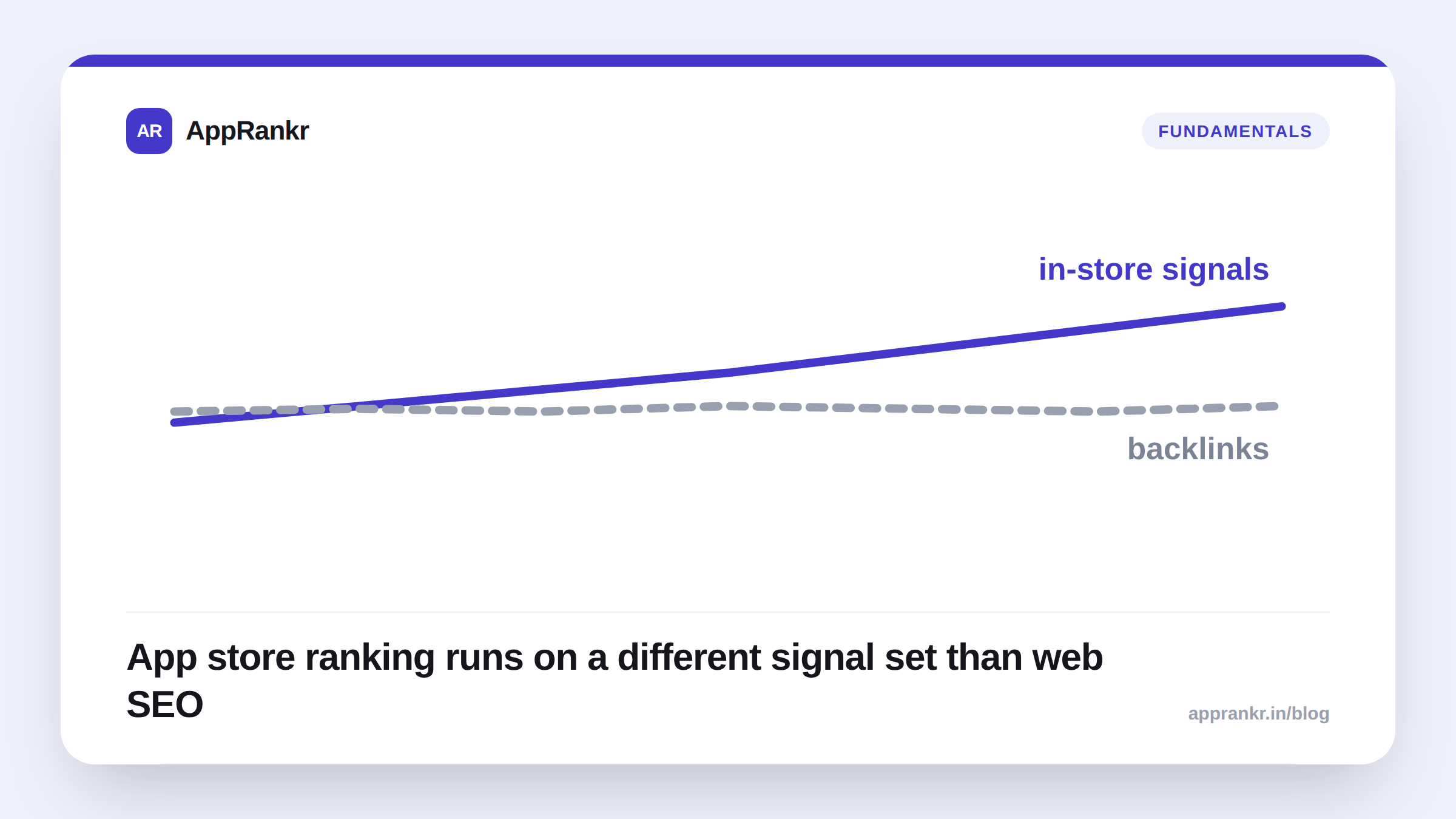
- Google Play’s own App Discovery and Ranking page lists three ranking inputs: metadata relevance, user feedback, and device optimization. Backlinks aren’t one of them.
- Apple’s official App Store Search page names two: text relevance and user behavior. Same story. No links.
- Neither company has ever said “backlinks don’t count” in so many words. This is an inference from their own lists, not a direct rule. Worth being honest about that gap.
- A link to your listing can still help — just not the way SEO agencies pitch it. Real clicks turn into real installs. Install activity is a real ranking input. The link itself does nothing on its own.
Someone pitched you an “app backlink package.” It builds links pointing at your Play Store or App Store page. It’s priced like a web SEO campaign. It sounds like a web SEO campaign. Does it do anything for your app’s search rank? Let’s check what the platforms actually say.
What Google Play’s own pages list
Google’s App Discovery and Ranking page is direct about this. Ranking weights shift by where you’re looking. Top Charts leans on popularity. Search results lean on relevance to the query. Either way, three things get named:
- Metadata relevance — your title and description matching what someone typed
- User feedback — ratings, reviews, and what people do after they install
- Device optimization — how well your app runs on the phone it’s installed on
That’s the full list. Google’s companion guide to getting discovered repeats the same three things. Backlinks show up in neither page.
What Apple’s own page lists
Apple keeps it shorter. Its official App Store Search page says results come from “text relevance (matches for your app’s title, subtitle, keywords, and primary category), as well as user behavior (downloads, ratings and reviews, and more).”
No backlinks there either. No domain authority. No inbound-link language of any kind.
Why this isn’t quite a flat “no”
Here’s the honest part. Neither company has ever written the sentence “backlinks do not affect ranking.” What we have instead is an omission. Both companies publish detailed lists of what matters. Links never make either list. That’s strong evidence. It’s not a direct denial. Say it the honest way when a client asks — don’t oversell the certainty.
| Signal | Matters for web SEO? | Matters for app store ranking? |
|---|---|---|
| Inbound backlinks | Yes | Not named by either platform |
| Title / keyword match | Yes | Yes — both platforms |
| Ratings and reviews | No | Yes — both platforms |
| Engagement after the click | Indirect | Yes — both platforms |
| Domain authority | Yes | No domains involved at all |
That table tells the real story. App store ranking and web ranking run on different signals. The names sound alike — ASO and SEO. The inputs barely overlap.
Real-world scenario: A subscription app’s team bought a three-month backlink package. Forum posts and directory links, all pointed at their Play Store page. They expected their target keywords to climb. Three months in, keyword rank hadn’t moved at all. Referral traffic to the listing page HAD gone up. Install volume rose about 4% because of that traffic. That was the whole effect. It came from the clicks, not from the links existing. The team moved the budget into fixing their actual title and description instead. Keyword rank moved within weeks.
What actually moves your rank
Since links aren’t the lever, spend that same budget on what both platforms actually name:
- Keyword relevance in your title and description — the words people really search, not the words you think describe you.
- Ratings and review health — both platforms name this outright. It’s also one of the more fixable signals you have.
- Engagement after install — retention, uninstalls, and what people actually do once they open the app.
Want to know where your keywords really stand right now? Check with AppRankr’s Rank Tracker. It’s a faster answer than any link campaign will give you.