Key points:
- OpenAI’s own Apps SDK rules ask for a verified identity, a working demo login, a privacy policy, and clean listing text. All before your app even gets reviewed.
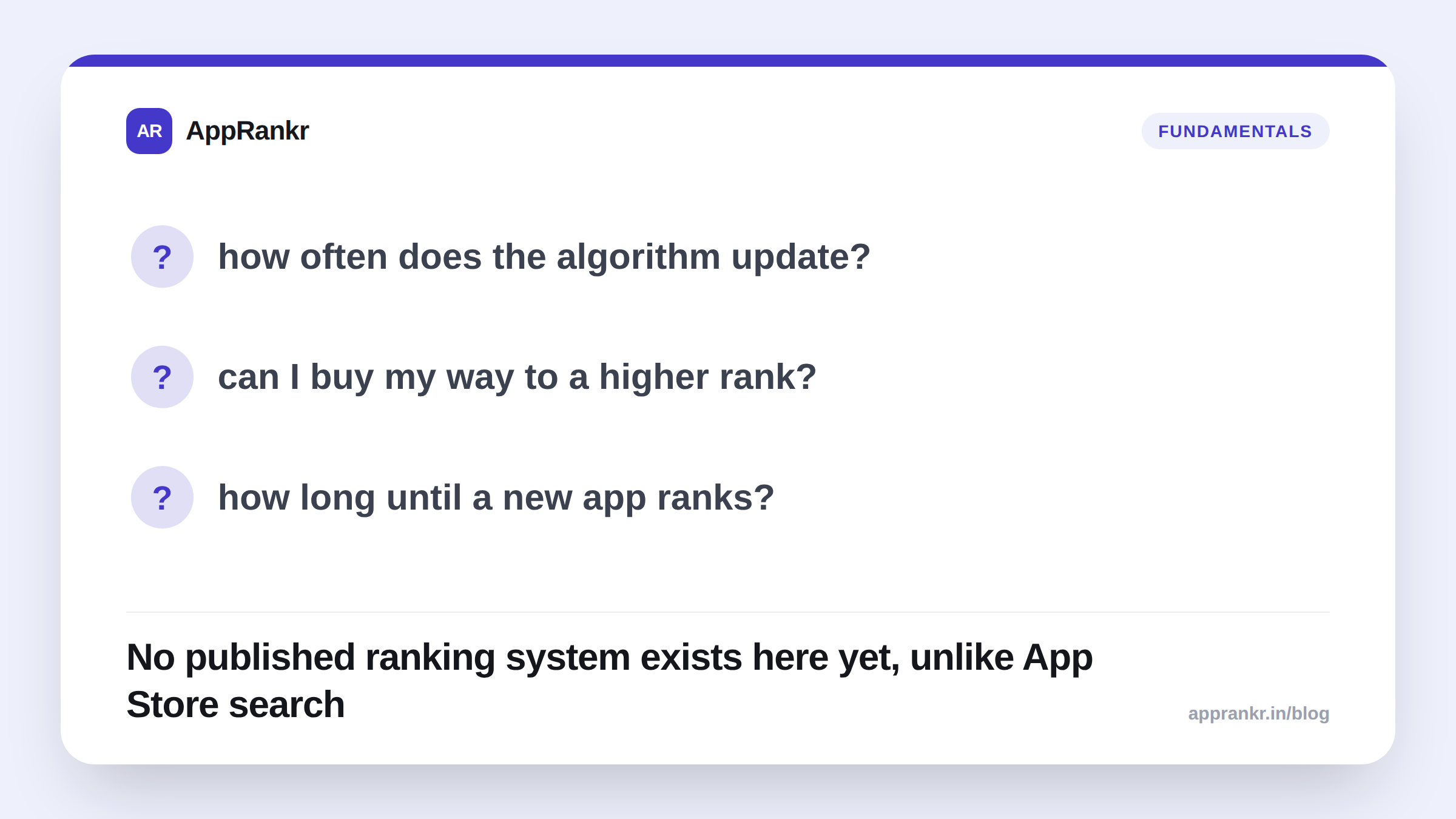
- OpenAI’s terms reportedly say there’s no promised spot or rank in the App Directory. No known algorithm to chase yet.
- The rules flat-out ban gaming what OpenAI calls fair discovery. Old App Store keyword habits likely won’t transfer well here.
- This space is brand new. Almost nothing real has been written yet about ranking inside an AI app directory.
ChatGPT now has its own app directory. Open to outside developers. That’s so new most App Store or Play Store advice just doesn’t apply here yet. Worth being honest about what’s real before you treat this like a new ASO channel with the same old moves.
What OpenAI’s rules actually ask for
A mirror of OpenAI’s own Apps SDK developer guidelines lays out real, specific asks. A verified developer identity. A working demo login so a reviewer can actually try your app. A privacy policy. Listing text that follows OpenAI’s own house rules, not whatever you’d normally write for an App Store page.
None of this is about rank once you’re in. It’s about clearing the bar to get listed at all. That’s a different fight than App Store or Play Store ASO, where getting listed is easy and rank is the real battle.
No known ranking system, and a flat ban on gaming it
Here’s the part worth real care. OpenAI’s terms are reported to say plainly that spot, visibility, and rank in the App Directory aren’t promised for any app. No public rule book here, unlike Apple and Google, who at least share some of their own search logic. Treat any claim about “ranking factors” for the ChatGPT App Directory right now as a guess. Not fact.
The rules also flat-out ban gaming what OpenAI calls fair discovery. That’s a plain, direct line against tricks. Whatever worked for App Store keyword fields almost certainly wasn’t built with this system in mind. Some of those old tricks could even get you flagged.
| Question | What’s actually true today |
|---|---|
| Can any developer submit? | Yes, per OpenAI’s own rules |
| Is there a public ranking system? | No, none found in official docs |
| Is gaming discovery allowed? | No, flat-out banned |
| Do a verified ID and demo login matter? | Yes, both are required to submit |
Why this matters for your visibility right now
Your goal isn’t just App Store and Play Store search anymore. People ask ChatGPT, Perplexity, and Google’s AI Overviews for app picks directly now. A ChatGPT App Directory listing is a real, new spot for that. Getting the basics right today, while this is still new, beats waiting for a full playbook that doesn’t exist yet.
Real-world scenario: A small to-do app team read early news of the App Directory launch. They assumed it worked like a normal app store. So they wrote a keyword-packed listing, copied from their App Store page. Their first try got flagged for review. They read OpenAI’s real rules more closely. Then rewrote the listing as a plain, direct line about what the app does and who it’s for. No repeated keywords at all. The second try passed clean. Nothing about their rank or reach changed after that, since nothing like that is tracked yet. Getting listed clean was the one real goal worth chasing this early.
What to actually do about it today
- Read OpenAI’s real submission rules first. Don’t just reuse an old App Store draft.
- Skip the urge to stuff keywords. The rules ban gaming discovery, and there’s no known keyword system to game anyway.
- Treat any “ranking tips” you find elsewhere as a guess. No public ranking rule book exists here yet.
- Watch this space closely. It’s new enough that a clean, early listing may matter more than any trick will for a while.
For the ranking systems that ARE public and trackable today, AppRankr’s Rank Tracker keeps a daily record of your real App Store and Play Store spots.