Key points:
- Google’s own Play Console Help page confirms that starting July 22, 2026, US app and game listings go to enrolled third-party US Android app stores by default.
- This covers your real listing assets. Name, icon, description, screenshots, videos. Not just the app file itself.
- You can approve stores one at a time, opt in to all, or opt out entirely. Do nothing, and Google opts you in for you.
- The change comes from the Epic Games v. Google case. 9to5Google and TechRepublic both confirm it followed the 2024 injunction and a July 2026 settlement withdrawal.
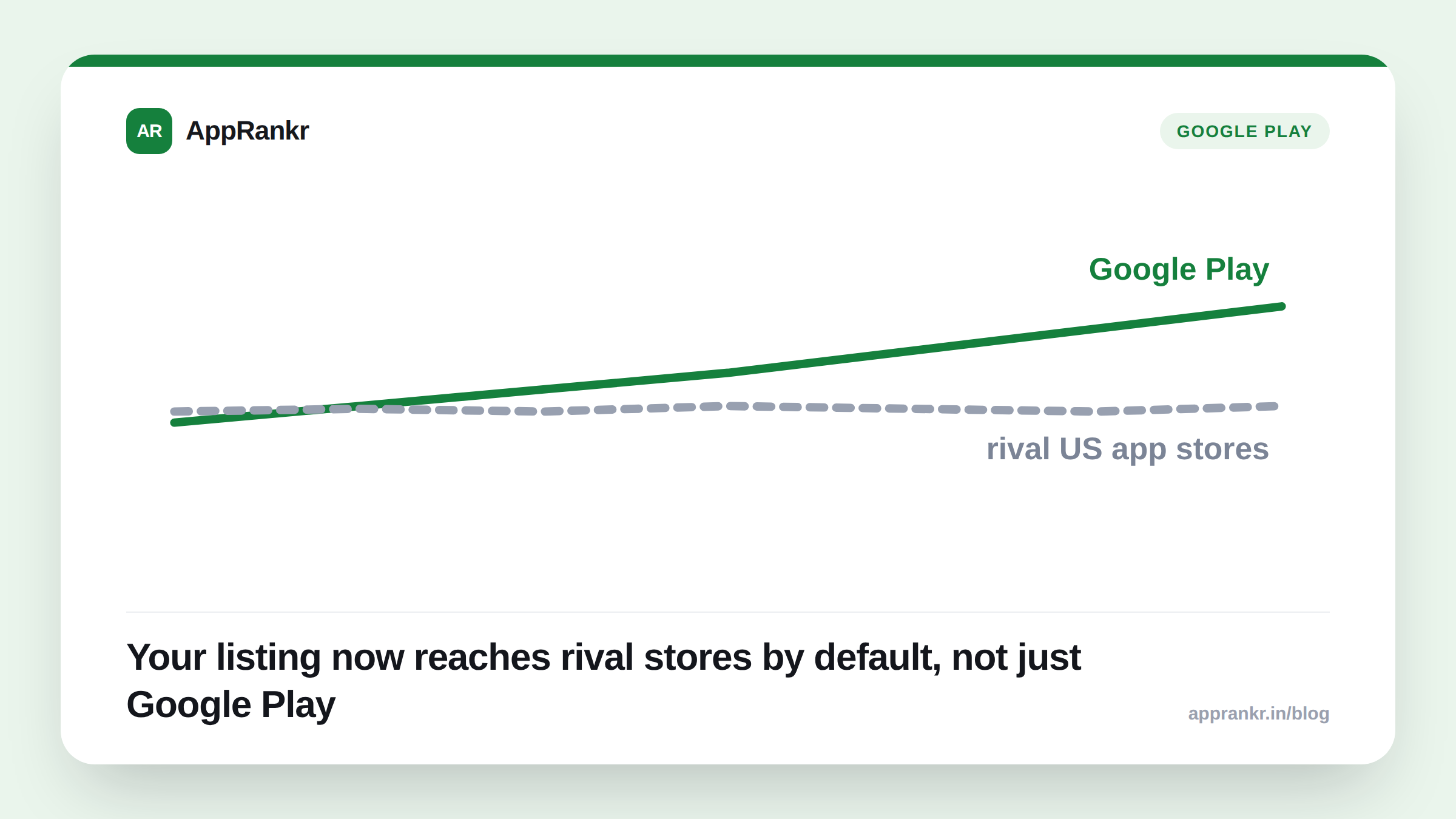
Most ASO advice assumes your Google Play listing lives in exactly one place. The Google Play Store itself. As of July 22, 2026, that’s no longer automatically true for US developers. Under what Google calls the Play Catalog Access Program, your existing listing can now show up inside rival Android app stores too. The default is opt-in, unless you actively say otherwise.
What Google’s own page confirms
Google’s Play Console Help page on this change is direct about it. Starting July 22, 2026, US app and game listings go to enrolled third-party US Android app stores. That includes your name, icon, description, screenshots, and videos. Those third-party stores can offer your app to their own users. But the actual download still runs through Google Play. Same terms as a direct download. Same Google Play service fee. Developers get three real choices. Approve stores one at a time. Opt in to all of them. Or opt out completely. The page is clear on what happens if you do nothing: Google starts sharing your listing anyway, once the date passes.
| Question | What Google’s page confirms |
|---|---|
| Effective date | July 22, 2026 |
| What’s shared | Name, icon, description, screenshots, videos |
| Where the download happens | Still through Google Play, same fee terms |
| Default if a developer does nothing | Opted in |
| Can a developer opt out entirely? | Yes |
Why this happened now
This isn’t a Google product choice made for its own sake. 9to5Google’s July 2026 reporting and TechRepublic’s coverage both trace it to the Epic Games v. Google case. A 2023 jury verdict for Epic. A 2024 permanent injunction from a US District Court. A Ninth Circuit ruling that upheld it. Then, in July 2026, Google and Epic jointly withdrew a proposed alternate settlement. That left the original injunction as the real, active order. The Play Catalog Access Program is Google’s way of following that order. Not a marketing push.
Real-world scenario: A US subscription app’s team hadn’t touched their Play Console settings around this change. They assumed nothing had shifted for them. Checking their enrollment status directly in Console showed otherwise. They’d been auto-opted-in on July 22, exactly as Google’s page describes. Their exact screenshots and description were now live inside a third-party Android store they’d never heard of. Their Google Play rank hadn’t moved at all. But their conversion copy was now doing work in a second storefront they hadn’t reviewed for that setting.
What to actually do about it
- Check your Play Console enrollment status directly. Don’t assume you’re opted out. Google’s own page confirms the default runs the other way.
- Decide store by store if you want that level of control. Google’s page allows approving individual third-party stores, not just an all-or-nothing switch.
- Review your screenshots and description with a second storefront in mind, if you stay enrolled. The same assets are now doing double duty somewhere you don’t control the surrounding context.
- Re-check Google’s own page every so often. This is a legally-driven process that’s still settling. A summary of it, this post included, can go stale fast.
AppRankr’s Rank Tracker tracks your Google Play rankings directly. So a change in where your listing shows up never gets confused with an actual shift in your real search position.