Key points:
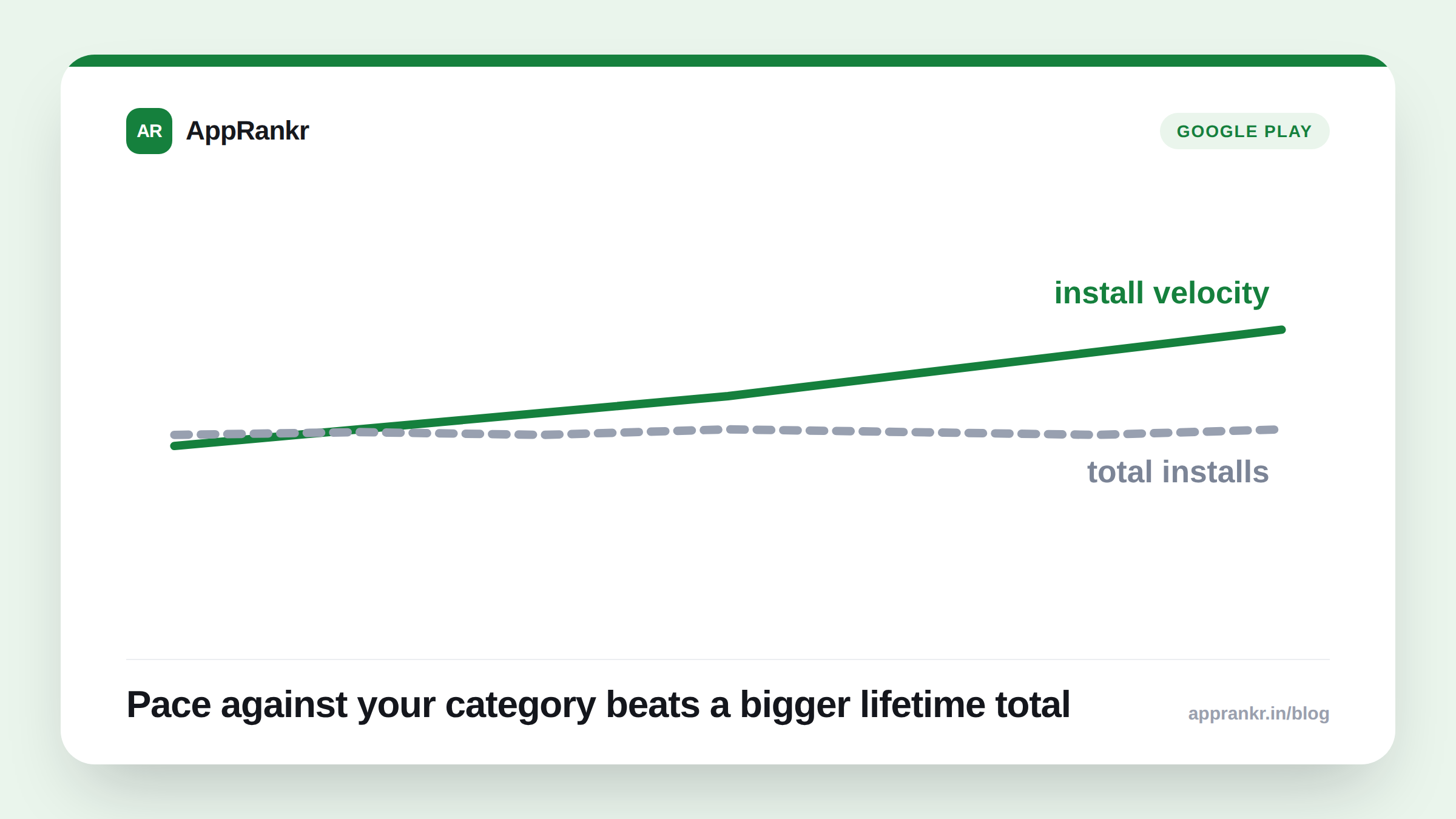
- Category top charts weigh install velocity, not lifetime totals. A newer app with a fast recent pace can beat an older one with a bigger total but a slower one.
- Velocity is measured against other apps in your category and region. Not against your own history.
- Reporting on 2026 changes describes engagement signals, like retention and crash rate, now weighing in alongside velocity. Not replacing it.
- You don’t need to match a competitor’s total installs. You need a competitive recent pace, ideally paired with strong engagement.
You check a competitor’s install count. It’s five times yours. Does that mean you can’t rank near them in category? Not exactly. The real mechanic here matters more than the raw number.
Velocity, not lifetime totals
Category top charts run on install pace, not old totals. That means how many installs your app gets right now, in a recent window, next to other apps in your category and region. A million past installs barely count on their own. An app with a million past installs, but a slow, flat pace lately, can rank below a much newer app pulling in installs fast right now.
| What matters more | What matters less |
|---|---|
| Recent install pace (last 1 to 4 weeks) | Total lifetime installs |
| Pace relative to category competitors | Pace compared to your own history |
| Sustained daily volume | One-time spikes that don’t repeat |
What else carries real weight now
Reporting on 2026 ranking says more than pace matters now. Retention counts too. How often people open the app again. So does crash rate. An app with a modest install pace, but strong week-one retention and few crashes, can beat a rival with more raw installs and weaker engagement.
That’s a real opening for a smaller app. You don’t need to match a leader’s total installs. You need a pace that’s competitive in your category. And users who actually stick around once they install. A burst of weak installs that churn fast can hurt more than help. It drags down the very signals that now count.
Real-world scenario: A team compared their install count to the category’s top three. They were sitting at roughly a tenth of the leader’s total. Instead of chasing that gap directly, they focused on their recent install pace and retention. A modest paid push, combined with fixing a crash affecting new users, lifted both their weekly install pace and their 7-day retention over the next month. Their category rank moved up several spots, without ever closing the total install gap.
What to actually do about it
- Track your install velocity, not just your total. A rolling weekly or monthly pace tells you more about category rank than a lifetime number ever will.
- Compare your pace to your actual category competitors. Not to your own past. Category ranking is relative, not absolute.
- Fix retention and crash issues before chasing more installs. A burst of installs that churn fast can work against you on the engagement side.
- Don’t assume a bigger total install count is unbeatable. A strong, sustained recent pace with good engagement is the more direct lever.
AppRankr’s Rank Tracker tracks your category chart position over time. You can see whether a change in your install pace or retention is actually moving the number that matters.