Key points:
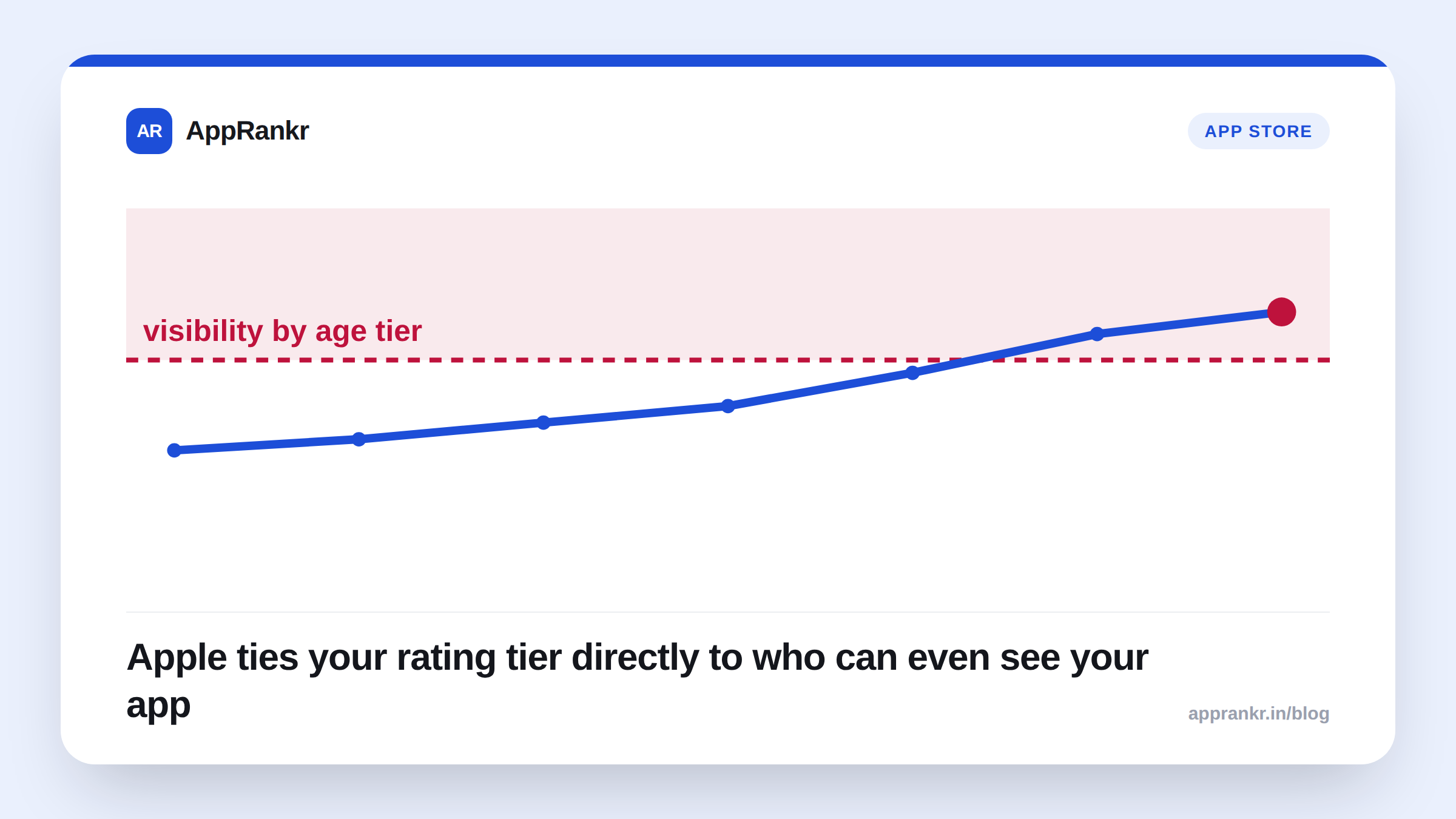
- Apple’s own age ratings reference states directly that your rating determines visibility and availability by user age. Not a side detail. A stated ranking-adjacent rule.
- Apps rated Unrated cannot be published at all, per that same page. Every app needs a real tier, even the lightest one.
- Apple’s own July 2025 announcement expanded tiers to include 13+, 16+, and 18+, with a real January 31, 2026 response deadline.
- A real, unanswered developer forum thread shows someone worried about losing existing users after raising their own app’s rating.
Age rating rarely gets treated as an ASO lever. Apple’s own docs say it should be. Add a real, recent tier overhaul and a hard 2026 deadline. This is a more live topic right now than most developers realize.
What Apple actually confirms about visibility
Apple’s age ratings reference is direct here. Age rating decides your app’s visibility. Based on the age tied to a user’s account. It also drives parental controls, like Screen Time limits and Ask to Buy approvals. A real, stated visibility rule. Not a guess layered on top of a vague hint.
The same page confirms one more thing. Unrated apps can’t publish at all. Every app needs a real tier. 4+, 9+, 13+, 16+, or 18+. No way to skip this step and stay visible anywhere.
A real, recent change with a real deadline
Apple’s own July 2025 news announcement confirmed a real overhaul. The old 4+/9+ system grew to add 13+, 16+, and 18+ tiers. New questionnaire items came with it. Things like AI or chatbot content, and medical or wellness topics. Developers had a real, dated deadline. January 31, 2026, to respond and update their rating.
This isn’t old, settled history. It’s recent enough that plenty of developers may still be sorting out their new tier. And what it does to their visibility going forward.
| Question | What’s actually confirmed |
|---|---|
| Does age rating affect visibility? | Yes, stated directly by Apple |
| Can an app go live with no rating? | No, Unrated apps can’t publish |
| Did tiers recently change? | Yes, expanded in July 2025 |
| Was there a real compliance deadline? | Yes, January 31, 2026 |
Why raising your rating is a real, weighed decision
A real developer forum thread shows someone asking the hard version of this exact question. What happens to existing users and visibility if you raise your app’s rating from 4+ to 12+? The thread stayed unanswered when found. Worth reporting honestly rather than papering over. This is a live, open concern for real developers right now. Not a settled, solved problem.
Real-world scenario: A word-puzzle app added a light chat feature between players. The team reviewed Apple’s updated questionnaire. Honest answers pushed them from 4+ to 13+. They worried about losing younger users who could no longer see or install the app under stricter parental controls. They went ahead anyway. They filled in the questionnaire straight, instead of under-reporting the new feature. Downloads among younger age brackets did drop. Roughly matching what the age-gating rules would predict. Their rating and reviews stayed steady, since the core app hadn’t changed for users who kept access.
What to actually do with your age rating
- Treat your questionnaire answers as a real visibility decision. Apple states rating drives who can even see your app.
- Check your rating against Apple’s current tiers, not last year’s. The July 2025 update changed real category boundaries.
- Answer honestly rather than under-reporting new features. A rejected or later-corrected rating is a worse outcome than accepting a stricter tier upfront.
- Watch your download mix by age bracket after any rating change. That’s the real, measurable signal a shift like this produces.
AppRankr’s Rank Tracker tracks your real rankings and download trends, so a rating-driven shift shows up in your own data, not just in theory.