Key points:
- Android’s own Level Up guidelines confirm enrollment opens through Play Console on September 1, 2026.
- This is a games-only program. It rewards rate-card benefits for meeting real user-experience guidelines, not just for signing up.
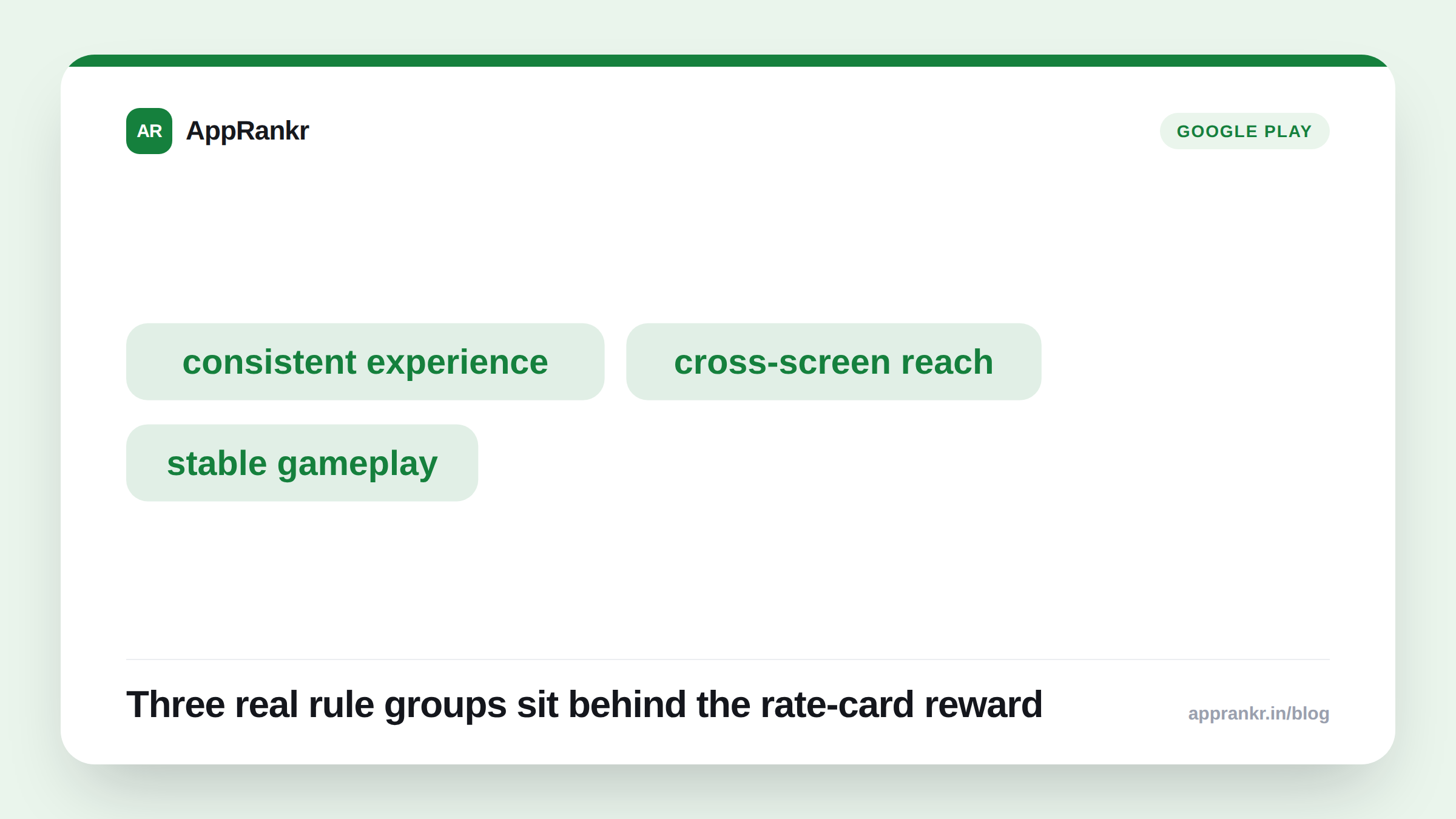
- Three guideline groups apply: a consistent gamer experience, reach across screens, and stable, smooth gameplay.
- Participation is voluntary. Android’s own page says skipping it doesn’t reduce benefits a game already gets through other programs.
A rate-card reward with real strings attached just got a real enrollment date. Android’s own guidelines confirm what a game actually has to do to qualify. Not just what the reward is.
What Android’s own page confirms
Android’s own Level Up guidelines describe enrollment opening through Play Console starting September 1, 2026. The reward is access to a program rate card, meant to drive business growth. But the guidelines are clear. Access depends on meeting real requirements first. Not just checking a box.
| Rule group | What it actually asks for |
|---|---|
| Consistent gamer experience | Play Games Services v2 SDK, Achievements, Sidekick, cross-device cloud save |
| Reach across all screens | Large-screen support, Google Play Games on PC, precise input controls |
| Stable, smooth gameplay | Stability, speed, memory use, Vulkan support |
Why this is narrower than it sounds
“Level Up” reads like a general Play Store program. Android’s own guidelines say otherwise. It’s built around Google Play Games features specifically. Real SDK integrations and platform mechanics. Not general store-listing quality. A game skipping this doesn’t lose anything it already had. But a game hoping to opt in without real engineering work behind it hits a wall fast. The rate card isn’t handed out for enrollment alone.
One real exemption exists too. Android’s own page says games aimed mainly at players under 13 don’t need Achievements, the Sidekick overlay, Rewards, or Cloud Save to meet this part of Level Up.
Real-world scenario: A mid-sized studio read a headline about the Level Up reward. They assumed enrollment itself would improve their rate card. Reading Android’s own guidelines directly showed three real requirement groups behind it. Including SDK integration work their game hadn’t done yet. Rather than enroll and fail to qualify, they scoped the real engineering work first. Play Games Services v2 initialization, cloud save, large-screen support. They enrolled once that work was done. Not before.
What to actually do about it
- Check whether Level Up even applies to you. This is games-only, tied to Google Play Games mechanics. A non-game app has no reason to look into this at all.
- Read the three rule groups before you enroll. The reward depends on meeting them. Not on the enrollment date alone.
- Check the under-13 exemption if it applies to your game. Android’s own page carves out real relief here. Don’t build features you don’t need.
- Scope the real engineering work first. SDK integration, cloud save, large-screen support. These are development tasks, not settings. Plan for them before September 1. Not after.
AppRankr’s ASO Inspector reviews the parts of your Google Play listing that shape discovery. A rate-card program like this one sits on the monetization side, separate from ranking. But both are worth tracking as your game scales.