Key points:
- Reporting describes the app title as the highest-weighted ranking signal on both iOS and Google Play, often outweighing other metadata fields by two to three times.
- Most metadata changes take 4 to 8 weeks to show a real ranking effect. A title change judged after a few days is being judged too early.
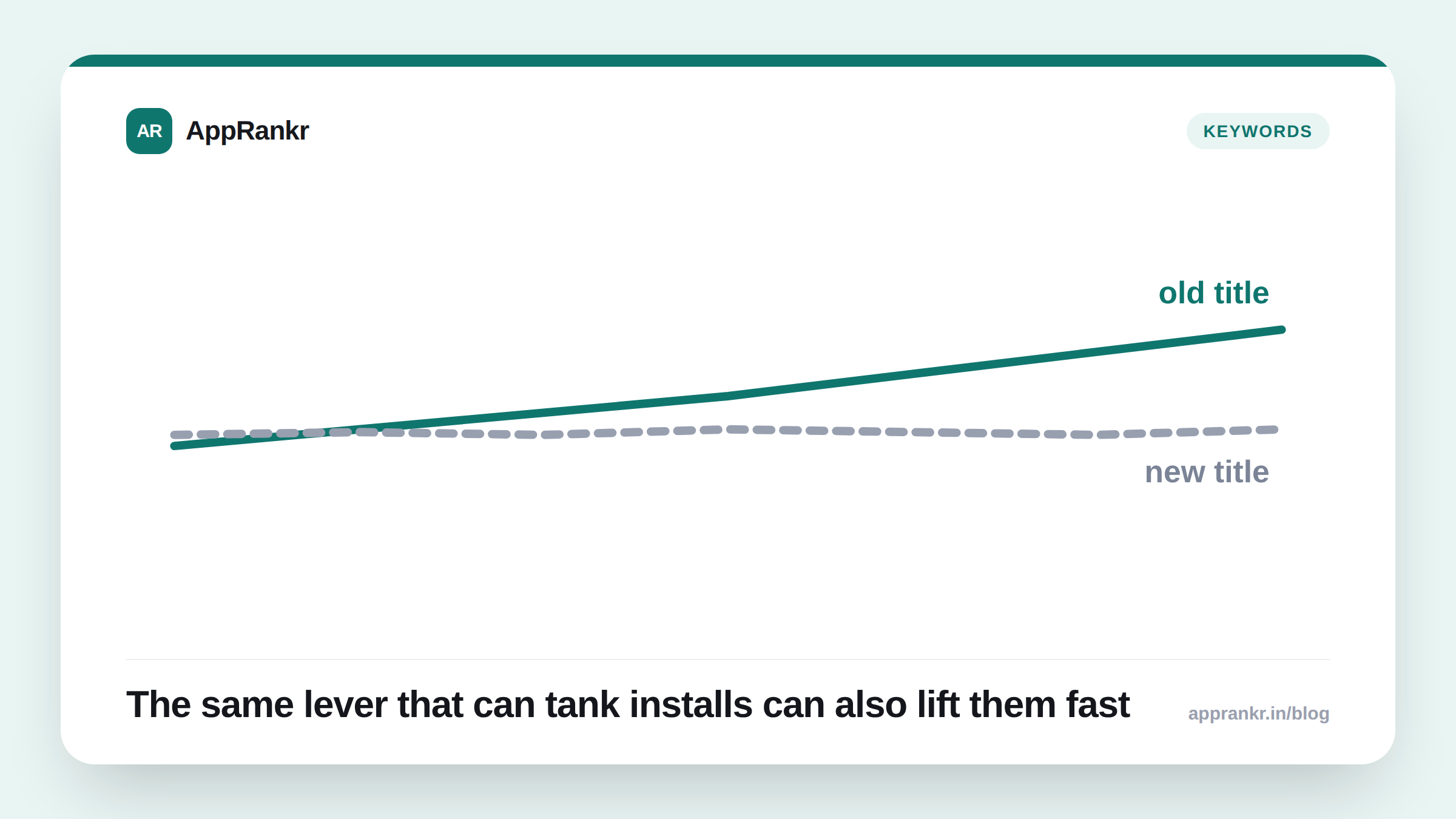
- A single sharp keyword shift can move an app into top results within days, per reporting. A careless one can cut installs just as fast, on the same timeline.
- An acquired app usually needs the new owner’s brand somewhere in the title eventually. The real question is not whether, but how and how fast.
You just bought an app. It has a rating history, an install base, and a title you didn’t write. Reporting is consistent on one thing: touching that title is the single riskiest metadata change available to you, in either direction.
Why the title carries this much weight
Reporting on ranking factors across both stores places the title well above other fields, including keywords in a dedicated field, screenshots, or the long description. It’s read for relevance more heavily than almost anything else in your listing. That’s exactly why an acquired app’s existing title, even one you’d never have chosen yourself, may already be doing real, hard-earned ranking work you can’t see from the outside.
| Change type | Reported ranking weight | Time to measure impact |
|---|---|---|
| App title | Highest on both stores | 4-8 weeks, often the slower end |
| Keywords field / metadata | Lower than title | 4-8 weeks |
| Screenshots, description | Lower still | Faster to test, still needs real traffic |
The acquisition-specific trap
A newly acquired app almost always needs your brand in the title eventually. Legal, support, and billing all point back to you now, not the old owner. But reporting is blunt about the mechanism: a careless title change can cut installs fast, on roughly the same weeks-long timeline it takes a good one to pay off. Swap the title in one move, on day one of ownership, and you’re testing your new brand against the old one’s earned ranking with no data to guide the swap.
The honest read here: this isn’t a reason to never rebrand an acquired app. It’s a reason to treat the swap itself as the highest-stakes single edit you’ll make to that listing, not a same-day administrative task.
Real-world scenario: A company acquired a mid-sized productivity app and rebranded its title to match their portfolio naming convention on the same day the deal closed. Installs dropped within two weeks. They initially assumed the buyer’s own users were confused by the sudden new name. Reading reporting on title-change timelines pointed at something else: the ranking signal tied to the old title’s exact keyword match had been doing real work, and the new title didn’t carry the same terms. They didn’t revert. Instead, they rewrote the new title to keep the core searched terms from the old one, just reordered around the new brand name, and watched the same 4-8 week window before judging the result again.
What to actually do about it
- Find out what’s actually driving the current title’s ranking before you touch it. Check which keywords in the existing title are pulling real search traffic, not just what reads well to you.
- Keep the working terms, change the framing. A brand swap doesn’t have to mean losing the keywords already earning rank. Reorder and rebrand around them instead of replacing them outright.
- Give any change the full measurement window. 4 to 8 weeks, per reporting, before you call a title change a win or a mistake. A two-week judgment is a guess dressed as data.
- If you must cut over immediately for legal or brand reasons, do it deliberately. Know you’re accepting a real, measurable risk window, and have your rank tracking running before the change, not after you notice a drop.
AppRankr’s Rank Tracker tracks your keyword positions daily, which is exactly what you need running before a title change, not started after installs already dipped. Seeing the trend as it happens beats reconstructing it after the fact.