Key points:
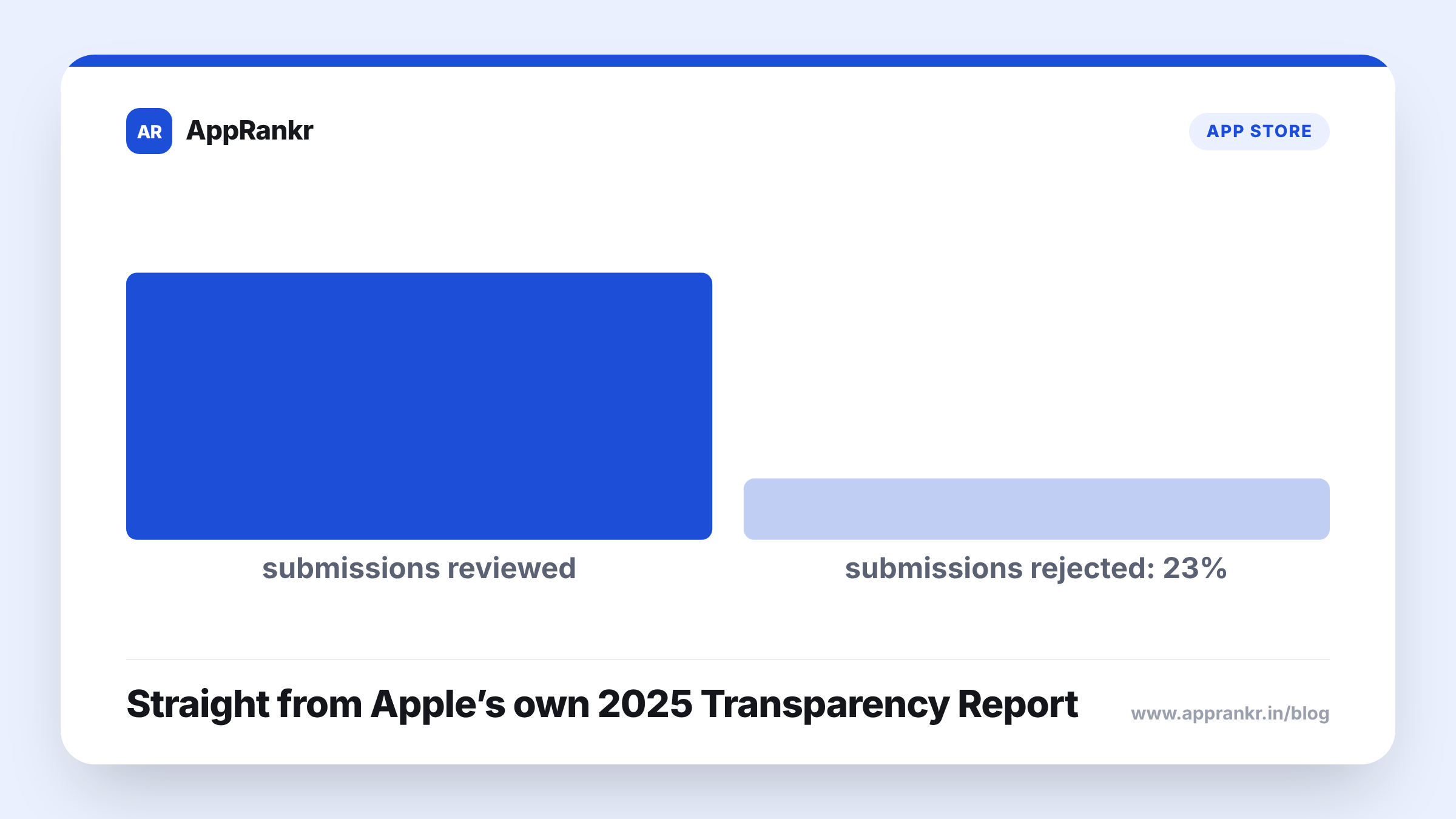
- Apple’s own 2025 report, cited the same way across many outlets, puts the reject rate at 23.0%. 9,100,620 apps reviewed. 2,093,244 turned down.
- Per Apple’s own App Review page, over 40% of open issues trace back to one rule. Guideline 2.1, App Completeness. Crashes, bugs, and half-finished builds.
- 387,087 apps got approved after an earlier reject. Up from 295,109 the year before.
- Section-level counts, split by Performance, Legal, Design, Business, and Safety, differ across the outlets reporting them. Those exact splits aren’t repeated here as settled fact.
Nearly a quarter of everything submitted to the App Store in 2025 got rejected the first time. Most of it for reasons that had nothing to do with policy.
What’s actually confirmed from Apple’s own report
Per Apple’s own 2025 report, cited the same way across outlets covering it, the headline numbers are real and specific. 9,100,620 submissions reviewed. 2,093,244 rejected. A 23.0% rate.
| Detail | What’s confirmed |
|---|---|
| Submissions reviewed | 9,100,620 |
| Submissions rejected | 2,093,244 |
| Rejection rate | 23.0% |
| Approved after an earlier rejection | 387,087, up from 295,109 the year before |
| Top unresolved issue | Guideline 2.1, App Completeness, over 40% of cases |
Why “App Completeness” being the top issue actually matters
Per Apple’s own App Review page, over 40% of unresolved issues come down to one rule. Guideline 2.1. That’s not a deep policy fight. It’s crashes. Bugs. Broken links. Leftover placeholder content. This matters because the single biggest cause of rejection sits fully inside a developer’s own control. Basic QA catches it. It’s not some gray-area call about content or business rules.
Real-world scenario: A small team submitted their app the night before a planned announcement. They felt ready. It had passed every test on their own devices. It got rejected the next day anyway. A support-page link that only broke on cellular, not their office Wi-Fi. Reading Apple’s own report later, they saw it wasn’t bad luck. It was the single most common reason apps get rejected at all. Their next release added one deliberate step. Testing every link and flow on cellular. Not just Wi-Fi.
Where sources genuinely disagree
Multiple outlets give different numbers here. Performance. Legal. Design. Business. Safety. The numbers don’t match each other. That’s a real gap worth naming. Not hidden behind one picked set. The main figures agree everywhere. Total submissions. Total rejections. The overall rate. The App Completeness stat too. The section split doesn’t agree. Check Apple’s own report first. Before you cite one exact section number anywhere that matters.
What to actually do about it
- Treat Guideline 2.1 as your first QA pass. Not an afterthought. It’s the single biggest cause of rejection, by far, per Apple’s own data.
- Test on real cellular, not just office Wi-Fi. A huge share of these rejections trace back to exactly this gap.
- Don’t treat a first reject as final. Nearly 400,000 apps got approved after an earlier reject, in this same report. Fixing the real issue and resubmitting is normal. Not a failure.
- Check any section-level stat before you repeat it. Sources disagree there. The headline numbers are the safer thing to cite.
AppRankr’s ASO Inspector reviews your current listing before a submission, a useful habit alongside testing for the completeness issues that cause most real rejections.