Key points:
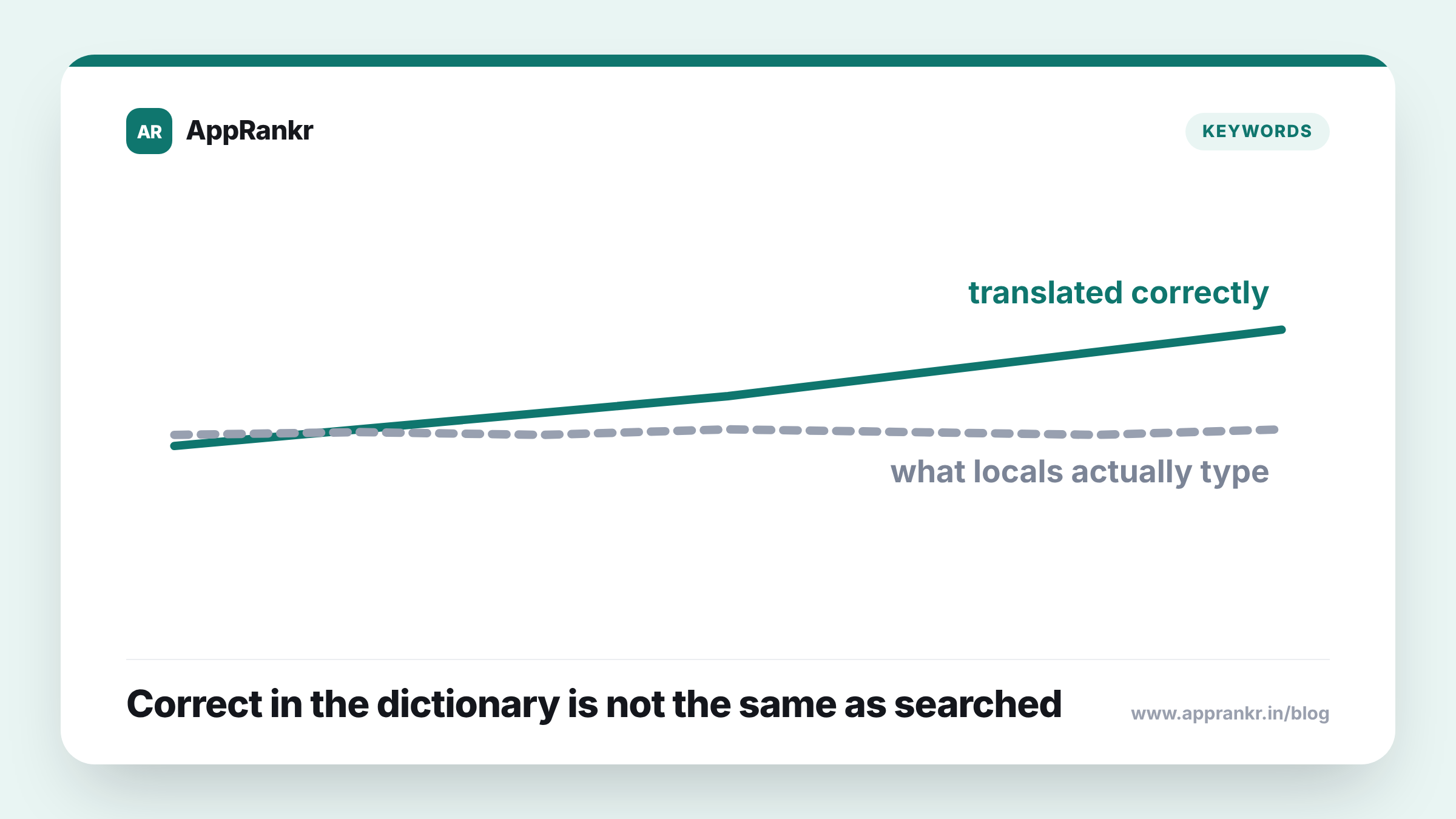
- Translation gives you the matching word. Adapting asks what a real user in that market actually searches.
- Those two aren’t always the same phrase, especially for idioms or terms that don’t translate cleanly.
- The gap doesn’t show up on every keyword. Many plain terms translate and work just fine.
- Checking real local search behavior, instead of assuming a translation is right, is the only way to know which terms actually need adapting.
Running a keyword list through translation feels like finishing the job. For some terms, real local search tells a different story.
Why translation and real search aren’t always the same
A direct translation gives you the matching word, correct in grammar and meaning. Real search in that market can still differ from that exact phrase. Maybe it’s local slang. Maybe it’s a different common way to describe the same problem. Maybe it’s an idiom that just doesn’t carry over word for word. A term that reads as a perfectly correct translation can still miss how real users in that market type their search.
| What it answers | |
|---|---|
| Translation | What the word means in the other language |
| Cultural adaptation | What a real local user actually types to search for it |
Why this gap is easy to miss
A translated term looks done. It’s correct, it carries the right meaning, and it passes any language check you’d run on it. None of that confirms it matches real search, since that’s a separate question about habits, not correctness. A team that stops at “is this translated right” skips the real question: “is this what someone in that market actually types.”
Real-world scenario: A team translated their core keyword directly into a new market’s language, sure it was right since a native speaker had checked it. Performance in that market stayed flat despite strong signals elsewhere. Checking how real users there actually searched for the same kind of app, they found a more common, slightly different phrase, one a plain translation would never have given them, that locals used far more often for the same need. Switching to that locally common phrase, instead of the technically correct one, brought a real, clear gain the translated term had never managed.
Why this doesn’t mean scrap every translation
Plenty of keywords translate cleanly and match real search with no change needed. The point isn’t that translation is always wrong. It’s that assuming it’s right without checking real local search risks missing the specific terms where the gap actually matters. Some terms need nothing changed. Others need a genuinely different phrase a plain translation would never surface.
What to actually do about it
- Check real local search, not just translation accuracy. A correctly translated term can still miss how users in that market actually search.
- Don’t assume every keyword needs adapting. Many terms translate clean and work fine with no change.
- Watch idioms and category terms closest. Those are the ones most likely to drift from a plain translation.
- Check performance by market, not just by language. A flat result in one market is worth checking as a possible translation-versus-usage gap.
AppRankr’s ASO Inspector checks your keyword performance by market, a useful way to spot where translation and real search have actually drifted apart.