Key points:
- Rating a star is a single tap. Writing a review is a separate, optional step most users never take.
- Your average score is built from every rating you’ve ever received, written review or not.
- Visible written reviews are a smaller, separate layer sitting on top of that average, not the same pool of data.
- A huge gap between your rating count and your written review count is completely normal, not a red flag.
Tapping a star and typing a paragraph feel like one action to most users. The store keeps them apart.
What’s actually two different things
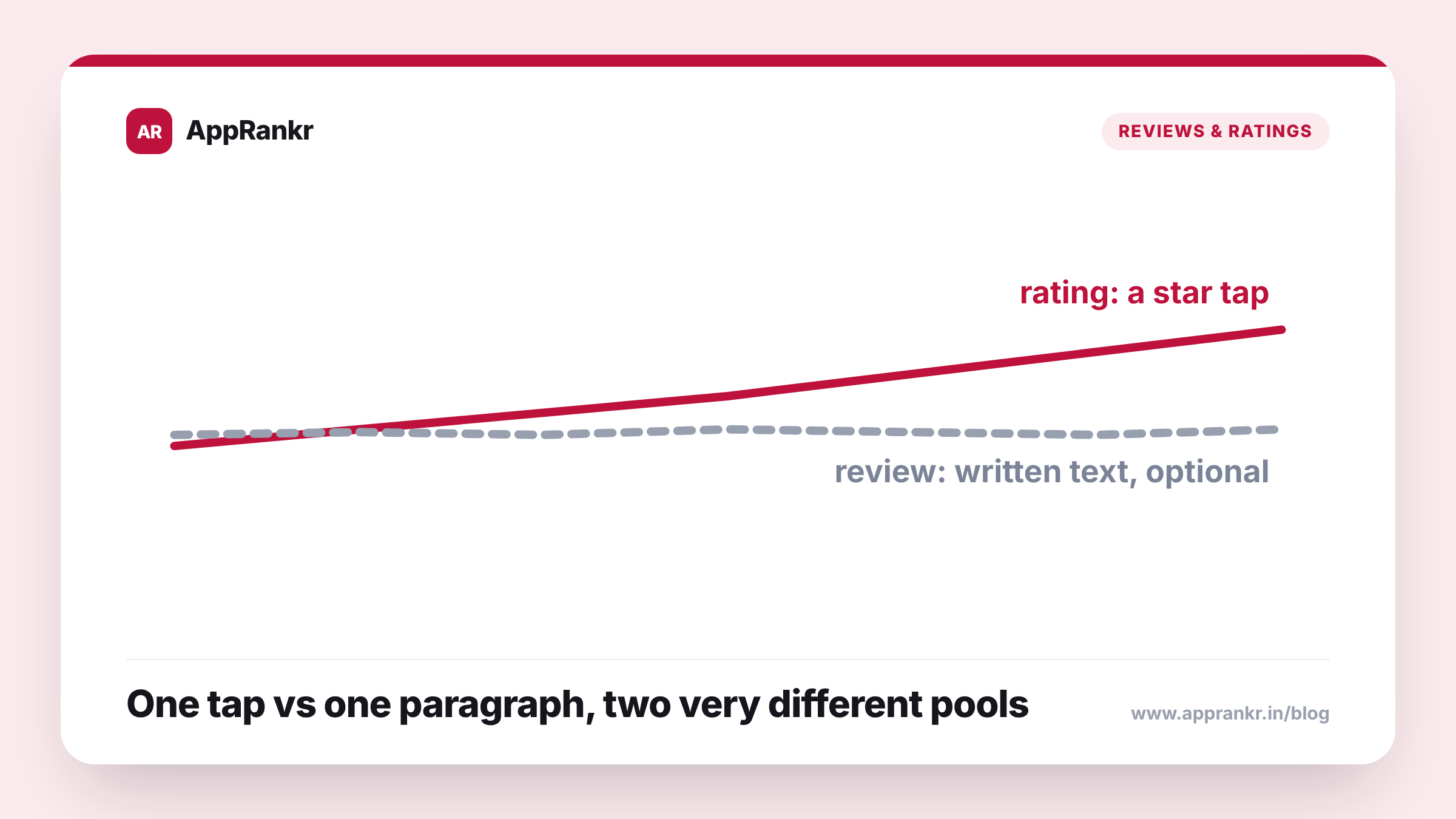
A rating is the number of stars a user taps, nothing more. It takes a second, and most users who ever interact with your rating prompt stop right there. A review is the written text some of those same users choose to add on top. It’s a separate, optional step layered onto the rating, not a required part of it. Your overall star average is built from the full pool of ratings, every single one, whether a written review came with it or not. Visible written reviews are a different, much smaller slice sitting beside that average, not inside it.
| What it is | How common is it | |
|---|---|---|
| Rating | A star tap, nothing else required | The vast majority of all feedback |
| Review | Written text, added on top of a rating | A smaller, optional minority |
Why the gap between the two numbers is normal
Seeing a rating count in the tens of thousands next to a review count in the hundreds can look like something’s off. It isn’t. Writing even a short review takes real extra effort compared to a single tap, and most users who bother to rate an app at all stop right after that tap. A wide gap between the two counts simply reflects how much more friction one action has than the other. It says nothing about your app’s quality on its own.
Real-world scenario: A team noticed their written review count seemed tiny next to their much larger rating total and worried their review prompt was broken, pulling in stars but failing to capture actual feedback. Checking a handful of similar, healthy apps in their category, they found the same pattern everywhere. A huge rating count, a much smaller review count. The gap wasn’t a bug in their prompt. It was just the normal shape of how these two actions get used.
What this means for how you read your own numbers
Your average star score is the fuller, more complete signal, since it draws from every rating you’ve received. Written reviews are a narrower window, useful for reading real, specific feedback in users’ own words, but not a representative sample of everyone who rated you. Drawing conclusions about your whole user base from written reviews alone risks over-reading a small, self-selected group as if it spoke for everyone who actually rated your app.
What to actually do about it
- Don’t treat your review count as a stand-in for your rating count. They’re separate pools, and a small review count next to a large rating count is the expected shape, not a warning sign.
- Read written reviews for texture and specific detail, not for a full picture. They’re a useful but narrow window, not a representative survey of your whole user base.
- Trust your overall star average as the fuller signal. It reflects everyone who rated you, not just the smaller group who also wrote something.
- Don’t assume a low review count means low engagement. It usually just means most users stopped at the easier, lower-effort action, which is exactly what most users do everywhere.
AppRankr’s Rank Tracker tracks your real rating trend over time, the fuller signal worth watching day to day.