Key points:
- A soft launch means releasing your app in one or a few smaller markets first, instead of launching everywhere at once.
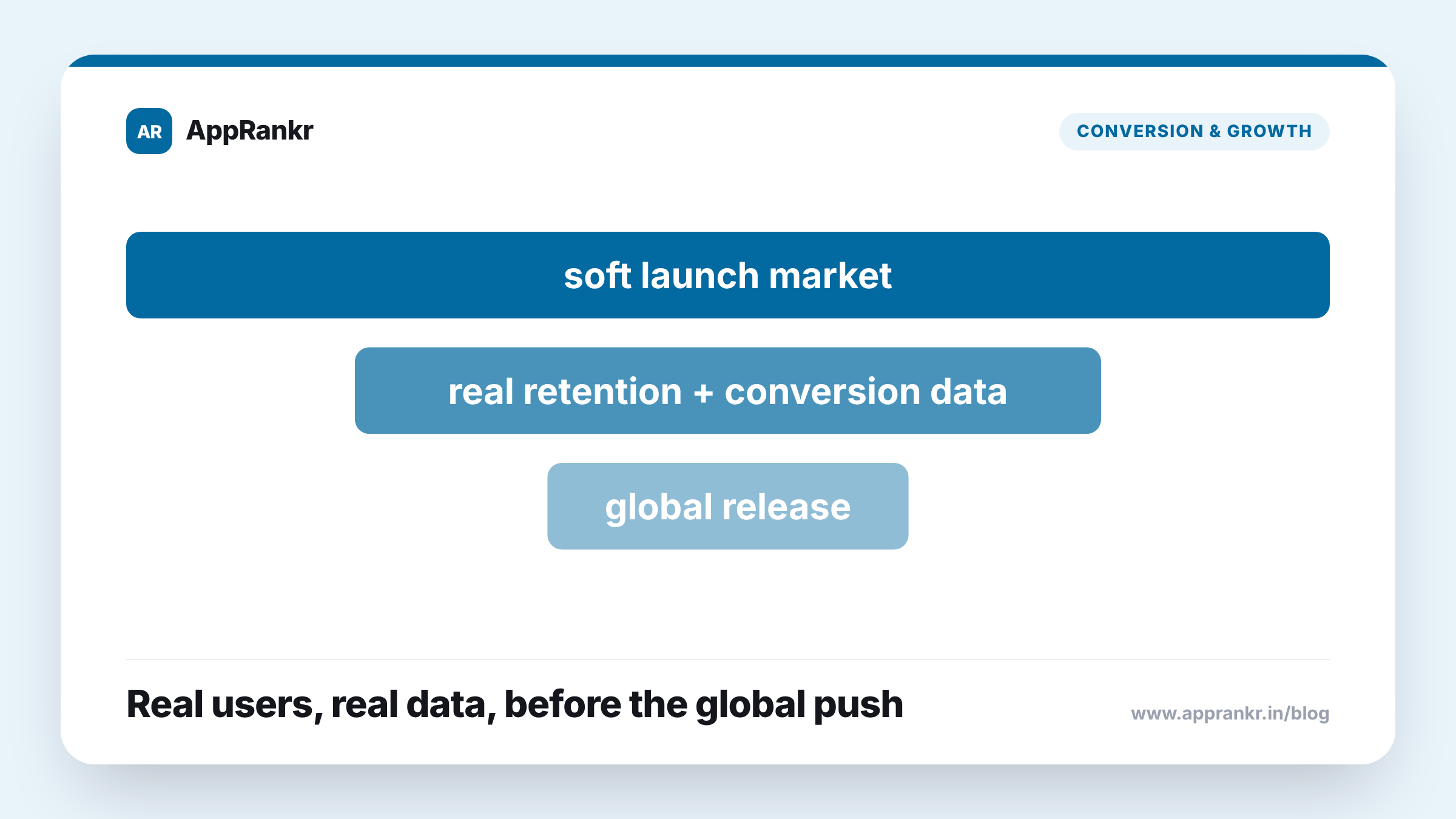
- The real goal is data. Retention, conversion, and monetization numbers from genuine users, not projections.
- A good test market has a real audience for your app, a language you can actually support, and low enough visibility that early rough edges stay contained.
- A soft launch is different from a staged or phased rollout, which limits exposure to an update, not a first release, by percentage rather than by country.
Launching everywhere at once feels like momentum. It also means every mistake happens in public, in every market, at the same time.
What a soft launch is actually for
The core idea is simple. Release in a smaller set of countries first. Watch what real users actually do. Fix what’s broken before the markets that matter most ever see it. That’s different from picking a random small country and hoping for the best. The data you want is specific. Real retention curves. Real conversion from install to active use. Real spending behavior, if your app charges for anything. Guesses get replaced with real numbers. From people who actually downloaded the app. Not a focus group describing what they’d probably do.
| Detail | What it’s actually for |
|---|---|
| Real goal | Retention, conversion, and monetization data from real users |
| Market size | Real, but smaller, representative audience |
| Timing | Before committing to your main, global release |
| Different from | A staged rollout, which limits an update’s exposure, not a first launch |
How to actually pick a test market
The wrong instinct is picking the smallest, most obscure market you can find. The logic: fewer people seeing early bugs means less risk. That logic backfires. A market too small or unlike your real audience gives you weak, noisy data either way. Look for three things. Real demand for what your app does. A language your team can genuinely support well. Not a rough machine translation. And low enough visibility that a rough early build doesn’t become a global story before you’ve fixed it.
Real-world scenario: A subscription fitness app almost launched everywhere at once. They felt confident after months of internal testing. Instead, they soft launched in two mid-sized markets first. Their real trial-to-paid conversion came in well below what internal testing had suggested. The drop traced to one confusing step in the paywall. A step their own team, too familiar with the app, had stopped noticing. They fixed it before the global release. The same mistake, caught early in two markets, would have cost real money if it had shipped everywhere on day one.
Why this isn’t the same as a staged rollout
Both Google Play and Apple offer a way to limit how many existing users get an update right away. Rolling it out to a slice of your install base first. That’s a real, useful tool. But it solves a different problem. It protects an existing user base from a bad update. A soft launch is an earlier, separate choice. Making your app available in specific countries only, for your actual first release. Often a build distinct from what you’ll eventually ship worldwide. Confusing the two means thinking you’ve “soft launched” when you’ve really just slow-rolled an update to people who already have the app.
What to actually do about it
- Pick a test market for real representativeness, not for being easy to ignore. A market too small or unlike your real audience gives you weak signal.
- Decide your real success metrics before you launch, not after. Retention at day 1, 7, and 30. Conversion to paid, if relevant. Decide the bar in advance.
- Give it real time before judging the result. Early numbers from day one or two tell you almost nothing about retention.
- Don’t mistake a staged rollout for a soft launch. They solve different problems, at different points in your app’s life.
AppRankr’s Rank Tracker tracks your real visibility once you do go wider, a useful way to see how a test-market lesson actually plays out at scale.