Key points:
- A broken privacy policy link is a real compliance problem on both major stores, not a minor detail.
- There’s no confirmed direct ranking penalty tied to the link itself, separate from compliance.
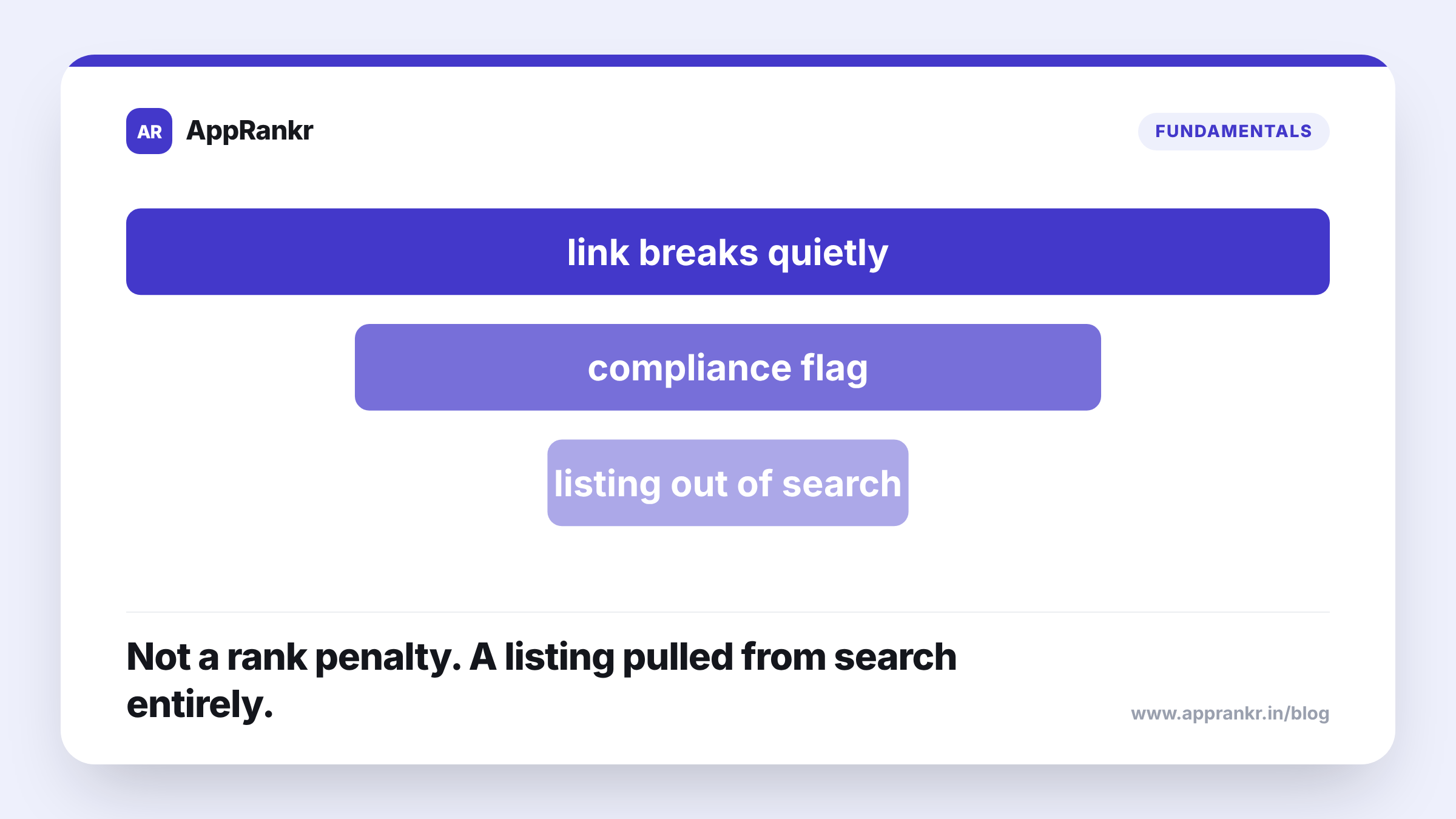
- The real risk is upstream: a flagged or pulled listing can’t rank at all while it’s in that state.
- A site migration or expired domain can break this link quietly, with no warning from either store.
A privacy policy link rarely gets a second look once it’s set up at launch. It’s also one of the easiest things on a listing to quietly break months later.
What’s actually confirmed here, and what isn’t
Both major stores require a working privacy policy link as part of basic listing compliance. That part is confirmed and well documented. What isn’t confirmed is any direct ranking penalty tied to the link itself, separate from compliance enforcement. Nobody’s shown the link’s state feeding into a keyword-matching or relevance score the way a title or description change would. The real risk runs through a different door entirely.
| What’s confirmed | |
|---|---|
| Required for listing compliance | Yes, on both major stores |
| Direct effect on keyword ranking | Not confirmed, no evidence of a separate penalty |
Why it still matters even without a direct ranking hit
A flagged or pulled listing isn’t competing for keyword position at all while it’s in that state. That’s the actual exposure. It’s not that the link’s being broken quietly shaves points off your rank. It’s that a serious enough compliance issue can take your listing out of search results entirely, which obviously beats whatever your keyword rank would have otherwise been. The path to real damage runs through enforcement, not through some hidden ranking formula.
Real-world scenario: A team migrated their marketing site to a new domain and didn’t think to check every link still pointing to the old one. Their privacy policy link, set during launch over a year earlier, quietly started returning a dead page. Nothing in their rank tracking flagged it, since nothing about their keywords had changed. The break surfaced only when the listing got flagged during a routine compliance check, by which point it had likely been broken for weeks with no visibility into exactly how long.
What to actually do about it
- Check your privacy policy link works, on a real schedule. It won’t show up in a rank chart when it breaks, so nothing else will remind you.
- Treat a site migration or domain change as a trigger to recheck every store listing link. This is exactly the kind of change that breaks it quietly.
- Don’t assume a ranking drop means this link broke. There’s no confirmed direct link between the two. Look at compliance status and enforcement notices instead.
- Fix a broken link immediately once found. The real cost is the risk of a flag or pull, not a hidden point loss in your rank.
AppRankr’s Rank Tracker watches your listing’s real status alongside your rankings, a useful second check beyond keywords alone.