Key points:
- Naming a competitor in plain description text is a different risk than targeting their name as a keyword.
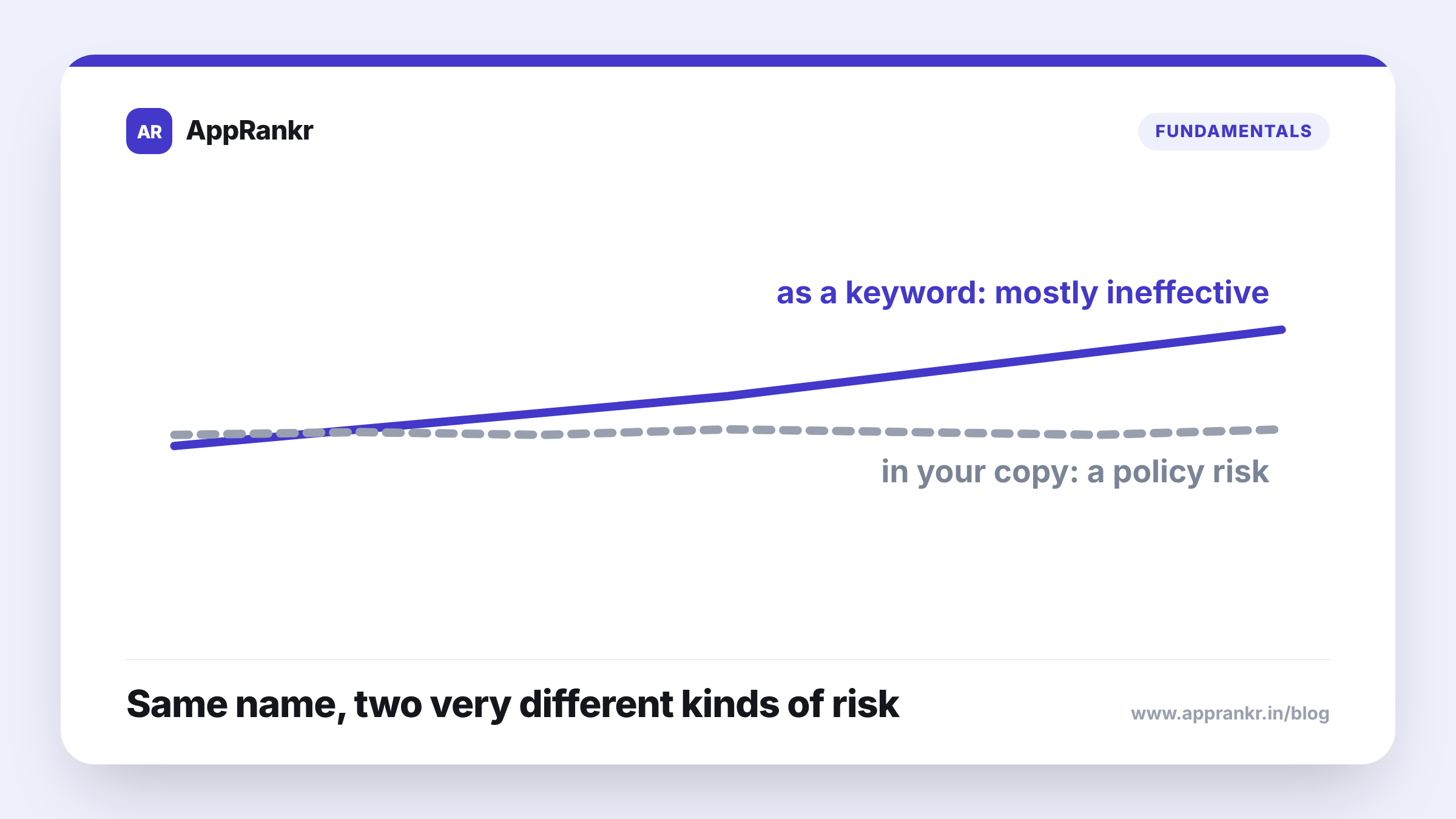
- The keyword version is mostly a weak-effectiveness problem. The description version is more of a trademark and policy problem.
- A mention that reads as implying endorsement or confusion carries real rejection or flag risk on both major stores.
- You can usually get the same positioning value by describing the difference without using the competitor’s actual brand name.
“Works like [Competitor], but free” sounds like honest, useful copy. It isn’t the same risk as putting that name in your keyword field. It’s worth treating as its own separate call.
Why this is a different risk than keyword targeting
Targeting a competitor’s brand name as a keyword is mostly a question of whether it works. It usually doesn’t. A store’s search tends to favor the real brand on their own name. Putting that same name in your visible text is a different kind of risk. It’s not about whether it ranks. It’s about whether using someone else’s brand in your own copy breaks a trademark or policy rule. A keyword buried in metadata doesn’t carry that same weight.
| What’s actually at stake | |
|---|---|
| Competitor name as a keyword | Mostly effectiveness. It rarely helps you rank for their term. |
| Competitor name in description text | Mostly policy and trademark risk, separate from ranking. |
What tends to cross the line
A narrow, factual line reads very differently from a mention that implies endorsement. Or one that confuses a shopper about which app they’re looking at. “Compatible with files from [Competitor]” reads as plain function. “The [Competitor] alternative everyone’s switching to” leans on their brand to borrow attention. That second kind is exactly what tends to draw a flag or a rejection.
Real-world scenario: A team built their description around a direct comparison, naming a well-known competitor several times to make their pitch clear. The listing got flagged during review over the repeated brand mentions, not over anything else in the app. They rewrote the same pitch to describe the real difference, with no competitor name at all. It cleared review. Real users understood it just as well.
What to actually do about it
- Treat a competitor mention in your description as a policy question, not a ranking one. The two risks don’t really overlap.
- Keep any comparison narrow and factual. “Compatible with X’s file format” reads very differently from borrowing their name for attention.
- Try describing the difference with no brand name first. You often get the same pitch with far less risk.
- Don’t treat a keyword risk and a description-text risk as the same thing. One is about whether it works. The other is about what you’re allowed to say at all.
AppRankr’s ASO Inspector checks your real listing text and keyword choices together, a useful way to catch a risk like this before it costs you a review delay.