Key points:
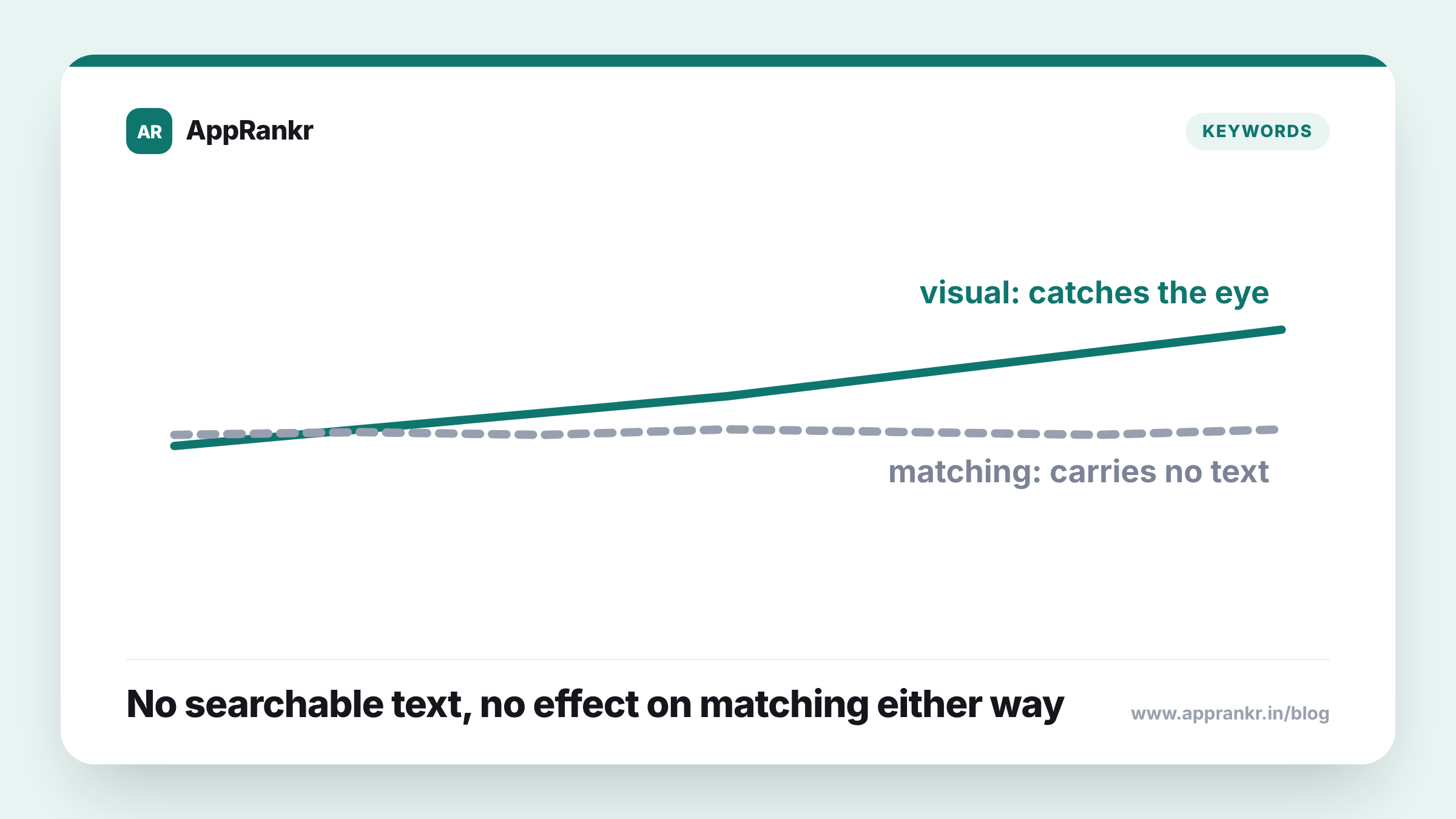
- An emoji carries no text, so it doesn’t add keyword weight to your title.
- It also doesn’t subtract from the real words around it. The two effects are simply unrelated.
- The actual cost is space. Your title has a hard character limit, and an emoji uses some of it.
- The real benefit is visual: standing out in a results list full of plain text, not a ranking lever.
A rocket emoji at the start of your title looks like it should do something for search. It’s worth separating what it actually does from what it just looks like it does.
Why it doesn’t touch keyword matching either way
Keyword matching works off real, searchable text. An emoji isn’t text in that sense. It doesn’t carry a word search can key off, so it adds nothing to your matching, and it doesn’t quietly cancel out the words near it either. These two effects, visual standout and keyword matching, are simply unrelated systems, even though they both live in the same title field.
| What it does | |
|---|---|
| Keyword matching | Nothing. An emoji carries no searchable text. |
| Visual standout in results | Real. It can catch a scrolling eye among plain titles. |
Why the real cost is space, not matching
Your title has a hard character limit on both major stores. Every character an emoji takes up is a character a real, searchable word isn’t using. That’s the actual tradeoff worth weighing, not some hidden keyword penalty. A short, well-placed emoji might cost you little. A longer string of them, or one placed where a real keyword would otherwise sit, costs you more than it looks like at a glance.
Real-world scenario: A team added two emoji to their title, assuming the visual boost was free since emoji don’t affect ranking either way. The characters used pushed one of their secondary keywords past the title’s limit, so it silently dropped off entirely. Switching to a single, small emoji and recovering the dropped keyword kept the same visual standout while restoring the full keyword coverage they’d quietly lost.
What to actually do about it
- Don’t expect an emoji to help or hurt your keyword matching. It carries no searchable text either way.
- Count it against your character limit like any other character. The real cost is space, not some hidden penalty.
- Check whether an emoji is quietly pushing a real keyword out of your title. That’s the actual risk, not the emoji itself.
- Use one only if the visual standout is worth the space. That’s a real, legitimate tradeoff, just not a keyword one.
AppRankr’s ASO Inspector checks your real title and keyword coverage together, a useful way to see if an emoji is quietly costing you space you didn’t notice.